
With an emphasis on limited materials and clean lines, minimalist houses keep everything simple and organized. But houseplants have their own agenda, and some are anything but minimal.
Plants can spread, drop leaves, expand to gigantic sizes, or look loud and unappealing. We spoke to simplicity and organizing experts to learn the types of houseplants minimalists never grow for this exact reason.
Meet the Expert
Cara Palmer is a simplification and decluttering expert at Organize Every Room.
Emily McDermott is a simplicity expert and decluttering coach with Simple by Emmy.
Barbara Brock is a decluttering expert, organizer, and founder of Barbara Brock Inc.
String of Pearls
Credit:
carlofranco / Getty Images
String of pearls are beloved for their delicate appearance, says minimalism expert Cara Palmer of Organize Every Room.
“But these plants constantly shed their pearls, creating tiny green spheres that roll into every corner of a room,” she says.
The constant cleanup becomes a daily burden that contradicts a simplified lifestyle, Palmer says. For minimalists who value clean lines and uncluttered spaces, avoid string of pearls.
Monstera
Credit:
TowersPhoto / Getty Images
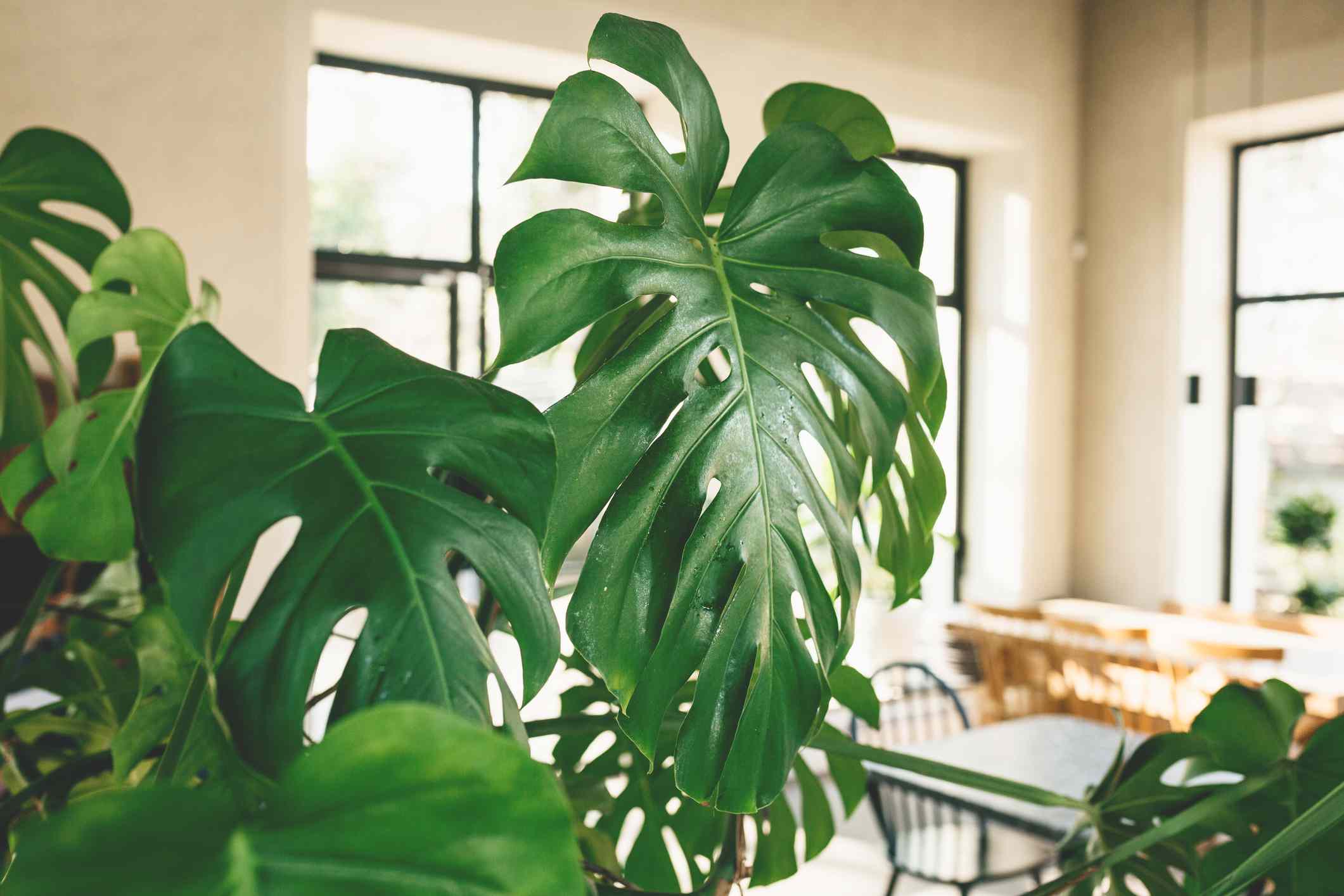
Aptly named, monstera deliciosa is truly monstrous, gobbling up space in your home at a rate of one to two feet per year.
Also consider that monstera is sometimes called swiss cheese plant, with leaves that develop ragged holes over time.
So, unless you’re ready for a ceiling-topping houseplant, avoid monstera in your minimalist house.
Polka Dot Plant
Credit:
The Spruce / Leticia Almeida
Palmer gives polka dot plant points for being striking, however, she would recommend avoiding them in a minimalist home.
“The vibrant pink or white spots create visual noise that disrupts the calm, unified aesthetic that minimalists seek,” she says.
This plant’s aggressive growth pattern requires weekly pruning to maintain its shape, she adds. Polka dot plant requires constant attention. If left unattended, it becomes leggy and sprawling within weeks.
Ficus Tree
Credit:
Hideaki Edo / Getty Images
Ficus trees may be a staple of commercial buildings and hotel lobbies, but that doesn’t mean that they are easy to maintain. Caring for ficus trees means constantly picking up dropped leaves and keeping them well-watered, but not overwatered.
Cold, drafty conditions cause ficus trees to drop their leaves. Yet too much sun may scald the leaves and—you guessed it—cause the leaves to drop.
If you value peace of mind, keep this houseplant out of your minimalist living room or anywhere else in your home.
Croton
Credit:
Anastasiâ Usanina / EyeEm / Getty Images
For a feel of the tropics wherever you might live, invite a croton plant into your home. Showy and colorful, this plant’s variegated leaves catch your attention the moment you step into a room.
But if you’re paring your home back for a minimalist design, a Croton plant will quickly undo your efforts.
They are a “psychological burden,” Palmer says. “Crotons are notorious for dropping leaves at the slightest environmental change. Their bold, multicolored foliage also creates visual chaos that fights against minimalist principles of peaceful, uncluttered spaces.”
Air Plants
Credit:
vaitekune / Getty Images
Because air plants don’t require soil, they’re often thought of as simple and low-maintenance.
Not so, Palmer says. They’re surprisingly high-maintenance, and their need for weekly soaking requires designating kitchen space for their bath ritual.
“Their display requirements result in accumulating various holders and stands—the exact opposite of minimalism’s less-is-more philosophy,” Palmer adds.
Ferns
Credit:
Mimai Mig / Getty Images
Ferns were all the rage in Victorian England, which alone should describe why they don’t belong in a minimalist house.
While some ferns are compact, others have a massive spread and towering heights. The popular Boston fern can reach three feet high and encroach on your living space.
Ferns require regular fertilization, bright light, and a humid environment. They thrive in a narrow temperature range of 65 to 75°F. If you dare let the temperature drop below 50°F, you’ll probably kill them.
All Houseplants
Credit:
Olga Peshkova / Getty Images
For the ultimate in minimal design, lose the houseplants entirely.
“I don’t think there’s any houseplant that is—or isn’t—minimalist-friendly,” says simplicity expert Emily McDermott of Simple by Emmy.
She argues that the point of minimalism is to make room for what matters most.
“The minimalist aesthetic that people typically think of, with small succulent plants and white walls, is not the same as the lifestyle of minimalism,” she says.
Best Minimalist Houseplants
Credit:
Maryviolet / Getty Images
Want houseplants but can’t stand chaos and maintenance? Decluttering expert Barbara Brock gives orchids high marks because they remain vertical and don’t overflow a pot.
“They are visually less invasive on the senses,” Brock says.
Brock also recommends jade plants since they require little maintenance. Jade plants grow glacially slowly—just two to three inches per year. So, they won’t instantly overwhelm your living space.
McDermott avoids houseplants for a simple house but concedes that any small, tidy plant that doesn’t require much upkeep would be fine.
Comments are closed.