
‘You don’t have to pine for spring. There’s also an affordable way to grow your indoor jungle without buying more,’ gardening columnist says
Transform your space with natural elements to boost well-being and brighten even the gloomiest days.
February is here. The days are stretching — slowly — but between the frigid temperatures and steady snowfall, cabin fever can start to settle in. This is the stretch of winter where inspiration runs low and spring still feels far away. That’s where indoor plants step in to provide daily inspiration. What if your living space could do more than just shield you from winter? What if it could lift your mood, clear your mind, and keep the seasonal slump at bay?
As a gardener living in the North, I’ve learned one hard truth: if you want to stay grounded through winter, you’d better bring the outdoors in. Without living green around you, it can feel like a piece of your spirit goes dormant along with the garden beds.
The good news? You don’t have to pine for spring.
Enter biophilic design — the bold, practical fusion of nature, wellness, and interior space. It’s about surrounding yourself with living elements: plants, natural textures, organic shapes, and light.
There’s also an affordable way to grow your indoor jungle without buying more.
It’s called plant propagation — creating new plants from the ones you already have.
No shopping spree required. Just a few tools, a little patience, and a willingness to experiment. Plant propagation is one of the simplest, most empowering skills a plant lover can learn.
It’s also practical. Plants naturally stretch, age, and change shape. A leggy vine or top-heavy succulent isn’t a failure — it’s an invitation. Propagation lets you reset, refresh, and multiply your greenery while keeping plants full, balanced, and looking their best.
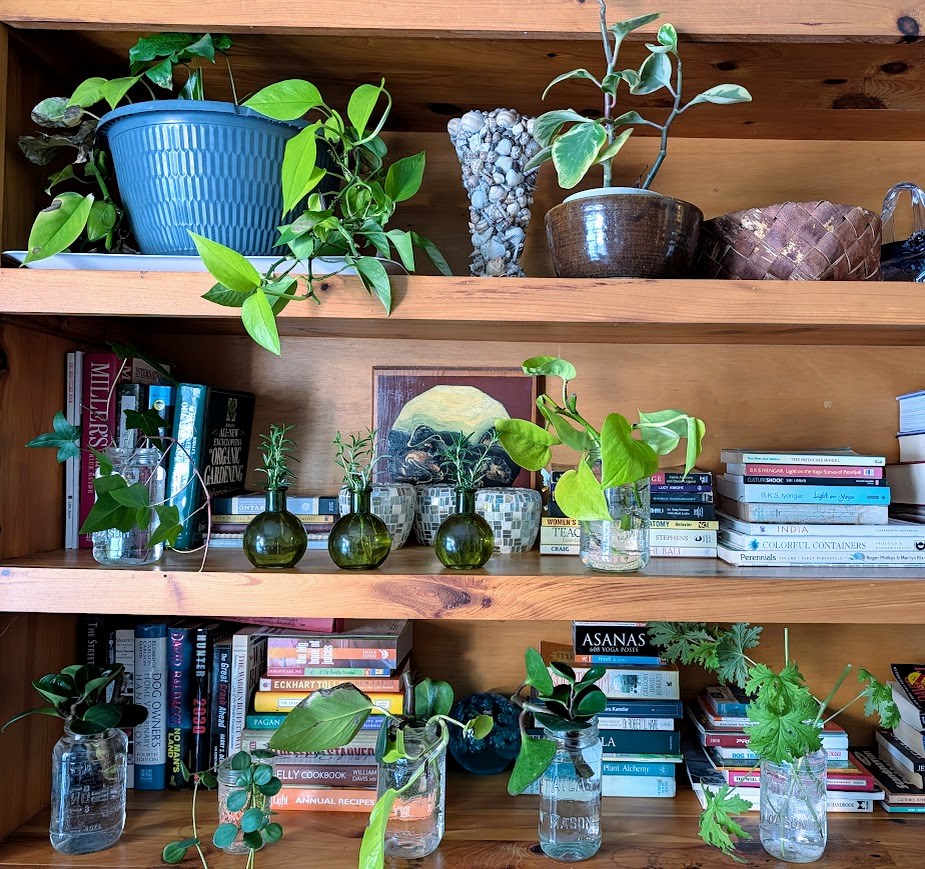
From the resilient and aromatic Rosemary to a naturally insect-repellent citronella, each offers not only the joy of watching new growth emerge but also the satisfaction of personal involvement in the cycle of renewal and growth.

Overgrown rosemary is never a problem — it’s an opportunity. A simple trim refreshes the plant, fills the room with fragrance, and provides plenty of cuttings ready to be rooted and shared.

Here, rosemary joins pothos and spider plantlets beginning their next chapter.
Propagation is also wonderfully accessible — something everyone can do, even those with limited mobility or difficulty bending — since most methods can be done comfortably at a table with just a few simple tools. This period of gentle transition provides a unique opportunity to nurture new life from established plants, ensuring a bountiful and vibrant garden in the upcoming seasons.
Propagating is awesome because you can share them with friends, trade them for other plants, or have backups in case something goes wrong with the parent.
What you’ll need
Sharp knife or scissors
Clean pots with drainage
Fresh potting soil (match the parent plant type when possible)
A jar or vase of water (for stem cuttings)
Bright indirect light is ideal for most new cuttings and divisions. Direct sun can stress tender starts.
Propagating from stem cuttings (the easiest method)
Best for: pothos, monstera, philodendron, tradescantia, fiddle leaf fig and many vining plants
Step 1 — Find the node
Look for the small bump where a leaf meets the vine. Cut just below it. Each cutting needs: one node, one leaf and a short section of stem.
Step 2 — Root in water
Place cuttings in water. Wait until roots reach at least about 1 cm long. This can take a few weeks — longer is fine.
Step 3 — Pot up
Transfer to moist potting soil or tuck several rooted cuttings back into the original pot to create a fuller plant. Keep soil evenly moist at first.

The original overgrown fiddle leaf fig is 12 feet tall and clearly ready for a haircut. The second plant now standing about 4 feet tall began as a single cutting from the original plant. Three years later, with patience, good light, and time, this is the kind of healthy, vigorous growth you can expect from propagation.
Propagating from pups & plantlets
Best for: aloe, spider plant, pilea, snake plant
Some plants produce ready-made babies — often called pups or plantlets.
Step 1 — Watch for minis
When the baby reaches about one-third the size of the parent, it’s ready.
Step 2 — Separate
Use a sharp knife to sever the connection. You may need to unpot the plant. Keep as many roots attached as possible.
Step 3 — Replant
Pot the pup in its own container using a similar soil mix. Water well. Even rootless pups can often be planted directly — roots will follow.
Root division (instant multiplication)
Best for: ferns, peace lilies, snake plants and other clumping plants
This method is perfect when a plant has outgrown its pot and has multiple stems. This is essential to maintaining the health of many species. This will vary from plant type to another, however, most division is done in spring as soon as new growth has started. This allows for doing minimal damage to the plant and for ample time to recover from the procedure.
Step 1 — Choose a healthy, crowded plant
Large root masses divide best.
Step 2 — Split the root ball
Remove from the pot and cut the root ball in half (or more) with a clean blade. Gently tease roots apart and remove any rotting sections.
Step 3 — Replant
Place each section in its own pot with fresh soil and water thoroughly. It may look dramatic at first — but recovery is usually quick.

Root division in action — one healthy, crowded plant becoming several. A simple split gives each section fresh soil, room to grow, and a whole new beginning (Image credit: K Neville)
Resetting a leggy succulent
Succulents naturally stretch with age. Even under good light, many will eventually grow tall and sparse. A reset keeps them compact and beautiful.
Step 1 — Cut the rosette
Slice off the top, leaving about an inch of stem. Remove lower scraggly leaves.
Step 2 — Replant
Plant the rosette in fast-draining cactus or succulent mix and water lightly.

Succulent propagation at its simplest — healthy leaves laid gently on soil, forming roots and new rosettes. Slow, patient, and deeply rewarding. (image credit: the fancy navajo)
Final propagation wisdom
Propagation teaches patience and observation — two qualities every gardener already knows well. Start with one plant and make three. Turn a single vine into a lush, cascading pot. Share divisions with friends and build abundance quietly.
And if you’re looking for guidance along the way, local Master Gardeners of Ontario — including the Simcoe County Master Gardeners— offer free, research-based advice tailored to our region, while the Farmers’ Almanac provides seasonal perspective and gentle reminders about working with nature’s rhythms. No greenhouse required — just curiosity, care, and a steady pair of hands.
(All photos by Monika Rekola except where indicated.)
Monika Rekola is a certified landscape designer and horticulturist, passionate about gardening, sustainable living and the great outdoors. Contact her at [email protected].

Comments are closed.