
The weather in February often reveals how long wintery conditions are likely to last; if the wind direction is north or easterly during late January – low temperatures may persist until April.
If it remains wet and mild – this pattern could continue into spring and prolonged cold conditions are unlikely to set in.
Take advantage of any dry days to prune shrubs and trees; only consider planting if the ground has thawed/dried out; continue planning the veg garden.
As outlined last month, some vegetable seeds including chilis can be started indoors; fill small pots with compost, sow three seeds per pot – lightly cover (with compost) and mist with water. Leave on a sunny window sill. They can take two weeks to germinate, once the seedlings are an inch high move the spares to their own pots. Keep the plantlets in warm and light conditions as they grow. Plants should be ready to go into the greenhouse, or outside in June into hanging baskets/window boxes when there is no likelihood of frost.
 Jackie Power
– Picture by Christian Fisher
There are Chili peppers for all tastes, a dazzling array of varieties – sweet and mild, hot, hotter and off the scale. There are heat scores for each type using a system called ‘Scoville Heat Units’. A mention of just three varieties: Aji Limon (Peru) a hot, heavy cropping, easy-to-grow chili pepper; the fresh fruit is citrus flavoured. The growing habit makes this a good choice for a hanging basket. Cherry Bomb – medium hot (similar to a Jalapeno) also very easy to grow with eye-catching bright red fleshy fruits. The Portuguese Biquinho (meaning small beak) is medium hot, with a smoky flavour, producing teardrop shaped fruits.
There is plenty of seasonal interest in the garden during February – catkins on Hazel and Alder; the evergreen and conifer foliage is vibrant against a largely colourless winter garden.
Daphne mezereum, sometimes called February Daphne, a woodland shrub is flowering (and a must for the winter garden); it has pink or purple blooms with a delicious complex perfume. Compact, and slow growing, Daphne likes a soil rich in leaf mould, and needs lots of well-rotted compost added each year.
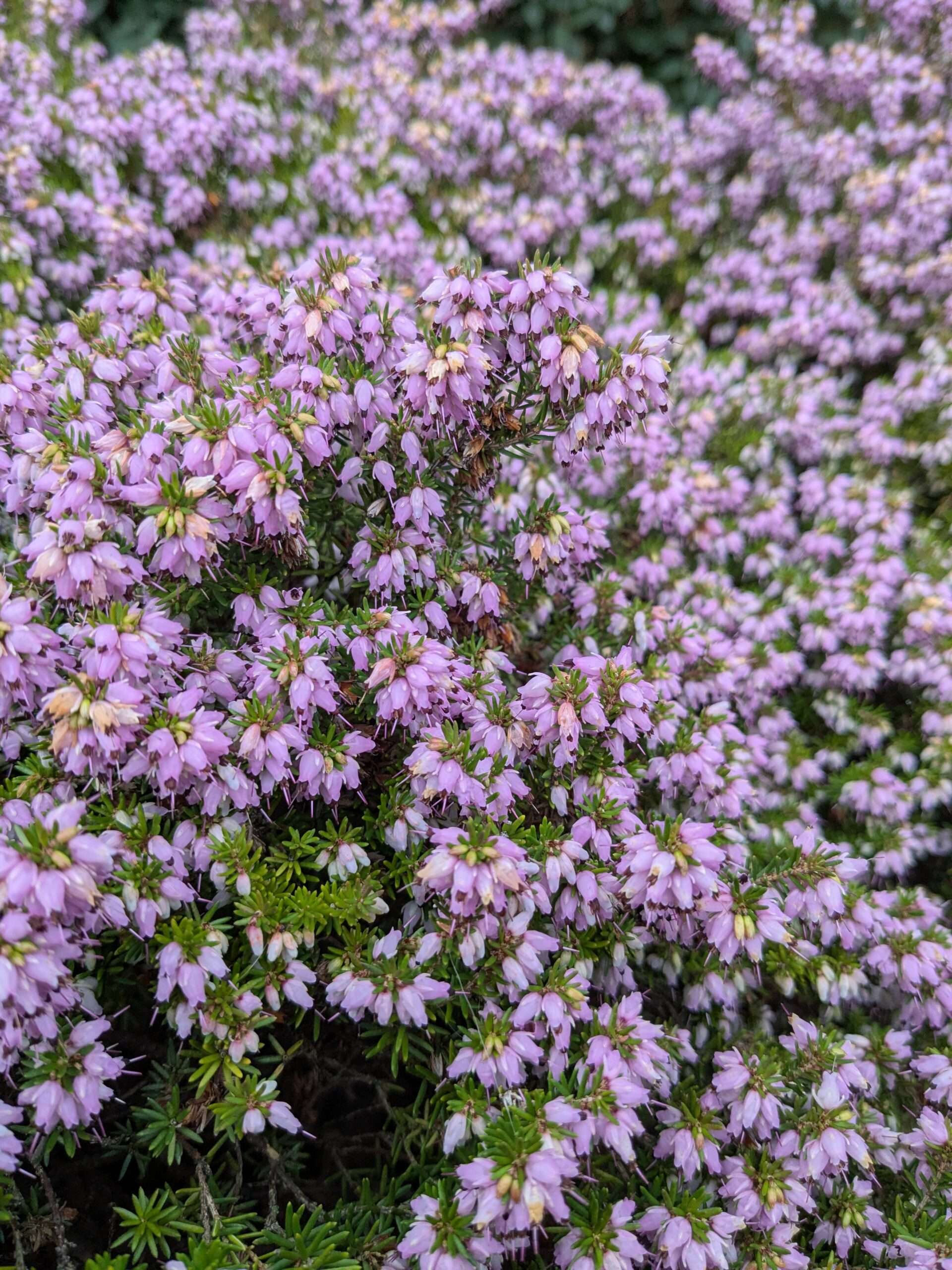
Erica pictured above (known as Heather or Heath) the delightful little evergreen shrub is in full bloom with masses of bell shaped flowers in mauve (pink or white).
Camellias are likely to be one of the next shrubs in bloom although they can be as late as April depending on temperatures.
The Witch hazels were slow to flower – they can be in bloom any time from December until late February. Their spidery yellow (orange or red) perfumed flowers are a welcome sight at this time of year.
Brighten up window boxes and/or containers with seasonal displays using the smaller varieties of hardy cyclamen and delicate viola. Some of the more unusual herbs like French sorrel and trailing varieties of Rosemary can be added to provide different shades of green and make things more interesting.
Comments are closed.