
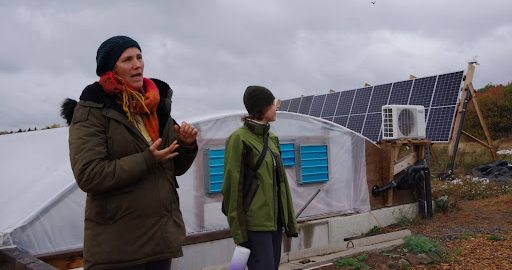
The Cocagne Community Garden grows and stores vegetables year-round thanks to renewable energy technologies. In 2025, it donated over 5000 pounds of produce to reduce the region’s food insecurity.
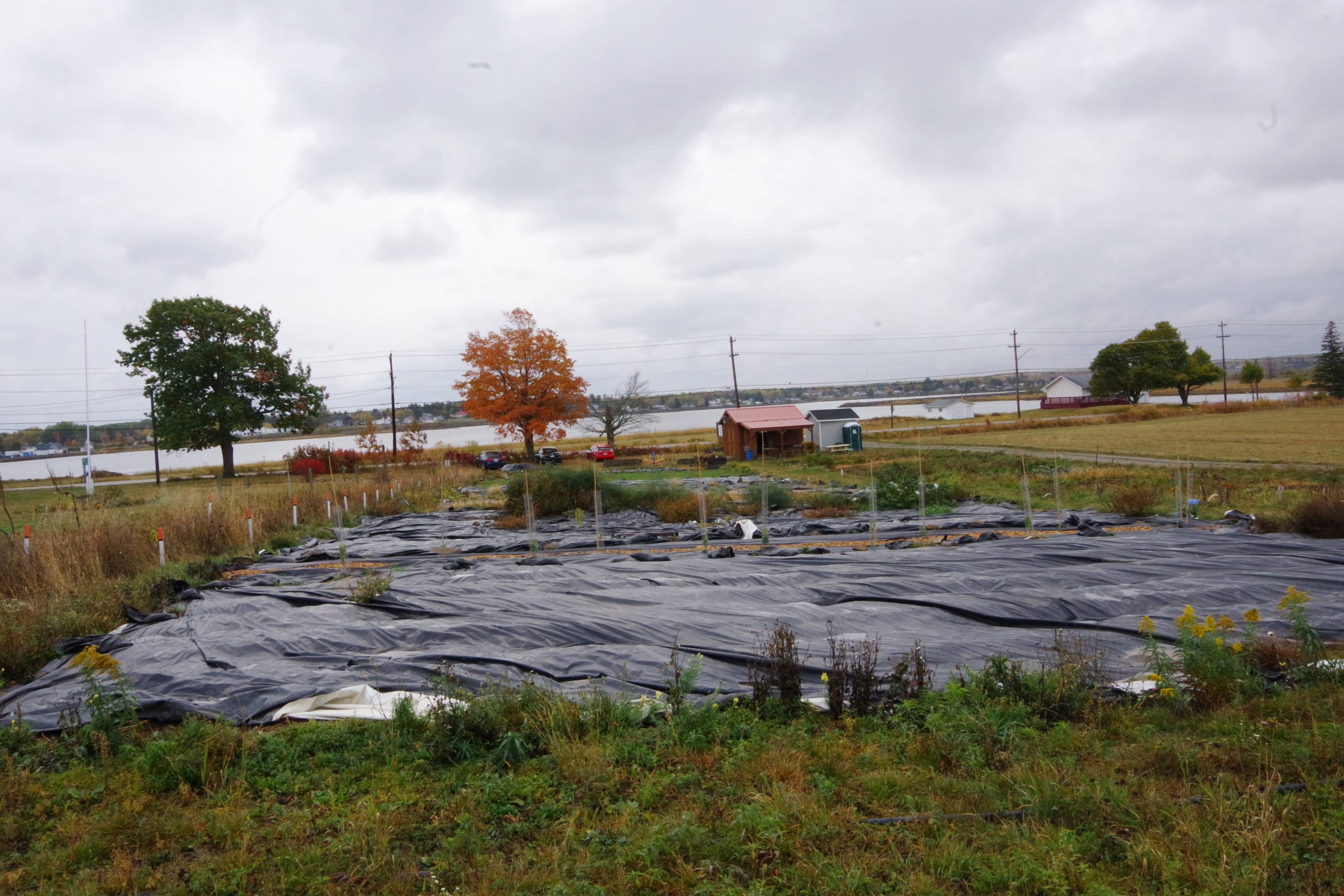
On a gentle slope overlooking the Cocagne River in Southeastern New Brunswick sits a community garden that, at first glance, looks like any other community garden. It’s got private plots, a tool shed, compost piles and skeletons of the season’s past plants slowly decomposing under a layer of snow. But dig below the surface just a little, and a compelling vision emerges: this garden is at the heart of local efforts to build community resilience, tackle climate change and help those in need, small step by small step.
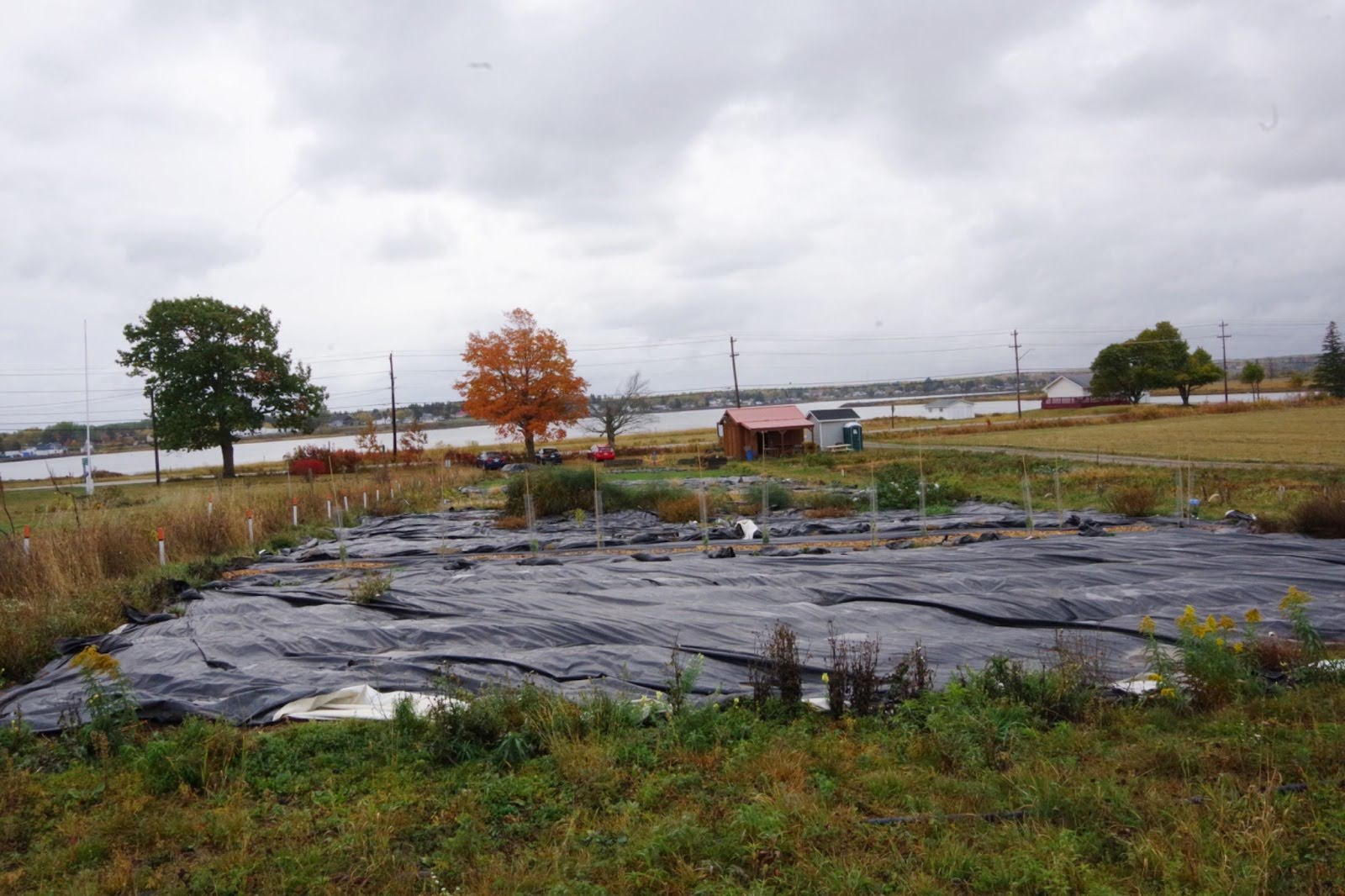 The Cocagne Community Garden overlooking the Cocagne River, October 2025. Photo by Mira Dietz Chiasson.
Like most other communities in Canada, Cocagne is dealing with rising costs of living and skyrocketing food insecurity. As a coastal community, Cocagne residents are seeing climate change- fueled storms eating away at their coastlines and endangering infrastructure. People are struggling to make ends meet, and climate change is projected to worsen food security and jeopardize people’s health and safety.
But what if there were solutions that could help communities prepare, reduce the carbon emissions at the root of the problem, and also help residents meet their basic needs?
 Marc Picard says food comes first. Screenshot from Zoom call by Mira Dietz Chiasson.
Food comes first
“Why wait till everyone’s really hurting?” asks Marc Picard, who founded the community garden in 2014 as a grassroots effort to bring people together to grow food.
“For me, it’s food, water, shelter, then comes love. If we all have healthy food, clean water and we’re warm enough, then it’s easy to love each other. It’s kind of my motto. Food was first on that list,” he says.
“The big, utopic vision was to feed the entire community of Cocagne. At the time, that was about 2600 people… it was go big or go home, let’s try to feed as many people as we can,” he recalls.
The community garden’s has evolved since its grassroots origin; more than a decade later, it’s become an entity that has multiple community partnerships and is able to access government grants and funding, all under the umbrella of a local non-profit, the Groupe de development durable du pays de Cocagne (GDDPC), who took the project under its wing as the original founders moved on to other things.
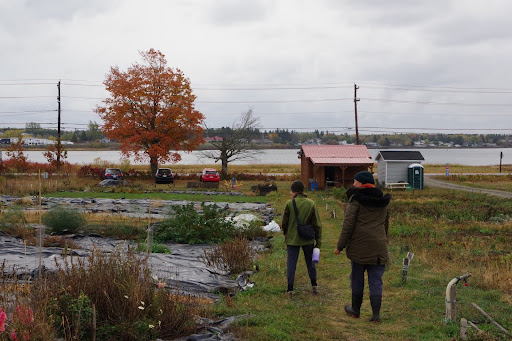 Garden coordinator Karine LaPointe and intern Vanessa Johnston survey the garden plots in October 2025. Photo by Mira Dietz Chiasson.
While Picard’s original vision of feeding the whole community was never achieved, the core of his ideal is still there: free food for those who need it. Produce is now distributed through three community partners: the local school, École Blanche-Bourgeois, the Vestiaire Saint-Joseph (regional food bank), and Bien vieillir chez soi, a program that provides meals to seniors. This video by the GDDPC (in French only) explains how the community partnerships work. In recent years, the garden also started exploring year-round food production powered by renewable energy.
Renewable energy for food production
The garden is powered by solar panels, a battery storage system and pumps for water. Most of the other work is done through human labour and minimal machinery.
The renewable energy aspect of the garden’s work was born partially out of necessity, there being no power supply onsite, but also out of a desire to showcase the potential of renewable energy technologies.
 Solar panels, in the back, provide an energy supply for the garden. Photo by Mira Dietz Chiasson.
“Our idea was to show our community some examples of renewable energy structures that work,” says garden coordinator Karine Lapointe. “If we don’t do it, no one will. […] We were on our way towards an energy and ecological transition, and I profoundly believe that we still need to do it”.
“We’re trailblazing here,” ads garden intern Vanessa Johnston, “ to see how it can work, how we can make this economical and sustainable. All the while hoping that this could spread within the community and give citizens the ability to be more food secure, but also to use alternatives that are more ecologically friendly.”
Gardening beneath the surface: the walipini
Even on the coldest days of winter, if you dig into the earth, below the frost, you’ll find that the ground is still warm. And if you build the right kind of structure, it can even be warm enough to grow food.
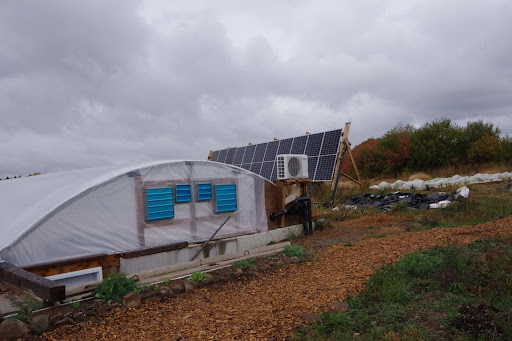 A walipini is an underground greenhouse that can produce vegetables year-round. This is the Cocagne Community Garden’s walipini in October 2025. Photo by Mira Dietz Chiasson.
In 2023, the community garden started construction on a brand new four-season greenhouse called a walipini, the first of its scale in Canada. This year is its first fully operational winter.
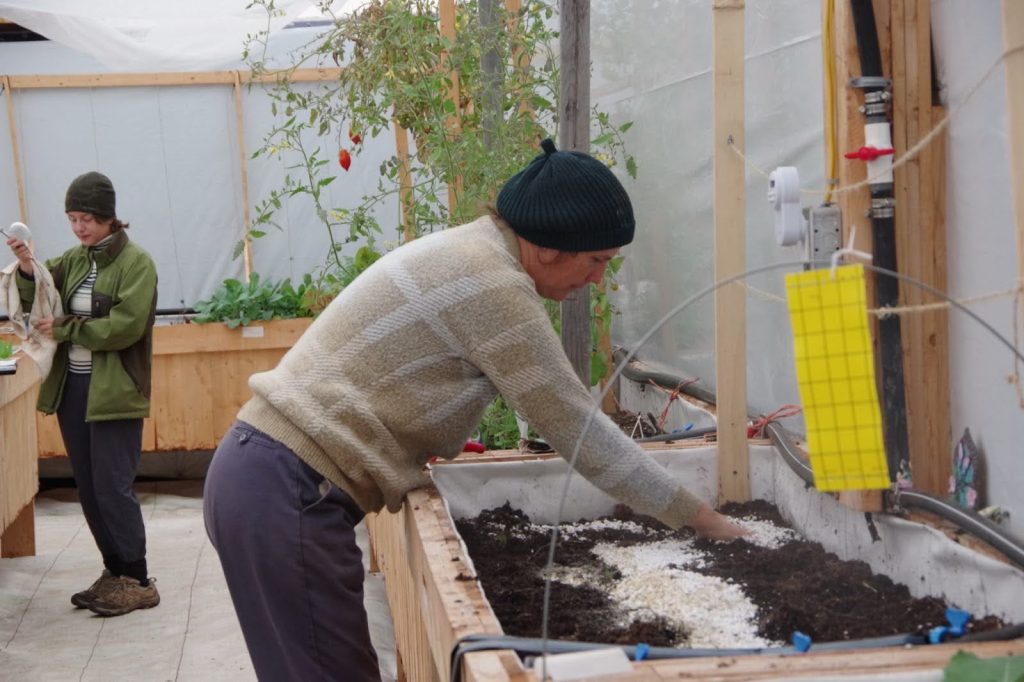 Garden coordinator Karine LaPointe and intern Vanessa Johnston check conditions and prepare soil in the walipini. Photo by Mira Dietz Chiasson.
A walipini is a greenhouse with a foundation dug below ground level, deep enough for the ground to insulate the structure and, in theory, allow it to stay at a steady 4 degrees Celsius without having to heat it.
It’s uncharted territory, and that keeps LaPointe on her toes. “The biggest challenge has been not having enough electricity during critical periods of the winter,” says LaPointe.
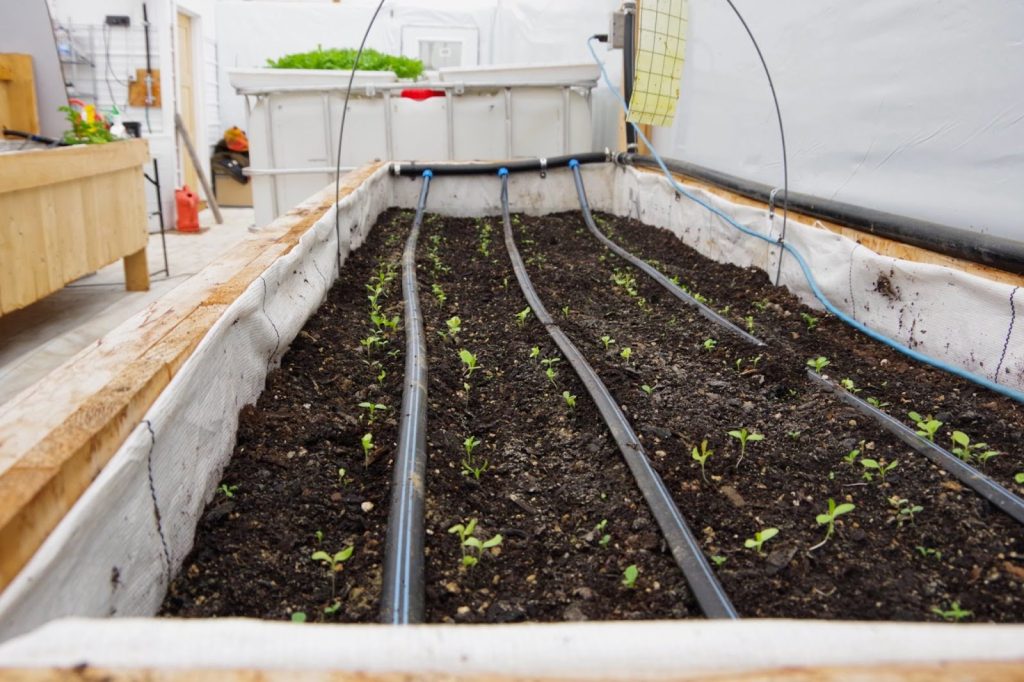 Seedlings growing in the walipini. Photo by Mira Dietz Chiasson.
The solar panels and batteries are only part of the solution; tarps and a space heater have also been required to help keep the ground from freezing during the coldest days.
However, on sunny days like January 19th, LaPointe says the walipini attained a comfortable 15 degrees Celsius (20 degrees in the soil), while outdoor temperatures were at -3.
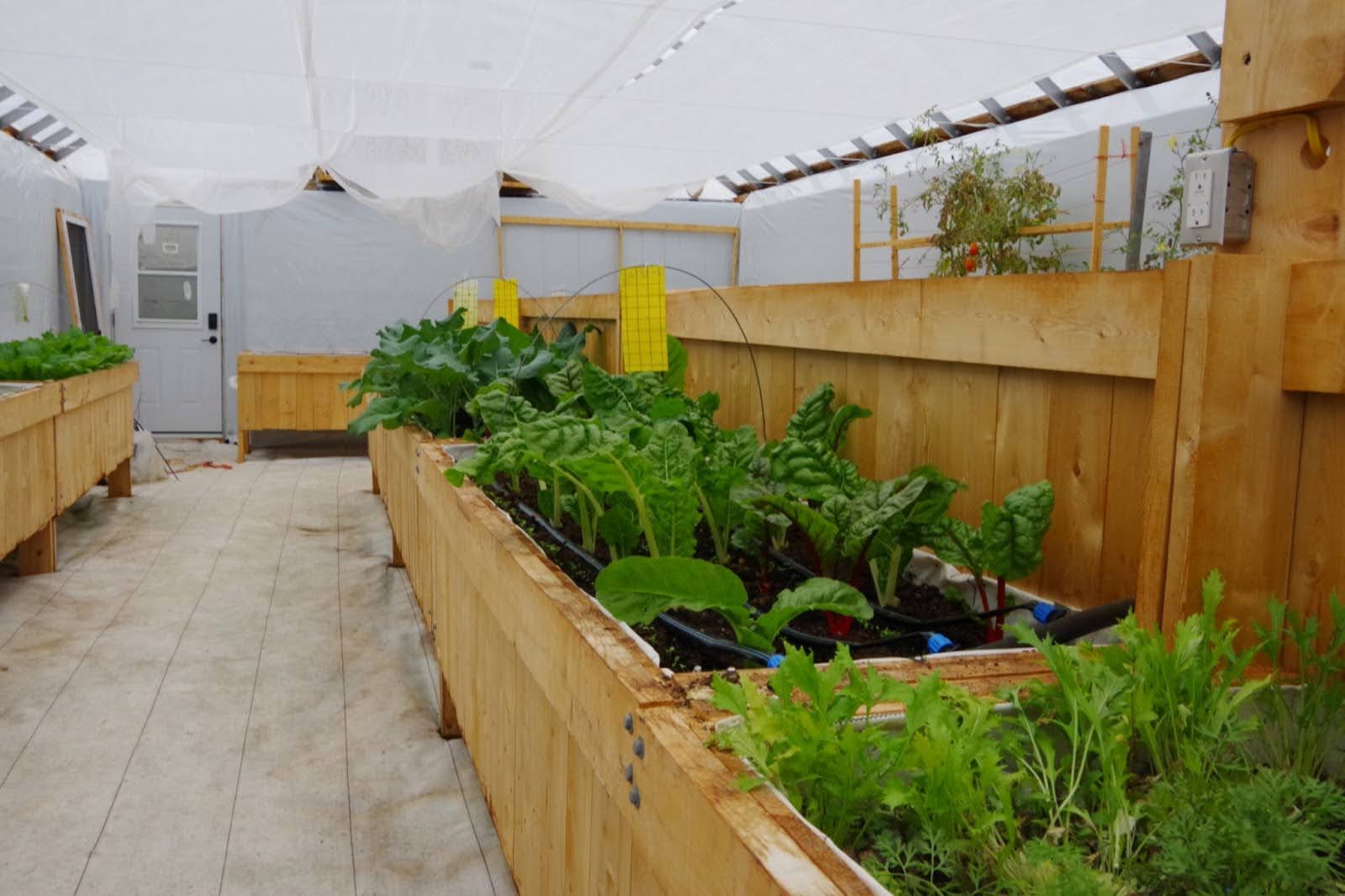 Some of the plants growing in the walipini. Photo by Mira Dietz Chiasson.
While plants take longer to mature in these conditions, LaPointe’s efforts are paying off. The walipini currently boasts cold-hardy plants, from Swiss chard and kale, to spinach, bok choy and more. LaPointe plans to supply Blanche-Bourgeois school with greens every two weeks throughout the winter and expand the offer to other schools in the area come spring. Learn more about the partnership with the school in this video by the GDDPC (in French only).
More than just a cellar
The walipini is not the only thing that allows the garden to provide produce year round. Only a few years ago, the GDDPC installed a solar-powered community cellar that allows it to store root vegetables for distribution year-round and be more in sync with the school’s operational season. But the cellar also serves an important emergency preparedness and climate resilience function.
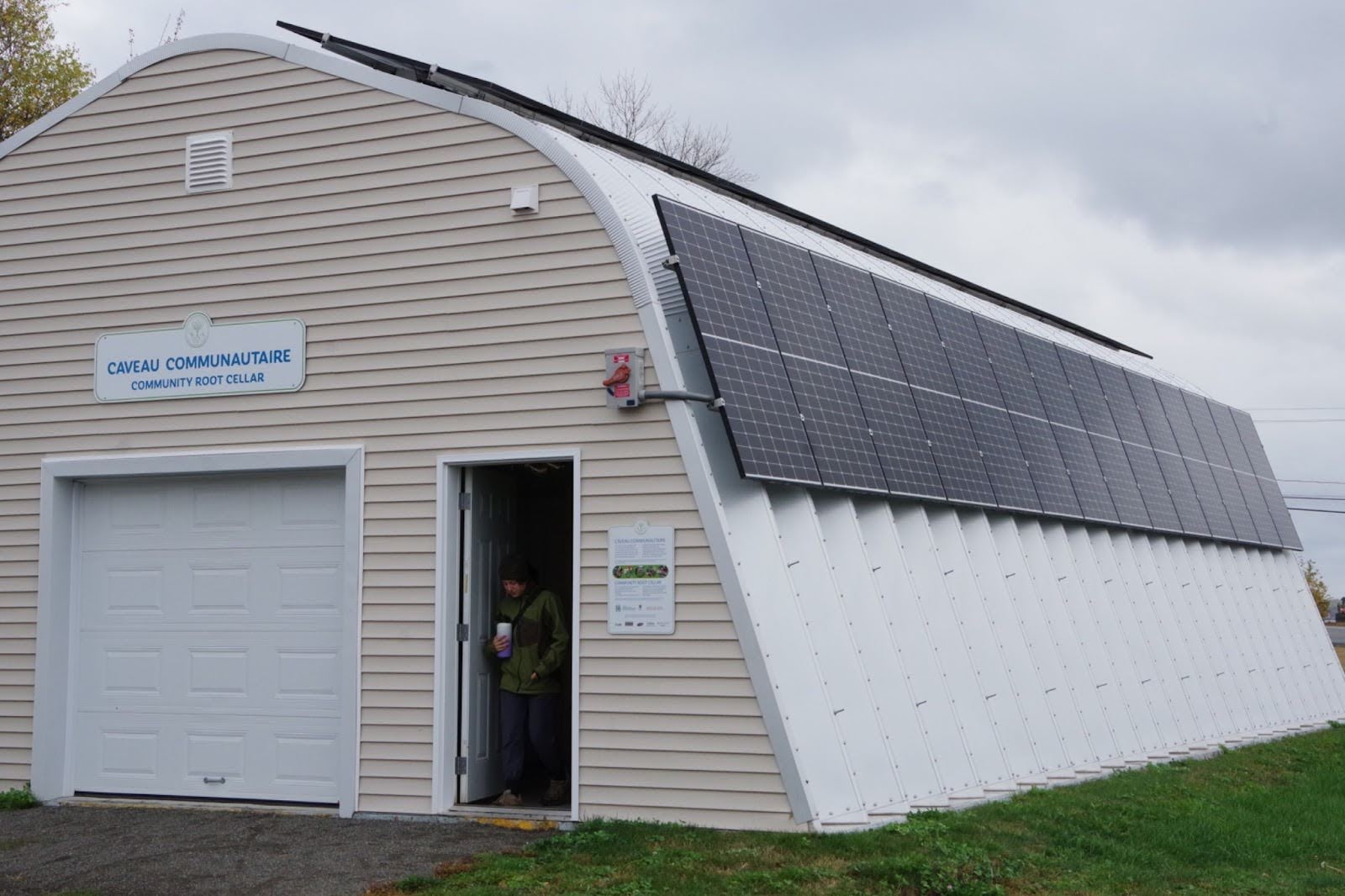 The Cocagne community cellar can store 5 tons of vegetables and is powered by solar energy. Photo by Mira Dietz Chiasson.
“The community cellar is right beside the community’s warming centre,” says Wiebke Tinney, Executive Director of the GDDPC. “People were saying, we need some food there, we have 100 people spending the night there, what will they eat?” So, pairing emergency preparedness with food storage was a no-brainer.
The same “low-tech” philosophy was applied to the cellar, which runs on solar panels, a type of air conditioner needed for the spring and summer, and special bins that control the humidity.
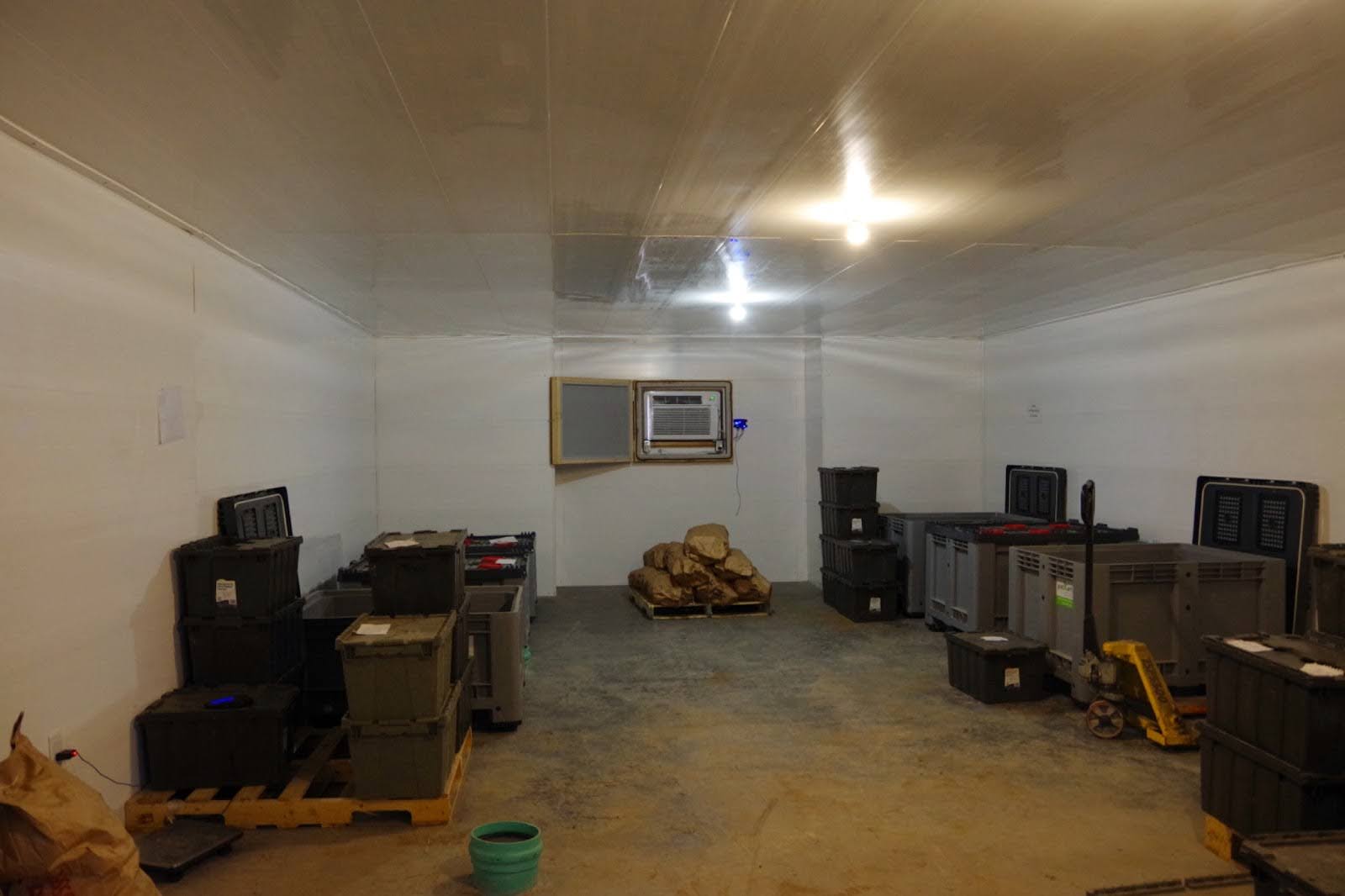 Inside the cellar, special bins that regulate humidity store potatoes and carrots. Photo by Mira Dietz Chiasson.
The solar panels on the cellar’s roof produce approximately 12 MW of electricity each year, says Tinney, and most of it goes to the nearby community centre, the Centre 50, as the cellar doesn’t need much. It can easily store 5 tons of vegetables, and anyone can rent storage space.
“It’s a great strength for the community, to be able to feed ourselves and to be able to store vegetables for emergencies,” says Tinney.
“Every community garden should have a greenhouse and a cellar to expand their potential. All communities in New Brunswick can grow their own food,” says LaPointe. “With infrastructure like this, it’s easier to help people and to mobilize them.”
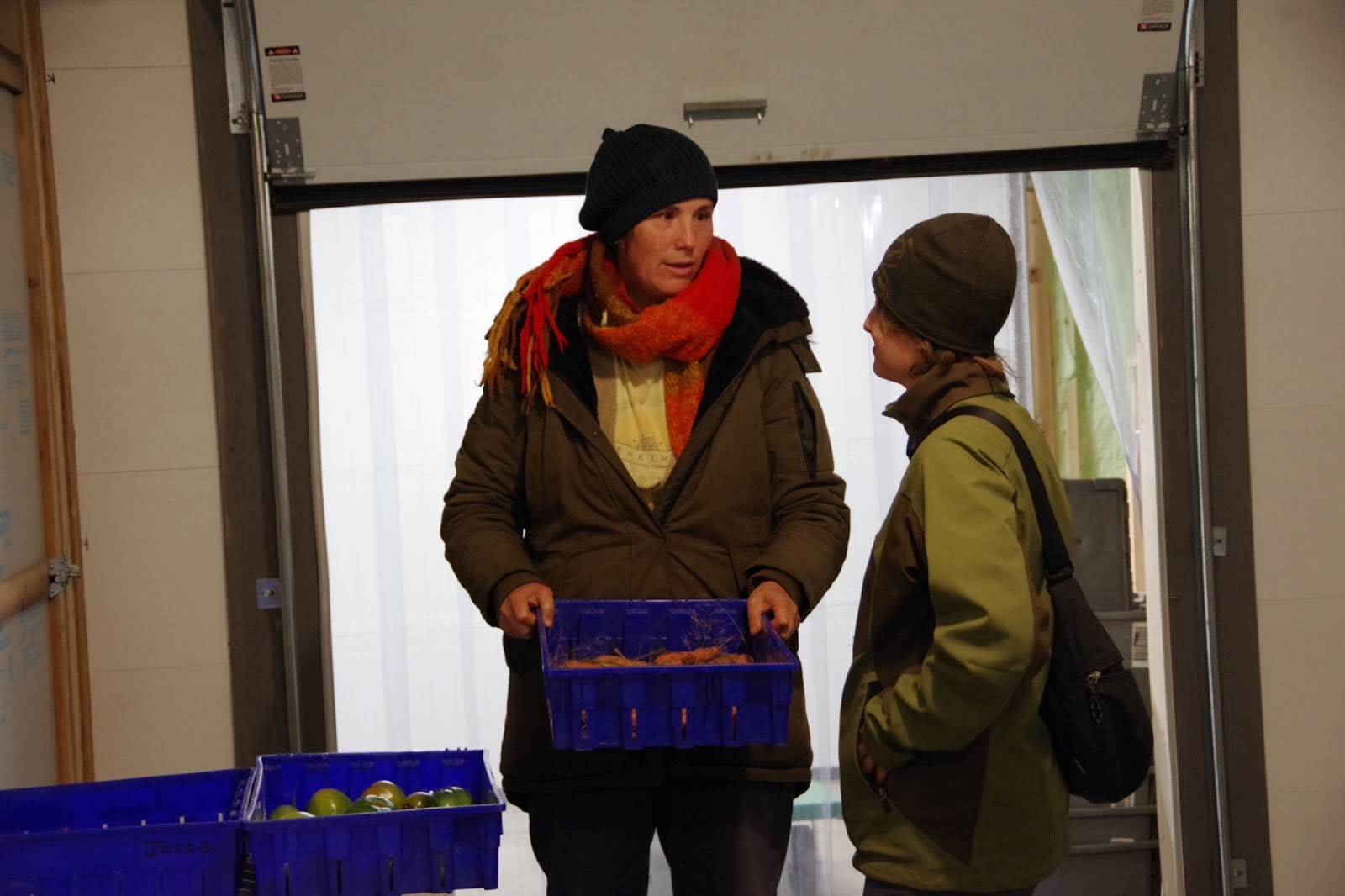 Garden coordinator Karine LaPointe and intern Vanessa Johnston discuss vegetable storage in the cellar. Photo by Mira Dietz Chiasson.
“A big need we’ll never be able to fill”
In 2025, the Cocagne Community garden donated 5629 pounds of fresh food to its community partners. “We’re making a difference,” says Karine LaPointe, “but it’s important to stay humble with that, because there’s also a lot of demand.”
Over at the Vestiaire Saint-Joseph, the local food bank, Executive Director Heather Richards says she sees about 1200 to 1300 individuals receiving food every month, a number that has been in sharp increase , doubling since 2022, the year she started working there.
She says the demographic has changed, with more families and seniors visiting the food bank. “Seniors, it’s heartbreaking when they call…You can just hear the turmoil in their voice and that they’ve been going without for a while before they call. ‘I never thought I needed it. There was always somebody that needed it more than me.’”
Richards and her staff do their best to keep up with demand, and she’s thrilled about the partnership with the Cocagne Community Garden.
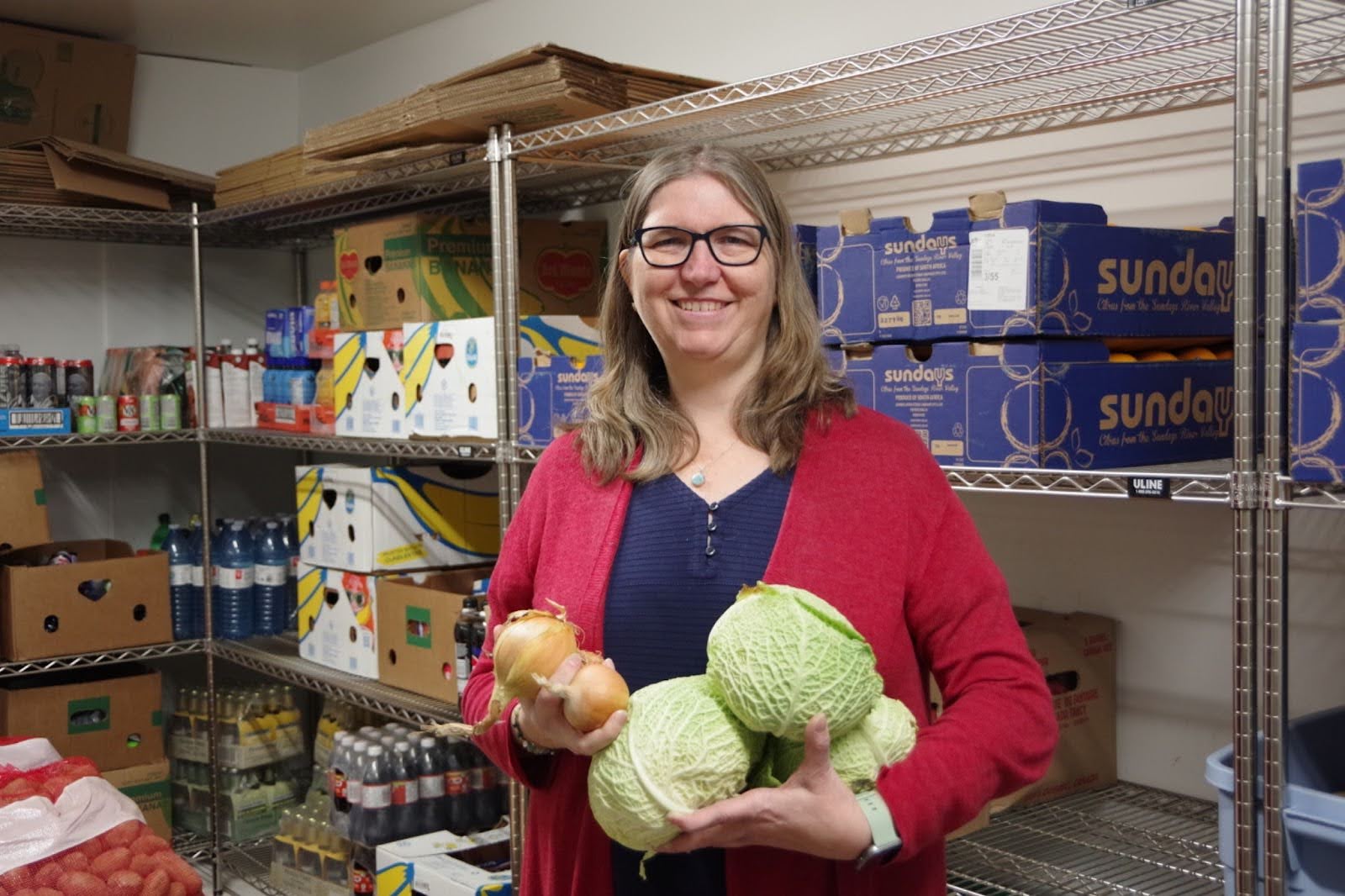 Heather Richards, Executive Director of the Vestiaire Saint-Joseph says everyone who visits the food bank loves the fresh produce from the Cocagne community garden. Photo by Mira Dietz Chiasson.
“Everybody who’s accessing the food bank expresses gratitude and appreciation for fresh produce. […]The nutrition and health benefits outweigh what we can provide them in a can or what we get at the grocery stores just doesn’t have that level of freshness. There’s nothing better than getting some fresh carrots in the middle of the winter,” says Richards.
And yet, despite all these efforts, food insecurity rates show no signs of slowing down.“There’s a big need we’ll never be able to fill,” admits Wiebke Tinney.
It’s estimated that 29.5% of households in New Brunswick are food insecure, according to research by the University of Toronto.
Marc Picard, the original founder of the community garden, says that while the initiative has achieved great successes, it could be so much more than it is. “What disappoints me is that I always see the same people in the field and no one else is jumping in. It could be tenfold what it is right now if there was a little bit more participation. It’s a shame that not everyone sees the emergency, hey, everyone needs to eat.”
“Food security is hugely tied to our ability to be resilient, right?” says Krysta Cowling, interim Executive Director of Food for All NB. “Especially if we’re able to grow things locally and, and ourselves. So I think that’s a big piece of it, and having that economic access or physical access to it.”
Mira Dietz Chiasson has been concerned about climate change ever since she can remember. She is a resident of Tantramar and lives on the marsh among the black ducks and ring-necked pheasants.
Comments are closed.