
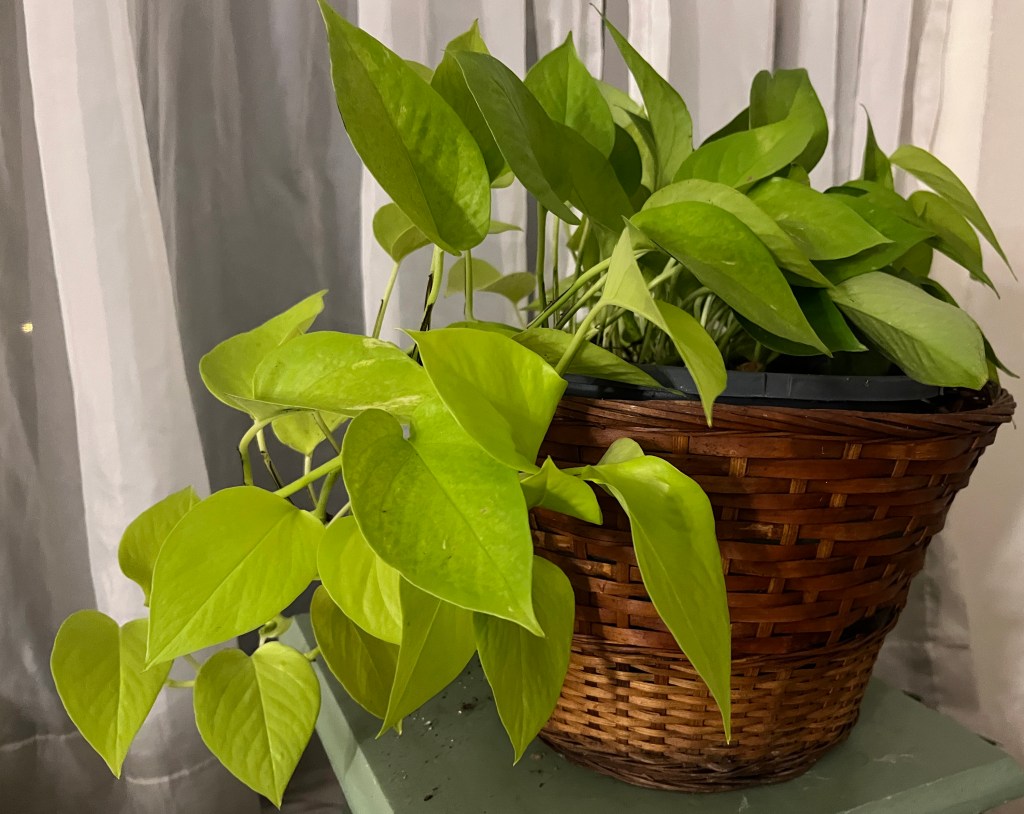
When houseplants struggle, it’s usually about water — either too much, not enough or not applied correctly.
“There’s a right way and a lot of wrong ways to water houseplants,” said Sharon Yiesla, plant knowledge specialist in the Plant Clinic at The Morton Arboretum in Lisle. “You have to apply enough water so it really soaks down through all the potting mix where the plant’s roots can get at it. And then you have to make sure that any extra water goes away.”
It helps to understand that a pot is an extremely unnatural environment for a plant. “In the ground, a plant’s roots are surrounded by thousands of square feet of soil,” Yiesla said. That soil holds water, so it’s a reservoir that the plant’s roots can tap for moisture. Because the soil goes far below the plant, excess water can drain down and away from the roots.
In a pot, by contrast, there is a tiny volume of soil that only holds a limited amount of water. The plant can easily use up that small supply. But if there’s too much water, it can be trapped around the plant’s roots and lead to rot, insects or disease.
“It’s up to us to water in a way that makes up for the difficult conditions we’re asking the plant to grow in,” she said. Here are tips for knowing when to water and doing it right.
Make sure the pot has a hole. Drainage is essential. You cannot grow a houseplant in a container that does not have a hole in the bottom.
Keep a saucer under the pot. You need something to catch the water that will drain away, and then you need to be able to easily remove the water from the saucer. “Never leave a plant’s pot sitting in a pool of water,” she said. Think twice about placing a planting pot with a hole inside a decorative container that does not have a hole and will trap water. To avoid creating a stagnant lake, you will have to remove the plant from the decorative cover every time you water and place it over a bucket or in the sink or bathtub to drain. “A deep saucer under the pot is easier,” she said.
Know your plants’ needs. Tap water is fine for most houseplants. For some delicate species, such as orchids, ferns or carnivorous plants, consider using distilled water that does not contain chlorine.
Check plants’ soil often. The best way to know whether a plant needs watering is by feeling for moisture in the soil. “It’s not enough to touch the surface,” she said. “You have to insert your finger down into the potting mix.” If the soil feels dry about an inch below the surface, it’s time to water. If it still feels moist, wait.
Water when they need it, not on a schedule. There is no set interval for watering houseplants. Each plant’s needs will vary, depending on the species, how large the plant is, whether it needs to be repotted, how close it is to a window or radiator, how much the heat has been on and many other variables. If you have several houseplants, check them all often, since they are likely to need watering at different times and different intervals. “You can’t just make a habit of watering all your plants every Thursday,” Yiesla said.
Don’t wait for plants to wilt. Wilting foliage means the plant is already stressed; some roots may have dried out. Check plants often enough so you can keep their soil from ever drying out completely. Water houseplants when you have time to do it right. You’ll need to wait for water to soak through and remove the excess.
Soak the soil thoroughly. Pour water slowly onto the soil surface until water begins to trickle out of the drainage hole into the saucer. Watch to be sure the saucer doesn’t overflow.
Remove the surplus water. If you leave water in the saucer, it will soak back up through the hole into the potting mix, keeping the plant’s soil too wet. Let the plant drain for about 20 minutes and then sop up the water from the saucer with a sponge. “I’ve also heard of people using an old-fashioned rubber-bulb turkey baster to suction up the water,” she said.
Don’t overwater plants either. Wet soil, from watering too often or letting the pot stand in water, can lead to root rot, fungus gnats and other problems. “If you see gnats, the plant starts to smell or the soil feels wet rather than moist, set the plant in the sink or bathtub for a couple of hours until it has thoroughly drained,” she said. “From then on, be careful to water properly.”
For tree and plant advice, see the online resources of The Morton Arboretum at mortonarb.org/plant-care, or submit your questions online at mortonarb.org/plant-clinic or by email to plantclinic@mortonarb.org. Beth Botts is a staff writer at the Arboretum.
Comments are closed.