

Do you know why gardeners have knees? To locate rocks in flowerbeds and vegetable gardens.
I can’t wait to get outside in the warm spring sunshine and work in the yard and garden. Cold winter weather does have its gardening advantages, though. We can sit inside, let our minds take us to a warm, happy gardening place and study seed catalogs.
Browsing seed catalogs is one of life’s simple pleasures. It’s been a favorite winter pastime since America’s first catalog was published in Philadelphia in 1784.
Why do we find seed catalogs so entertaining? Gardeners are on a quest for vegetable varieties that taste great and yield well, and maybe there’s a variety out there that’s better. Or we’re new to gardening and don’t know which types grow best in our region.

Seed catalogs are great resources. I can spend hours studying the melon section, and sifting through hundreds of sweet corn varieties in search of the sweetest can entertain me for a day.
There’s a big difference in vegetable cultivars; they’re definitely not all the same. Besides having different tastes, flavors, or levels of sweetness, some types are more prolific than others.
Some vegetable cultivars are developed to resist common diseases that can ruin a crop. Other cultivars are bred to be especially productive for container gardens, raised beds and small-space gardens.
When shopping for seeds, the terms “heirloom” and “hybrid” are commonly found in descriptions. Heirloom is a loosely defined term that generally refers to vegetable varieties developed before World War II and passed down from generation to generation.
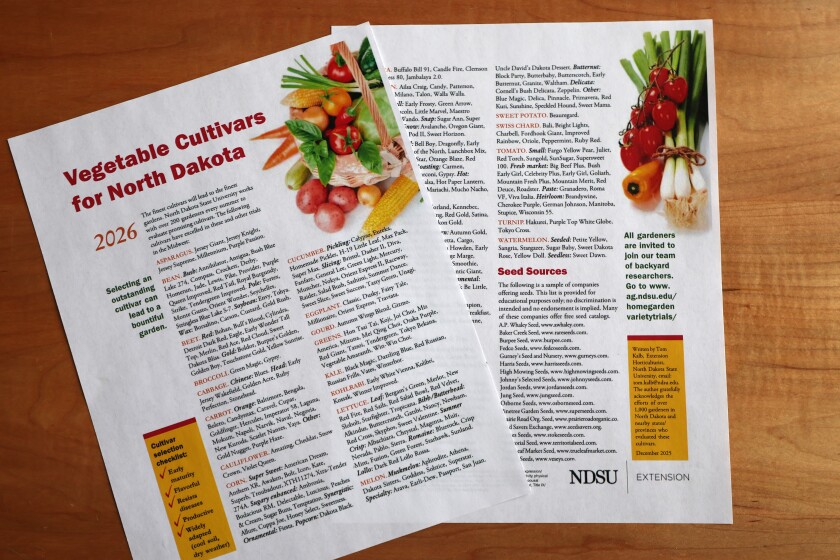
North Dakota State University has released a list of recommended vegetable cultivars for 2026 based on home garden trials, according to Don Kinzler, NDSU Extension’s horticulturist for Cass County.
Anna Paige / The Forum
Heirloom varieties are preferred by some gardeners for their special flavors or qualities. They’re referred to as open-pollinated, meaning you can collect and save seed from them, and the seed will produce plants with the same characteristics.
Hybrid vegetables are produced when plant breeders cross two parents having characteristics they wish to combine. Hybrids are very uniform and vigorous and can have traits such as disease resistance, improved flavor or sweetness, higher yield, or early maturity. If seed is collected and saved from hybrid vegetables, the offspring are usually different than the original hybrid.
With all the colorful pictures and elegant descriptions, how do we know which vegetable cultivars do best in Northern climates? North Dakota State University works with over 300 home gardeners every summer to evaluate promising cultivars and publish the results.
Under the direction of Tom Kalb, NDSU Extension Horticulture Specialist, gardeners share the results of their participation in NDSU’s Home Garden Variety Trials. The information is then compiled into an annual publication that recommends vegetable cultivars.
Vegetable cultivars on the list have excelled in these and other Midwest trials. Cultivars are evaluated for early maturity, superior flavor, disease resistance, productivity and are widely adapted to cool soil and dry weather.
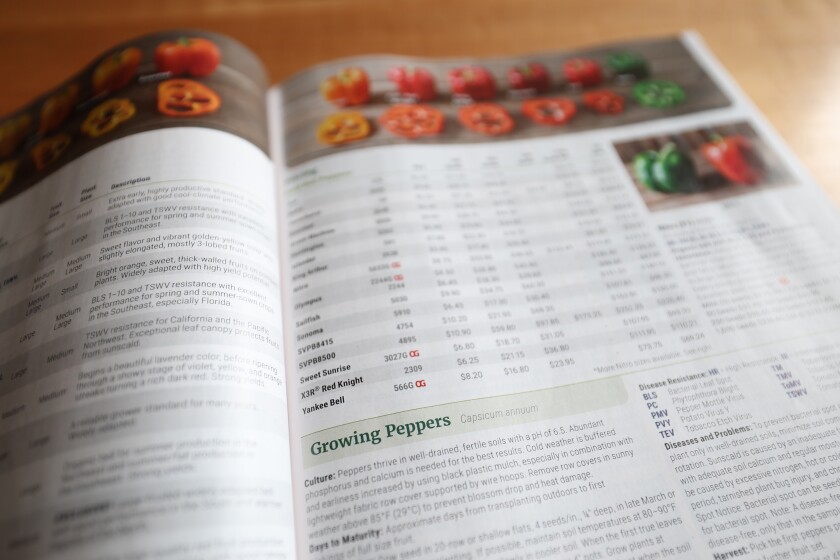
Seed catalogs are a wealth of growing information, says Don Kinzler, North Dakota State University Extension’s horticulturist for Cass County.
Anna Paige / The Forum
NDSU’s 2026 “Vegetable Cultivars for North Dakota” can be viewed or downloaded here:
https://www.ndsu.edu/agriculture/sites/default/files/2025-12/2026-recommendations.pdf.
Here are highlights of some of the cultivars from the recommended list:
Broccoli: Green Magic, GypsyCarrot: Bolero, Candysnax, Caravel, Hercules, Laguna, Napoli, Naval, MokumCauliflower: Amazing, Chaddar, Snow CrownCorn: American Dream, Anthem, Superb, Bodacious, Peaches and Cream, Sugar Buns, TemptationCucumber, pickling: Calypso, Eureka, Homemade Pickles, Max Pack, Super MaxCucumber, slicing: Bristol, Diva, Fanfare, General Lee, Muncher, Raider, Sweet SliceLettuce: Bergam’s Green, Merlot, Red Sails, Slobolt, TropicanaMuskmelon: Aphrodite, Atherna, Dakota Sisters, Goddess, Solstice, SuperstarOnion: Ailsa Craig, Candy, Patterson, Walla Walla, Dakota TearsPepper, bell: Bell Boy, Early Sunsation, Lunchbox Mix, King of the North, North StarPepper, hot: Cheyenne, Garden Salsa, Hot Paper Lantern, Hungarian Hot Wax, Mariachi, TiburonPumpkin: Autumn Gold, Big Doris, Big Loretta, Cargo, Early Dakota Howden, Early King, Large MargeRadish: Amethyst, Bacchus, Champion, Cherry Belle, Red Read, Rover, Roxanne, White IcicleSpinach: Bloomsdale Long Standing, Emperor, Escalade, Green Beret, Lizard, MelodySquash, summer: Gentry, Sundance, Cashflow, gold Rush, Green MachineSquash, winter: Bonbon, Burgess, Uncle David’s Dakota Dessert, Butterbaby, Early Butternut, Butterscotch, Cornell’s Bush DelicataSweet potato: BeauregardTomato, small: Fargo Yellow Pear, Juliet, Sungold, SunSugar, Supersweet 100Tomato, slicing: Big Beef Plus, Bush Early Girl, Celebrity Plus, Early Girl, Mountain Fresh Plus, Mountain Merit, RoadsterTomato, paste: Granadero, Roma VF, Viva ItaliaWatermelon: Sangria, Stargazer, Sugar Baby, Sweet Dakota Rose, Yellow Doll
Many of the recommended varieties aren’t available on local seed racks but can be found in seed catalogs, such as Baker Creek Seed, Burpee Seed, Fedco Seed, Gurney’s Seed and Nursery, Harris Seed, Johnny’s Selected Seeds, Jung Seed, Pinetree Seeds, Prairie Road Organic Seed, Stokes Seeds, Park Seeds, and Territorial Seed.

Don Kinzler, a lifelong gardener, is the horticulturist with North Dakota State University Extension for Cass County. Readers can reach him at donald.kinzler@ndsu.edu.
Comments are closed.