
Special to The Columbus Dispatch


See Blendon Township woman’s native plant and habitat garden
Native plant & habitat garden at Alice Foeller’s home.
Alice Foeller
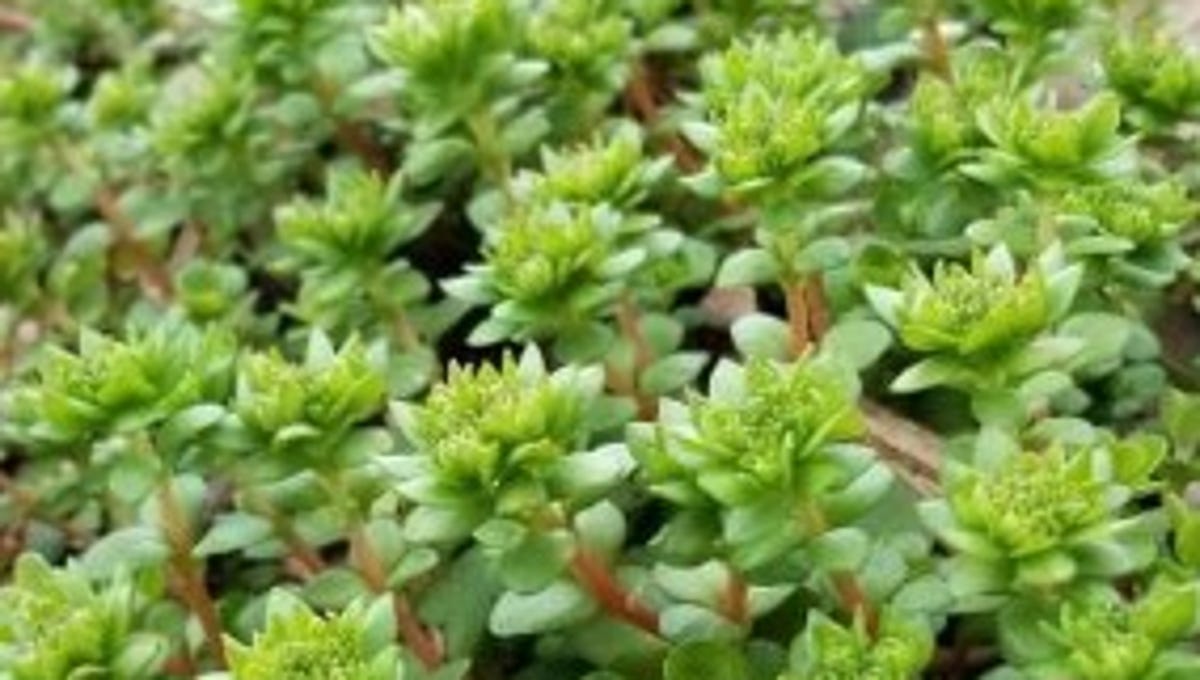
Wild stonecrop is a native Ohio succulent that serves as an excellent groundcover.This adaptable plant thrives in a wide range of sun, water and soil conditions.Its white, star-like flowers bloom from April to June, attracting various pollinators.
Editor’s note: Once a month, OSU Extension Master Gardener Volunteers in Franklin County profile a plant that occurs naturally in central Ohio.
A cheerful and adaptable native succulent is creeping throughout Ohio and worthy of recognition. Wild stonecrop (Sedum ternatum) is a semi-evergreen, low-growing herbaceous perennial that provides ecological value to any yard or garden.
A plant of many monikers – known as three-leaved stonecrop, whorled stonecrop or woodland stonecrop – its physical characteristics are reflected in its many common names, as it possesses three rounded, whorled leaves and is often a woodland plant.
Its scientific name also reflects its growth habits as the genus is derived from the Latin word sedeo meaning “to sit.”
Wild stonecrop is commonly used as a groundcover in modern landscapes and makes an excellent replacement for similar invasive, non-native groundcovers, including creeping Jenny (Lysimachia nummularia) and periwinkle (Vinca minor).
Found naturally in moist forests, shaded rocky outcroppings, wooded ravines, and riverbanks across Ohio, the ecosystems in which wild stonecrop naturally appears are a nod to its adaptability. This also translates into interesting companion plants for gardens.
It pairs well with many diverse plants, ranging from shade-loving ferns and coral bells to iris and phlox species, to even more sun-loving species like coneflowers.
It establishes quickly and can tolerate diverse soil types, water and sun ranges. It typically grows 3-6 inches high and creates dense mats with a foamy appearance when flowers are present.
Among the green leaves, it has purple-hued stems reaching upward and supporting the flowers. Star-like white flowers appear from April to June and are very pointed, almost sharp-looking in appearance, contrasting texturally with the rounded compact leaves.
The flowers, although tiny, are an enchanting addition admired by humans and pollinators alike. Four species of butterflies rely on wild stonecrop as a host plant, including the well-known common buckeye, while other pollinators like flies, bees, butterflies, and wasps all nectar on its tiny flowers.
Wild stonecrop is a low-maintenance plant that can endure a wide range of conditions and would be a smart addition to any native, rock, pollinator, or rain garden.
Growing requirements
Hardiness zones: 4-8Sun: Deep shade to full sunWater: Moist to very drySoil: Shallow rocky, sand, clay, alkaline, neutralPropagation: Division, leaf or stem-cuttingPest/disease: Nothing serious. Occasional slug or snail, deer resistant
Comments are closed.