
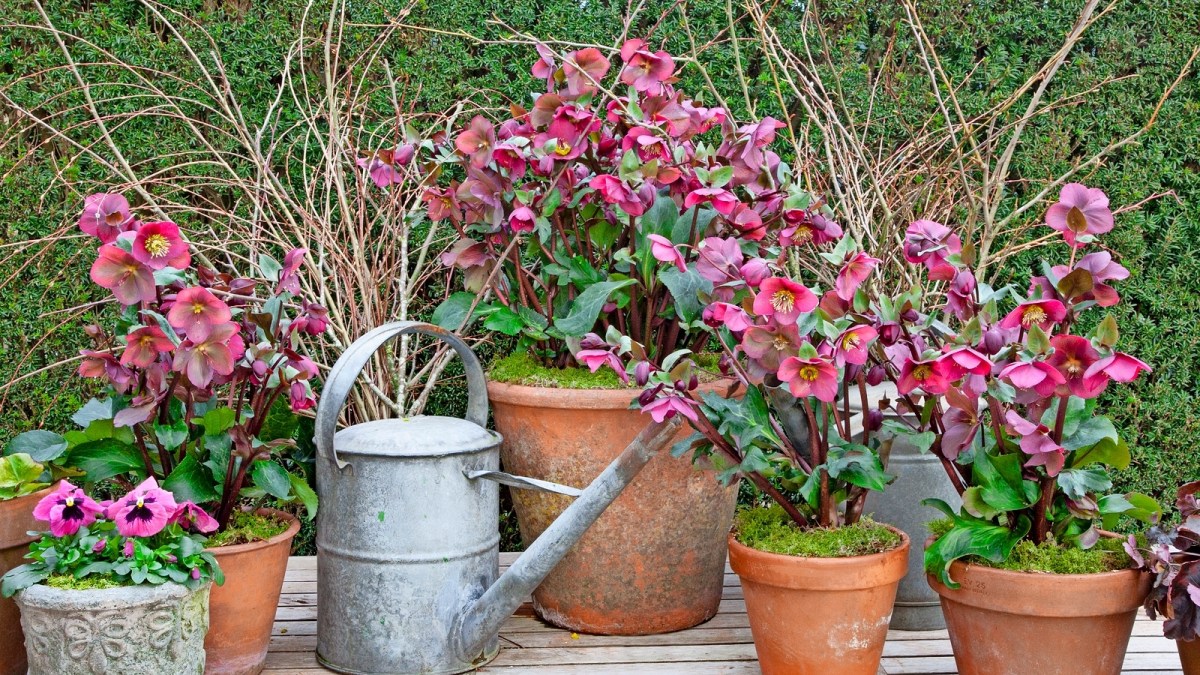
It’s very easy, this time of year, to become a helle-bore about hellebores. And why not? If you want colourful flowers in the winter garden bed, then you’ll need a hellebore or three or, indeed, thirty. Can you have too many hellebores? It seems not because it’s one of those plants that, over the past few decades, has been the focus of dedicated breeding.
The result is a positive profusion of hellebores. There is no official collective noun, though some have suggested “a happiness of hellebores”. Sounds about right, though I would also offer up “a confusion” as an alternative. Every year, those for sale in garden centres seem to get more sumptuous and glamorous, at times to the point of bling, while the more traditional ones are harder to find.
The hybrid revolution in hellebore-land over the past 25 years has resulted in hundreds of options, but some things remain the same. There remain two basic types: the “stemmy” ones (aka caulescent) such as our native “stinking hellebore” that can grow up to a metre tall, and the “stemless” (acaulescent), with leaves and flowers coming directly out of the ground.
The stemless include the old-fashioned favourite Christmas rose, which is the stalwart of so many gardens (including my mother’s and mine). They also include the popular garden hybrids grown from seed that were previously known as Helleborus orientalis and have now been renamed H x hybridus (though are often still called orientalis, just to confuse us more). Over the past decade or so, the big showy interspecies hybrids, such as ‘Anna’s Red’, many with varied leaf patterns as well, have become the garden-centre superstars.
• Joe Swift: My favourite winter-flowering climbers
So how to choose? There are a ridiculous number of options and some, because of the effort involved in creating them, can be expensive. Flower shapes include cup, star and flat, as well as nodding and semi-nodding. They can be single, double or anemone-centred. Sepals (not petals) are veined, spotted, blotched or star-centred. Colours include white, cream, peach, apricot, pinks, greens, yellows, purples and lavenders, greys and blacks.
If you put all these together, it would be a pretty crazy family photo. Where to start? You could stay pure and grow the wild or species types. These tend to have a muted palette of greens and creams and include the Christmas rose as well as our native Helleborus foetidus (or stinking hellebore) with its striking nodding green flowers. It’s the leaves that smell but only when crushed.
At the other extreme, there are those new-named superstars. It took the late Rodney Davey more than 12 years to perfect ‘Anna’s Red’ (in honour of the garden writer Anna Pavord), with its marbled leaves and striking red flowers, at his Devon nursery. Other favourites include ‘Penny’s Pink’ and ‘Moondance’, which live up to their eye-candy billing.
In the middle — though distinctly not middling — are the huge number of garden hybrids. John Grimshaw, the author and botanist who is the former director of the Yorkshire Arboretum, says that you cannot beat these in terms of staying power. His experience is that the new-named showier ones don’t perform for long in the ground. “You just don’t see them as established specimens in the ground, which tells me that they are not robust.”
• Our expert’s four essential garden resolutions for 2026
He suggests choosing your favourites from the range of Helleborus x hybridus available from the hellebore specialist nurseries, such as Ashwood in Kingswinford in the West Midlands. Colour and flower shape is down to personal choice. “For me, the paler ones are the most useful in the garden because they show up on dingy days, which is kind of important in an English winter,” he says. “The blacks and dark reds are absolutely sumptuous, but they are inconspicuous when they are actually in the open ground. I like whites, pale yellows and pale pinks because they stand out.”
How to create your own hellebore hybrid
To create your own hybrid, Grimshaw suggests using three plants of the same colour and exchanging the pollen among them, gathering it from the plants’ anthers and depositing it on the central stigma, using a small brush or your fingers. This helps to avoid getting “murky muddles”.
The seed capsules will then fatten up through the spring. From May onwards, they will get puffy and ready to pop. “They just begin to open at the tips a bit and you can see the white seeds inside.” Then you pick it, clean the seed by gently blowing away the chaff and sow it immediately in a small pot with some compost. “This is really important. The seeds mustn’t get desiccated.” Leave the pots outside and pot when the first true leaves appear.
• Read more from Ann Treneman
Ann’s favourite hellebores
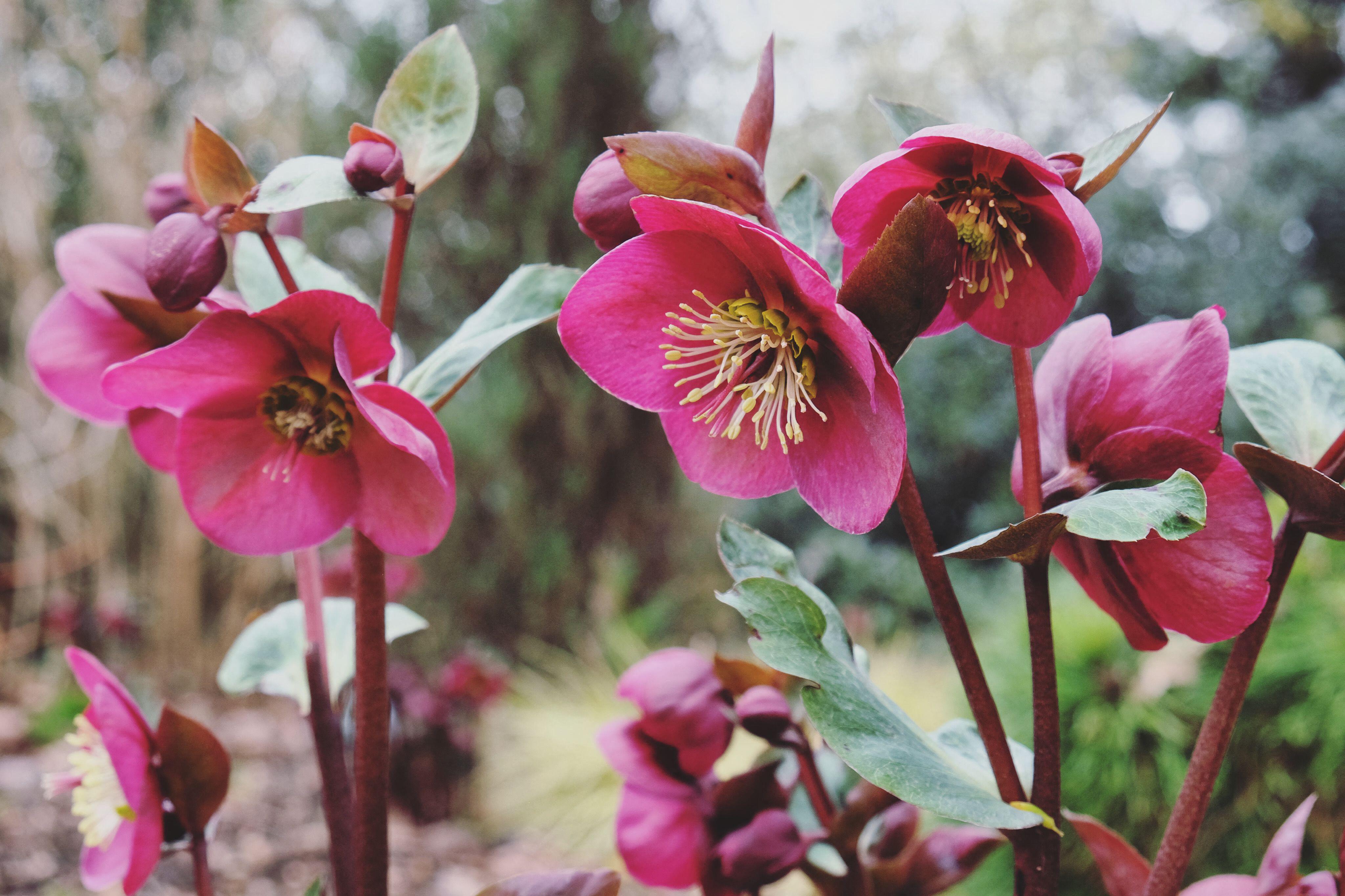
For pots
I would go big and bold with ‘Anna’s Red’.
 For beds
Personal bests are the single and/or speckled pinks from the Harvington or Ashwood ranges.
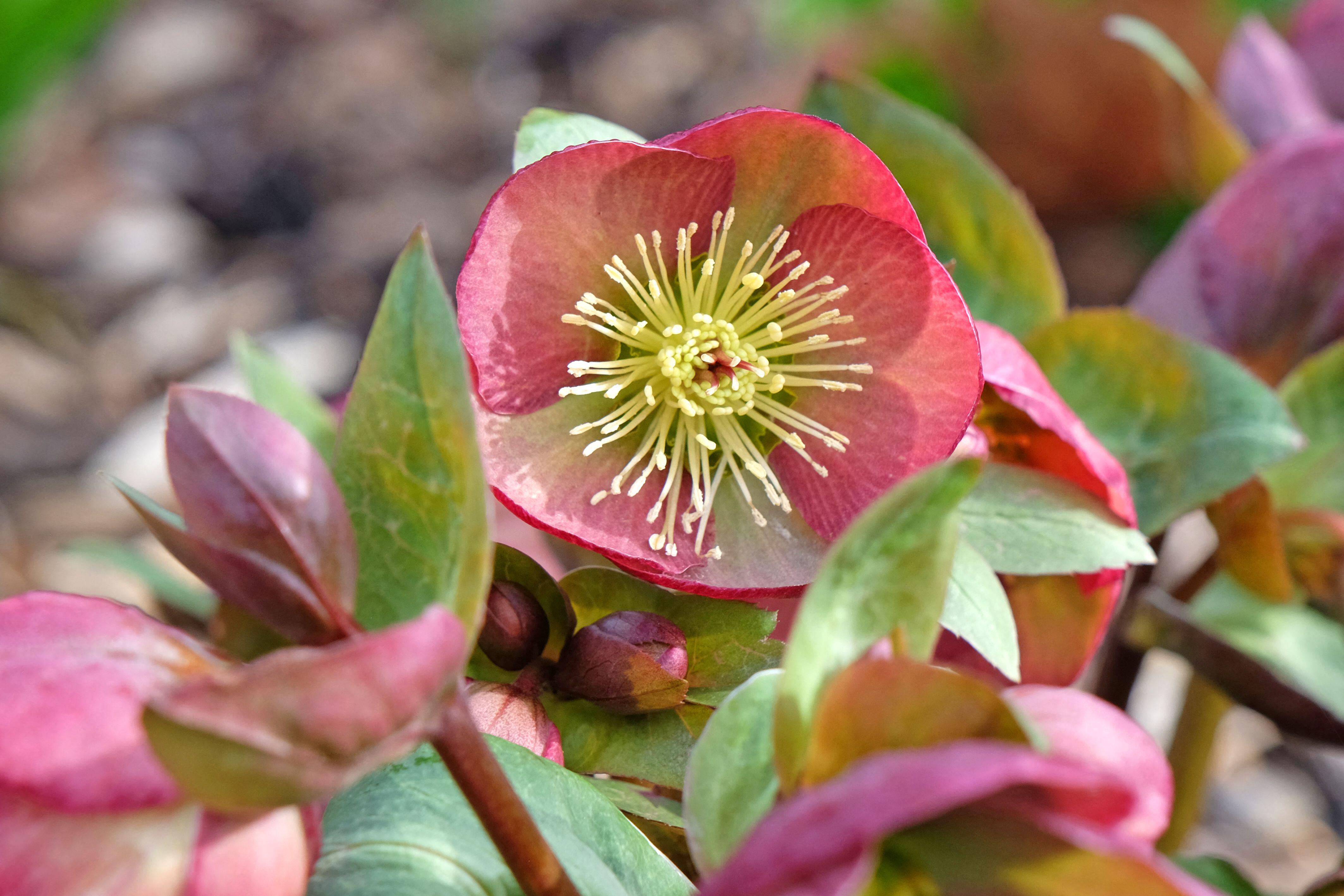
Harvington lenten rose or winter rose
ALAMY
For structure
The Corsican or holly-leaved Helleborus argutifolius, with pale green flowers.

Corsican hellebore, Helleborus argutifolius
ALAMY
For tradition
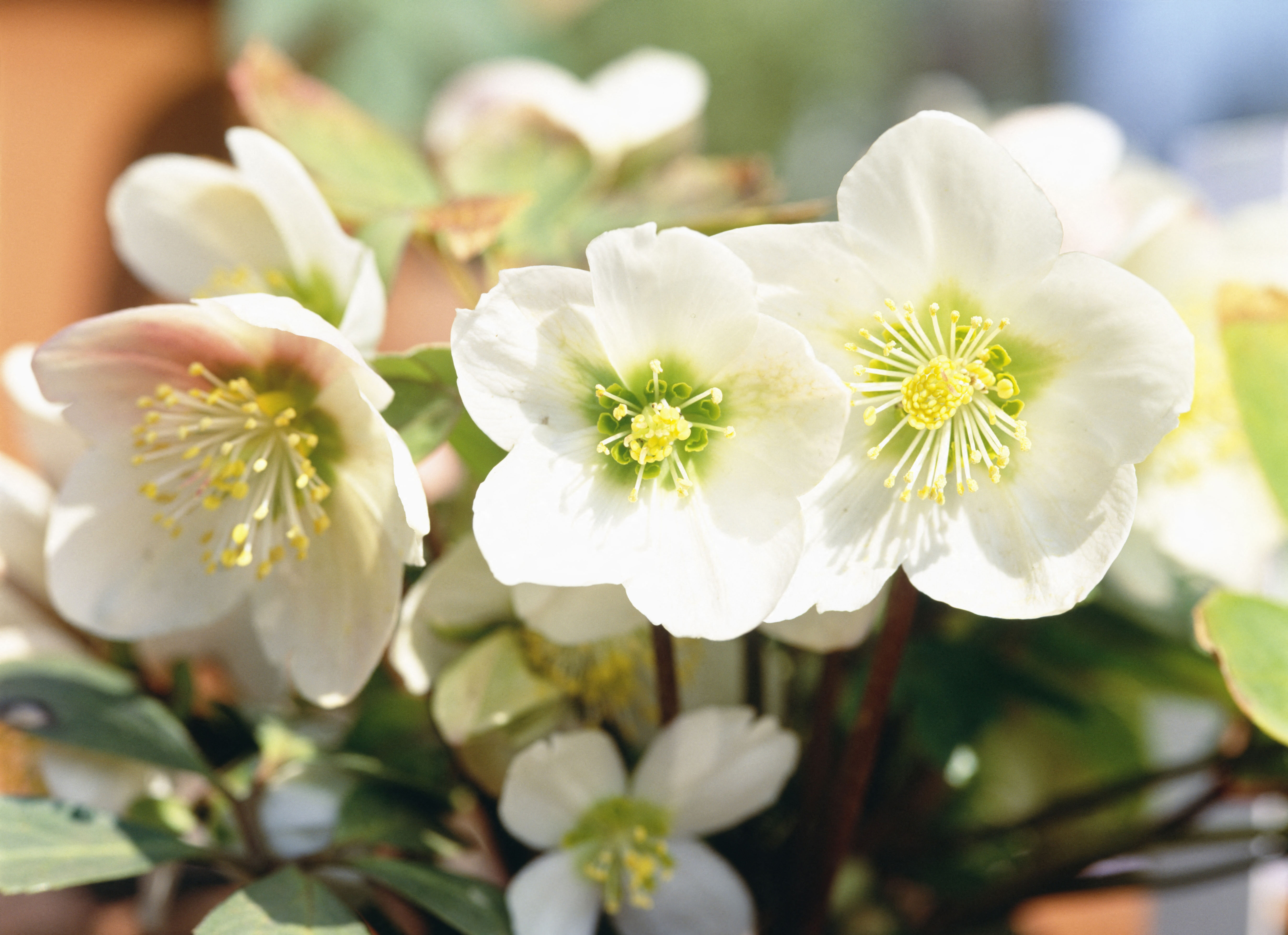
You cannot beat the beautiful white Helleborus niger (Christmas rose).
Comments are closed.