
Araksa Tea Garden offers immersive tea experiences rooted in organic farming, sustainability, and centuries‑old Northern Thai tea traditions.Visitors can harvest tea leaves, learn traditional techniques, sample award‑winning teas, and deepen their understanding through workshops and forest bathing.The garden prioritizes community impact by supporting local livelihoods, empowering women, and preserving regional tea heritage through responsible tourism.
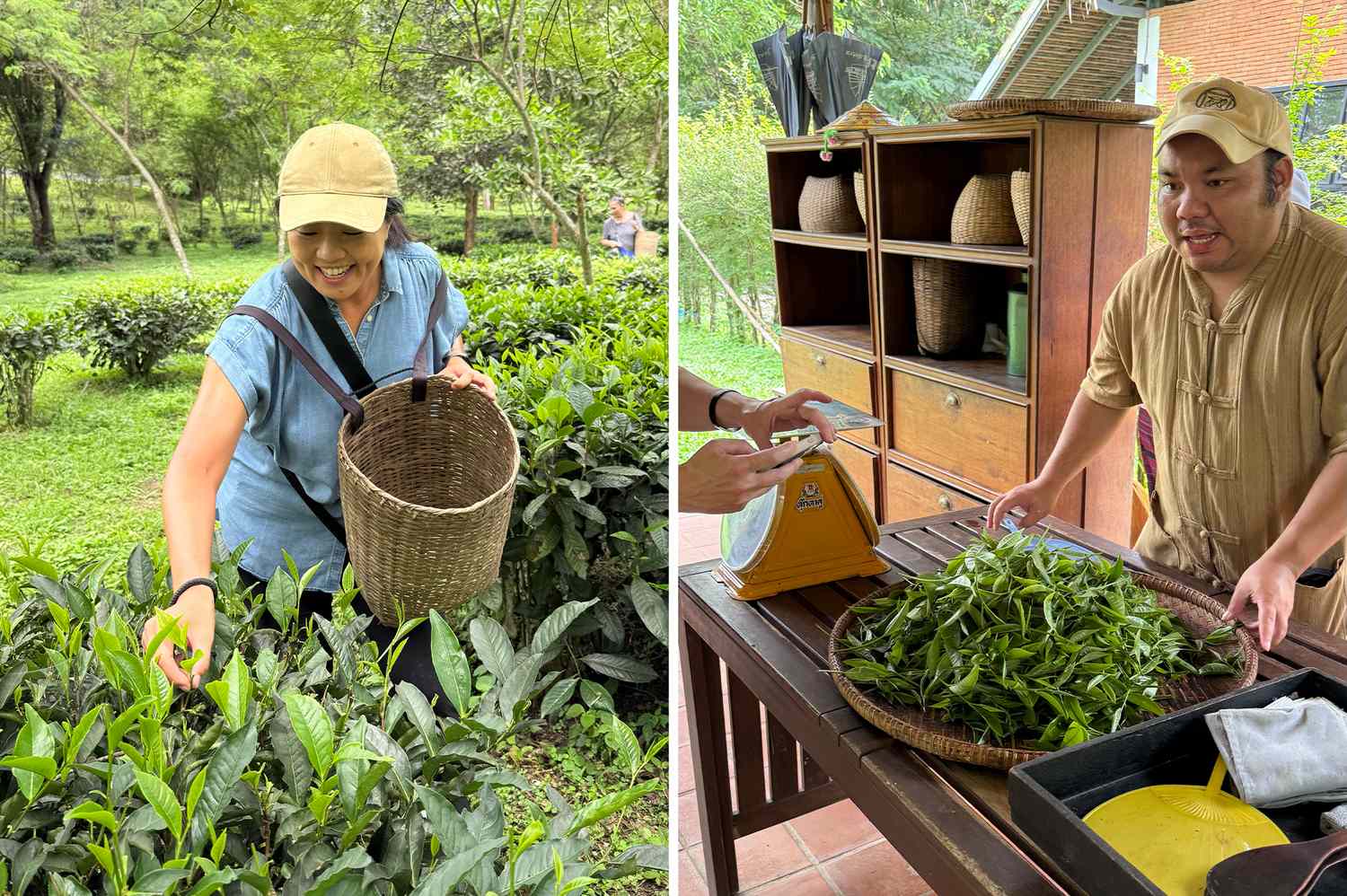
Scanning the yellow-green bushes lining the foothills of Chiang Mai, I looked up in defeat. With an oversized bamboo basket strapped over my shoulders, I had been instructed to pluck tea leaves that bore a specific pattern: one big and one small leaf sandwiching an unfurled one.
The combo seemed so specific and impossible to find among the endless clusters of shrubs. Growing restless, I turned around, when … jackpot! Snapping off the perfect formation with glee, I proudly marched it over to the resident plucker. She smiled gently and nodded slightly in approval.
As I set my first tea leaf into my basket, I caught a glimpse of hers—and my jaw dropped. It was already half full! Turns out, the whole time we’d been strolling through the garden, her deft hands had been nonchalantly plucking perfect leaves nonstop, a testament to the long-practiced craft that produces some of the world’s best tea at Araksa Tea Garden. The farm, with its sustainable practices that prioritize the soil and ecosystem’s health, was the first commercial tea operation in Thailand to earn USDA and EU organic certifications.
While on an Intrepid Travel tour of Northern Thailand a few months back, I initially wondered why we were driving north of the city center into the hillside community of Ban Chang in the Mae Tarng District. But the moment we arrived at the 111-acre oasis, a sense of calm drew me in.
“What makes Araksa special is not only the way we grow tea, but how we express Thai-ness through it, in the flavor, aroma, and the gentle way we process each leaf,” says Chananya Phataraprasit, CEO of Araksa Tea Garden.
Set at an elevation of over 1,706 feet, the farm’s undulating hills were lined with what seemed like endless rows of verdant tea bushes. Most of them are a local species known as “jungle tea,” while others are Assam hybrids that adapted to the area’s unique soil and climate. It’s one of the country’s oldest tea gardens, and many of its plants range from 40 to 70 years old.
After bringing our baskets back (mine with barely a handful of leaves!), our group got a close-up view of the team’s process, sorting leaves and pan-roasting them with the utmost care. All that work results in more than 20 varieties of teas, ranging from whites and greens to the award-winning Araksa Thai Tea, a natural take on the classic drink with creamy vanilla and caramel notes.
While I was sampling a few varieties in the shop, I was overcome with a sense of guilt. I had never appreciated tea, dismissing its preparation as too easy—simply pouring hot water over leaves. But the tea here tasted full of dimension and sophistication. The secret ingredient? The team at Araksa has a “deep understanding of the land that shapes the way we grow and make tea,” Phataraprasit says.
The 90-minute tea tour runs three times per day and costs about 650 baht (about $20 USD) per person. For those looking for something more immersive, the gardens also hold tea workshops that focus on tea blending and fine honing your tea sensory skills. No matter which sessions guests pick, Phataraprasit says that “each session reflects their deep knowledge and love for tea, offering guests a thoughtful and engaging way to understand the care and creativity behind every tea we make.”
To gain a deeper understanding of the area and the people who live there, Phataraprasit recommends starting with forest bathing. Start with an overnight stay at Lisu Lodge (run by the same group that owns Araksa Tea Garden, Asian Oasis) where guests can enjoy guided tea harvesting excursions, garden meditation sessions, and even steam baths featuring dried herbs and tea leaves in the lodge’s mud-brick hut.
“It’s a hands-on way to see, taste, and understand what makes our tea special, while reconnecting with nature and the local way of life,” she says.
But for Phataraprasit, who has worked in the area for 32 years, it’s not just about sharing a slice of Thai culture with visitors—it’s also about supporting the local community. With an emphasis on fair employment practices, hands-on training, and uplifting women, Araksa was designed to keep the benefits of the garden within the community.
“For me, Araksa is about preserving northern Thailand’s tea heritage and ensuring that this craft continues to evolve within our local community,” she says. “Each cup of tea from Araksa is a reflection of the people and the landscape that brings it to life.”
While Chiang Mai might be best known for its temples, night market, and elephant counters, the philosophy behind the Araksa has drawn the attention of Tourism Cares, a nonprofit dedicated to promoting meaningful and sustainable travel across the globe.
“Meeting local tea artisans like Araksa, hearing their stories, and taking part in the craft firsthand fosters a genuine connection between visitors and community members,” Tourism Care’s senior director of community impact John Sutherland told Travel + Leisure. “Authentic offerings like these allow travelers to appreciate Thailand not just as a destination, but as a living, breathing culture sustained by its people.”
Indeed, the moments at Araksa that stayed with me involved my time with the resident tea plucker. As she showed me through parts of her daily routine, we communicated through smiles and glances, and never stopped her own hands from picking those perfect leaves.
After our garden adventure, we enjoyed a family-style, home-cooked organic meal on site, as an Intrepid Travel guide (who grew up in the area) showed me how to properly mix khao yum, aka Thai rainbow rice salad featuring a colorful display of vegetables and herbs. He also clued me into Burmese pork curry, which was more aromatic and stew-like than other local varieties—I was quickly reaching back for seconds.
For me, these moments of natural connections with the area, people, tea, and food turned a garden visit into a deeply moving experience.
“These experiences make travel more meaningful—not just for the traveler, but for the destination itself,” Sutherland added. “When we seek out and support these kinds of responsible experiences, we help ensure that Thailand’s beauty, diversity, and spirit endure for generations to come.”
Comments are closed.