
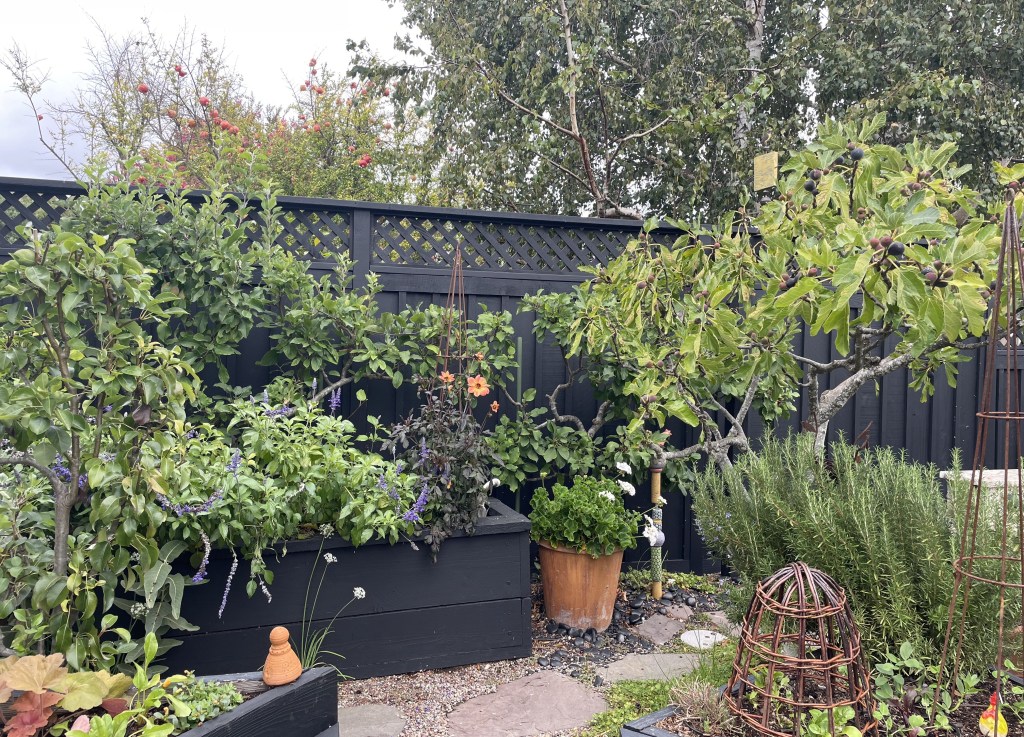

This Marin garden features apple, pomegranate, fig and quince trees. (Photo by Anne-Marie Walker)
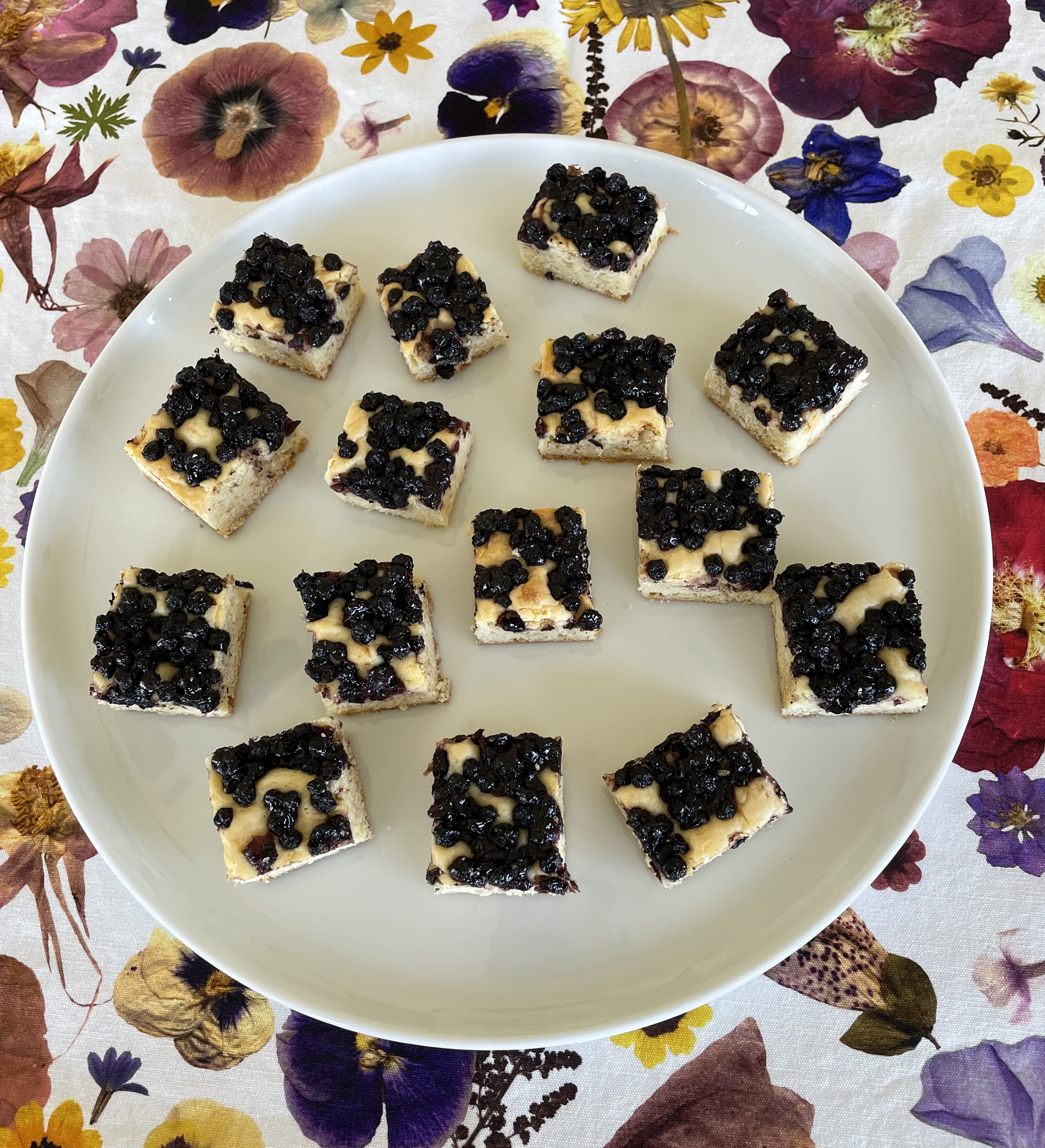
Serviceberries can be used to make tasty berry blondies. (Photo by Anne-Marie Walker)
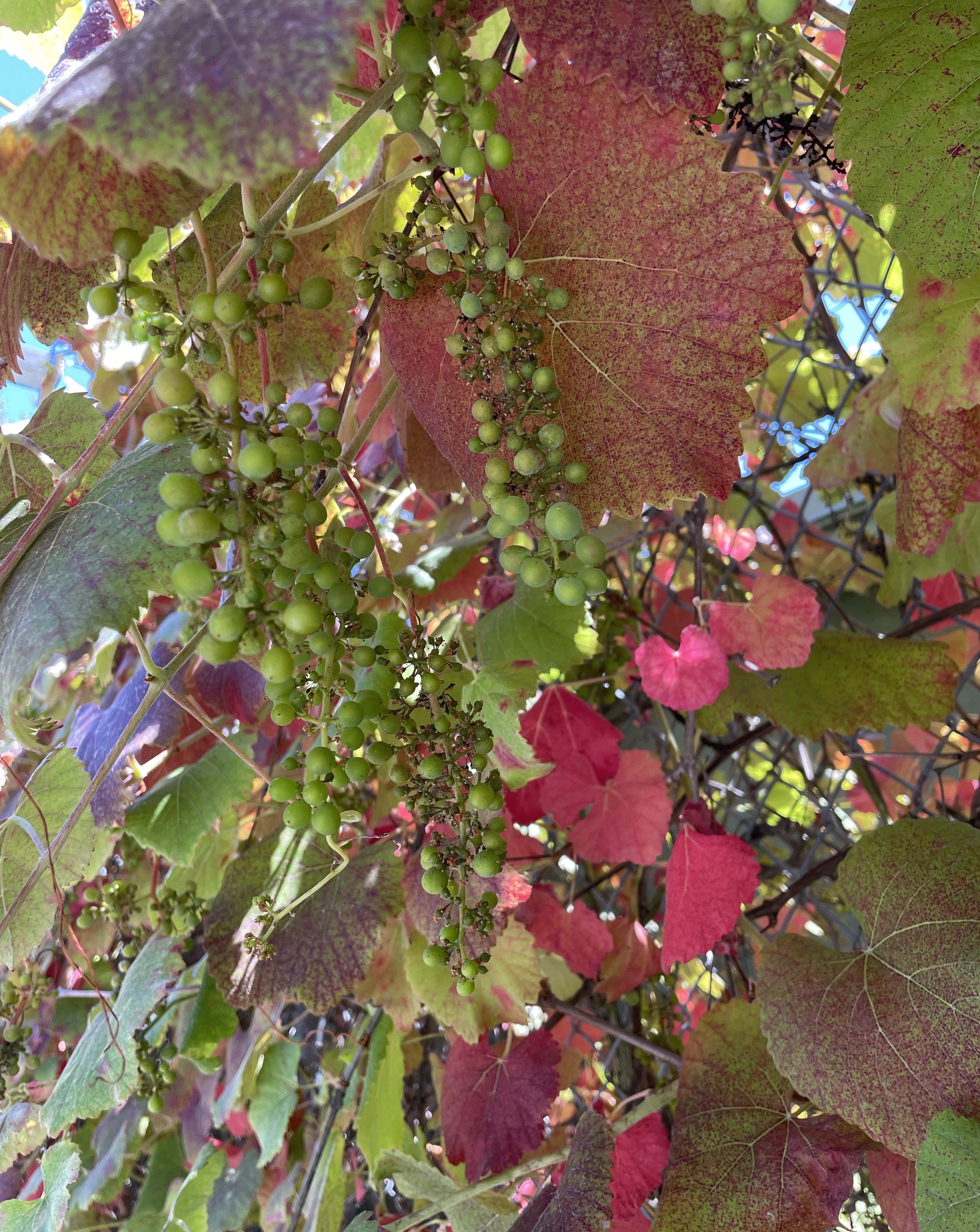
Vitis californica, our native grape, grows well on fences and provides fall color. (Photo by Anne-Marie Walker)
Show Caption
1 of 3
This Marin garden features apple, pomegranate, fig and quince trees. (Photo by Anne-Marie Walker)
Expand
Fruits bring year-round interest to your garden as well as a sense of achievement gained by growing and harvesting your own fruit. My husband says growing blueberries is reason enough to grow backyard fruit. Yet, here’s a little secret: Marin’s favorable Mediterranean climate allows you to grow so much more, and the possibilities proliferate when you plant vertically and in containers.
It’s winter now, and most gardens support a lemon tree, facilitating the enjoyment of tree-ripened lemons. There are so many more varieties of citrus ripening now and producing tantalizing fruit, such as kumquats, Kishu tangerines and blood oranges. Citrus thrive in containers in a sunny spot with not too much wind. My citrus trees thrive on a hill where once there was a lawn. I planted herbs under the trees to confuse ants, which can bring scale to citrus trees. Another fruit to plant in winter is strawberries. In Marin, the variety ‘Seascape’ does well planted in containers in a sunny spot. Be sure to plant them in soil that drains well because strawberries are susceptible to root rot. They need plenty of slow-release nitrogen fertilizer, and if you cut off developing runners, berry production increases.
As winter begins to fade, the first sign of approaching spring is the glorious, showy bloom of fruit trees. Growing up on our ranch in Cloverdale, my sister snapped a photo of our parents sitting under flowering fruit trees. Spring is the time to plant fruit trees. Things to consider as you select which fruits to grow include what you like to eat, what will flourish best in your climate and what varieties of fruits afford ease of care and harvest. Selecting dwarf varieties can save lots of pruning time and permit higher density planting. Learn more at California Rare Fruit Growers’ website at crfg.org and read UC Agriculture and Natural Resources’ “The Backyard Orchard” online, which includes lots of information on growing fruits in your backyard.
Late spring and early summer herald the start of berry season. In my garden, blueberries planted in the ground form a hedge, with more planted in containers on a terrace. The blueberry harvest season lasts about four months, from April to July. Other berries ripen later, including native specimens like serviceberry and huckleberry. These all grow beautifully in our Marin gardens, and while the berries are smaller, one can still make tasty treats like serviceberry blondies.
Fall arrives with yet another bounty of fruits you can enjoy from your backyard, including apples, pears, figs, grapes, quinces, pomegranates and persimmons. Selection must consider chill hours required for fruit production. In northern Marin, apples and pears flourish, while in southern Marin, pomegranates and figs may thrive better. Also ripe now are grapes whose vines happily twine along a fence, using vertical space to produce yet more backyard fruit. The leaves of grapes, also edible, make tender bites stuffed with rice, fish and cheese and then grilled. Remember the concord grape jelly your grandmother made from her backyard harvest? Backyard grapes, including our native grape, Vitis californica, are perfect for spritzers or a verjus for salad dressing. The grapes can also be poached and added to fruit medleys and muffins and served with soft cheeses for charcuterie boards.
Part of the reason I enjoy growing backyard fruit is the novelty aspect. I like tasting a variety not always found in markets. For example, markets abound with ‘Black Mission’ and ‘Brown Turkey’ figs. But not often can you find a ‘Genoa’ or ‘Violette de Bordeaux’ fig. Figs ripen only on the tree. Specimens of backyard fruit will abound in nurseries soon. Consider the pleasures of growing fruit in your backyard and delight in the bounty as you harvest ripe fruits.
Sponsored by UC Cooperative Extension, University of California Marin Master Gardeners provide science- and research-based information for home gardeners on our website, in public workshops, on our YouTube channel and in the Leaflet, a free quarterly newsletter. For help with plant problems, email questions to helpdesk@marinmg.org, drop off samples 24/7 in the box outside our office or call 415-473-4910 to see when a master gardener will be at the help desk. For more information, go to marinmg.ucanr.edu.
Comments are closed.