
Key Points
Marigolds offer limited pest control benefits and are not a standalone solution.They won’t deter most above-ground pests, especially in planted form.Better alternatives include garlic, chives, catnip, and lavender.
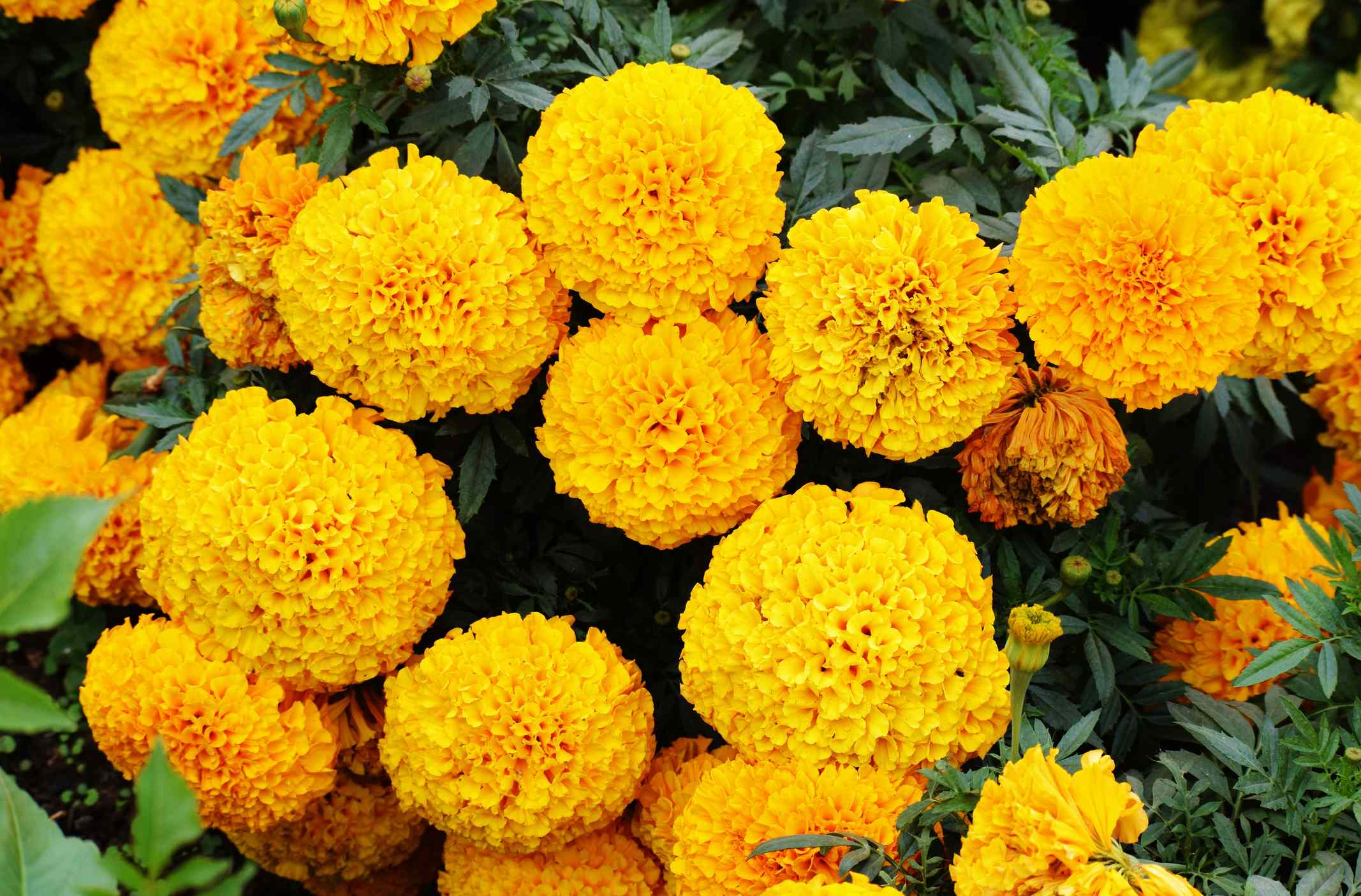
Marigolds have a reputation as a natural pest deterrent. With their bright, gold-yellow blooms and intense fragrance, marigolds are a popular companion plant in many home gardens. But does growing marigolds really keep pests away?
We spoke to garden and pest experts to find out whether marigolds really deter pests.
Do Marigolds Really Repel Pests?
Experts say that marigolds are helpful in repelling pests, but only to a small extent.
“It’s more no than yes if you’re planting marigolds just for pest control,” says Nicole Carpenter, with Black Pest Prevention. Planting marigolds on the perimeter of your garden beds adds some level of protection, but not an awful lot.
Pest expert Juan Rezk has deep experience with this, having tested marigolds in dozens of garden setups.
“While marigolds do offer some repellent effects, their benefits are wisely misunderstood,” says Rezk.
Marigolds in concentrated, processed form can repel some types of pests. But planted marigolds produce only minimal benefits.
Why Marigolds Work—or Don’t
Marigolds deter pests to some extent because they produce a strong scent and contain compounds like alpha-terthienyl, Rezk says.
“Against above-ground pests like aphids, whiteflies, or beetles, marigolds have a scent that is actually not strong enough to deter them,” Carpenter says.
At best, marigolds confuse or repel soft-bodied insects in small areas, adds Rezk. But they won’t be able to stop larger pests like beetles, caterpillars, or rodents. They also won’t be able to deter any pests over large areas.
Don’t lab studies conclusively prove the bio-insecticidal toxicity of marigolds? They do, but not under real-world conditions.
In studies, the marigolds were transformed to a concentrated state atypical of most gardens. Fresh marigold leaves were rinsed, chopped, crushed, centrifuged, filtered, and evaporated. In other words, marigolds planted around a garden perimeter will have little or no effect on pests.
Pests Marigolds Are Best For
“While marigolds do have some pest control properties, it’s mostly in their root,” Carpenter says. She says that this chemical compound can suppress soil pests like nematodes, or microscopic worms.
“Marigolds actually have one legit pest they can be genuinely good at suppressing: root-knot nematodes, for plants like tomatoes, peppers, cucumbers, eggplant, and squash,” Carpenter says.
8 Plants That Do Repel Pests
If marigolds don’t really deter pests in a garden, what are some natural pest repellents? Are there some companion plants that can help?
Plants like nasturtiums, chives, garlic, and catnip are powerful, recommends Carpenter. Lavender, rosemary, and basil are other effective natural pest deterrents. If you want flowers, consider growing chrysanthemums.
Nasturtiums
“Nasturtiums don’t repel,” Carpenter says. “In contrast, they draw aphids to themselves, keeping pests off your vegetable beds that way.”
Garlic and Chives
For plants that do repel, Carpenter recommends garlic and chives, which produce sulfurous compounds that ward off aphids and cabbage worms.
Catnip
Catnip also repels aphids and squash bugs. Research has shown that nepetalactone found in catnip works well against these insects.
Lavender, Rosemary, and Basil
If you’re looking for stronger natural pest deterrents than marigolds, lavender, rosemary, and basil work more effectively, Rezk says.
“Lavender’s scent disrupts mosquitoes and moths,” Rezk says. “Rosemary and basil work well against flies and other smaller pests.”
Chrysanthemums
For soil-level protection, consider using chrysanthemums, recommends Rezk. They contain pyrethrin, which is a natural compound used in many insecticides.
How to Make Marigolds Work as Pest Deterrents
Even though marigolds aren’t ideal for deterring pests in a garden, can you increase their effectiveness? Our experts recommend:
Plant in large numbers: All of these plant pest deterrents work best when they’re planted in decent numbers, Carpenter emphasizes. You can’t just plant a single clump of marigolds in the corner and expect them to work.Use with other solutions: Rezk stresses that marigolds should be treated as just one layer in a multilayered defense, not the whole solution. “Remember that they all are just helpers and more of a prevention rather than a solution,” Carpenter agrees.Don’t expect too much: “Marigolds aren’t entirely useless; they’re just limited,” says Rezk. You’ll be met with disappointment if you expect planted (not processed) marigolds to repel all pests in a garden effectively.Plant for beauty: As Carpenter puts it, planting marigolds does add some level of protection, but their main power is their beauty.
Comments are closed.