
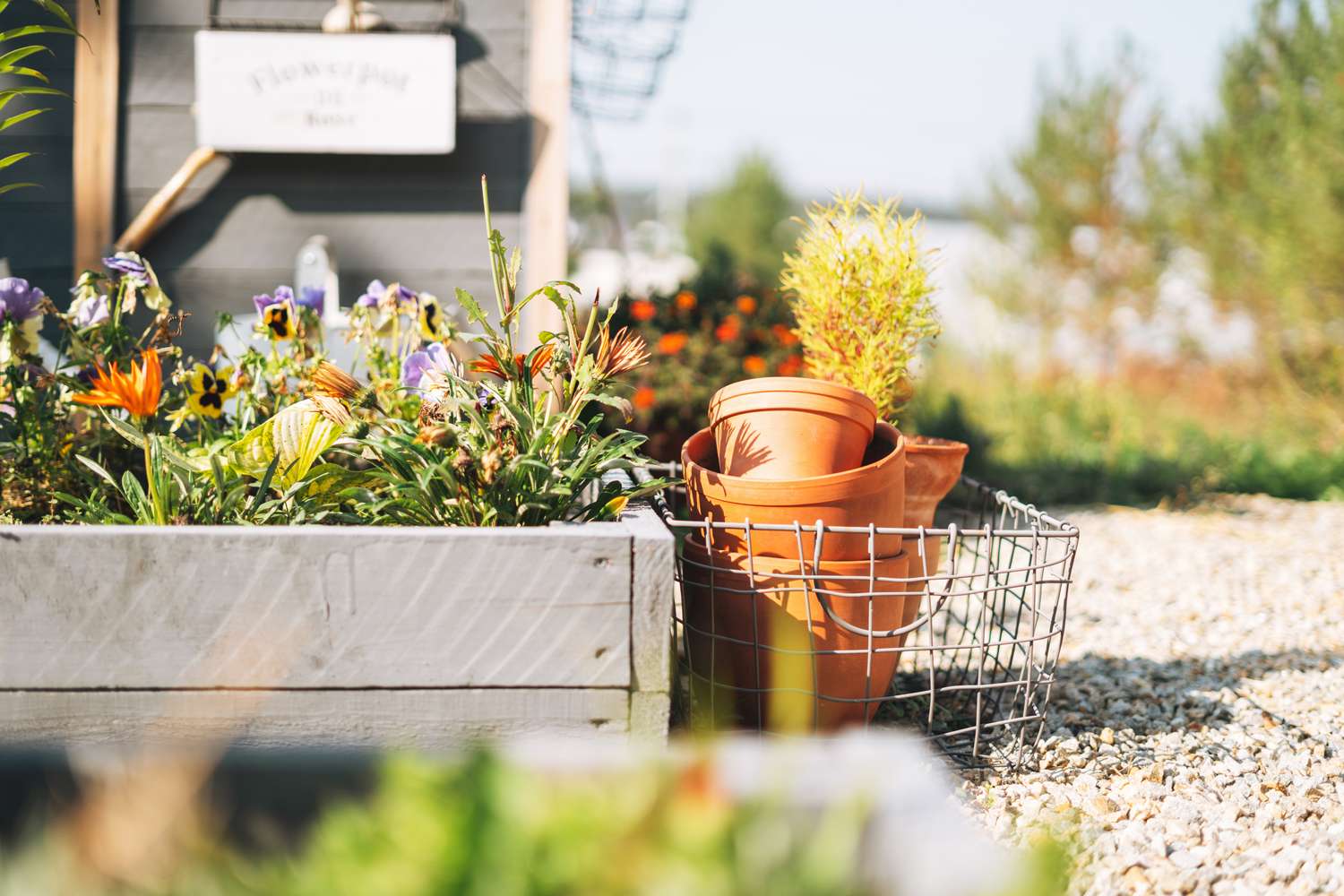
If you’re getting the spring itch, you might already be planning your upcoming garden. Spring is not that far off but while you may have ideas swarming in your head (or on a Pinterest board), it might be best to hold off on taking any action. Like interior design, gardening has its own trends that come and go, and one of your ideas may be on the list that most landscapers are skipping this year. While it’s totally fine to go against this list and create a garden design that makes you happy, some are worth considering the pass once you hear what our pro has to say. Here are six garden trends to skip in 2026 that focus on making sure your harvest convenient and reasonable.
Emily Patrick is the founder and owner of Carolina Flowers in Asheville, North Carolina.
Hand Watering
It’s 2026… why are we still watering our garden by hand? Not to sound lazy, but there are some pretty neat inventions that have come along to make this process much easier. Patrick says implementing an irrigation system is definitely one of her main focuses in 2026, especially since she owns a 30-acre farm. “Hand watering is so inefficient and time consuming. This year, I am finally irrigating my garden. Watering plants frequently is one of the best things you can do for your garden, and drip irrigation makes it so easy to water the garden without wasting water through evaporation before it even hits the ground,” she says.
High-Maintenance Designs
Credit:
N/A
Another trend on our radar to skip this year is high-maintenance designs. You know, the ones that stay completely and perfectly manicured with aesthetically-clipped edges, overflowing blooms, and impeccable symmetry. These garden designs look immaculate, but let’s be real: They’re hard to sustain. Unless you’re an expert gardener who’s fine with spending a chunk of time every day shaping your garden, it’s best to choose a design that’s low-maintenance yet accentuates your curb appeal.
Waiting To Plant At The Last Minute
There are some cold-weather plants that need to be planted when the temps are still cool. Parker says some big box stores throughout the country will try to sell flowers like poppies, larkspur, ranunculus, and nigella closer to spring, but the problem is that they prefer a colder start. Waiting for the last minute to plant these is something she plans on skipping this year for her garden. “Some flowers, like larkspur, need to freeze in order to germinate,” she says. “In Zone 6 and warmer, they actually prefer to be started in September or October. In cooler zones, a February and March start is appropriate. But in most places, by the time spring hits in April, it’s too warm to plant these cold-loving beauties.”
Grassy Lawns
Credit:
Laurey W. Glenn
This may be a controversial trend-worth-skipping for those who prefer the look of a luscious, vibrant green yard. But according to Parker, they look pleasing to eye but come with a lot of mowing time you’ll have to carve out. “Why not convert your grassy lawn into an amazing garden complete with perennials that bloom year-round, hardy ground covers, and a sprinkling of annuals? You can start a little bit at a time, using cardboard and mulch to expand your garden beds. But, it may be enticing since the more grass you convert to garden, the less you have to mow.”
Non-Native Plants That Require Too Much Attention
Credit:
Erica Dunhill
While you may adore a certain tropical plant, it may not adore your Southern climate back. Some of these plants can be hard to grow, which is why we’re seeing them go in gardens this year. Depending on the environment you live in, non-native plants may come with care needs that are far too time consuming for you to sustain. Instead, we’re seeing homeowners lean into plants that flourish in their particular reason so there’s some forgiveness in terms of maintenance.
Uprooting Plants
If your garden taste has changed and you’re no longer a fan of what you have planted, Parker wants you to wait before making a drastic change. Uprooting your plants can damage the soil and make it harder to grow what you plant next. This is why she’s trying to keep her same plants but get creative with how they’re presented in her garden design this year. She says, “Every plant in your garden creates an ecosystem within its roots. When you uproot a plant, you remove so many good microscopic species, such as mycorrhizal fungi. When your spring annuals finish, don’t uproot them. Instead, trim the stems to the ground and leave the roots in place. They’ll quickly break down, allowing all the good soil creatures to remain living in your garden.”
Comments are closed.