
Breadcrumb Trail Links
HomesNew Homes and Condos
Published Feb 06, 2026 • 3 minute read
You can save this article by registering for free here. Or sign-in if you have an account.
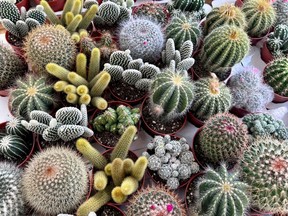 Cacti rank among the toughest and most long-lived of all growing things, with individual specimens living for hundreds of years. SHUTTERSTOCKArticle content
Reviews and recommendations are unbiased and products are independently selected. Postmedia may earn an affiliate commission from purchases made through links on this page.
The original desert survivors are among the easiest plants to grow – and as houseplants go, they’re actually pretty interesting
Advertisement 2
This advertisement has not loaded yet, but your article continues below.

THIS CONTENT IS RESERVED FOR SUBSCRIBERS ONLY
Subscribe now to read the latest news in your city and across Canada.
Unlimited online access to articles from across Canada with one account.Get exclusive access to the Toronto Sun ePaper, an electronic replica of the print edition that you can share, download and comment on.Enjoy insights and behind-the-scenes analysis from our award-winning journalists.Support local journalists and the next generation of journalists.Daily puzzles including the New York Times Crossword.
SUBSCRIBE TO UNLOCK MORE ARTICLES
Subscribe now to read the latest news in your city and across Canada.
Unlimited online access to articles from across Canada with one account.Get exclusive access to the Toronto Sun ePaper, an electronic replica of the print edition that you can share, download and comment on.Enjoy insights and behind-the-scenes analysis from our award-winning journalists.Support local journalists and the next generation of journalists.Daily puzzles including the New York Times Crossword.
REGISTER / SIGN IN TO UNLOCK MORE ARTICLES
Create an account or sign in to continue with your reading experience.
Access articles from across Canada with one account.Share your thoughts and join the conversation in the comments.Enjoy additional articles per month.Get email updates from your favourite authors.
THIS ARTICLE IS FREE TO READ REGISTER TO UNLOCK.
Create an account or sign in to continue with your reading experience.
Access articles from across Canada with one accountShare your thoughts and join the conversation in the commentsEnjoy additional articles per monthGet email updates from your favourite authors
Article content
If you love having growing things in your home but just can’t seem to keep houseplants alive, try growing a few cacti.
Article content
Recommended Videos
Article content
This under-appreciated plant actually grows best when it’s pretty much left alone. Just give it plenty of sun, water it once or twice a month, keep it away from drafts – and it might just outlive you.
Once you get to know these prickly little guys, you can’t help but admire their tenancy. I rescued mine from next to a neighbour’s trash about ten years ago, and it’s not only doing fine, but sends up a teeny fluorescent-pink flower once in a while.
True cacti (and yes, you can say cactuses if you prefer) originate from desert regions all over the world, though they rarely get quite as large in our homes as they do in the wild.
Dozens of different kinds are popular as houseplants; as with orchids, there are people who specialize in them and grow nothing else.
Among the most familiar are bunny ear (Opuntia microdasys), with its flat oval pads that stick up from a central oval; prickly pear (Opuntia ssp.), with rounded, larger flat pads; old man cactus (Cephalocereus senilis), with its coating of fine white hairs like an old man’s beard (but don’t be fooled and try to stroke it – the spines are hidden underneath the beard!); and columnar cacti, like Pilosocereus.

Your Midday Sun
Thanks for signing up!
Article content
Advertisement 3
This advertisement has not loaded yet, but your article continues below.
Article content
The desert is a pretty tough place to grow up in. So over time, these remarkable plants evolved a number of survival strategies that make them unique in the plant kingdom.
In fact, cacti rank among the toughest and most long-lived of all growing things, with individual specimens sometimes living for hundreds of years.
One of many oddities about this class of plants is the way they perform photosynthesis: instead of opening their pores during the day to “breathe” (exhale oxygen and absorb carbon dioxide) like most plants, cacti actually open them at night, to minimize water loss.
A single cactus is a highly efficient water conservation system; in the wild, even a modest-sized plant can collect and retain gallons of water from one rainstorm, which might not recur for another year. Some have vanes that swell as they fill with water, then slowly shrink as the stores are depleted.
That water, as you can imagine, is very tempting to other desert dwellers; their spines are actually modified leaves, which evolved to protect the plant from thirsty thieves.
Advertisement 4
This advertisement has not loaded yet, but your article continues below.
Article content
These same survival traits mean it’s well-equipped to survive on a windowsill in your home, as long as you respect its desert heritage. The first rule is lots of sun – at least six hours a day.
A cactus that is starved for light tends to get pale, sickly and sometimes long and weird-looking. If you don’t have a south- or west-facing window, grow lights are a good substitute.
Cacti prefer special cactus soil, or any fast-draining, coarse soil; regular potting mix can cause rot. Special cactus fertilizer should only be applied every couple of months or so, and never in winter. You can grow cacti in plastic pots but terra cotta evaporates excess moisture better, which the plant prefers.
Allow your cactus to dry out completely between waterings; you’ll probably only need to water it once or twice a month, even less often in winter. Even more than lack of sun, a cactus that gets too much water is a dead cactus.
Sweet as these little guys are, a word to the wise: even with a small plant, avoid touching it even lightly without wearing gloves. Those spines are designed to keep away intruders, and as you will discover, they are surprisingly effective!
Article content
Share this article in your social network
Comments are closed.