
In Masiphumelele, nutrition is no longer just about what’s on a plate – it’s about what’s growing in the soil, being crafted in small hands, and shared between neighbours.
The Masiphumelele Creative Hub, a non-profit organisation, is driving change in the community through its Nourished Child Project (NCP).
The project addresses child malnutrition with a holistic approach that combines food, education, culture and dignity.
Founded in 2022, the Nourished Child Project was established to address malnutrition and poor dietary habits among women and young children in the community.
But instead of focusing solely on feeding schemes, the project is driving long-term change – teaching practical skills, nurturing local leadership, and helping families grow their own food.
“Our aim is not just to feed a child for today,” said Masi Creative Hub founder Yandiswa Mazwana.
“We want families to understand nutrition, to grow their own food, and to feel empowered to make healthy choices for themselves and their children.”
The project is supported by a joint research partnership between the University of Cape Town, Stellenbosch University and City University of London, and has received mentorship through the Southern Africa Food Lab under the guidance of Professor Scott Drimie and his team.
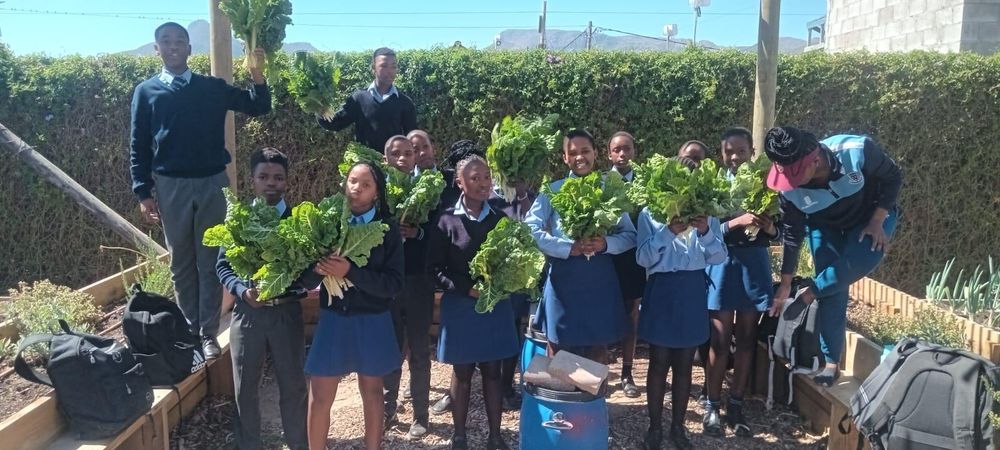
One of the project’s most visible successes is its Garden Champions Programme, which trains community members to establish and maintain food gardens across Masiphumelele.
“These gardens are about more than vegetables,” Ms Mazwana said.
“They are about dignity, ownership and showing people that they can create food security right where they live.”
Public and home gardens now dot the area, increasing access to fresh produce while promoting self-sustainability.
The harvest supports the Masi Creative Hub Community Feeding Kitchen, Nourished Child Project beneficiaries and residents through vegetable packs.
Workshops with Grade 6 to 9 learners at Masiphumelele High School and Ukhanyo Primary take place every Tuesday and Wednesday, giving learners hands-on experience in gardening.
“When children understand where food comes from, they start to see themselves differently,” said Ms Mazwana.
“They realise they can grow something, care for it, and contribute to their households.”
The project has also introduced healthy lunchbox campaigns and integrated nutrition lessons into early childhood development centres and schools, reinforcing healthy habits from a young age.
The Nourished Child Project includes a breastfeeding support programme, recognising the critical role of maternal nutrition and early feeding practices in a child’s development.
After school, the hub’s Dignity Boys and Girls Programme provides a safe and supportive environment where children receive mentorship and take part in structured activities.
Creative expression also forms part of the programme, with craft sessions where children make statues from recycled materials.
“Creativity builds confidence,” Ms Mazwana said.
“When children create something from recycled materials, they learn about the environment, but they also discover their own value and ability.”
Nutrition education workshops for parents, ECD practitioners and local vendors have extended learning beyond the classroom, helping to strengthen community-wide understanding of healthy eating and lifestyle choices.
Partnerships with local clinics and schools have also grown stronger, she explained.
The team has learned that awareness alone is not enough.
“Information is important, but it is not sufficient on its own. People need practical skills, ongoing support, and access to resources. Real change happens when the community is actively involved and feels ownership,” Ms Mazwana said.
She added that collaboration between schools, clinics and households has been essential, and that sustainable initiatives require local structures capable of supporting themselves over time.
The project is now entering Phase 2, guided by international partner Wilde Ganzen under its 2025 programme.
This stage focuses on strengthening the organisation’s structure and expanding community participation through Planning, Participatory Monitoring, Evaluation and Learning (PPMEL).
A major goal for this phase is the creation of a container-based Community Food Lab in Masiphumelele.
“The Food Lab will be a space where learning becomes hands-on,” Ms Mazwana said.
“People will be able to see, touch and experience healthy cooking, hygiene practices and planting techniques. It will serve children, parents, and the wider community.”
Plans for the lab include a demonstration kitchen for healthy cooking workshops, interactive sessions for ECDs and schools, educational displays, and a space for training and community dialogue around food security.
To bring the Food Lab to life, the project still needs a container, kitchen equipment including a stove and fridge, utensils, work surfaces, shelving, educational materials, furniture, and plumbing.
“Our goal is to build a safer, greener, and healthier Masiphumelele,” Ms Mazwana said.
“When people are equipped with knowledge and confidence, we create healthier generations and stronger communities.”
For more information, contact Yandiswa Mazwana at info@masicreativehub.org or 071 036 8081.
Find the False Bay Echo on TikTok and Instagram @ccmonlineza
Comments are closed.