


Ohio River in Louisville is full of ice due to winter weather
Cold temperatures created ice floes on the Ohio River from late January into February 2026. The river last froze over during the 1977-78 winter.
Planning your garden’s fertilizer needs is best done before the spring season begins.Fertilizers are available in organic, natural, and synthetic forms, each with different properties.Organic fertilizers are derived from plant and animal sources and release nutrients slowly.Synthetic fertilizers are manufactured and can offer immediate or slow-release nutrient options.
When there’s a foot of snow on the frozen ground and your car’s coated with a salt glaze, it’s hard to think very creatively about the upcoming gardening season. Beyond a little garden porn catalog shopping, most of us are doing our best to hide inside, quietly cursing that groundhog for ongoing winter.
But this is the best time for planning. All too often, we make spring gardening decisions by default — you’re out there on that first, warm, sunny, spring Saturday morning to tackle a few garden tasks. The last thing you want to do is take the time to run to the nursery for some supplies. You just grab whatever makeshift solution is at hand. And fertilizer application is the poster child for non-planning.
My first paying job in horticulture was working for a little mom and pop garden center just outside of New York City. The owners were nice people. They didn’t know a thing about gardens, or plants, or anything connected with taking care of a yard. No idea why they thought owning a garden center was a good investment. But on my very first day on the job my boss, Charlie, called me over and said, “take that broken bag of fertilizer and throw it on the vegetable garden over behind the dumpster.”
Of course, more learned gardeners know that in order to create the perfect fertility regime for your garden, you start by running to the local Cooperative Extension office, picking up a soil test kit, sending it in, and once the results arrive, sitting down at the table with calculator, yellow legal pad and a No. 2 Ticonderoga pencil to make a fertilizer plan for the lawn, shrub/perennial borders, and the veggie garden.
My guess is, most people are more like Charlie.
Figuring out how much fertilizer to apply to the yard and garden is pretty straightforward. If you follow the soil test approach, the results usually give you specific recommendations, even customized to what you plant to grow. If you follow the recommendations on the fertilizer bag, they’re pretty specific, too. They just present a once-size-fits-all approach. Your soil might not need everything in that particular bag.
Most of the fertilizer questions I field this time of year are more related to what kind of fertilizer is “best.” Of course my answer is, as always, it depends.
Fertilizers come in a dizzying array of types, and their labels can drive you absolutely crazy. Organic. Natural. Delayed-release resin-coated mineral fertilizer. It’s all a bit overwhelming. Here are a few basics to help you decide on a direction for your own garden.
What is an organic fertilizer?
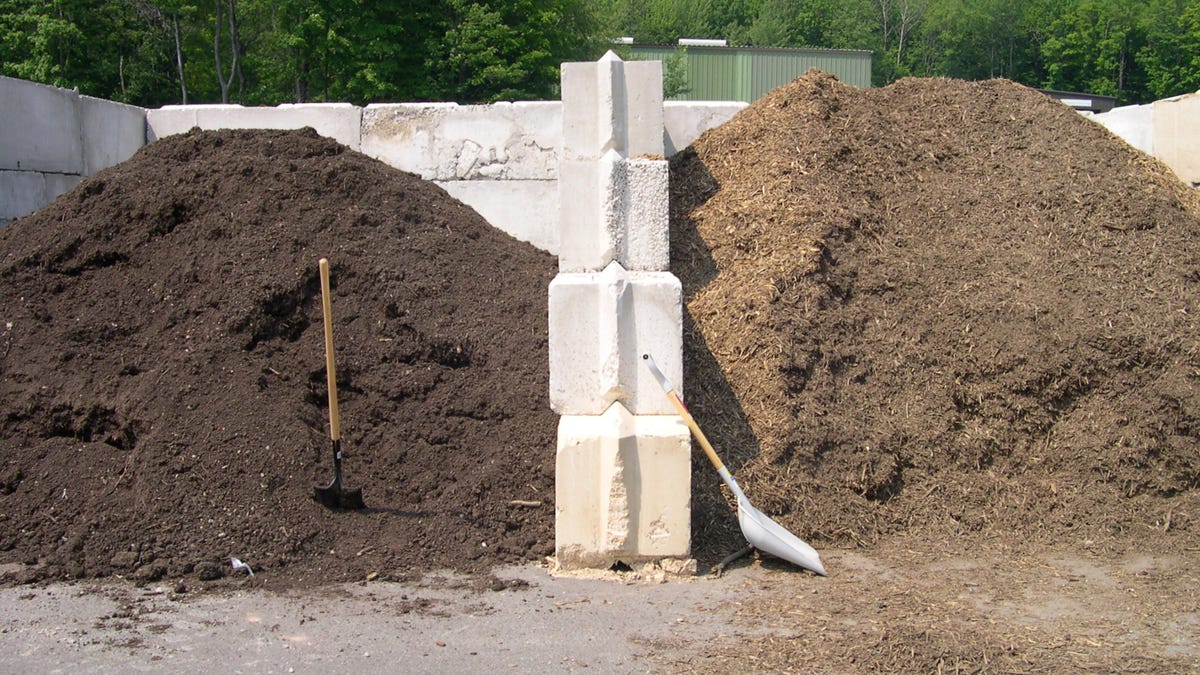
In your freshman chemistry class, you probably learned that organic compounds are those based on carbon. Following that logic, fertilizer products that come from minimally processed plant and animal sources are considered organic fertilizers. Composted manures, leaves, seaweed, and woodchips can all be used as organic fertilizers. They tend to have fairly low nutrient content and since nutrient release relies on soil microbe action, nutrients are released slowly and over a long period of time. It is difficult to overfertilize with most of these products. They give the user lots of room for error.
These plant and animal-based products also add bulk organic matter to the soil profile. That material is tremendously helpful in building quality soil structure, improving water retention in sandy soils and improving drainage in heavy clay soils. As those bulky products break down, the organic acids and other byproducts improve soil even more. But the process takes time.
What is compost tea?
Another organic fertilizer option is a liquid organic known as compost tea. Making compost tea is not a good option for the chronically distracted gardener. It involves steeping “green” plant material like pulled weeds, lawn clippings, banana peels, etc., in water and allowing the nutrients to gradually move into solution. This is another excellent nutrient source that carries a very low environmental footprint. But if you don’t pay attention, you can easily end up with a mosquito-breeding, stinking and festering mess that can have your neighbors calling in the guys in the white moon suits.
What are natural fertilizers?
Natural fertilizers can be the most confusing. Generally considered as allowable in certified organic production systems (but not all), these are often naturally occurring mineral deposits that are mined and (at most) minimally processed. Pulverized limestone is considered a natural fertilizer. It is not considered an organic compound from an organic chemistry standpoint. But as long as it is mined and simply ground to a fine texture, it is usually considered to meet the requirements of an organic production system. If that ground limestone is then subjected to chemical alteration or more involved processing of any kind, it generally falls out of favor with organic certification programs.
What are synthetic fertilizers?
Synthetics are manufactured using industrial processes and come as either soluble salts or solid/granular products. They are not approved for use in certified organic production systems.
Soluble synthetics most typically fall into what I refer to as the blue juice of gardening category. The nutrients in these products are immediately available and don’t require microbial action for release. Those nutrients are not held very long in the soil profile and can be leached out before they are absorbed by plant roots.
Solid/granular synthetics come in a variety of products. Some quickly dissolve in the soil solution while others can release nutrients over an extended period of time. Some slow-release granular fertilizers actually have soluble nutrients encased in a micro-porous resin capsule — and you can dial in a three, six, or nine month nutrient release schedule.
The bottom line is that a molecule of nitrate is a molecule of nitrate, regardless of source. It’s up to you to decide where that nitrate comes from and how it gets to your plant roots.
It’s all a little more complicated than pulling a “Charlie” but in the end, it’s all about balancing your gardening style and personal philosophy.
Paul Cappiello is the executive director at Yew Dell Botanical Gardens, 6220 Old Lagrange Road, yewdellgardens.org.
Comments are closed.