
I often write about something I learned from my father or grandfather. This week, however, it’s something my mother taught me: how to force flowers into bloom in the middle of the winter.
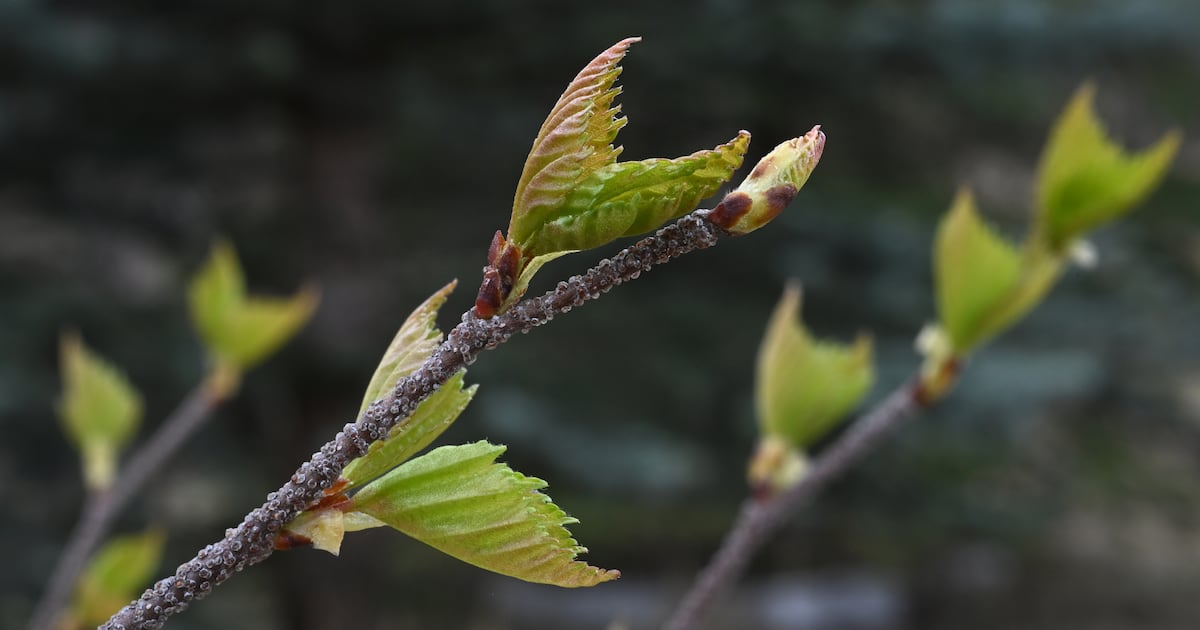
Forcing is possible because lots of our flowering plants, be they trees or shrubs, require a dormant period. Only after a set number of days exposed to cold will they regain the ability to rebloom. Some only require exposure to 32 to 45 degrees, others to below zero. Once they go through this, however, it is only a matter of exposure to sustained warm temperatures for them to start to bloom.
Why am I pointing this out? Because while we probably won’t get sustained warm temperatures for many more weeks, our trees and shrubs are ready. If it did happen to warm up to above 32 degrees for any amount of time, they would perform. This means you can take cuttings of some of those plants, bring them inside and force them into flower.
The easiest of our plants to force is forsythia. I always consider this plant’s spring performance a cheap trick. Yellow flowers for a few days and that is it. However, it performs much better when forced indoors. The flowers seem to last much longer, though it may just be that there are flowers in the first place when we haven’t had many for months.
A bit more challenging to force are lilacs. Remember, they set buds shortly after flowering so they are good to go. And most produce a distinct lilac fragrance, which will be a hit indoors this time of year.
How about those Montmorency cherries. They don’t taste very good, but they sure do produce beautiful flowers. The only thing you need is a big enough tree such that you can take a few branches off and not ruin things for this spring’s outdoor display. These trees normally don’t grow over 10 feet, so use that to help gauge what you take now.
If you are lucky enough to have an apple tree, you have a real winner for forcing.
Birch and poplars produce scaly, pendulous catkins, which are their flowers. Wish that we had honeysuckle as these too can be forced. But flowering almond, often used as a hedge here, produces wonderful pink, popcorn-size flowers. It is great for forcing.
The trick is to find branches with lots of buds and to cut 2- to 3-foot lengths. If you cannot tell which is a flower bud versus a leaf bud, pull one or two off and take them apart to get the right ID. Leaf buds are usually smaller than flower buds. A tip on cutting branches: If you cut from the top down through a limb, it may strip the bark on the bottom of the branch, which could cause problems later. Just cut from the bottom up and you won’t have any problems.
Bring branches indoors and soak them in water. You want to submerge the entire branch so both the bud and the branch get the water they need to perform. A bathtub is now a garden tool! After 24 hours, recut the ends. My mother would hit the ends with a heavy knife or her pruning shears, as in theory this helps the plant take up water quickly.
Next, put the branches into a vase or other container filled with warm water and expose to bright light in a 60- to 65-degree room. Yes, you can put them under your winter lights!
Now all you need to do is wait. Depending on what you are forcing, it may take three weeks to a month to see results. We will still have winter here, so it should be well worth any effort.
Jeff’s Alaska Garden Calendar
Alaska Botanical Garden: Hours are 10 a.m. to 7 p.m. Please join if you have not already. I promise you will not regret it.
Seed racks: Easy does it.
Amaryllis: ‘Tis the season. Buy as many as you can afford and have room for.
Sweet peas: You can start sweet peas in early April and they will do fine, but if you plant them now, you can pinch them back a few times before transplanting outside. This produces more flowers and a really hearty plant.
Vegetable flowers to start: Celery. This is a tough one because of the length of time, but there is a great taste.
Comments are closed.