
Home Advice You Can Trust
Tips, tricks & ideas for a better home and yard, delivered to your inbox daily.
We thought it would be fun to match the hues in certain plants and flowers to paint companies’ 2026 colors of the year. That wasn’t easy since the list includes many browns and greens, uncommon in flower colors and often too common in bark and leaf colors.
Since several of those tints have trees in their names, it was tempting to revert to those plants. But that would be a little too literal. So, we’ll opt for uncommon plants instead. Just keep in mind that the colors of some plant selection vary widely depending on who is photographing—and photoshopping—them.

Cloud Dancer: Floating Cloud Japanese Maple
(Acer palmatum ‘Ukigumo’ or ‘Floating Cloud’)
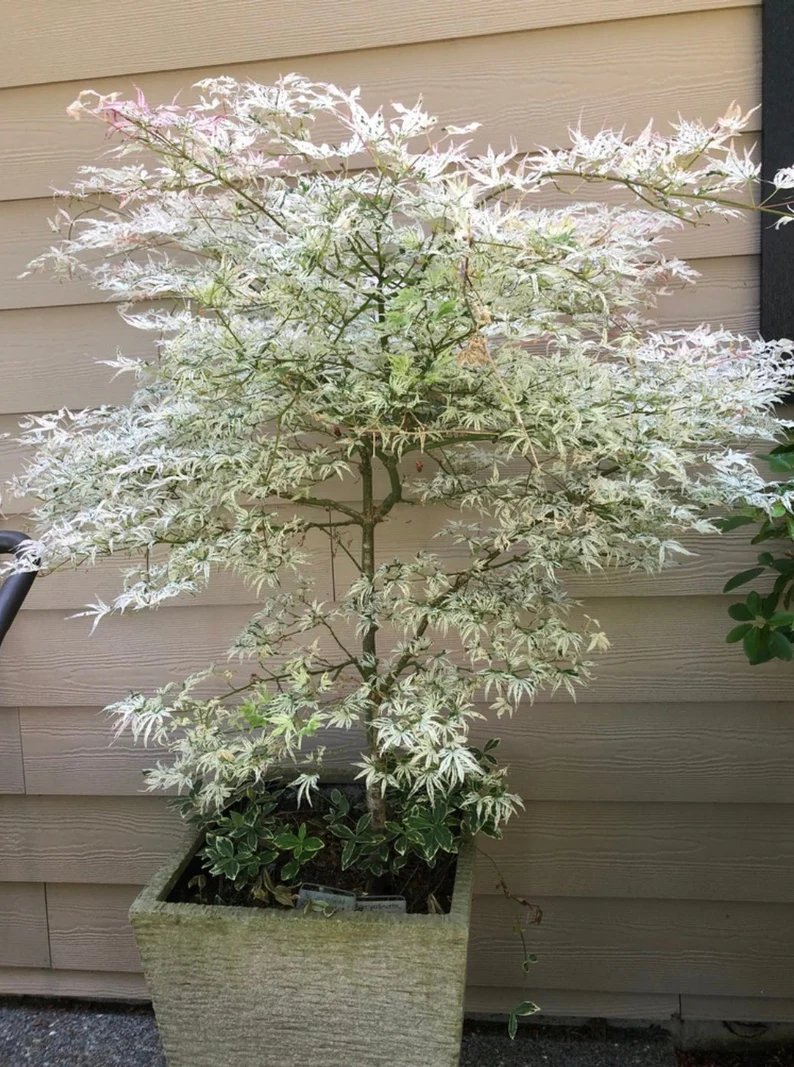 Photo: GiddyforGardening via etsy.com
Pantone notes that the color Cloud Dancer, an “airy white,” is meant to inspire “well-being and lightness.” This variegated type of Japanese maple, which grows to about 15 feet high with star-shaped leaves that seem to float “light as a cloud,” should do that. Its foliage often starts out almost entirely white in spring before adding green and pink tints to the mixture as the weather heats up. In autumn it loses its white variegation and transitions to red and gold.
Best For: Asian garden, understory garden, woodland garden
Hardiness Zone: 5 to 8

Warm Mahogany: Mahogany Splendor Hibiscus
(Hibiscus acetosella ‘Mahogany Splendor’)
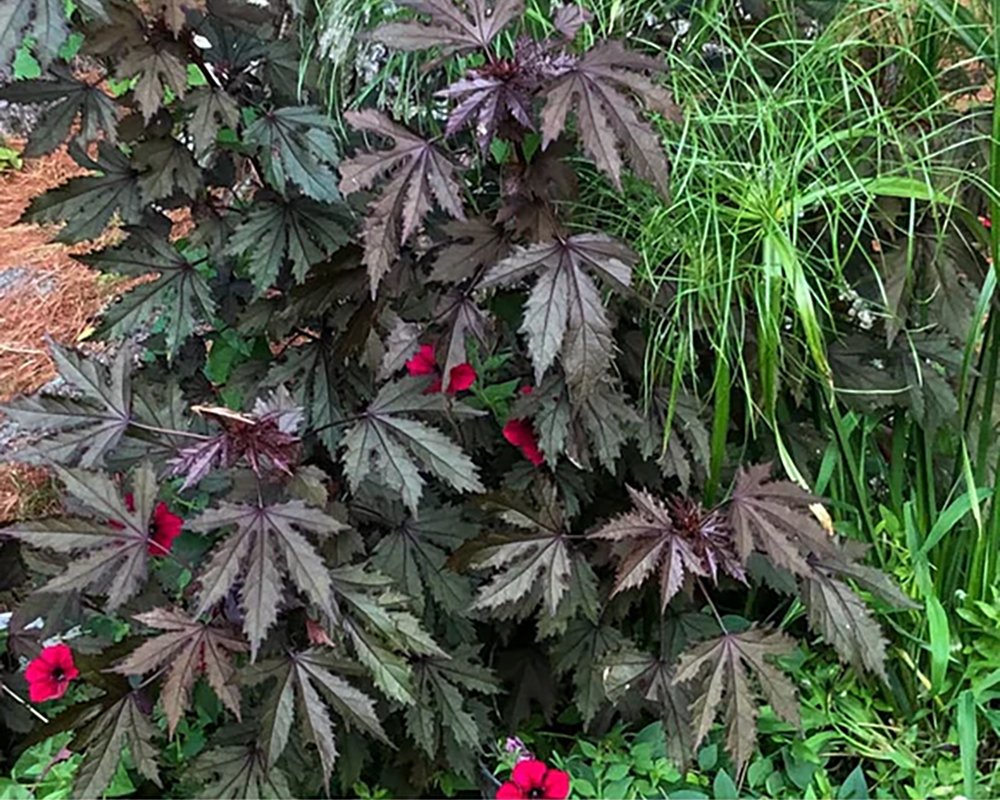 Photo: Pinetree Garden Seeds
The mahogany in this plant’s name refers to the hue of its leaves rather than its flowers. Although most often raised as an annual for its colorful deeply cut foliage, it also produces 2-inch red flowers where it is hardy. Bring cuttings inside to add to bouquets as a warm filler. Growing to almost 6 feet high, this hibiscus requires full sun to reach that warm mahogany color’s full potential. Otherwise, it might fade to a rusty green. Pittsburgh Paints calls their mahogany a “classically calm neutral” but—where plant foliage is concerned—the color definitely makes a statement.
Best For: Accent plant, container, cutting garden
Hardiness Zone: 9 to 11

Matte Coffee Bean: Painted Tongue Café Au Lait
(Salpiglossis sinuata‘Café Au Lait’)
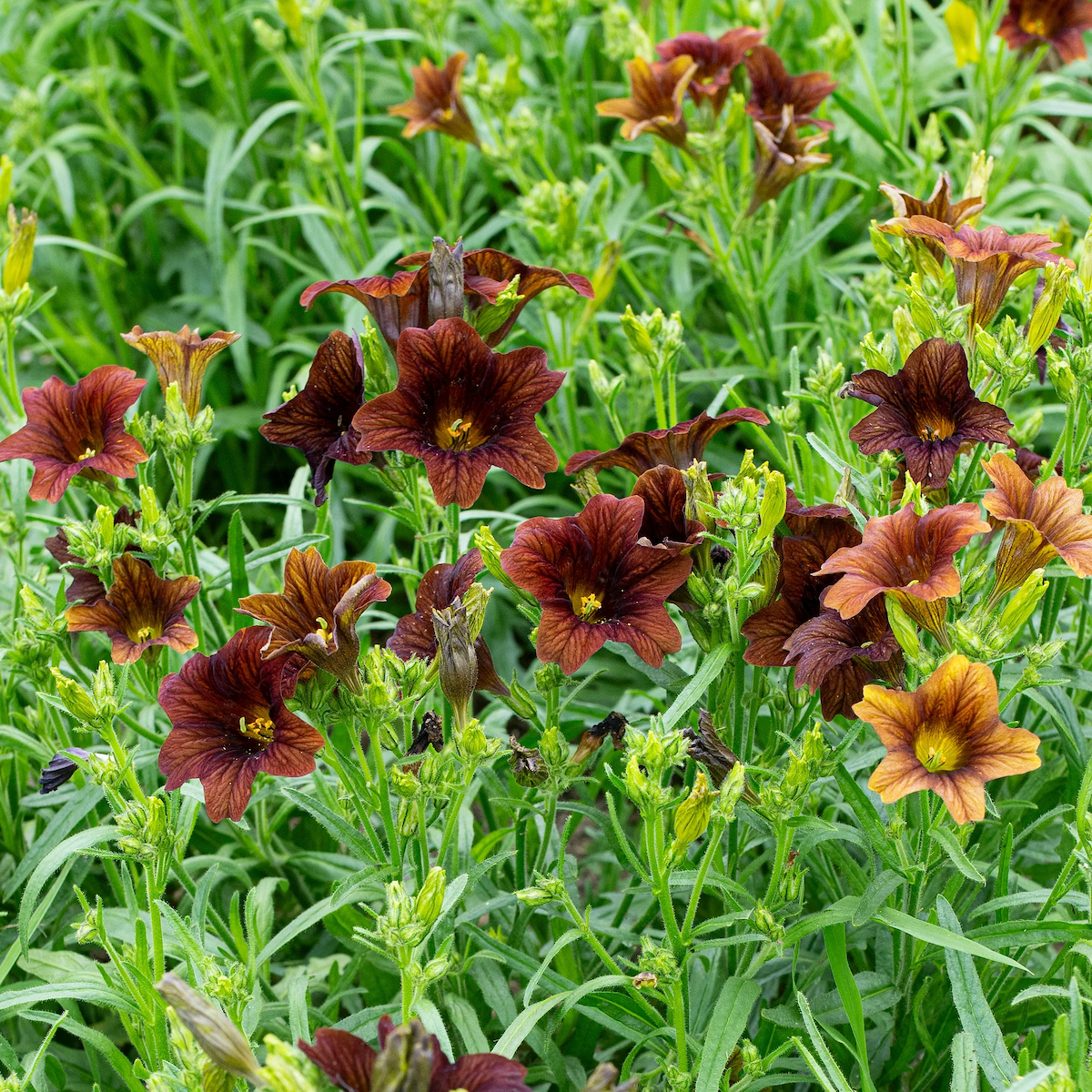 Photo: Select Seeds
Although few brown blooms exist in nature, this salpiglossis offers “a range of coffee tones, from mocha to light roast caramel, with a golden throat,” says Baker Creek Heirloom Seeds. The dark veins on each 2-inch trumpet flower resemble Krylon’s Matte Coffee Bean, a “dark neutral” that “brings a sense of warmth, without dominating.” This salpiglossis grows to about a foot high, most often is raised as an annual, and prefers full sun but cool summers.
Best For: Annual bed, border, container
Hardiness Zone: 8 to 11

Epernay: Lisianthus Voyage 2 Champagne
(Eustoma grandiflorum‘Voyage 2’)
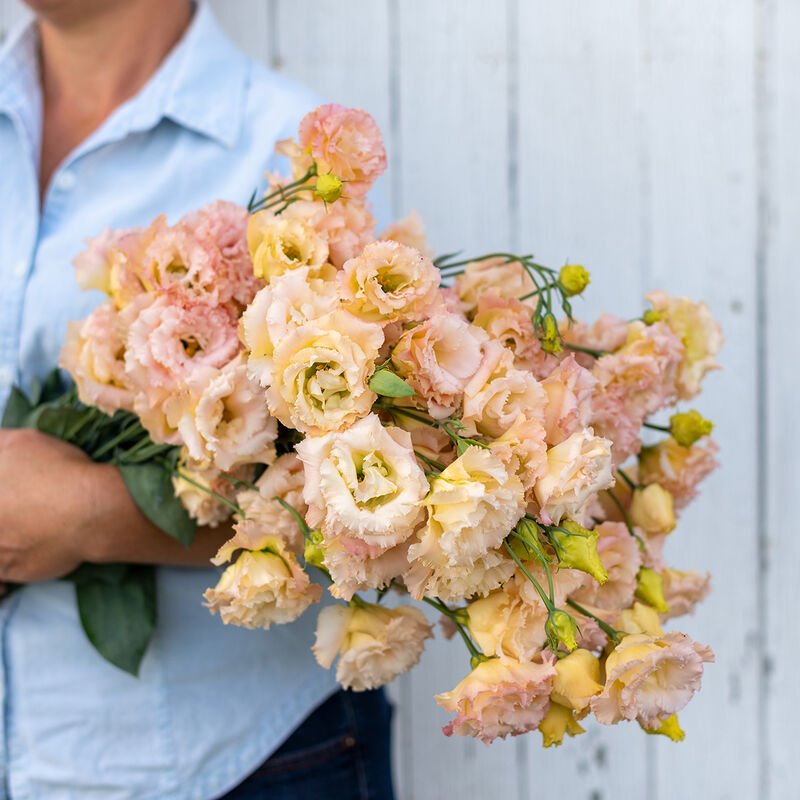 Photo: Johnny’s Selected Seeds
Epernay is a wine-growing village in France, and the C2 Paint hue bearing its name appears—appropriately enough—to be a tint of the golden ivory color known as champagne. The company calls it one of the “shades that bring old-world elegance into modern spaces.” The doubled goblet-like 3-inch blooms of lisianthus Voyage 2 Champagne, produced on 2- to 3-foot stalks, offer that color–sometimes touched with a pale pink similar to Garden Media Group’s “faded petal” color of the year. A biennial where it is hardy, lisianthus usually is raised as a slow maturing annual.
Best For: Annual bed, container, cutting garden
Hardiness Zone: 9 to 11

Universal Khaki: Paphiopedilum Charlie Brown
(Paphiopedilum hybrid)
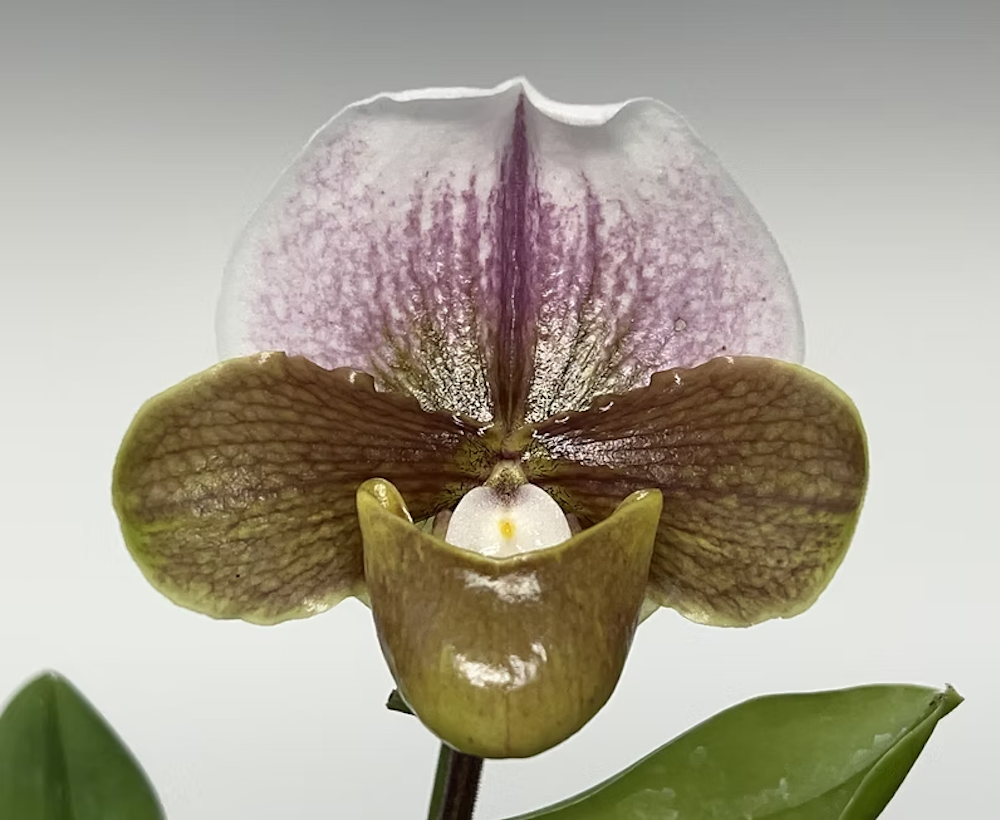 Photo: Hillsview Gardens
Sherwin-Williams Universal Khaki paint color is described as “a subtle and timeless earthy tan.” Although most flowers don’t run to tans and greens, the lady’s slipper orchids with their unusual, pouched blooms definitely go there. And some of them, including Charlie Brown, have a definitely khaki-esque hue. These shade flowers typically grow in a greenhouse or as houseplants. You can take it outdoors in summer to enjoy the heat, since it grows best in containers anyway. And, although Sherwin Williams calls khaki “a hue that’s quietly content to be in the background,” such unique orchids definitely take center stage when they bloom.
Best For: Container, greenhouse plant, houseplant
Hardiness Zone: 9 to 12

Warm Eucalyptus: Kiwi Blue Cerinthe
(Cerinthe major purpurascens ‘Kiwi Blue’)
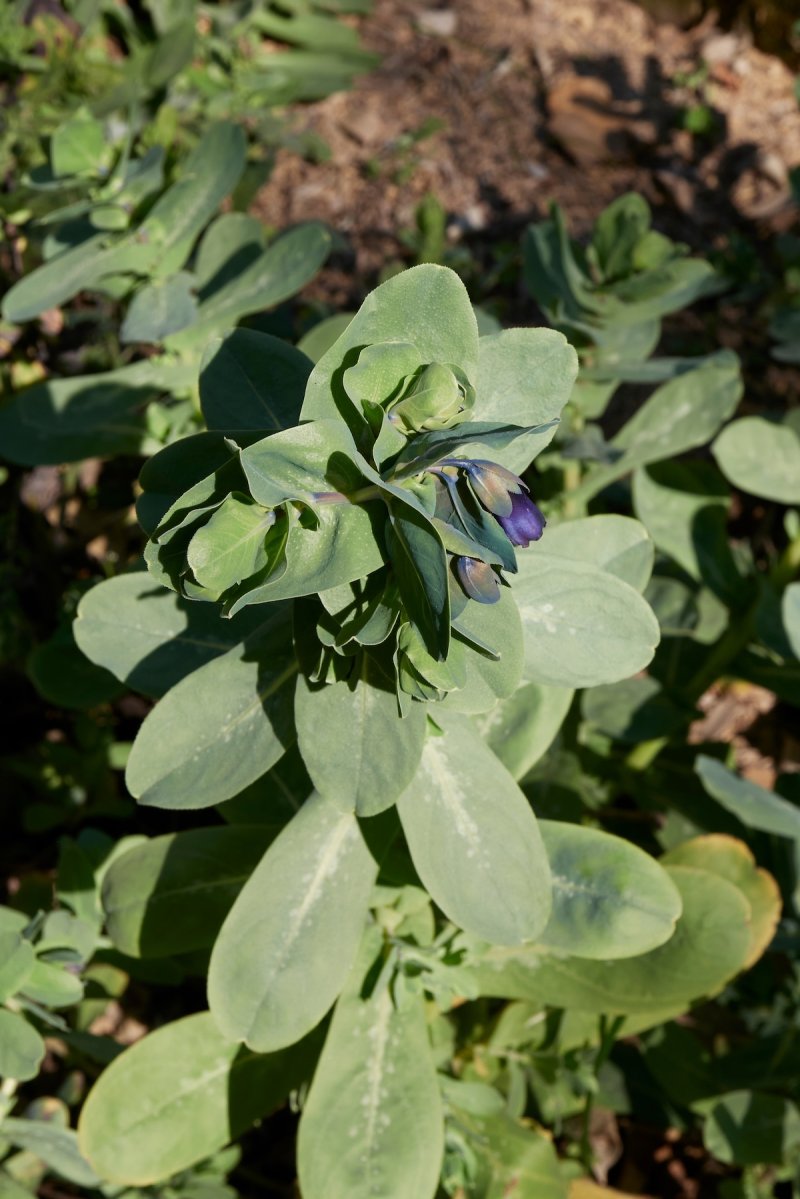 Photo: simona – stock.adobe.com
The foliage of Kiwi Blue cerinthe reaches a gray-green tone similar to Valspar’s Warm Eucalyptus, which the company says inspires “mindful living.” This unique hardy annual grows to between 2½ and 3 feet high with roundish leaves and tubular blue summer flowers. It will thrive in either full sun and sometimes is called honeywort because bees definitely are mindful of its flowers. Due to its preference for cool conditions, Kiwi Blue can serve as a spring-flowering biennial in the South if planted late in the previous summer.
Best For: Annual bed, cutting garden, pollinator garden
Hardiness Zone: 7 to 10

Hidden Gem: Turquoise Puya
(Puya berteroniana)
 Photo: Annie’s Annuals & Perennials
Hidden Gem, which Behr calls “timeless and fresh,” appears to have a blue-green color more reminiscent of smoky turquoise than jade. Puya berteroniana offers what Annie’s Annuals calls “metallic blooms of the most unearthly emerald-turquoise,” close to the paint’s timeless hue. The blooms grow in panicles resembling pineapples on rosetted silvery succulent bromeliad plants that eventually can reach 10 feet high in the hot dry climates they prefer. Each rosette dies after it flowers but usually is replaced by offsets.
Best For: Container, desert garden, houseplant
Hardiness Zone: 8b to 11b

Melodious Ivory: Merrist Wood Cream Halimiocistus
(Halimiocistus xwintonensis‘Merrist Wood Cream’)
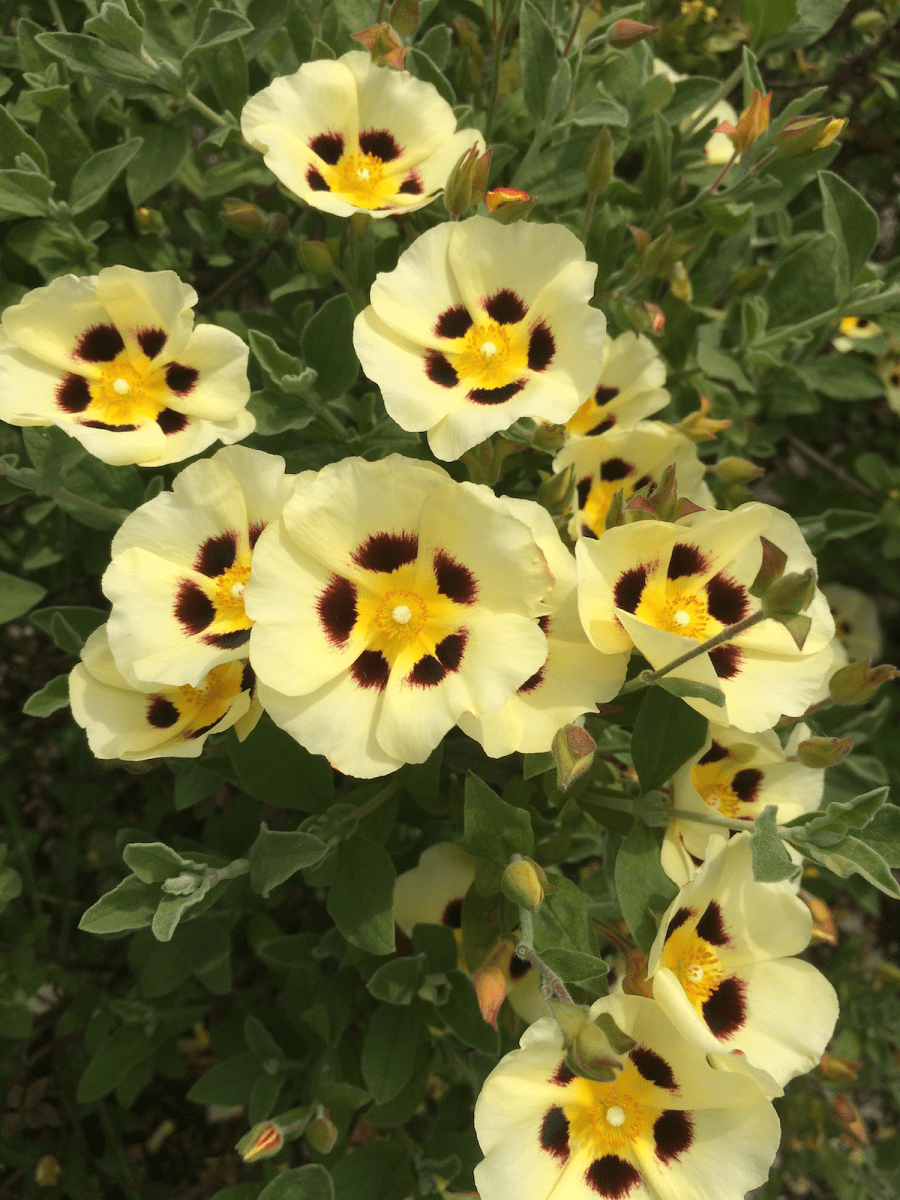 Photo: Xera Plants Inc.
Described by Dutch Boy as a “creamy warm neutral” that “offers a hint of yummy indulgence,” this ivory appears to be a pale yellow hue more reminiscent of French vanilla ice cream than the plain white type. The Halimiocistus shrub produces flowers of that same shade and grows to 2 feet tall with silvery foliage. Its 2-inch ivory blooms feature darker yellow centers surrounded by red bands that complement the yellowish-ivory petals. Plant this stunning evergreen shrub in full sun.
Best For: Desert garden, median, rock garden
Hardiness Zone: 8 to 10
Special Walnut: Hawaiian Baby Woodrose
(Argyreia nervosa)
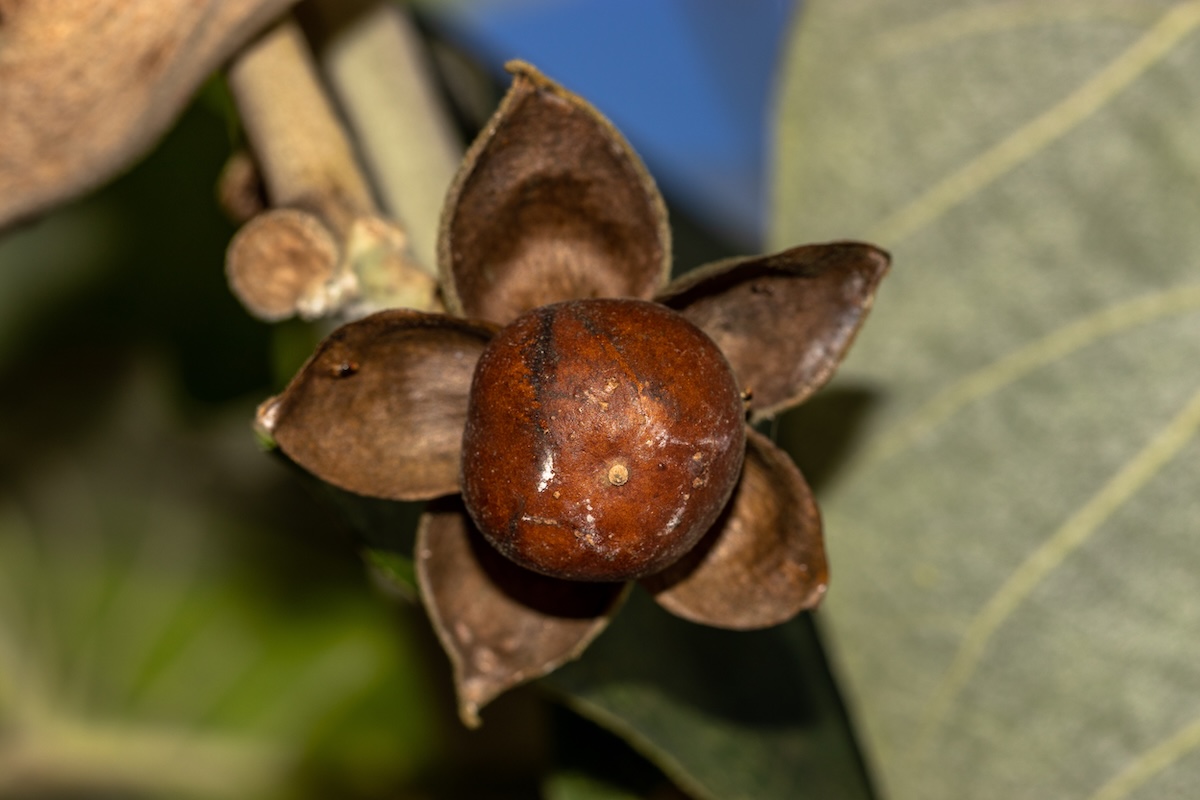 Photo: Isis Medri – stock.adobe.com
Named for the fact that its seedpods actually resemble wooden roses, due to the woody sepals surrounding each one, this vigorous tropical vine grows to 30 feet with heart-shaped leaves up to 1 foot across and 2-inch trumpet-shaded pink flowers. But it is, of course, those seedpods that might be considered, like Minwax’s Special Walnut, to exhibit “the honest beauty of wood in its truest form” even if they aren’t really wood. Although invasive in the state for which it is named, the plant can be contained in a conservatory or greenhouse in colder climates.
Best For: Container, pergola, trellis
Hardiness Zone: 10 to 11

Hazelnut Crunch: Millet Jade Princess
(Pennisetum glaucum ‘Jade Princess’)
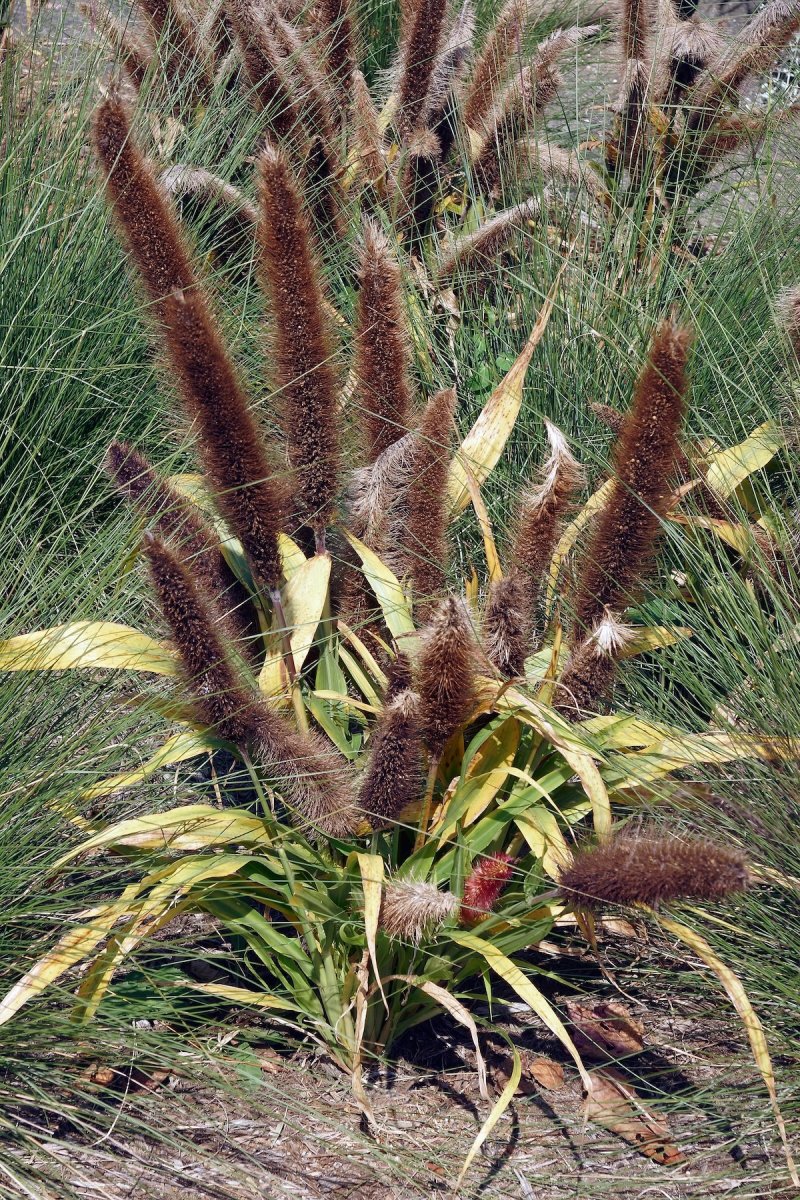 Photo: nickkurzenko – stock.adobe.com
Hazelnut Crunch is described as a rusty red that “strikes a harmonious balance between familiarity and boldness,” much like the “pokers” of flowers that protrude from the center of the Jade Princess millet cultivar. They age to a darker brown before producing “crunchy” seeds for your wild birds. Despite its name, this ornamental millet has chartreuse rather than jade foliage and matures to about 2½ feet tall. It most often is grown as an annual “grass,” its brushy flowers making an interesting addition to bouquets.
Best For: Accent plant, container, cutting garden
Hardiness Zone: 10 to 11

Meet the 2025 Tools of the Year
After months of scouring the market and putting products through their paces, we’ve named the best of the best in new tools. There’s something for everyone, from veteran pros to average Joes.
Comments are closed.