
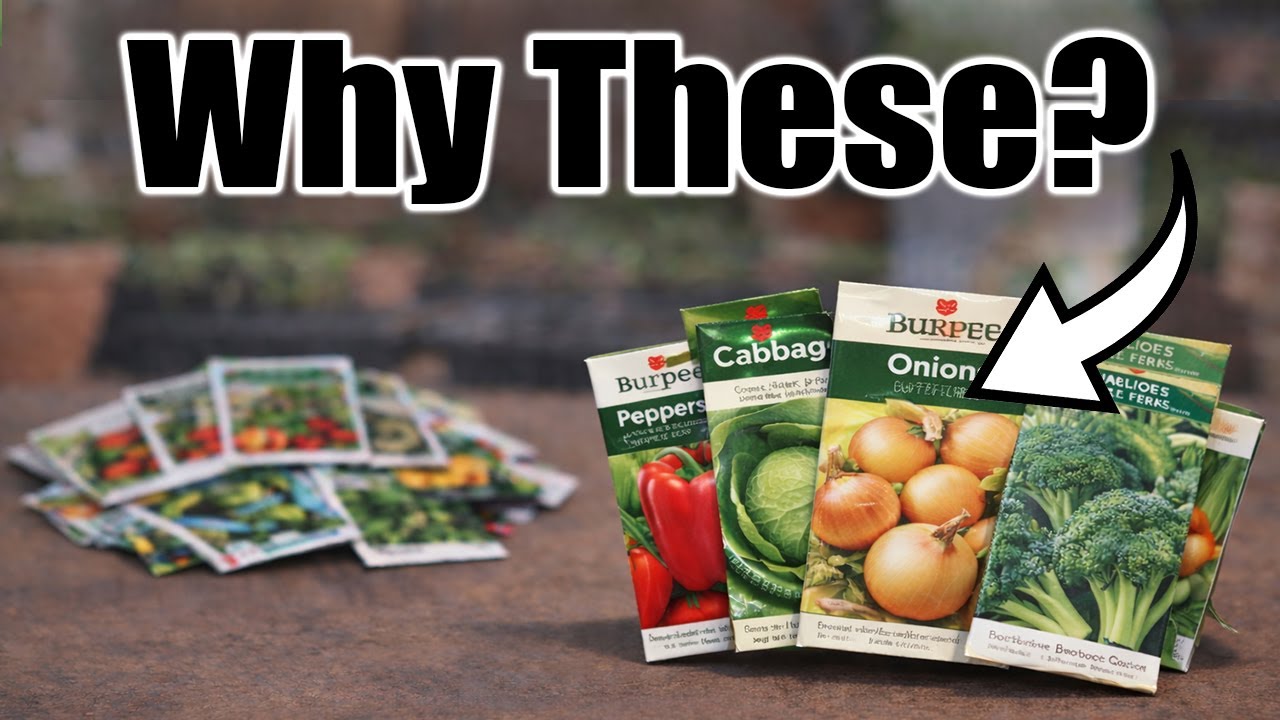
Most “what to start in February” advice is just a list — and that’s how people end up overwhelmed with seedlings they didn’t need to start yet.
In this video, I walk through how I actually decide what seeds are worth starting in February, no matter where you live.
Not based on the calendar alone — but on growth speed, payoff, and timing.
This approach works whether you’re in a warm climate or a cold one, because February isn’t about starting everything early — it’s about starting the right things early.
In this video you’ll learn:
• How to think about February seed starting (not just what to plant)
• Which crops actually benefit from an early start
• Which seeds can wait — even if other people say to start them now
• How to avoid overcrowded trays and stressed seedlings
• A simple way to plan February without turning your house into a jungle
If you’ve ever felt behind in spring — or started way too much too early — this will help you start smarter.
If you want help timing your seed starts for your exact location, check out GardenGuide https://www.gardenguide.com/
CHAPTERS
0:00 February Is the Fork in the Road
0:49 Why Most February Seed Lists Get It Wrong
1:35 The 3 February Climate Lanes (Warm, Middle, Cold)
2:35 How GardenGuide Solves February Timing Confusion
3:06 Onions: The Biggest February Payoff
4:18 Leeks: Slow, Cold-Tolerant, and Worth It
4:38 Celery: Why February Is Non-Negotiable
5:11 Brassicas: Broccoli, Cabbage, Kale, Cauliflower
6:12 Lettuce: Starting Early for Spring Waves
6:58 Herbs That Belong in February
7:34 Peppers: The One Warm Crop That Truly Fits February
8:20 Eggplant: Same Rules as Peppers
8:40 Flowers That Actually Help Your Garden
9:27 Tomatoes: Why February Isn’t for Everyone
10:00 The 3 February Mistakes That Cause Chaos
10:13 Mistake #1: Starting Too Much
10:40 Mistake #2: Not Enough Light
11:01 Mistake #3: Overwatering
11:25 The Simple February Seed-Starting Calendar
11:51 Final Thoughts + What to Watch Next
35 Comments
Not many veggies this season, switching to money tree's.
lol, how true is that Brian, thank you for all of your advise,
Parsley doesn’t germinate well for me..I soak the seeds overnight.
Thanks so much for this video! Watching it now. I start my tomatoes and peppers in February or earlier (often late January), curious to see what your take will be.
Thank you Brian for the tips.
I always dive right in the seed starting to chase the winter blues away.
Thank you Brian for all of this information. I couldn't go through planting without you
Just love your tips.
I’m in SE London England What “lane” am I in ?
Where's the Gardening link ??
You left out hardiness zone 8 which includes most of states like South Carolina, Louisiana, Alabama, Mississippi, Georgia. Is that in the "warm" zone lane? Or is it between the middle and the warm zone?
Your guide is wrong on when to start Onion seeds in my region It says March 19 to April 15, way too late, I start them around February 15 to 20
Oh yahoo it will be an app!!! Thank God!! It makes it so much easier for people like me🌸🌸🌸🌸
This perfect timing as always🌸🌸🌸
The production quality of these videos is like the Next Level cinematic universe. Welcome to the NCU, Ha ha!❤
Just received my Companion Planting book yesterday. Easy and fun read. Wish I had purchased soon. We love your channel ❤
Thank you for recognizing that there are different times for the different growing zones.
I am trying to figure out how to thaw out in February this year…. And I live in Florida. Jack Frost is a jerk this year.
Thanks, Brian, very helpful! Here in the UK it never stops raining and you cheered me up!
I sowed marigold and basil indoors on 1/31 so they'll be in the ground and ready to work before other crops are ready to put out. Sowed a few kale and romaine and beets on 2/2. Started prepping the "mater patch" 2/3. Removed weeds, added compost, tossed a few handfuls of dry organic fertilizer. Today I'll prep the raised beds and containers. I had an extra MILD winter and several crops overwintered on their own!
This was a ‘game changer’ video for me!!! Just the info I needed… thank you beyond words
I'm so frustrated because im going to be gone for a couple of weeks in early March. If i start anything now, my boyfriend won't take care of them while I'm away. I will be setting up my winter sowing containers this weekend, but any indoor stuff will have to wait til mid March.
I just started gardening last year. I had no idea what I was doing, and my timing was way off. Then I discovered your Garden Guide app. I bought an extra calendar just for gardening. Using GG I entered when to start each plant I want to grow inside or outside, when to transplant, and when to expect my harvest. I’m expecting this will be a much more successful and less stressful year! Thank you for this great resource.
Great video! I’m itching to start everything😂, but here in the very middle of the US, I have to pace myself. My onions have to be started in early January, and I’ve started pansies and violas too. Just now starting a few brassicas to put out under row covers in march, and I’ll start more in a couple of weeks. Can’t wait for the app!
❤❤❤❤❤
Does Lane 1 include central Alabama? I sowed a bunch of peppers, flowers, herbs, brasicas today. I'll start my tomatoes on Valentine's Day ❤
These are things i never really known about….thank you for this….
Great video! Liken the website. Looking forward to your app 🙂
Thank you, Brian! Your video is opportune. Just finished organizing seed packets for sowing indoors an hour ago. I'm a bit late for some of the herbs and flowers that require stratification.. .just got them all in the fridge today. Hoping to be back on your Gardener App with the Circle App soon…I miss it! –
Looking forward to the app!
I'll second the "basic shop light." My growing rack is built around Walmart 4' LED shop lights, and has served me nicely.
I'm in zone 10a so our timing is hard to get down before it gets too hot. My tomatoes were started in December and were just up potted, they'll be going in the ground in 3 weeks.
We are having warmer than normal weather ( high 60s this week and mid 50s next week). I think we aren’t getting any more rainfall! I have no clue how to deal with this weather!
I’m in Northern California near the East Bay.
What do you recommend?
We start peppers and eggplants mid-january and tomatoes at the beginning of feb here because our average last frost is March 10-20.
Who knew there was a polite way to tell someone to “stay in your lane” 😂 thanks for another excellent video!!!🫶🏼😄
Good stuff, Brian.
Agree with the general idea on zones but also frost dates are important too, of course. I get it, not enough time in the video to explain everything.
Risk Takers, we've all done it, back count from that frost date and start those peppers and maters, for example. Or plant them even earlier. But that frost date is a 70% average typically. It depends on which organization is reporting it.
Risk Aversion Folk? Well, count two weeks forward of the estimated last frost date, and then count backwards. Patience, I guess. But that gives the nightshades, in particular, a better chance of surviving overnight temps below 50 degrees. Problems come once that happens, of course.
The problem in certain areas, 7a to 8b for example, is timing it for the pests that are sure to appear. No way to get it right between overnights temps and the coming pests. Start and start again two weeks later is one way to try to ensure results.
Anyway, nice summary Brian. Enjoyed it! Good luck developing the app.
great video. I order my short day onions sets to come in on the 2nd week of December. I get a good head start that way. north central tx area. I haven't had good luck with marigolds. Seemed like I had a lot more aphids with them in the garden. I really like our native Indian blankets. I get more bees and butterflies with them. Thanks for sharing.