
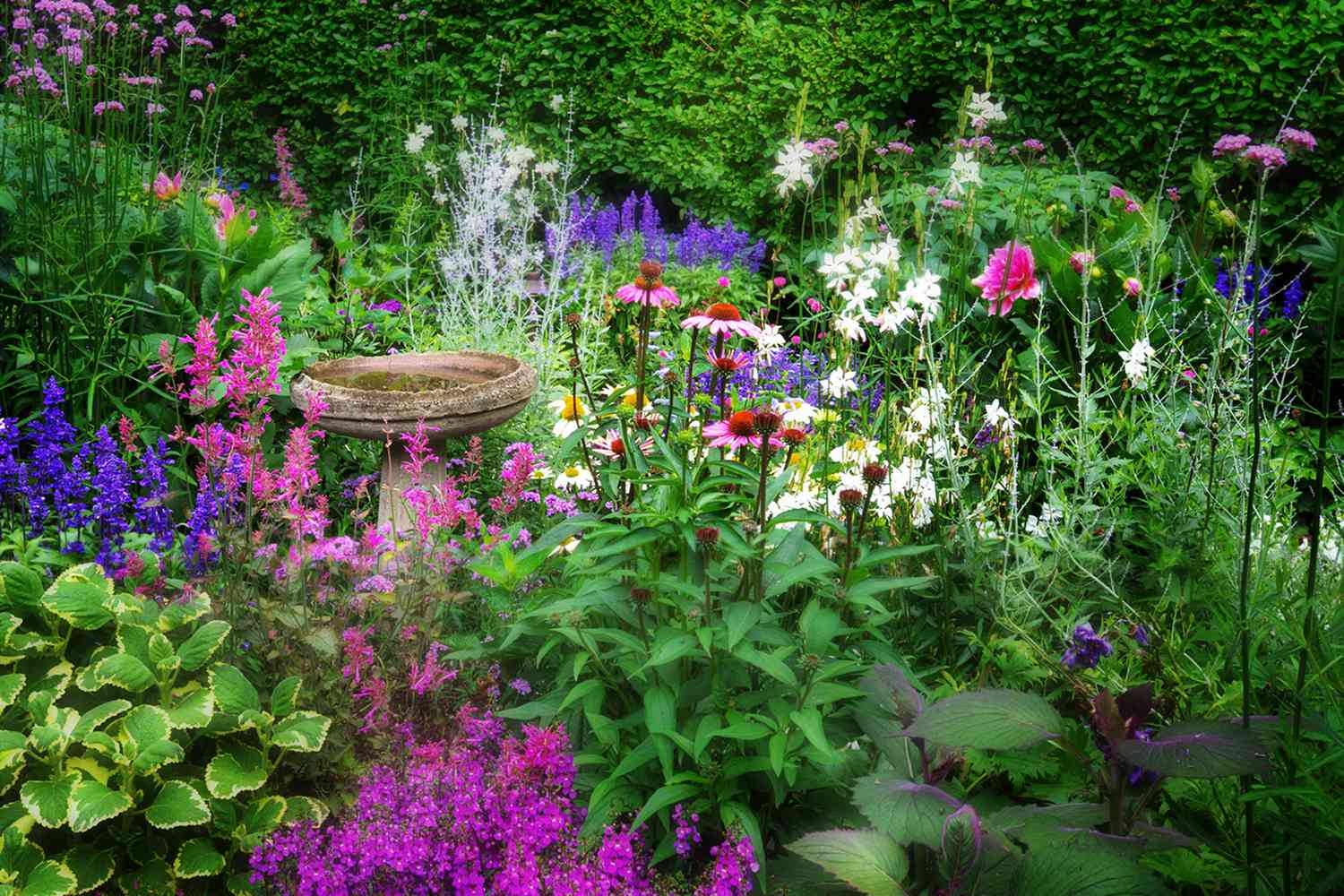
If you love the look of an abundant, informal cottage garden, many colorful plantings can help you fulfill that vision. An English cottage garden (also known simply as a cottage garden) is less structured and more natural in appearance than a more formal English garden (also called a parterre).
“Cottage gardening is very whimsical and looks unplanned,” says Laura Irish-Hanson from the University of Minnesota Extension. “But there is absolutely planning that’s involved with these gardens. Everything is about color and texture and space.”
A cottage garden focuses on leaf shape, plant height, and color. Ahead, we talked to experts and rounded up favorite cottage garden plants, including wildflowers, flowering herbs, shrubs, and other perennials, to help you plan a charming cottage garden.
Lavender
Credit:
Asife / Getty Images
What would a cottage garden be without lavender? This hardy herb can handle the sun and prolonged droughts and grows almost anywhere. As long as you don’t plant it in a soggy spot, you’ll enjoy its fragrance all summer and fall. It is great for borders or anywhere with more than six hours of sun a day.
Zones: 5 to 10Mature size: 2 feet tall x 1 to 2 feet wideCare requirements: Full sun; sandy, well-drained soil—be careful not to overwater
Sage
Credit:
Olga Ionina / GETTY IMAGES
Another cottage garden herb that is important for its culinary uses and fragrant leaves, sage can’t be overlooked. This small perennial, like lavender, enjoys full sun and well-drained soil. Bonus: Its spike of purple tube-like flowers attracts loads of pollinators, which will help keep your garden (and the ecosystem) thriving.
Zones: 4 to 10Mature size: 2 feet tall x 3 feet wideCare requirements: Full sun, well-draining soil, water moderately
Roses
Credit:
Masako Ishida / Getty Images
Roses need full sun, and the plants don’t always require daily watering, but the best part about them is that they can tolerate a wide range of temperatures, depending on the variety. They’re beautiful in a cottage garden as a hedge or a standalone centerpiece that you can lean in and smell when in full bloom.
Zones: 3 to 11Mature size, shrub: 3 to 5 feet tallMature size, climbing: Up to 11 feet tallCare requirements: Full sun; light watering; slightly acidic, well-draining soil
Clematis
Credit: Johnny Miller
Who wouldn’t love this beautiful vining plant that will shower your garden with fragrant blooms from early summer to fall? Clematis comes in a range of colors and can be woven on a trellis to create a dramatic shape or arch. They need to be pruned and regularly watered, but it’s worth it for large, showy flowers all season long.
Zones: 3 to 10Mature size: 7 to 10 feet tallCare requirements: Full sun; pH-neutral soil; water moderately
Coneflowers
Credit:
Getty Images
A pollinator favorite, coneflowers are native to North America and have big, wide flowers in yellows, purples, reds, and whites. Laura Janney, garden designer and owner of The Inspired Garden, recommends that coneflowers be placed in the mid-layer of a garden for the best effect. “Coneflower is a prolific bloomer,” says Janney. “Once it starts blooming, it could last all the way into frost. It makes a wonderful cut flower, so you can enjoy it inside and outside the home.”
Zones: 3 to 9Mature size: 3 to 4 feet tall by 1 foot wideCare requirements: Full sun; well-draining soil; water moderately
Peonies
Credit:
Jasenka Arbanas / Getty Images
You’re probably most familiar with the herbaceous form of peony—a dense shrub with fragrant globe-like blooms in whites, pinks, yellows, and reds. Though peonies only bloom for a couple of weeks, different varieties bloom during different parts of the season, so if you plant them right, you could have peony blooms all summer long.
Zones: 3 to 8Mature size: 1 to 3 feet tall x 1 to 3 feet wideCare requirements: Full sun; well-draining soil; water moderately
Thyme
Credit: ANA LEBIODIENE / Getty Images
A low-growing, hardy herb, thyme is a great plant to put in a dry, sunny patch of the garden next to plants with taller flower spikes. If you’re a bit of a home chef, you can plant this next to rosemary, lavender, or sage plants (though rosemary will be an annual in cooler zones). Just make sure you don’t overwater, or you could cause the roots to rot.
Zones: 5 to 9Mature size: 4 to 5 feet tall x 3 to 4 feet wideCare requirements: Full sun to part sun; well-draining soil; water lightly
Salvia
Credit:
Getty Images
If there’s one plant that will grow anywhere and be happy, it’s salvia. “Salvia is a wonderful plant because it’s hardy, reliable, and an early spring bloomer,” says Janney. “It’s great to have some color when most of the perennials haven’t bloomed yet.” These are great pollinator plants, come in a range of colors, and are usually disease-free, making them a good choice for a beginning gardener.
Zones: 3 to 9Mature size: 18 inches to 5 feet tall x 1 to 4 feet wideCare requirements: Full sun to part sun; well-draining soil; moderate watering
Astilbe
Credit:
Alex Manders / Getty Images
Astilbe flowers later in summer through the fall in many areas and are known for their fluffy flowers in pinks, whites, and reds. They aren’t tolerant of full sun and likely would work best at the edge of a garden in the shade. Because they flower later in the season, the dead blooms can add winter interest to a garden that’s otherwise brown.
Zones: 3 to 9Mature size: 3 feet tall x 2.5 feet wideCare requirements: Part sun to shade; well-draining soil; water heavily
Poppies
Credit:
Getty Images
Easily grown from seed, poppies can be either annual or perennial, depending on the species, and the flowers come in every color. Tall stems with big, showy flowers in all colors make poppies a beautiful cut flower for an indoor arrangement. Deadheading poppies also encourages the plant to send up more flower spikes through the season.
Zones: 2 to 9Mature Size: 3 to 4 feet tall x up to 18 inches wideCare requirements: Full sun; well-drained soil; water lightly
Alyssum
Credit:
Kilito Chan / Getty Images
This low-lying plant smells wonderful and adds variety when paired with taller background plants like foxgloves or delphiniums. Alyssum will stay less than a foot tall and will spread to any sunny spots as a ground cover plant. This is an annual plant unless you live in zone 9 or 10, but it will likely reseed itself where planted and come back year after year.
Zones: 5 to 9Mature size: 9 inches tall x 4 inches wideCare requirements: Full sun; well-drained soil; moderate watering
Pincushion
Credit:
Getty Images
This annual plant gets its name from its globular blooms that resemble a pincushion. Also known as scabiosa, it is a low-maintenance plant that will attract pollinators for months. “With deadheading, it will bloom all season,” says Janney. To deadhead, she recommends cutting back spent blooms to the crown or the next set of leaves.
Zones: 3 to 7Mature size: 2 to 3 feet tall x 1 foot wideCare requirements: Full sun; well-draining soil; light watering
Yarrow
Credit:
Getty Images
A native to the Americas, yarrow (or milfoil) is a hardy perennial with fragrant blooms. “Its fuzzy leaves create a gorgeous texture,” says Janney. She recommends using the sturdy New Vintage variety to prevent the plant from flopping as easily and for a longer bloom period. You should also deadhead once the yarrow is done with its first round of blooming to encourage more blooms into late summer.
Zones: 3 to 9Mature size: 3 feet tall x 3 feet wideCare requirements: Full sun; well-draining soil; moderate watering
Foxglove
Credit:
aimintang / Getty Images
It would be a shame to have a cottage garden and not have foxglove included with its 3- to 4-foot-tall flower spikes in any number of colors. Foxgloves are generally pest-resistant and, in general, won’t be taken down by wildlife like deer or rabbits. This plant is toxic, though, so you may want to keep it away from any herbs you grow so there’s no confusion.
Zones: 4 to 9Mature size: 2 to 5 feet tall x 1.5 feet wideCare requirements: Full sun to part shade; well-draining soil; light watering
Penstemon
Credit: Neil Holmes / Getty Images
Also known as bearded tongue, penstemon is native to North America and produces large spikes with smaller tubular blooms in a range of colors. The leaves can be dark purple, adding contrast to a sea of green. These plants are heat and drought-tolerant and don’t need extra fertile soil to be happy.
Zones: 4 to 9Mature size: 1 to 2 feet tall by 1 to 2 feet wideCare requirements: Full sun to part shade; light watering; well-draining soil
Comments are closed.