

Soap aloe (Aloe maculata). This South African native is a popular garden plant in California. It grows rosettes of 20-inch-long, 4-inch-wide leaves. The species name “maculata”
means the speckled markings on the leaves, which are attractive until summer, when the plants
produce flat-topped racemes of bright red to yellow flowers. (Courtesy Tom Karwin)
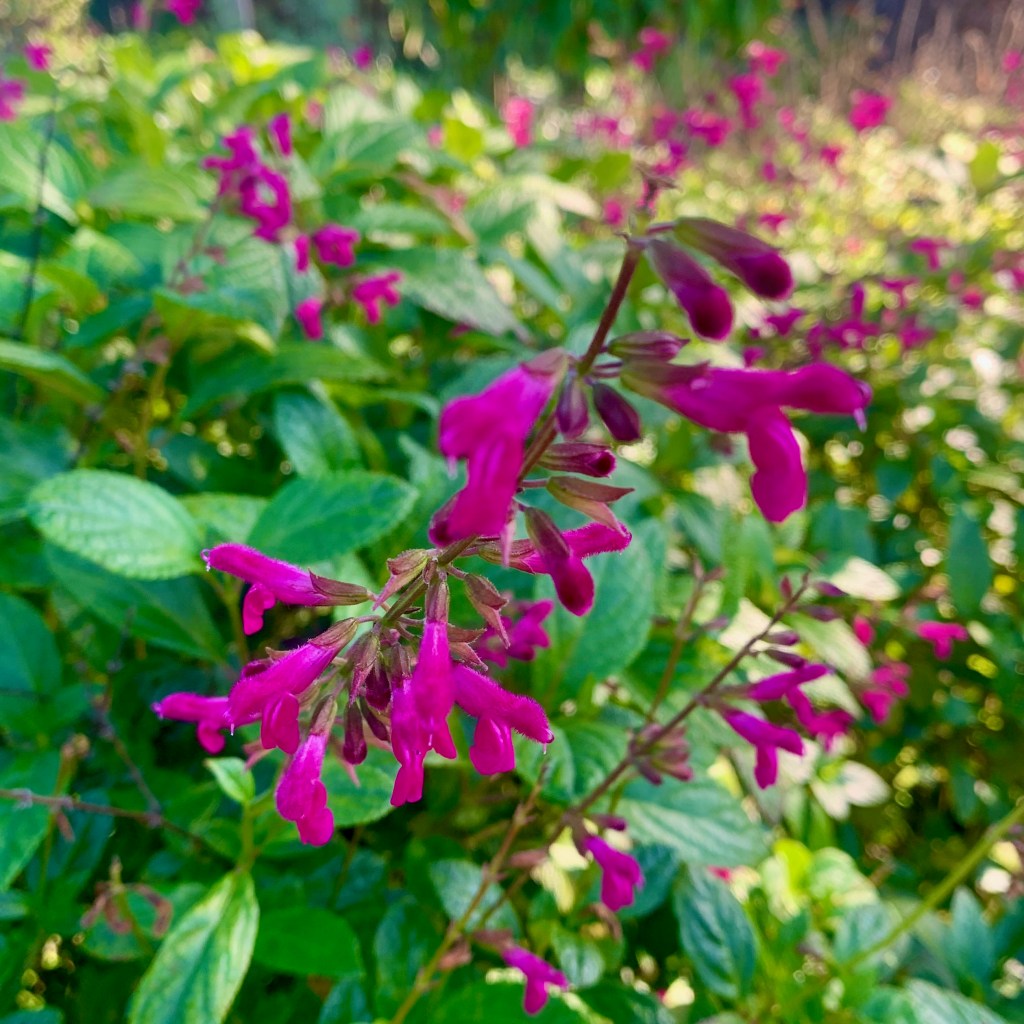
Firecracker plant (Cuphea ignea). This rounded, densely branched, bushy, evergreen sub-shrub
grows to 30 inches tall and wide. The stems are crowded with pointed, lance-shaped to ovate,
dark green leaves about 1 1/2 inches long. From late spring to frost, the plant generates small,
tubular, bright red flowers attractive to hummingbirds and butterflies. This plant is native to Mexico and Jamaica. (Courtesy Tom Karwin)
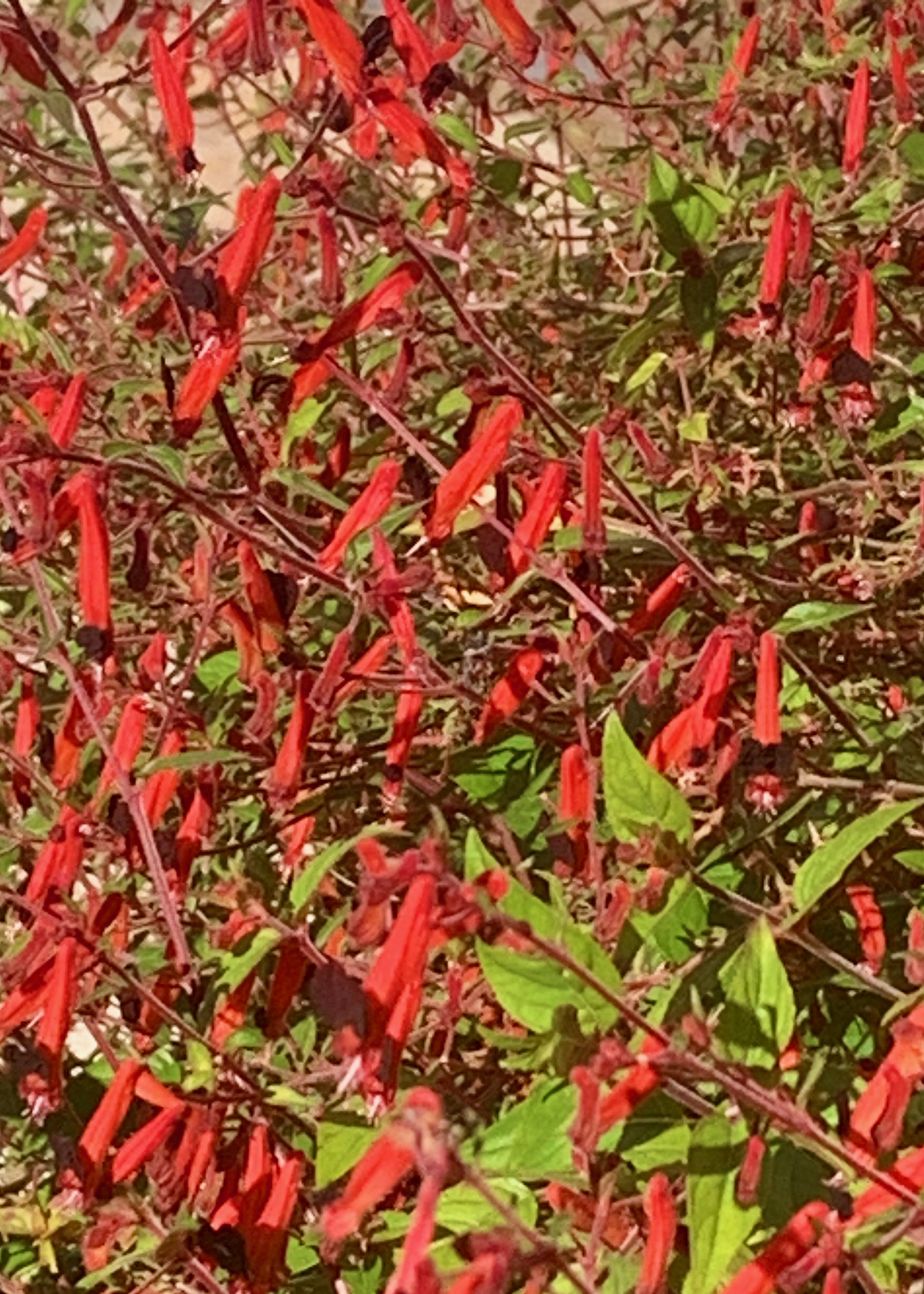
Orchid frost deadnettle (Lamium maculatum ‘Orchid Frost’). Native to the Mediterranean
basin, this showy, repeat-blooming ground cover has large orchid-pink flowers and frosty
variegated foliage. It grows in shady areas, reaching 6 inches tall and 18 inches wide. Its
foliage is evergreen in mild-winter regions like the Monterey Bay area. Common dead nettles
have small white flowers, and this cultivar produces large orchid pink flowers from late spring to early summer. (Courtesy Tom Karwin)
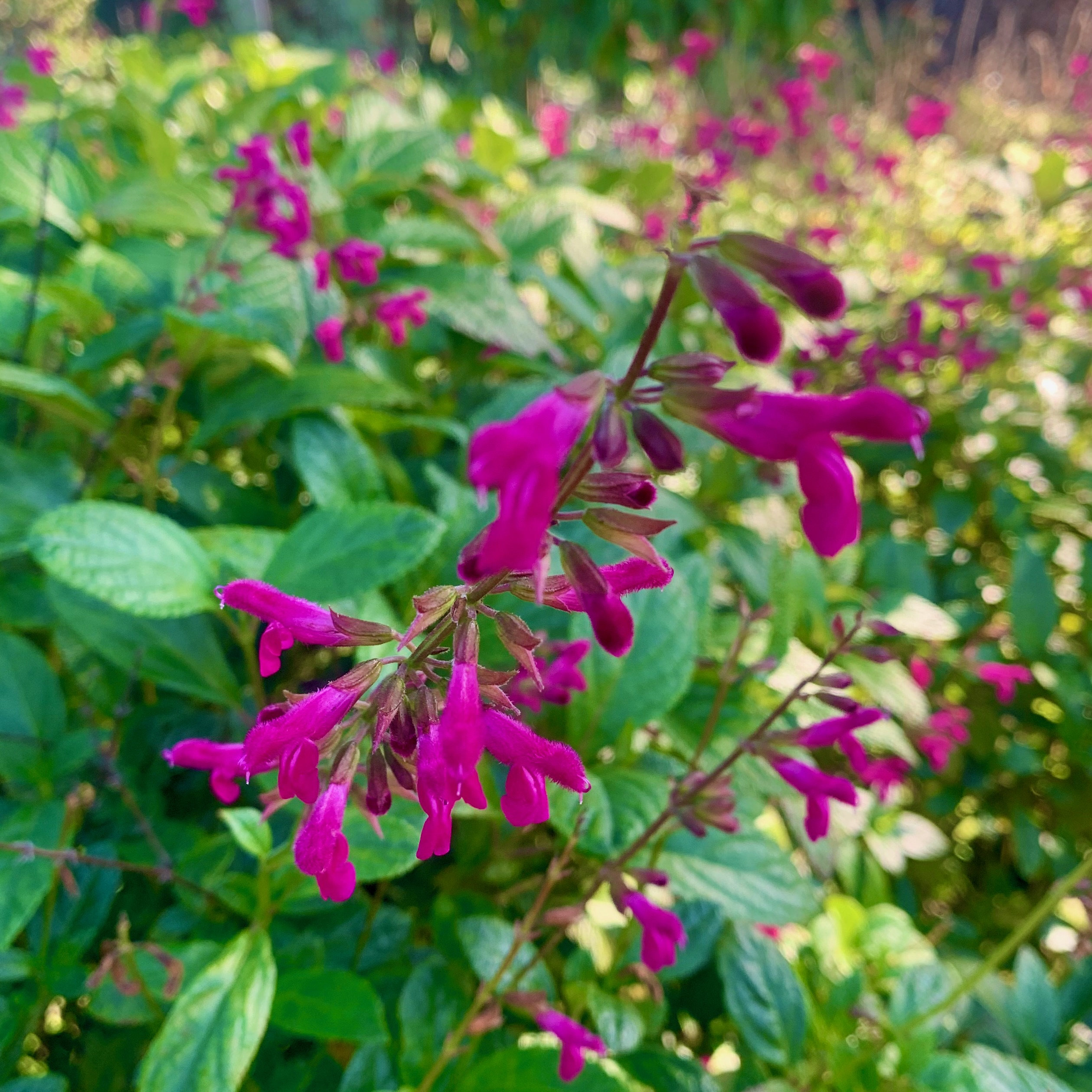
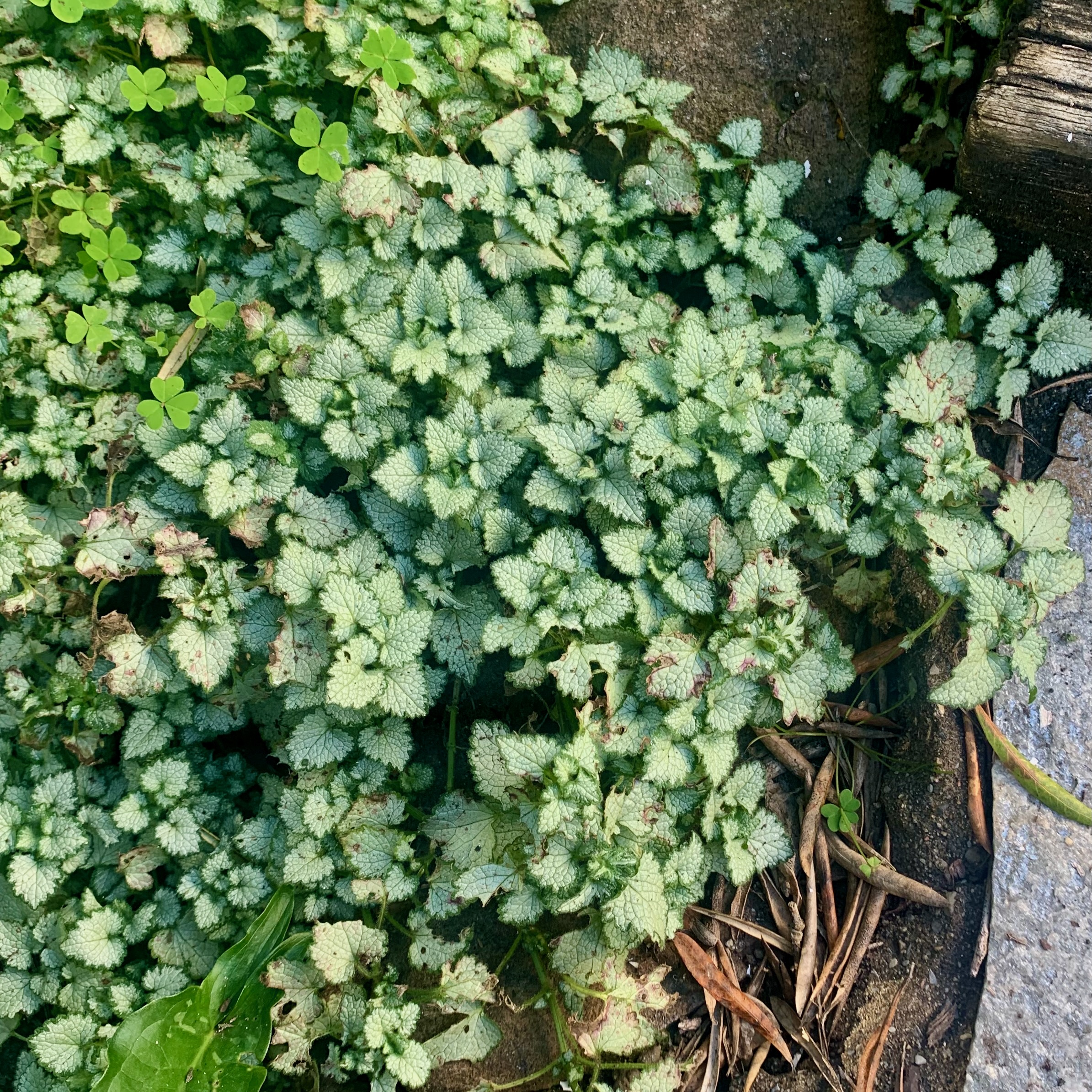
Chiapas sage (Salvia chiapensis). This Chiapas, Mexico, native plant’s natural habitat is a cloud forest; it grows in full sun or partial shade and reaches up to 4 feet high and wide. When
grown in a large container, it will be limited to 3 feet high and wide. From late summer
through winter, it develops bright rose-fuchsia-colored flowers with green calyces in well-spaced whorls of three to six flowers on erect, 1-foot-tall stems. As with many salvias, this plant should be cut back hard in late winter or early spring to encourage fresh new growth. (Courtesy Tom Karwin)
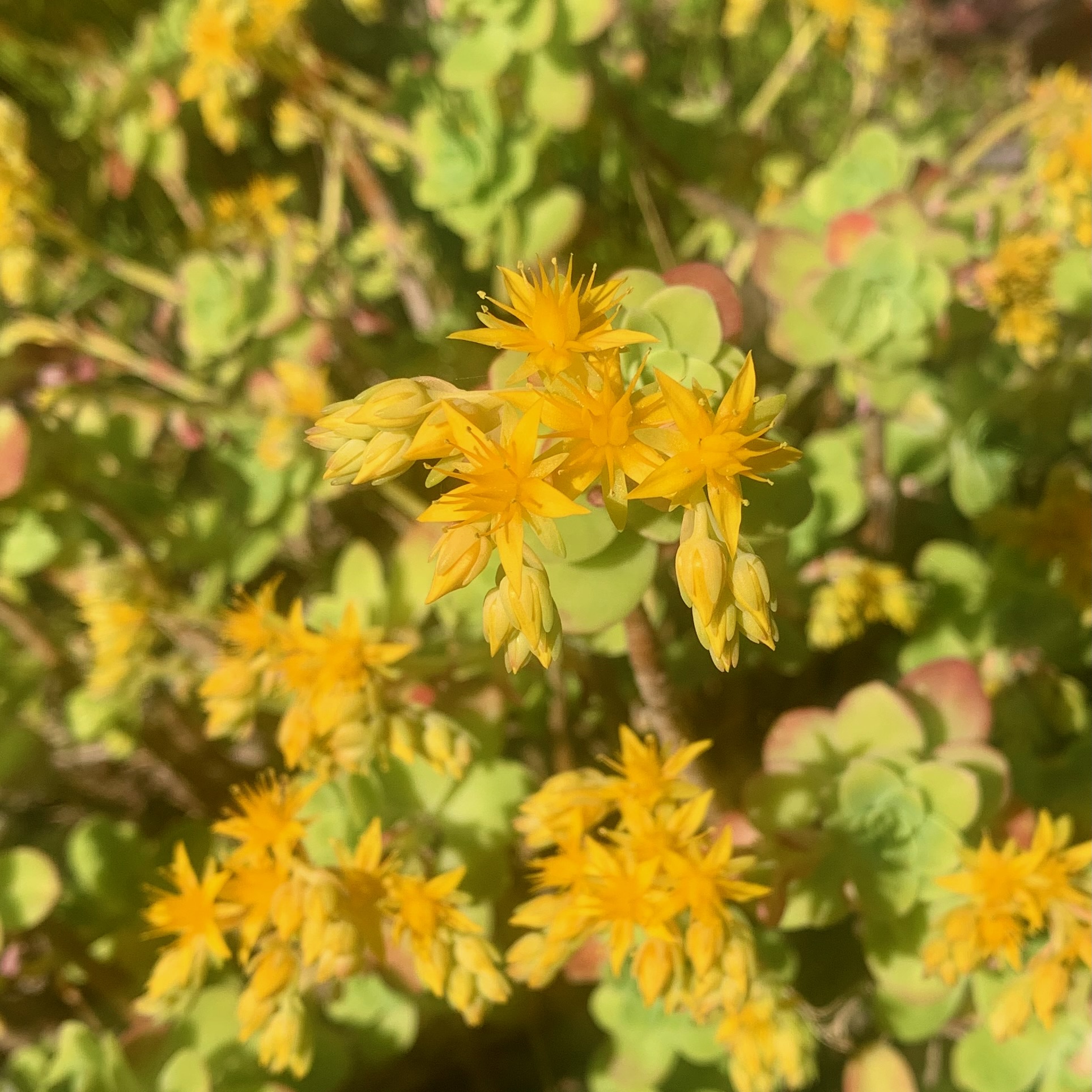
Stonecrop (Sedum oaxacanum). Stonecrops include about 600 species of succulent herbs. The genus name is based on a Latin term meaning “to sit,” referring to the plant’s slow-spreading habit. This species carries the name of its native habitat in Oaxaca, Mexico. It has creeping, 6-inch-long reddish stems bearing small green leaves with dusted white caps. Star-shaped yellow flowers appear solitary or in small terminal clusters. They generally bloom in summer, but are
blooming now, in late winter, possibly because of our unexpected springlike days. (Courtesy Tom Karwin)
Show Caption
1 of 5
Soap aloe (Aloe maculata). This South African native is a popular garden plant in California. It grows rosettes of 20-inch-long, 4-inch-wide leaves. The species name “maculata”
means the speckled markings on the leaves, which are attractive until summer, when the plants
produce flat-topped racemes of bright red to yellow flowers. (Courtesy Tom Karwin)
Expand
Now is the appropriate time to plant seeds for spring blooms in the garden.
Growing plants from seeds requires minimal time and effort and provides the satisfaction of real gardening as you watch plants emerge naturally.
This column provides an overview of the topic without a tutorial on the details of seed planting. If needed, see “Advance your gardening knowledge” below for practical aspects of this form of gardening.
The last frost generally occurs around April 15, so gardeners can plant seeds outdoors after that date. Start earlier by planting indoors.
Today’s image gallery
When I toured my garden to see more than the seasonal weeds, I found lingering blossoms, unexpected early blossoms and foliage of interest. Gardens are worth visiting at all seasons of the year.
Benefits of seed planting
Practical reasons for planting seeds include planting at a very low cost, avoiding potential diseases and pests from purchased plants, broadening your garden’s range, trying new varieties and flavors and the satisfaction of real gardening.
In addition, by planting seeds with care, gardeners can help to preserve the cultural heritage of hands-on gardening and support plant diversity and resilience during climate change.
Planning for planting seeds
An important consideration is to focus on plants that will grow from seeds planted soon or now, and that you want or need for your garden.
Here’s a list of spring or warm-season flower crops: asters, cosmos, nigella, scabiosa, statice, stock, strawflower, sunflowers, tithonia, zinnias. This list is from “Spring into Seeds” (below), which also has a list of veggies to plant for spring growth.
Seed sources
Local garden centers typically display a wide range of popular plants in small packets, along with essential information on how and when to plant the seeds.
Online sources provide access to both common and unusual plants. Here are particularly interesting online sources of seeds:
• Renee’s Seeds (reneesgarden.com) offers “a selection of the best heirloom and organic gourmet vegetable, herb, and flower seeds from around the world.”
• Amazon posts 400 pages of selected plant seeds and packets of seed collections. To browse these pages for seeds of your interest, start by visiting Amazon.com and searching for “seeds.” To narrow the range to 11 pages, select your USDA Plant Hardiness Zone (9 for Santa Cruz and Monterey counties) and Planting Period (choose spring for the present).
• The Theodore Payne Foundation focuses on the beauty and ecological benefits of California native plant landscapes. Visit theodorepayne.org.
• The Wildflower Seed & Tool Co. (wildflower-seed.com) specializes in quality wildflower seeds and mixtures.
• AfroPlants (afroplants.net/index.php) offers plants and seeds from Africa, Arabia and the Indian Ocean. When visiting the website, select “seeds.”
• Chileflora (chileflora.com) is a resource for learning about the nutritional and medicinal properties of Chilean plants, identifying them and purchasing seeds.
• Seed of Italy (seedsofitaly.com) is the importer for the Franchi Seeds brand, the oldest family-run seed company in the world.
• Botanical Interests (botanicalinterests.com) offers “beginner-friendly seed bundles” and seed starting essentials.
• The Pacific Bulb Society has posted an interesting article, “How to Grow Bulbs from Seed.” To read the article, visit tinyurl.com/mzfd5wfp.
Advance your gardening knowledge
For online learning about seed gardening, visit “Spring into Seeds,” 69 pages of slides on the subject. The lesson begins with an introduction to seed gardening, followed by sections: Spring Garden Planning, Seed Storage, Sowing Techniques, Pricking-Out Technique, Sowing Mix, Light, Seedling Diseases & Pests, Hardening Off, Transplanting and a Hands-On Exercise. The Master Gardeners of Monterey and Santa Cruz Counties authored and posted this thorough introduction to seed gardening. The University of California Cooperative Extension sponsors master gardener programs across the state.
“Spring into Seeds” will help you prepare to be a successful seed gardener. It is available at tinyurl.com/3a2uas2a without cost.
This week in the garden
The Master Gardeners of Monterey and Santa Cruz Counties also posted the article, “What to do in the Garden – February,” with notes on food gardening, California natives, flowers and ornamentals, fruit trees, miscellaneous and evergreen tips. The article includes links to extensive information on key gardening topics, such as planting bare-root roses, pruning roses and pruning fruit trees.
View this article by browsing tinyurl.com/7xr5fujh.
Tom Karwin is a past president of Friends of the UC Santa Cruz Arboretum and the Monterey Bay Iris Society, a past president and lifetime member of the Monterey Bay Area Cactus and Succulent Society, a Lifetime UC Master Gardener (certified 1999-2009), past board member of the Santa Cruz Hostel Society and active with the Pacific Horticultural Society and other garden-related societies. To view photos from his garden, visit facebook.com/ongardeningcom-566511763375123. To review the archive of recent On Gardening columns, visit santacruzsentinel.com and search “Karwin.” Go to ongardening.com to review columns from 2012-2020 (and soon) from 2025. Send comments or questions by email to gardening@karwin.com.
Comments are closed.