
Interest in gardening and healthy eating is growing by leaps and bounds at Creekside Elementary School in Sun Prairie, thanks to Grady’s Garden.
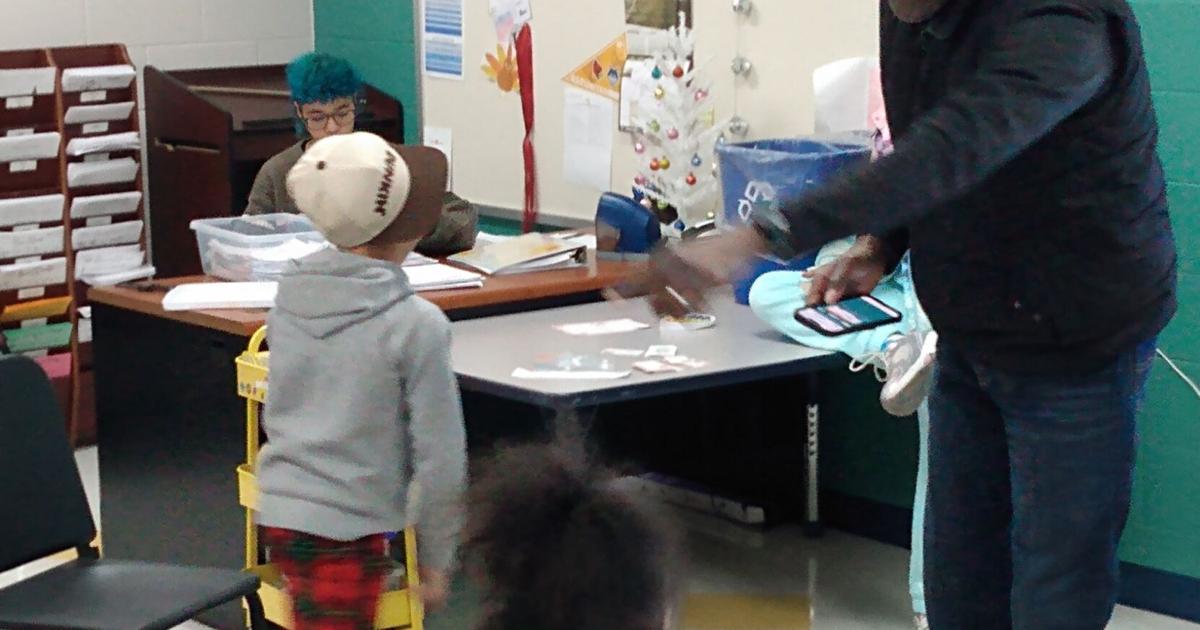
It’s all started with a group of 15 third graders in an afterschool program called Coyote Club, who are finding out they have a taste for vegetables.
“Actually, if a vegetable is brought to the table from a garden in which the kid has worked, then their willingness to consume the products or give it a try, vegetables rather, it goes up incrementally,” said Michael Wheeler, co-founder of the nonprofit Grady’s Garden and the related Grady’s Classroom program.
‘Grady’s Garden’ and Coyote Club
The program, according to Wheeler, is based on the animation show “Grady’s Garden,” which he said chronicles the lives of six kids who decide to create a garden.
“And these kids, they love to have fun, but invariably, it’s about how they develop teamwork and skills and understand everything that goes into creating a garden,” explained Wheeler, “but no less importantly, [it talks about] the benefits of gardening from a nutrition standpoint.”
The animation show is included in Grady’s Classroom modules, and within each module are four key educational components, including vegetables and what allows a vegetable to grow. Additionally, there’s the nutritional part. Another aspect is social-emotional learning, a core emphasis for schools in Wisconsin and everywhere these days. That includes breathing exercises. And lastly, it includes physical activity.
According to Wheeler, the conduit for all this is the Grady’s Garden app, created by a small business innovation research grant from the U.S. Department of Agriculture.
“So, we’re on phase 2, and those funds were used to develop the app, and the app publishes the animation content, as well as all the educational modules,” said Wheeler.
Coyote Club, now in its second year, is a free federally funded afterschool program that serves about 70 kids overall in Creekside and Westside Elementary.
Emily Veselsky, the community schools site coordinator at Creekside, said it all started when Wheeler contacted Sun Prairie’s Community Schools Program Coordinator Jamie Racine, who brought the idea to Veselsky and her colleagues around the district.
‘I think I was just kind of one of the first to connect right away with Michael, and then we just kind of took it from there,” said Veselsky.
It’s been a learning experience for everyone.
“We originally started thinking we were going to do this first semester with our third-, fourth- and fifth-grade, and then realized pretty quickly – the first day – that it was a lot of kids and that we needed a smaller group, that we could really tweak things and change things as we go, and try to pilot this program for out-of-school time,” said Veselsky, who shared that next semester, the club’s first- and second-graders will get the Grady’s Garden experience.
Because it’s an afterschool program, Wheeler said a fluidity to the modules makes it different than what takes place in a normal classroom and allows for growth. Along the way, they’ve learned to adapt to different needs. Wheeler said that with experience and feedback from other facilitators, they’ve been flexible working with other administrators and teachers to go beyond the afterschool program into other educational environments with elements of Grady’s Classroom.
Wheeler said it’s about meeting them where they are.
“So, if a teacher wants to engage or an administrator specifically as it relates to social and emotional learning, or just the vegetable component, or what have you of the educational curriculum, then that’s fine,” said Wheeler. “And if they want to migrate to doing in the full curriculum, all 15 minutes, but invariably, what I’ve discovered is, you just don’t have enough time. And if we don’t have enough time in an afterschool setting, a teacher doesn’t have enough time, because literally, everything is on the clock.”
Getting it going at Creekside
Veselsky has been at Creekside since 2024. When she started, the grant for Grady’s Garden had already been written. She’s been able to build Coyote Club from the ground up, with help from advisors. The program is at capacity with 70 students, she said. They were also at capacity in the first year.
“That shows a need for these out-of-schooltime programs in our district. So, bringing in enrichments like Grady’s Garden, for me, I just want to say yes to everything, right?” said Veselsky, with a laugh, “Because as Michael said, during the day things are so rigid and to-the-minute that it is very hard, especially the older they get, to incorporate things like this. And so, we have 340 students at our school, and to have 70 of them in our afterschool program … yeah, we’re going to do things like this.”
It also didn’t cost anything, said Veselsky, which is big for a community school location like Creekside.
Grady’s Garden and Grady’s Classroom are based out of Janesville. Wheeler said that slowly but surely, it’s going nation-wide. Other states using it include Michigan, Massachusetts, Idaho, Texas, Indiana and Illinois.
Wheeler said corporate donations support the program. Right now, the Sun Prairie and Beloit districts are the only ones in Wisconsin utilizing Grady’s Garden.
Wheeler expects to resume Beloit’s program in the spring. It started there with Converse Elementary, and Wheeler expects to conduct programs at Beloit’s five other elementary schools two at a time.
Seeing the kids engaged in learning about gardening has been rewarding for Wheeler.
“For me, it’s been an incredible, eye-opening experience,” said Wheeler. “I’ve never spent 10 weeks with one school before, working with the same kids and developing a love for them and a patience. I’m not a teacher. It’s not my background. And I’ve seen that through patience and lack of judgment, kids will develop a rapport with you that accelerates their learning.”
Wheeler also said the next group will get the benefit of what Wheeler and company learned with the first one.
“I’m seeing a willingness to try vegetables,” said Wheeler. “I haven’t seen the data, but normally what we’ve seen is 37% to 39% in terms of a child’s willingness to try vegetables, and that’s the big challenge for us. Normally, it takes between eight and 11 exposures. Empirically, that’s what the people who support the program from a research standpoint suggest. We’re getting a willingness to try that’s substantially higher than that. And sometimes it’s simply because the kids like the vegetables but haven’t had the exposure to them either at home or at school, or a combination of both.”
There is a pantry with fresh fruits and vegetables that can be sent home to families, who often ask specifically for produce their kids have learned about, according to Racine.
Wheeler said the organization has received another donation to fund gardens. He’s hoping to start 15-20 of them this year.
“So, imagine if the child or student is involved in the curriculum or the classroom, and then you can walk them outside where they start growing, and I guess we’ve laid the foundation for that,” said Wheeler, who explained that the next step is working with Veselsky to fund a garden and integrate the community. “That’s the circle.”
Veselsky said some state representatives visited the program and met Wheeler. They got to ask the kids what they were learning. With a laugh, she said they talked a lot about purple carrots.
“They were really excited about the purple carrots,” said Veselsky. “They had answers, and they were talking about how they got to try things and what color the inside of purple carrots are. So, for me, that was really cool to see that it’s working, and to see that they’re retaining this information because it’s a really special way to present it. It’s not just sitting at your desk in front of worksheets. It’s not just people talking at you. Michael is talking with them and having conversations with them, and they’re receptive to that. It’s also a really special group of kids. They want to be a part of it.”
Racine said, “Those purple carrots were a thing!”
Wheeler said that empirically it’s been shown that kids who work in gardens lead a more active lifestyle and eat more vegetables. When he was a kid, Wheeler said he doesn’t recall such opportunities and didn’t realize some of the “profound moments” he had with adults until he left school.
Wheeler started as an assistant public defender, followed by a marketing career in corporate America. He credits his wife with helping him take a more Eastern philosophic approach to finding inner peace, and gardening was a part of it.
Before that, he joked he wouldn’t have been caught dead in a garden. Veselsky said she hadn’t been into gardening before this either. In the end, Wheeler hopes that one day the kids will look back fondly on this experience.
“And so, I think about being patient with a child or a student; it’s similar to those experiences that I look back on when I was a kid,” said Wheeler. “You’re like, ‘Holy cow! This particular person, they have no idea the impact they made on my life’ … so when I work with the kids, if I can give them one moment, they may take a quarter of a percent from this curriculum over 10 weeks, or whatever it may be, but that could be something which changes or gives them pause as they go down a pathway of food and nutrition in this society.”
Comments are closed.