
Downloadable Retaining Wall Build Guide: https://geni.us/Xev21
Insurance Survey And Custom State Report: https://geni.us/bI8z0
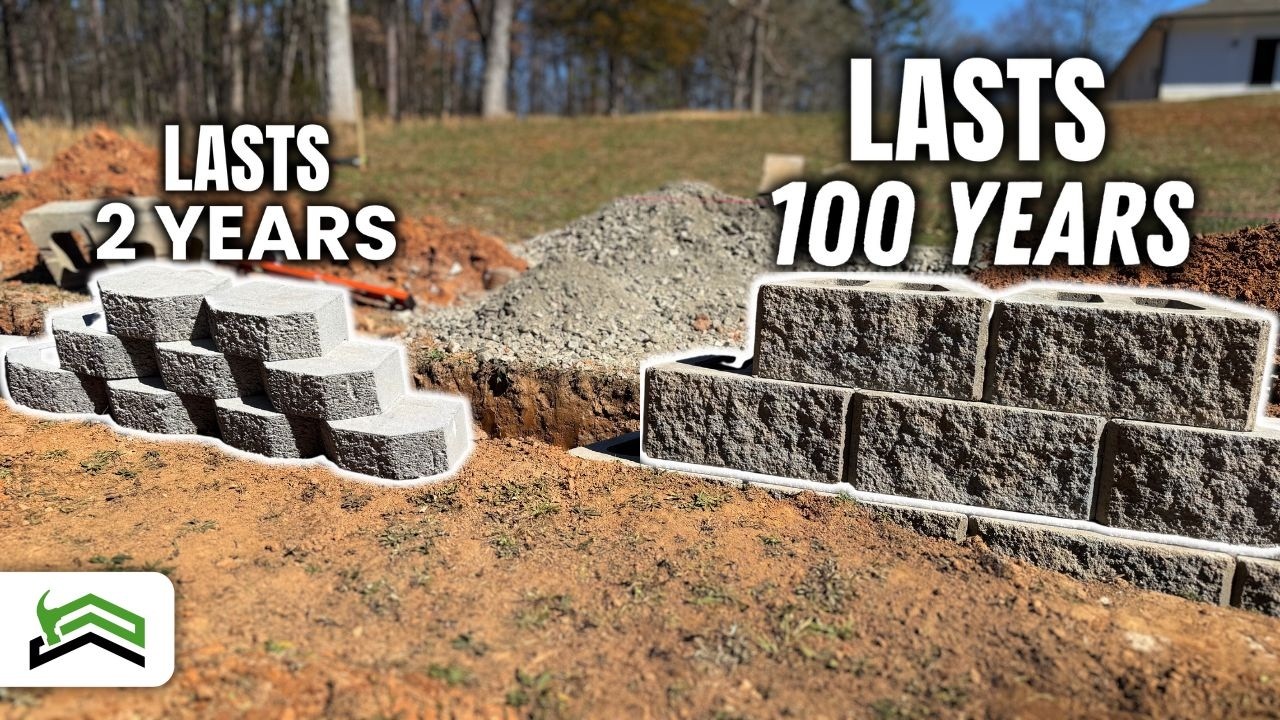
Taking on a DIY retaining wall project can save you thousands, but proper planning and selecting the right retaining wall block is essential for success. This comprehensive guide covers how to approach this home renovation project while avoiding the 5 most common mistakes homeowners make. Get ready to enhance your curb appeal ideas and landscaping ideas with my detailed multi-page guide that walks you through tools, materials, and professional techniques. 🏡
Free Home Maintenance Checklist: https://geni.us/P7XBg
DISCLAIMER: This video and description contain affiliate links, which means that if you click on one of the product links, I’ll receive a small commission.
22 Comments
Downloadable Retaining Wall Build Guide: https://geni.us/Xev21
Insurance Survey And Custom State Report: https://geni.us/bI8z0
DISCLAIMER: This video and description contain affiliate links, which means that if you click on one of the product links, I’ll receive a small commission.
Great video thanks for sharing! At what point would it make more sense to pour concrete instead of using blocks? I have access to a mixer. Thanks!
On the first heavy rainfall, that wall is coming down… zero foundation, and drainage can literally be large diameter cut pvc pipes evenly spaced… Much quicker and chapeper to simply trench, tamp, pour concrete with reinforcement "add steps on sloped terrain" and build atop… WTF!!!!!
Do you ever fill the blocks with concrete (maybe rebar also) after the blocks are in place?
Generally, it's hard to argue with this advice. Having said that, I used residential grade blocks from H.D. for terracing the grade on both sides of our house (5 stack high, tapering down as they wrap toward the front of the house). Those projects were done in 2002, and they both still look as good as when I installed them (using the technique he explains in this video). Also, on one side the terraced grade has supported the external air conditioning unit. So, if you do it right, residential grade blocks can result in a very satisfactory result that lasts a long time – depending on the project.
I built retaining walls for my garden with the bricks you call "last 2 years". It is year 6 now, so far, no problems with the walls. so I guess if yours is standing 2 years only the problem is not the bricks.
I don't know about you guys, but as a European I would not trust that little lip on the back of those blocks to hold it together, for anything more then 2-3 feet… Our retaining walls don't look so fancy here, we just pour solid concrete, but I bet they are a lot stronger…
Instead of a/b base rick, My structural engineer suggested 3/4" crushed as base, as it needs NO compaction. Once level you are ready for the stone.
God bless you for sharing this unique construction exeperience
👍🏻 FR 🇫🇷👍🏻👀👍🏻🇬🇦 GA 👍🏻
There is level concrete already. Only 2 feet tall. 13 feet long. Easy Peasy????
You are using gravel as your base, reason for not pouring a concrete "platform" to build your wall on?
I go to street material supplies for retaining blocks . Setting up blocks I always leave space between all blocks and backfill it with straw and soil. That's where I plant my perrinial saxifrage and sedum species types as they use rock for support. Looks very cute and decorative if you know what to do. No monotonous industrial shapes to ruin the biology of a garden.
Isn’t poured concrete with rebar going to be much more stable?
not sure of the facts here. I have residential grade just like you show and its as solid as brand new after exactly 50 years. 22 with me and back to 1973 with the original home owner. I do live in the best weather. That may have a lot to do with longevity
cheers
80lb retaining wall blocks? Good luck doing a wall with those as a home DIY. Seen many people start jobs like this and end up calling in paid help because they absolutely underestimate how back breaking and time consuming this is.
Your compacted gravel base is not wide enough, should be at least twice as wide as the block. You skimped out on the most important part.
This may be a really dumb question, but why would you not just poor an 18 inch concrete footer with steel rebar instead? Then it doesn’t matter how level you have the base.
Would this method work for pinning underneath a Aframe cabin that's built up on open piers only around 20" off ground level?
thank you very much!
Scott, wouldn't that style wall with no cement have plenty of gap for water to drain?
For stability and dynamic loading, place geogrid between every other course of blocks, going back at least as far as the course height.