
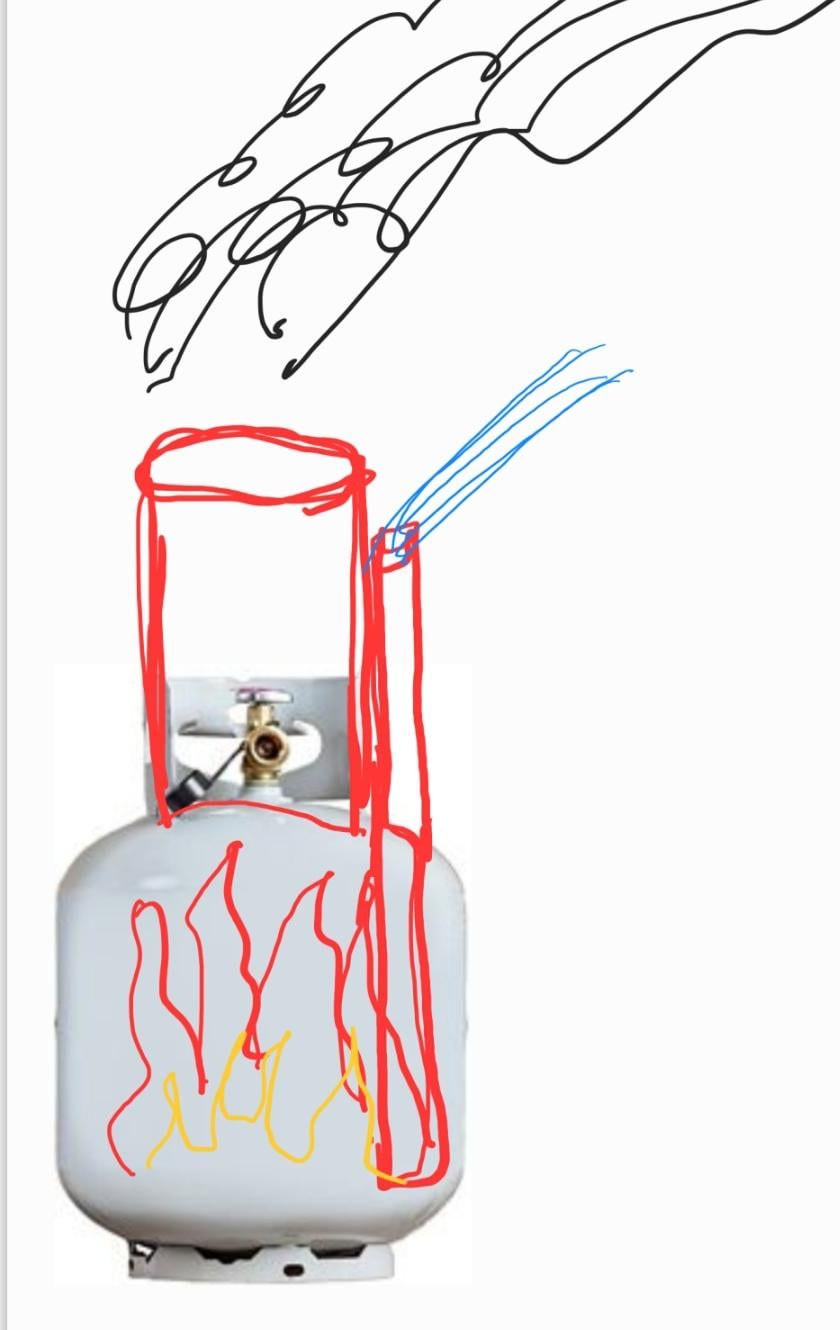
To preface I'm new to this. This is my second winter with animals and by far the hardest winter I've experienced in 10 years. We have a 100 acre stead in the Northeast. It hasn't been above freezing since the beginning of December. Nights are even touching subzero (F). At this point stock tanks are nearing 20% capacity. We use the plastic Rubbermaid ones in 100 & 150 gallons. Absolutely no power to the animals and the house is about a quarter mile away. We haul water in. What can we do to keep tanks from freezing or even thawing them easily? We have a genny but I don't exactly want to run it 24/7 just to maintain. I ran a 12v diesel heater off a deep cycle plummed into a plywood lid. That wasn't awful. Now I'm considering a wood fired stock tank heater. To at least thaw once a week or so to increase holding capacity. I attached a rough pic of the idea. But at this rate I'll try anything.
by Natexl87
9 Comments
Do you have a way to move the watering area closer to your house?
Have you considered putting in solar? If you’ve never done a solar project before, it can be a steep learning curve, but with a large enough array and battery bank, you can run a smaller wattage submersible deicer, just make sure to have low-voltage cutoffs in place.
You could also run about five 250 foot extension cords. This is not an ideal solution, and would require heavy duty 10 AWG wire if running 250 watt deicer, or 8 AWG if using 500 watts to combat voltage drop. It would also be an expensive solution for that length of heavy duty wire.
I’m trying to get my head around wtf the pic has to do with keeping your animals water from freezing? A 25 pound propane tank will be empty in hours. The diesel heater you tried is probably the cheapest way to do it. Maybe you can try a fish tank heater on a jackery battery. You just need to keep the water above 32. You can get 100 watt ones at most fish stores
You’ll be happier if you move the watering area closer to where you have water and/or power. Figure out where you’d need to put fences and gates to allow the animals close to the house to get their water when it’s freezing, while keeping them further away the rest of the time.
But if you insist upon thawing the water out there… consider just heating water in metal containers over a fire and dumping the hot water into the tanks. consider increasing the thermal mass around the troughs to slow the heat loss from the water. if you have a barn, consider watering inside the barn, because inside the barn tends to be warmer than outside.
People make wood fired hot tubs, so you could look there for inspiration. To keep a wood fire going long enough to melt 100 gallons, though, I’d think you’d need a much larger burn vessel than a propane tank. I think I would consider solar and a small pond deicer first.
If you can, this spring or summer, consider renting a trencher. Trench below frost line just like water pipes for your house. Use the black plastic water pipe. You can get it at most hardware stores in 100 foot lengths. The run your water pipe in the trenches and put in frost free hydrants. The ones that drain all the water out of the bottom into a gravel pit you put under the hydrant down below frost line. Then you have a hydrant right where you water your animals. My husband suggested we do this when we moved into our current place. It is one of the best things we ever did. I can reach all of our rotational grazing pastures in the summer with a couple hoses and I have hydrants where I need them to fill stock tanks in the winter.
Then it becomes a game of figuring out how much your animals drink so you don’t over fill the tanks and create a giant block of ice that can’t be dumped out until spring…..
You can put insulation around the tanks, and insulate part of the top so there is only a small hole for the animals to drink out of. If the water is fairly warm when you put it in the tank it will stay pretty warm in there for quite a while. You can also build insulated tanks that have solar heating window in them that helps heat the water if the tank is in the sun. I know, sometime we don’t see sun for days. I am in Ohio. It was -20 F Saturday to Sunday low temp and -17 F from Sunday to Monday low temp. I have a hydrant that is frozen. Luckily it is close to an outdoor outlet so I am attempting to thaw it. I think the hydrant needs replaced this spring, but that is a ways away.
link to insulated solar tank
[https://www.motherearthnews.com/diy/solar-stock-tank-zmaz10onzraw/](https://www.motherearthnews.com/diy/solar-stock-tank-zmaz10onzraw/)
I haven’t tried it so I can’t say how it works.
I assume you’re going to cut a hole in the top of the tank and weld on a chimney pipe and then you’re smaller pipe that has the blue at the top would be your air intake and then set them inside the tank. If that’s the case it will work great
They just need to be heavy enough so they don’t float when empty. I’ve seen brake rotors or drums attached to the bottom for more weight and they also keep the burn pot off the bottom of the tank so the don’t melt the tank. Also make sure all the seams for the pipes are watertight.
I would add a damper on the exhaust or intake so you have a way of controlling the fire.
And run the exhaust pipe a few feet above the head of your tallest livestock and secure it in a way that the livestock can’t knock it over.
Also if you can get coal in your area that works better than wood. You can pack it tighter into the burn pot and adjusting the damper right it will burn a lot longer than wood.
They used to make similar stock tank heaters before electricity was widespread. They were usually made out of cast iron though for the weight. There were also tanks that had coal heaters built into the bottom of them.
Corbett makes freeze proof waterers for this purpose. There are companies that make combustion stock tank heaters that run on propane.
I have seen homemade versions that use diesel, waste oil or wood but they all require tending to at least once a day.
You are going to have half or more of the cost of a Corbett in any combustion system you build or buy. And then you have to tend to it forever.
I would get through this season however and then install something that takes no work next summer.
I have a stupid idea for you that comes from an impoverished history. My friend bought an above ground pool when it was on sale for about $80. That means that it was in the fall when it’s too cold to have an above ground pool. He filled it with city hose water that you could swim in for about 4 minutes before you had to get out. I had a radiator for a Nissan hardbody pickup that I sold so I brought it over and it just so happened that the hookups for the pool’s recirculator/screen fit perfectly on the radiator allowing us to put it onto one of those cheap round charcoal grills that we had built a pallet board fire in. Two hours later it raised the water temp to allow you to sit in the water for about 12 minutes, longer if you were being active. I got the idea from those big metal coils people put in campfires to make a dug out tarp hot tubs that the heat itself makes the pump action work. Hope that helps.
To add another option that I’ve done to get by, chop all the ice out once a week. It’s not a long term solution, but it’s one I’ve used – including last week. I have a couple 500 gallon tanks I don’t run heat to and for most of the winter it’s just a couple inches of ice to chop a hole through in the morning but after a long cold spell it’s 10-16 inches of ice around the top and sides. Not the best solution but a solution