
Despite February’s often cool, damp, and dreary days, it is a harbinger that spring is only a month away and can inspire North Bay gardeners to begin planning, preparing and getting an early start on their gardens for the upcoming season.
Prune
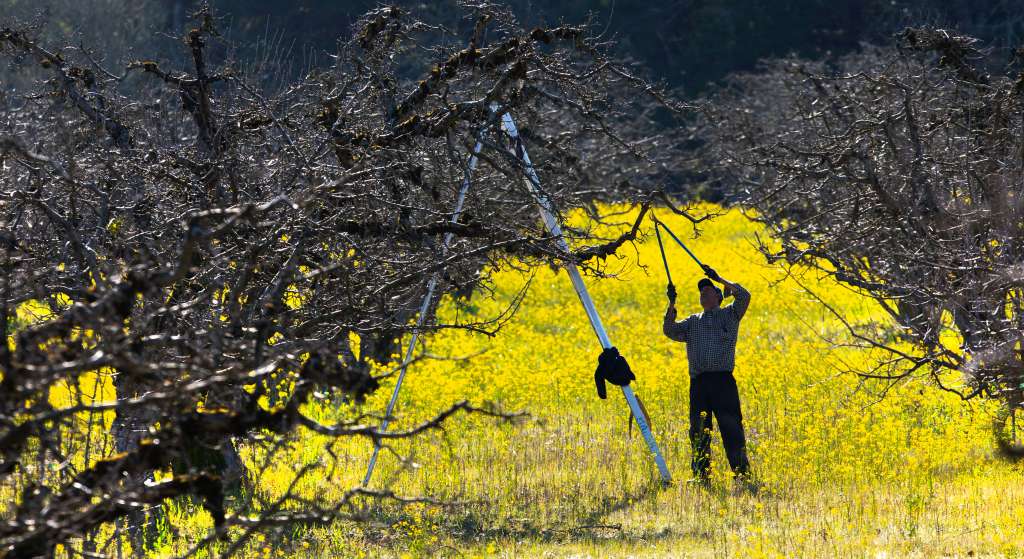
Established fruit trees are dormant in February and need your attention to promote spring growth. If you haven’t already pruned your dormant fruit trees, there is still time for most. See the University of California’s guidelines on pruning and training fruit trees. https://bit.ly/3H4ABQT
Spray fruit trees with dormant oil and copper after pruning and before buds start to open. Always follow label directions when using any agricultural spray.
Spray fixed copper on peach trees just before bud swell to control peach leaf curl and brown rot per label instructions. The same spray will help prevent fire blight in apples and pear trees.
Fruit trees aren’t the only plants that need attention this month. Finish pruning deciduous trees, roses and shrubs while the leafless branch structure is visible. Cut out all damaged, diseased and crossed branches. Prune for shape and size. Wait to prune back frost-damaged plants until warmer weather when you see whether they have recovered.
Cut back woody shrubs to stimulate new growth. To rejuvenate leggy shrubs such as salvia, cut to the ground one-third to one-half of each year.
Prune ornamental grasses.
Finish pruning roses and dispose of canes, leaves, and debris. After pruning, be sure to clean tools.
Citrus
Fertilize your citrus trees according to product instructions. Most mature citrus require regular fertilization with nitrogen. Typically, most other nutrients are available in sufficient amounts in the soil. Nitrogen should be applied in January or February just prior to bloom. The second application can be applied in May and perhaps a third in June. For more information about fertilizing citrus see: https://tinyurl.com/mu5cvmtn
It may be time to harvest citrus. Fruit ripens only on the tree, so sample one to determine ripeness. If scale insects are present, use an agricultural spray according to label directions to reduce the existing population of scale.
Plant
Plant bare root deciduous shrubs and trees. Plant roses, grapes, blackberries, raspberries and strawberries.
A few vegetables such as spinach, turnips, peas, potatoes, Swiss chard, head and leaf lettuce can be planted this month. However, vegetable garden soils should be moist, but not wet, and dry enough to crumble when pressed in your hand before preparing it for planting. These vegetables thrive in cooler temperatures and can be planted directly in the ground or started indoors for transplanting later. https://tinyurl.com/36uyv5we
Start seeds indoors
Get a head start on your vegetable garden and consider starting tomato and other warm-weather vegetable seeds indoors so they’ll be ready to plant outside after the threat of frost has passed. While the last average frost date in Sonoma County is about April 15, this is a 30-year average. Most gardeners delay planting warm-weather vegetables until early- to mid-May.
For detailed information on starting seed indoors or in a greenhouse see: https://bit.ly/4j0YOJv
Start sweet potato slips
There are three stages in growing sweet potatoes:
1. Growing the slips on your windowsill in a jar or in a shallow container with moist potting soil.
2. Planting the slips outside either in a big bucket or container, or in the ground.
3. Harvesting the mature sweet potatoes. Sweet potatoes take about three-to-five months to mature and another one-to-two weeks to cure before moving to cooler storage. Properly cured sweet potatoes can be stored for four-to-six months. For more information on sweet potatoes and a step-by-step guide for growing see: https://tinyurl.com/yzcfjmup.
California native plants
Although relatively low maintenance, native plants need attention this month, too.
Cut back dead portions of native perennials that have become leggy. Don’t prune plants whose buds have already set.
Top off mulch around natives to keep down mud when it’s wet and to help retain moisture when it’s not. Be sure to keep the mulch at least 4 inches away from the base of the plant to prevent rot and pests.
Water natives only if needed. Young seedlings and new plantings may require water if there has been a dry spell.
In February, snails and slugs may make an appearance in your garden. Look for silvery mucous trails, searching under boards and other hiding places. The first step in gastropod management is to eliminate the places where they can hide during the day and collect them from concealed places that cannot be removed.
Hand pick snails at night – every night at first – and then weekly as numbers decline. Place barriers of copper foil or diatomaceous earth around plants and raised beds to deter their movements or trap them in small containers filled with beer or other fermented liquids buried at ground level. For more information go to https://bit.ly/3IyVVg5.
Contributors to this week’s column were Diane Judd and Debbie Westrick. The UC Master Gardener Program of Sonoma County sonomamg.ucanr.edu/ provides environmentally sustainable, science-based horticultural information to Sonoma County home gardeners. Send your gardening questions to scmgpd@gmail.com. You will receive answers to your questions either in this newspaper or from our Information Desk. You can contact the Information Desk directly at 707-565-2608 or mgsonoma@ucanr.edu. To receive free gardening tips and news about upcoming events, sign up for our monthly newsletter: https://tinyurl.com/y3uynteb
Comments are closed.