
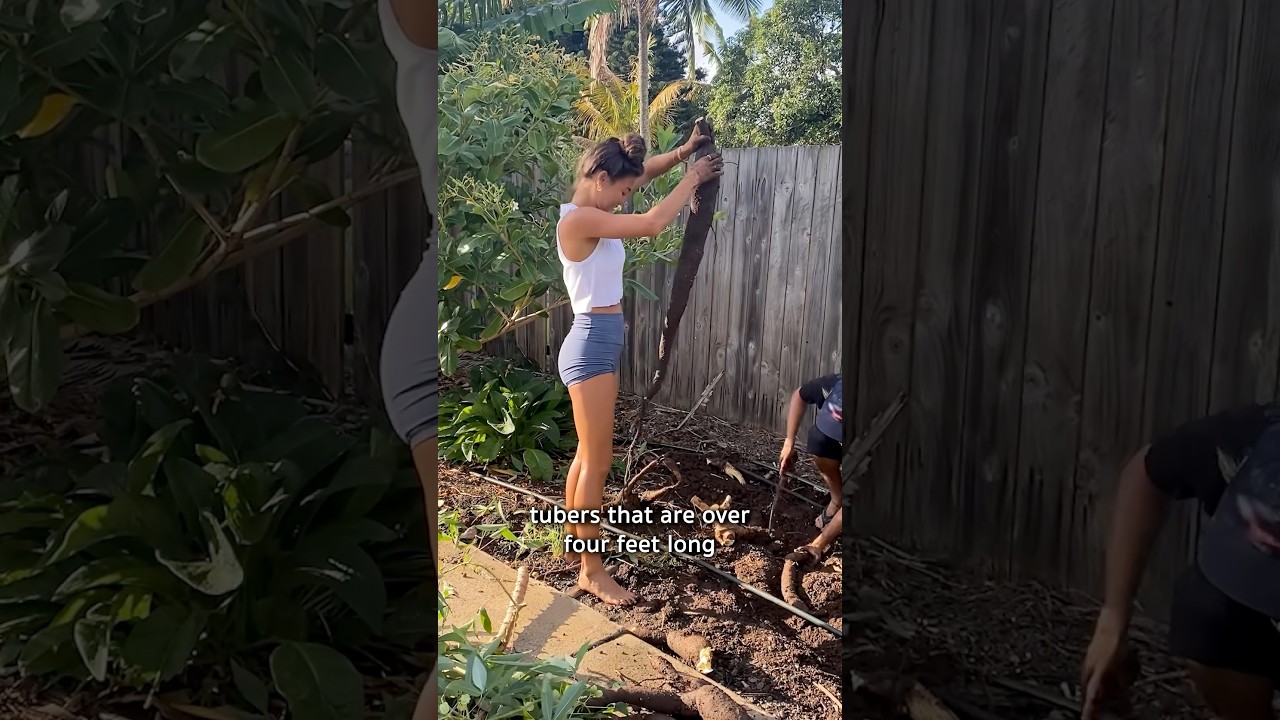
Growing food has been the most empowering thing. It has opened our eyes to how valuable the knowledge is and essential for security in this unstable world. I hope everyone gets a chance to feel that freedom and taste the difference. Here’s a little video of how things are progressing back home in Hawaii, while we are traveling.
#foodsecurity #growingfood #growfood #selfsufficient #gardener #backyardgardener #cassava #tapioca #yuca #growfoodnotlawns #homesteading #hawaii #homestead #tropicalfood
21 Comments
Cassava, also known as yuca or manioc, is a woody shrub cultivated for its edible, starchy tuberous roots. It's a staple crop in many tropical and subtropical regions, known for its drought tolerance and ability to thrive in poor soils. The roots are a significant source of calories and are consumed in various forms, including boiled, fried, or processed into flour (tapioca).
Key Characteristics:
Plant Type: Woody shrub, typically grown as an annual crop.
Climate: Thrives in warm, tropical, and subtropical climates.
Roots: Edible, starchy, tuberous roots that grow underground.
Leaves: Palmate (hand-shaped) leaves, sometimes with ornamental value.
Propagation: Typically grown from stem cuttings, not seeds.
Toxicity: Contains cyanogenic glycosides, which must be removed by processing before consumption.
Uses:
Food:
Cassava roots are a major source of carbohydrates and calories, consumed in various forms.
Tapioca:
Cassava starch, known as tapioca, is used in food, animal feed, and industrial applications.
Ornamental:
Some varieties with variegated leaves are grown for their aesthetic appeal.
Growing Cassava:
Planting: Cassava is usually grown from stem cuttings, planted horizontally or vertically in the ground.
Soil: Prefers well-drained soil but can tolerate poor soil conditions.
Watering: Requires regular watering, especially during dry periods.
Harvesting: Roots are typically ready for harvest after 9-12 months, but can be left in the ground for longer.
Processing: Cassava roots must be processed to remove toxins before consumption.
In summary, cassava is a versatile and important crop, providing a vital food source in many parts of the world, while also offering ornamental value and industrial applications.
I’m from South America so we call it yuka. Boils till soften then fried is so good. Add chicharones or cracklings. Winning combo
I would love a link for your gals pants!! ❤🎉
My excuse to drink boba
You can eat the young or top leaves of the casava tree and cook it in coconut milk.
You need to first squeeze out the cyanide content by boiling and squeezing it. Just like bambo shot.
Please show the whole recipe if you do it
Cassava is pretty micronutrient poor. Need to combine with other foods.
The head gardener is noticed !
Its great but i just cant stand the stuff. Its like eating glue covered potato.
He actually said to boil them, mash them, or stick them in a stew!
Hi, starch foods really aren't that great.
Thank you for the knowledge, God bless you
It's high in Cyanide 😮
Yes, YESSS I WANNA GROW!!!
you should try makin' cassava cake man, it's really nice ….. it's a very famous cake in the philippines …… i think there's some videos here,how to make cassava cake or search it online or you can make a cassava puto (rice cake) …….
I gotta feed this to my girl. Wow
Pa sembrarle la yuca
Somebody tag the Asian height guy
What climate zones is this hardy in?
From Philippines, hi people 😊
You have to be careful with cassava. Can be poisonous if you don't know how to handle and cook it.