
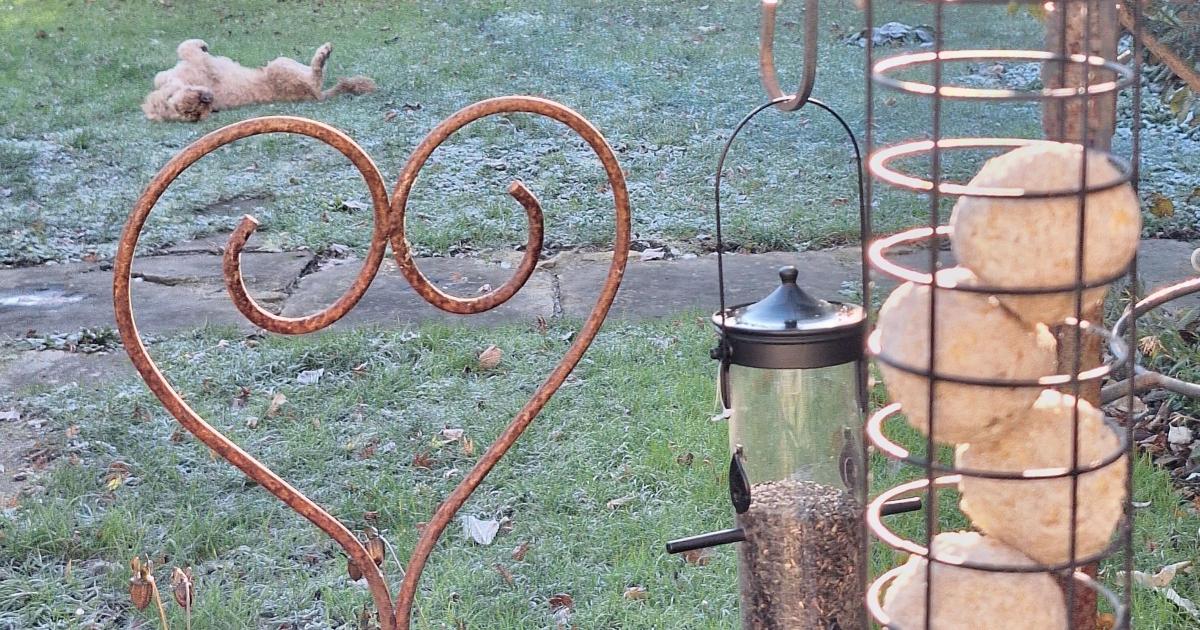
I absolutely love February. It feels like spring is starting to show her face, and if you stand in the right spot there’s a faint warmth in the air. Every so often a blackbird sings as if it simply can’t hold its feelings in any longer. With Valentine’s Day on the horizon, love is officially in the air.
This month I’ve been thinking about the idea that love is observant. True love isn’t grand gestures but really seeing someone, quietly paying attention. And really, that’s the heart of wildlife gardening. Before we plant or prune or rearrange, it helps to simply stop and see what’s happening around us. When we slow down enough to notice the hoverflies on the hellebores or the robin waiting for us to turn the soil, we naturally start caring for them better.
So great news – simply watching is a vital part of being a good gardener! Love begins in attention, and a wildlife-friendly garden begins with learning who already calls it home.
What do the birds prefer to perch on? Where does the hedgehog squeeze through? Which part of the garden catches the early light? None of this shows up in gardening books – we only learn it by watching.
And once we’ve noticed a blackbird eyeing up a nest site or bees struggling on a colder day, we naturally respond with small kindnesses. We leave the seed heads on the teasels because the goldfinches adore them. We tuck a nesting box under the eaves because a blackbird keeps circling that part of the garden with interest. We top up the fat balls because we’ve noticed how much they’re appreciated. We make sure our pond has shallow ledges and a log for safe exit because George the dog alerted us to a stranded beetle.
I’ve observed the birds are getting ready for romance. Robins have been staking out territories since January, their red breasts flitting through the garden, chirping with the confidence of a very determined Valentine. Blackbirds are practising their calls, and blue tits are inspecting every nook of every nest box as though checking potential property options before popping the question. There is definitely romance stirring among the branches.
And underneath the branches I adore how the snowdrops are amassing under the apple tree and spreading onto the lawn, beautiful optimists on cold dark days, and vital for early pollinators to use as emergency service stations. It’s nice to take the time to pause and notice a pair of wrens weaving moss together, a frog choosing the perfect ledge for the first spawn, or even the tiny insects that will become vital food for spring’s fledglings.
Love in the garden is patient, persistent and not always very dramatic, and it’s very similar to our restoration project on our Regency townhouse in Cirencester. These past 12 months I’ve learned the same lessons from the garden and the renovation – it’s ok to take the time to observe how the house works during the first year of living in it, how the walls breathe, where the light falls, how the space is used: and this helps (a bit!) with my impatience to make changes. It’s exactly the same in the garden.
So if love starts with simply paying attention, what better excuse is there to get out there with a nice cup of tea (on one of the sunnier days obviously), and just stop, sit still and watch?
Five Little Love Notes for Your Garden This February
• Put out fresh water – even on chilly days birds need a clean drink and somewhere to wash. A quick top up each morning is like leaving a love letter on the doorstep
• Add early flowering favourites – snowdrops and crocuses are lifesavers for sleepy bees emerging on brighter days
• Leave some ‘perfect mess’ – a messy corner full of last year’s leaves and seedheads gives insects shelter and offers natural food for birds
• Offer a nesting spot – put up a bird box in a sheltered spot, out of the prevailing wind and away from full sun. It’s a bit like preparing the guest room for very tiny, feathery visitors
• Watch before acting – take two minutes each day just to observe. See who’s visiting, where they’re rooting about, and what’s starting to grow. This is where all the best ideas come from. And it’s a surprisingly soothing way to start the morning.
Comments are closed.