
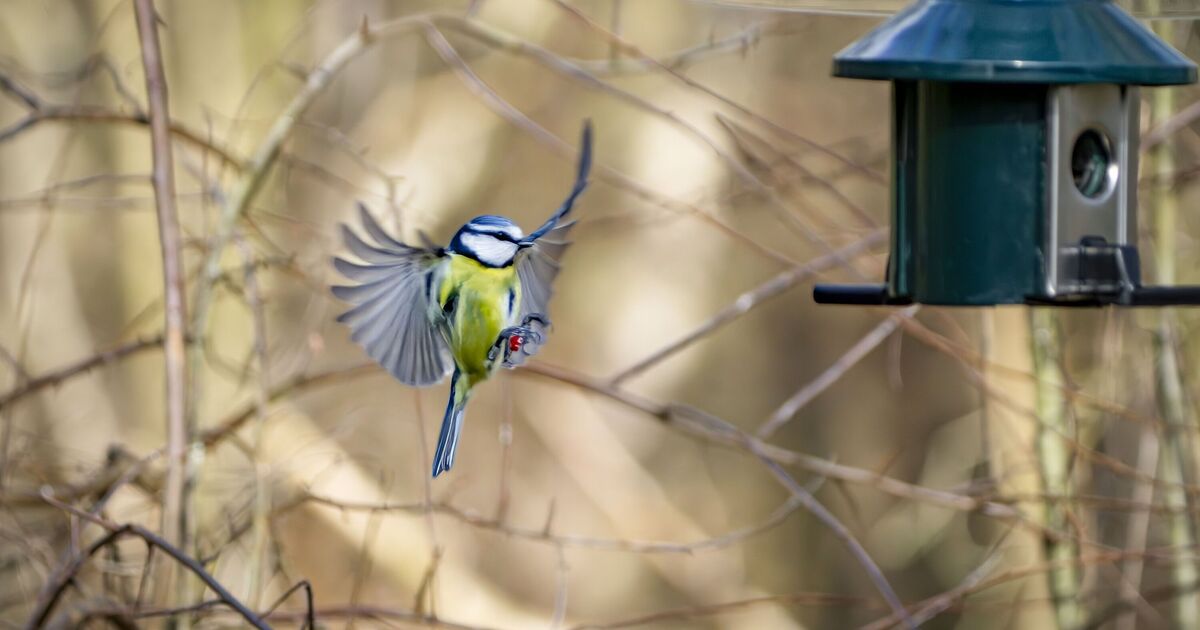
Do you get blue tits in your garden? (Image: Getty)
Everyone enjoys seeing birds fluttering around their gardens – after all, they bring a sense of life, joy and birdsong to the dreary winter days.
This is exactly what has prompted some gardeners to ask how they can encourage smaller birds into their gardens, after complaining that they only seem to attract pigeons and blackbirds.
One Reddit user said: “I live in a fairly urban area close to the countryside and I mostly get wood pigeons and blackbirds.
“Is there anything I should be doing other than the feeders shown in the pictures? There’s suet balls, peanuts, mixed seeds and nyjer seeds. Thanks in advance!”
According to Love Garden Birds, gardeners need to make one simple change to attract smaller birds – and it’s all about where food is placed.
Read more: Drivers urged to avoid nighttime mistake that risks £1,000 fine
A statement reads: “Hang your feeders away from fences and trees, as these are ideal perches for cats. Domestic cats are one of the main causes of blue tit mortality.”
Sharing their favourite foods, it adds: “While blue tits enjoy a wide range of feed, they are particularly fond of suet balls and suet pellets.
“Blue tits are known for their lunchtime acrobatics, so provide feeders they can grip onto while feeding – sometimes upside down.
“A mesh peanut feeder is ideal for them to scurry up and hop about on. Peanuts are also a great source of protein and are perhaps their second favourite food.
“However, peanuts should not be left out during the nesting season, as adult blue tits may try to feed them to their chicks, which can be too large and difficult to digest.”
On the Reddit post, other users shared what had worked for them when trying to encourage more wildlife into their gardens. One said: “As well as shrubs, a small pond can attract more birds and encourage them to stay longer.
“It doesn’t have to be large – a shallow ‘door wedge’ shape works best, allowing birds to paddle and bathe while providing deeper water for insects and amphibians.
“If a pond isn’t possible, a bird bath will also do the job. A small fountain can help too, as birds are attracted to the sound of running water.
“This is especially beneficial during winter, as it may be the only unfrozen water source available.
“Plants such as teasels and echinops are also great. Not only do the flowers support insects in summer, but finches will feed on the seeds in autumn and winter.”
Another user added: “Feeding-wise, sunflower hearts are a great option, as many species love them.
“Blackbirds may also visit if you put out cut-up apples, and other species can be tempted too – I once had a fieldfare turn up on a snowy day for an apple.
“Providing more plants for cover and berries is important, and if you grow plants that attract caterpillars, birds will follow to feed on them.
“Log and brush piles encourage insects, which in turn attract birds. The same applies to areas of longer grass or meadow patches.
“Thorny shrubs are ideal for nesting, and bird boxes can help if you have suitable locations. Try not to be too tidy in spring so birds can collect twigs, moss and grass for nesting.
“You can also put out natural fibres such as alpaca fleece. A pond will also provide water and attract more insects.”
Comments are closed.