
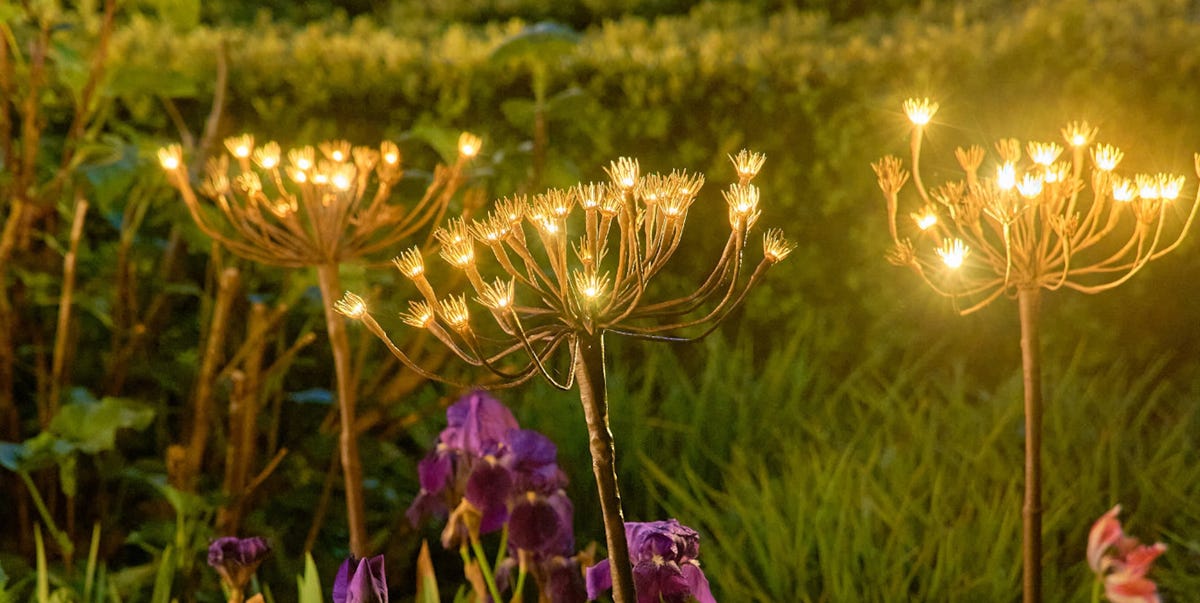
Biophilic lighting is emerging as a key garden design trend for spring/summer 2026, as outdoor spaces once again become the heart of the home.
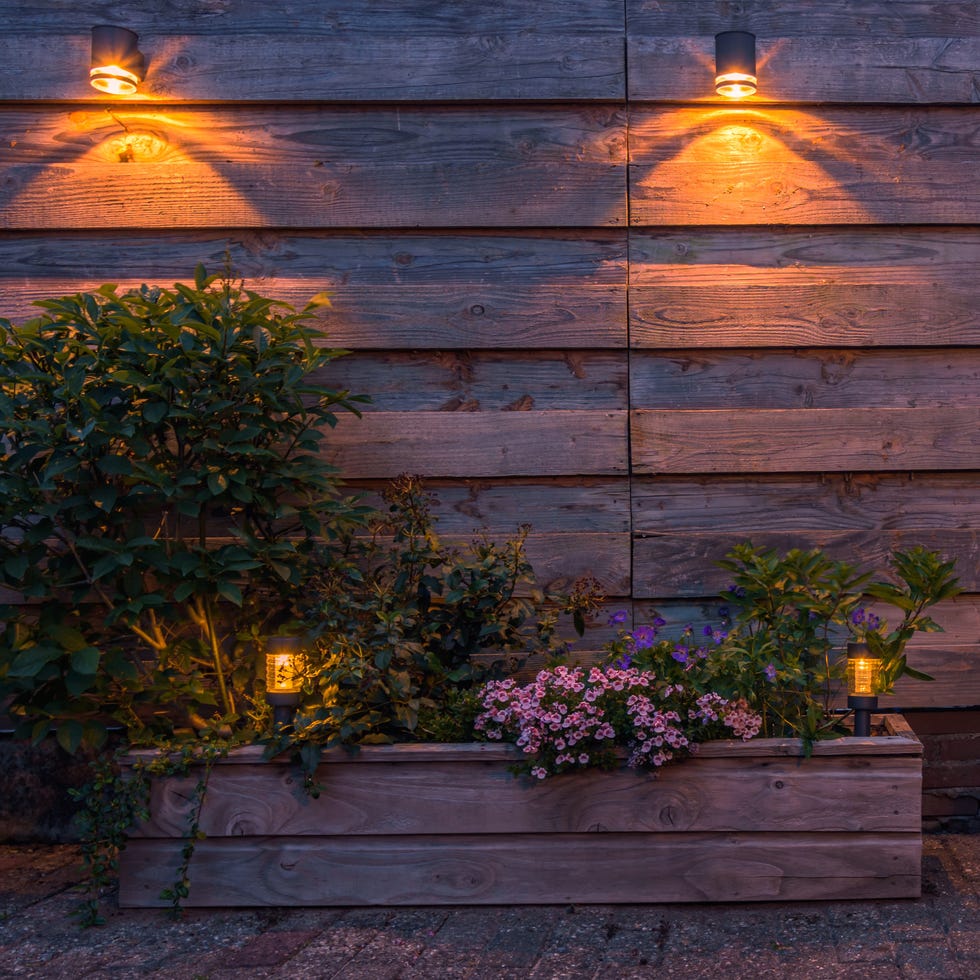
At its core, biophilic lighting is about mimicking the kind of light we experience in nature, creating spaces that feel calming, comforting and easy to relax in. While it’s long been associated with interiors, the same idea works beautifully outdoors too, helping gardens feel more inviting as daylight fades.
As evenings gradually become lighter heading into spring, this approach offers a way to extend time spent outside without disrupting the natural rhythm of the space. ‘Incorporating biophilic lighting means you can make the most of the evenings and create a calm and relaxing space to unwind,’ says Jon Saeed, managing director ofLighting Legends.

Patrick Herzberg//Getty Images
And the good news? Creating this effect doesn’t require a full garden overhaul. In fact, it’s surprisingly easy to achieve.
‘The goal is to use lighting to mimic the natural light cycle, using warm tones, soft brightness levels and gradual dimming while allowing areas of darkness so the garden feels peaceful and balanced,’ Jon adds.
Here’s how to create a biophilic lighting scheme in your garden.
More gardening inspiration:1. Choose warm lighting
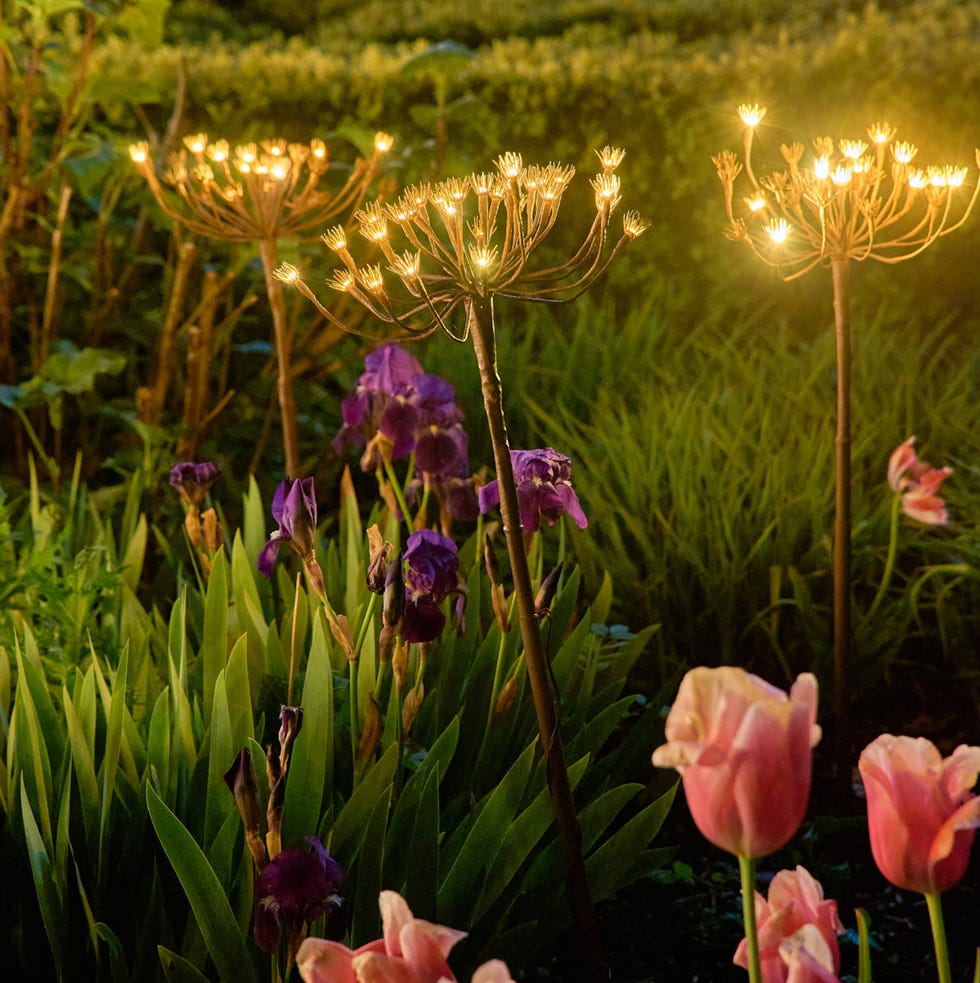
To mimic nature’s natural lighting, opt for warm toned lights to recreate a golden hour sunset. Look for lights between 2700 – 3000k. Importantly, avoid harsh blue and white lights.
 2. Install smart controls
Smart lighting controls allows you to programme lights to gradually dim as the evening goes on, mirroring the natural light cycle. This gentle shift helps signal to your body that it’s time to unwind, creating a calmer, more relaxing atmosphere as night falls.
3. Highlight natural elements
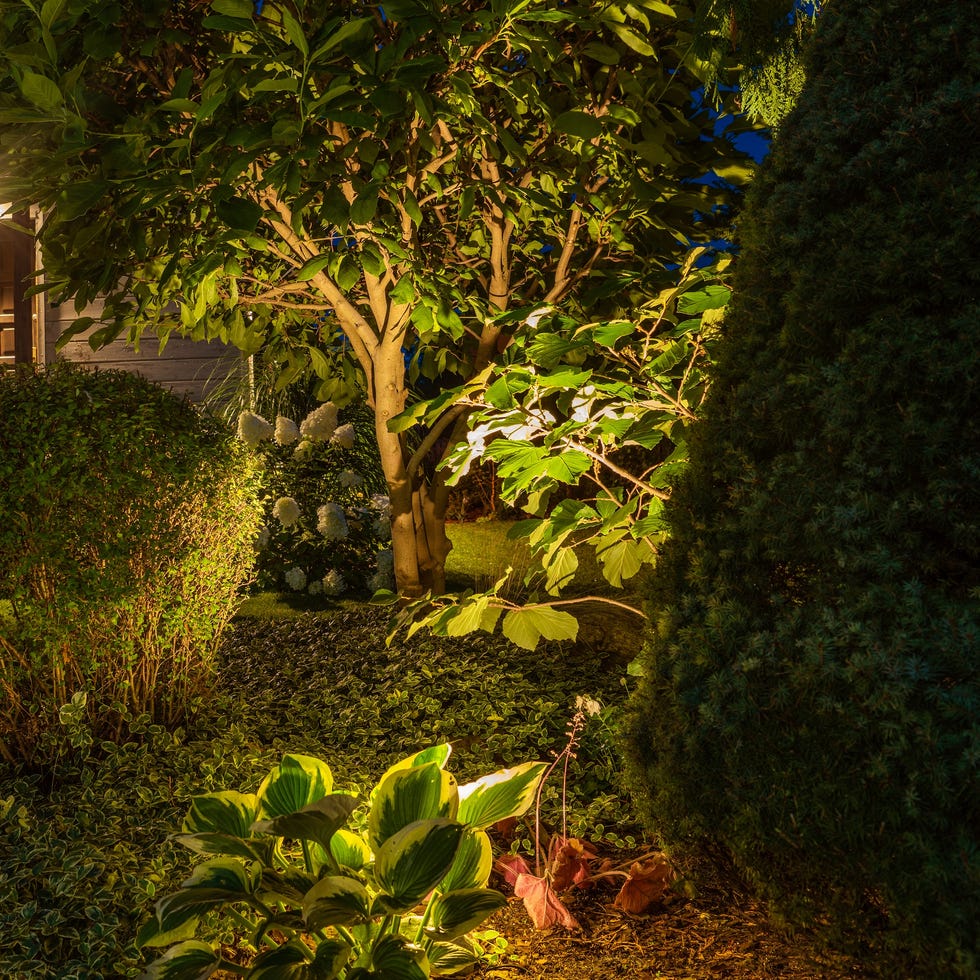
Angle lighting so it softly illuminates trees, planting, water features and other garden details, rather than flooding the whole space. This layered approach adds depth and visual interest after dark, while ensuring nature remains the star of the show.
4. Use light from below or the sides
When illuminating natural features, opt for uplights or side lighting. Light that comes from lower angles more closely mimics moonlight, creating softer shadows and a greater sense of depth, which feels far more atmospheric after dark.
welcomia//Getty Images
5. Use layered lighting
Combining different types of lighting — such as path lights, accent lights and feature lighting — creates a layered effect that feels balanced and intentional. This approach avoids harsh, over-lit areas and helps the garden feel more natural and inviting in the evening.
6. Keep some areas dark
Resist the urge to light every corner of the garden. Leaving certain areas unlit not only enhances contrast and atmosphere, but also helps protect wildlife that relies on darkness for navigation and safety.
The Garden Lighting Edit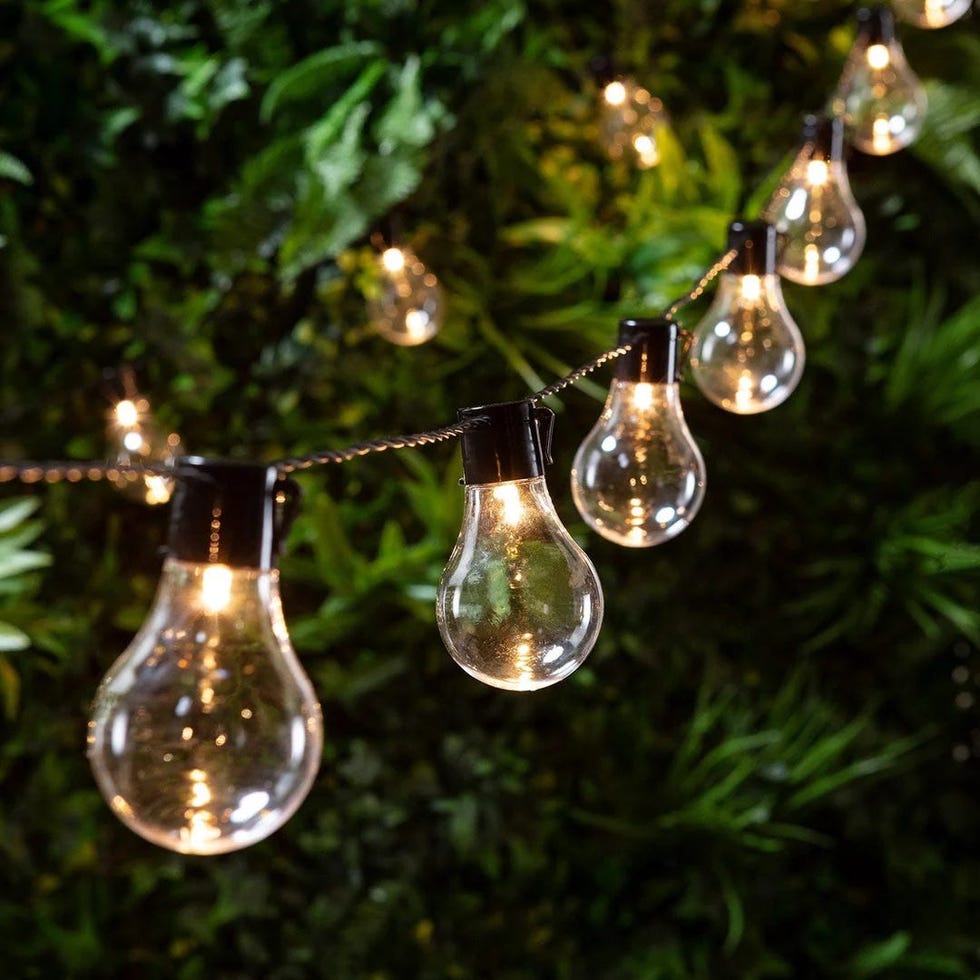 20 Warm White Carnival Plug In Festoon LightsCredit: Lights4fun
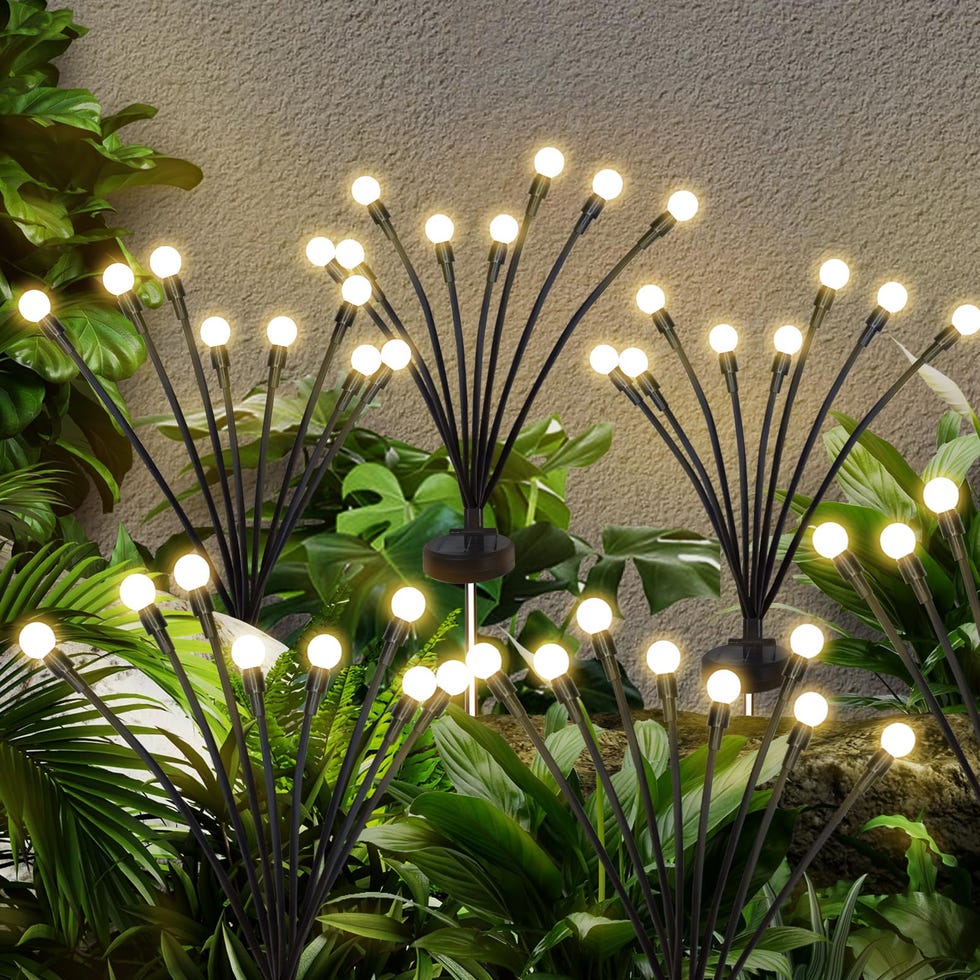 Jsdoin Solar Lights Outdoor WaterproofCredit: Amazon
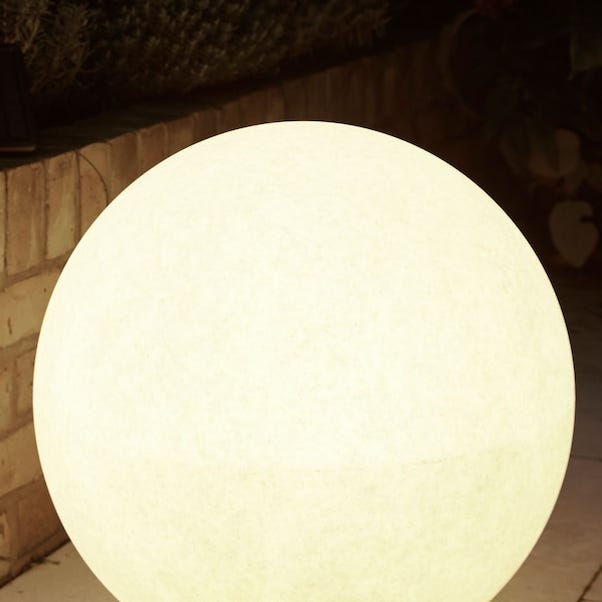 Grey Concrete Effect Solar Outdoor Light SphereCredit: Next Home
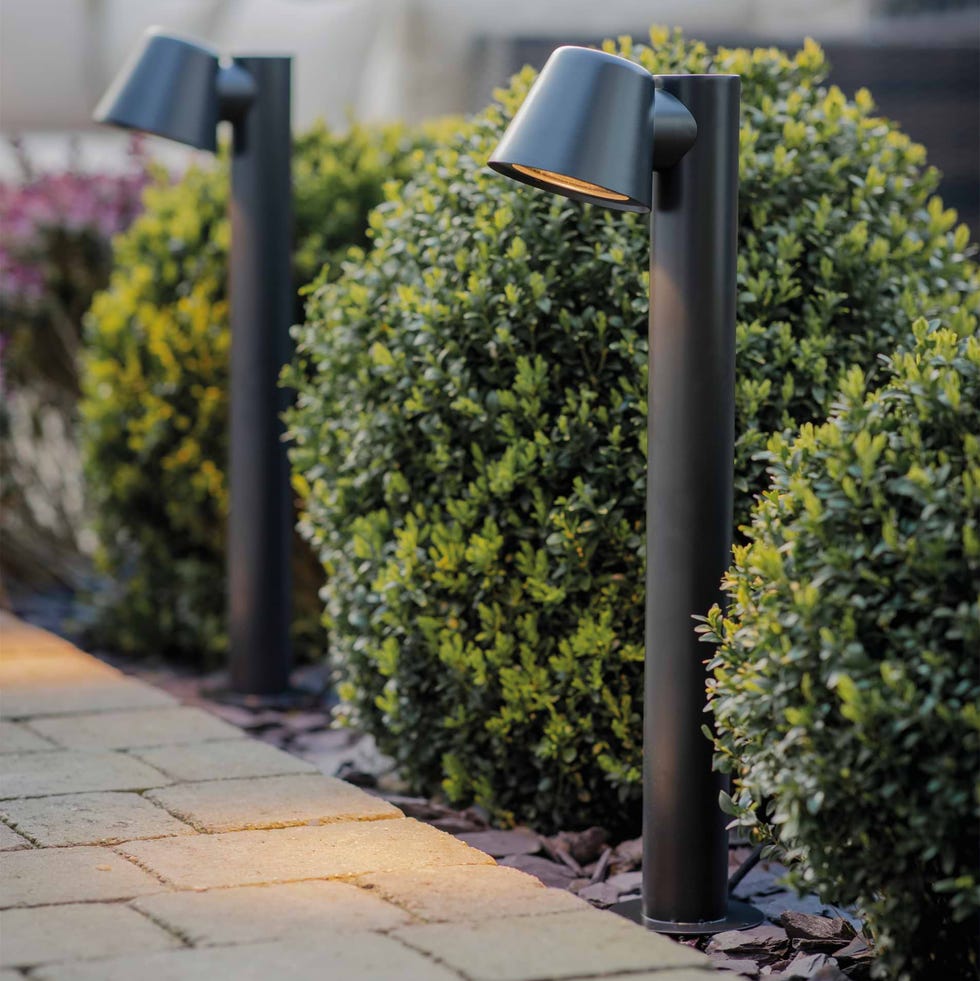 Regent Mast Path Light CarbonCredit: Garden Trading
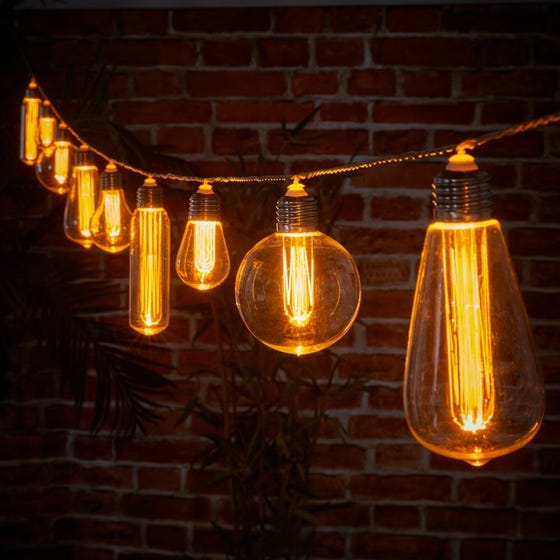 Indoor/Outdoor Connectable Festoon Lights – 10 mixed Antique BulbsCredit: Atkin and Thyme
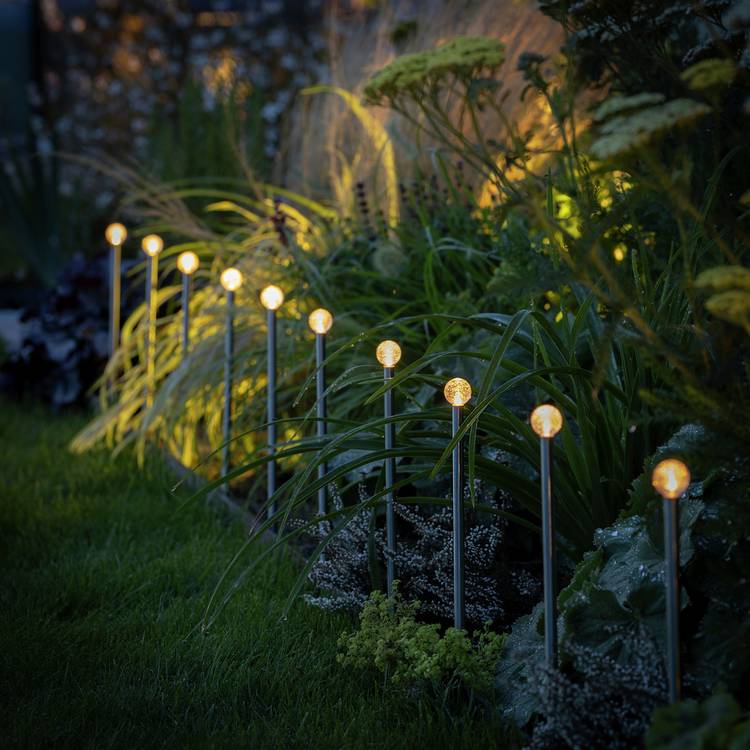 Habitat Warm White Solar Stake Lights – Set of 10Credit: Habitat
Follow House Beautiful on Instagram, TikTok and Pinterest

Olivia Heath is the Daily Editor at House Beautiful. Heading up all things digital, Olivia loves uncovering tomorrow’s biggest design trends and sharing the best decorating tips, small-space living solutions, and houseplant care advice. She also enjoys curating stylish and affordable homeware on the high street, as well as spotlighting the hottest properties on the market. Olivia covers some of the biggest events in the calendar, including all the action from the RHS Chelsea Flower Show, Colour of the Year forecasts from Pantone to Dulux, and exclusive previews of all the new Christmas collections before they hit the shops. Olivia has been writing about homes and interiors for the past seven years, and her work has also been published on House Beautiful US, Elle Decor US, Country Living, Good Housekeeping, Red, Prima, Town & Country, Elle Japan, Modern Living and Micasa Revista. Prior to joining House Beautiful, Olivia worked at Reveal magazine, where she reported on celebrity and entertainment news by day, and attended showbiz parties and red carpet events by night! Olivia has an MA in Journalism with an NCTJ qualification, as well as a BA in Journalism and Media & Cultural Studies. Previous bylines include The Guardian, Independent on Sunday, The Huffington Post, Frontline Club and Pride Magazine.
Comments are closed.