

Managing home landscapes during Central Texas winters depends not just on fickle weather but also on the mix of plants: some just shut down for cold weather, while others keep their leaves and color despite chilly conditions. After a January of roller-coaster temperature changes, from freezing to “room temperature” outdoors, Spring Lake Garden Club offers this overview of landscape survivors as our “yard of the month” instead of naming an individual yard for February.
A yard filled with clusters of spent stems banked by fallen leaves is not a showcase garden, although in fact it may be protecting soil microbes and providing shelter for the next generation of beneficial insects in spring gardens. Yet when another week of warmer weather returns, endless brown looks more like an unkempt yard than a gift to ecology. So how can homeowners maintain an attractive winter landscape that is also sustainable?
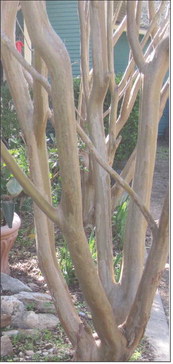
Sculptural elements of plants, such as bare trunks of crape myrtle, may not be appreciated when colorful blossoms call for our attention, but trees and background shrubs stand out in winter landscapes. Mixing evergreens with plants that lose leaves and color in winter ensures contrast in plantings, and shrubs such as boxwood or native hollies and mountain laurel remain green in all seasons. Non-native nandina adds red berries to landscape color, although these berries do not nourish native wildlife, as does native beauty berry. Shrubs with lighter color leaves, such as gray cenizo (Texas sage) add contrast to both green and browned landscapes. Decorative plants like sago palms provide reliable green fronds which may not survive extended freezes but usually re-grow over time.
Even small lawn areas in a home landscape offer contrast to browned plants waiting for spring, but grass isn’t the only ground cover for yards. In shady parts of a landscape, smallleaved horse herb or frog fruit provide low green cover for bare ground, whereas sunnier areas may benefit from rock or gravel mulch. Native decorative grasses, in lighter shades of beige or yellow, further expand texture and color in a landscape and may also shield spent plants from view, especially in planting beds.
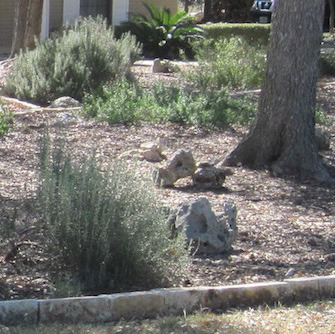
Planting beds under trees can be filled with spiky green yuccas in winter and feature wildflowers the rest of the year. So-called red yuccas (actually aloes) and Texas sotol are also cold hardy and fill the role of “evergreen” in planting beds and landscapes. Fallen leaves are a natural mulch for these beds, but a mulch of rocks or gravel offers even more contrast to colored pots or garden art year round. Even stone edging of planting beds adds interest to a winter garden, when plants themselves are not the prime attraction. The final effect depends not only on what’s planted, but how it’s presented and how plants contrast and cooperate in a sustainable landscape.
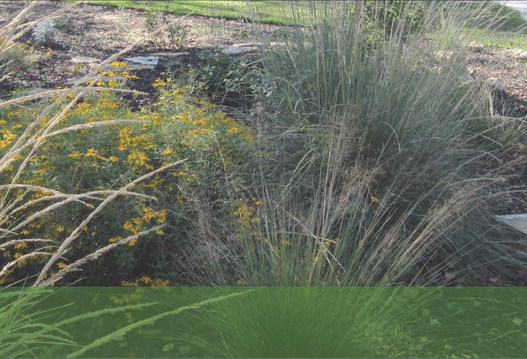
Above, grasses and winter blooms. Left, winter bed around trees. Below, bare crape myrtle.
Comments are closed.