
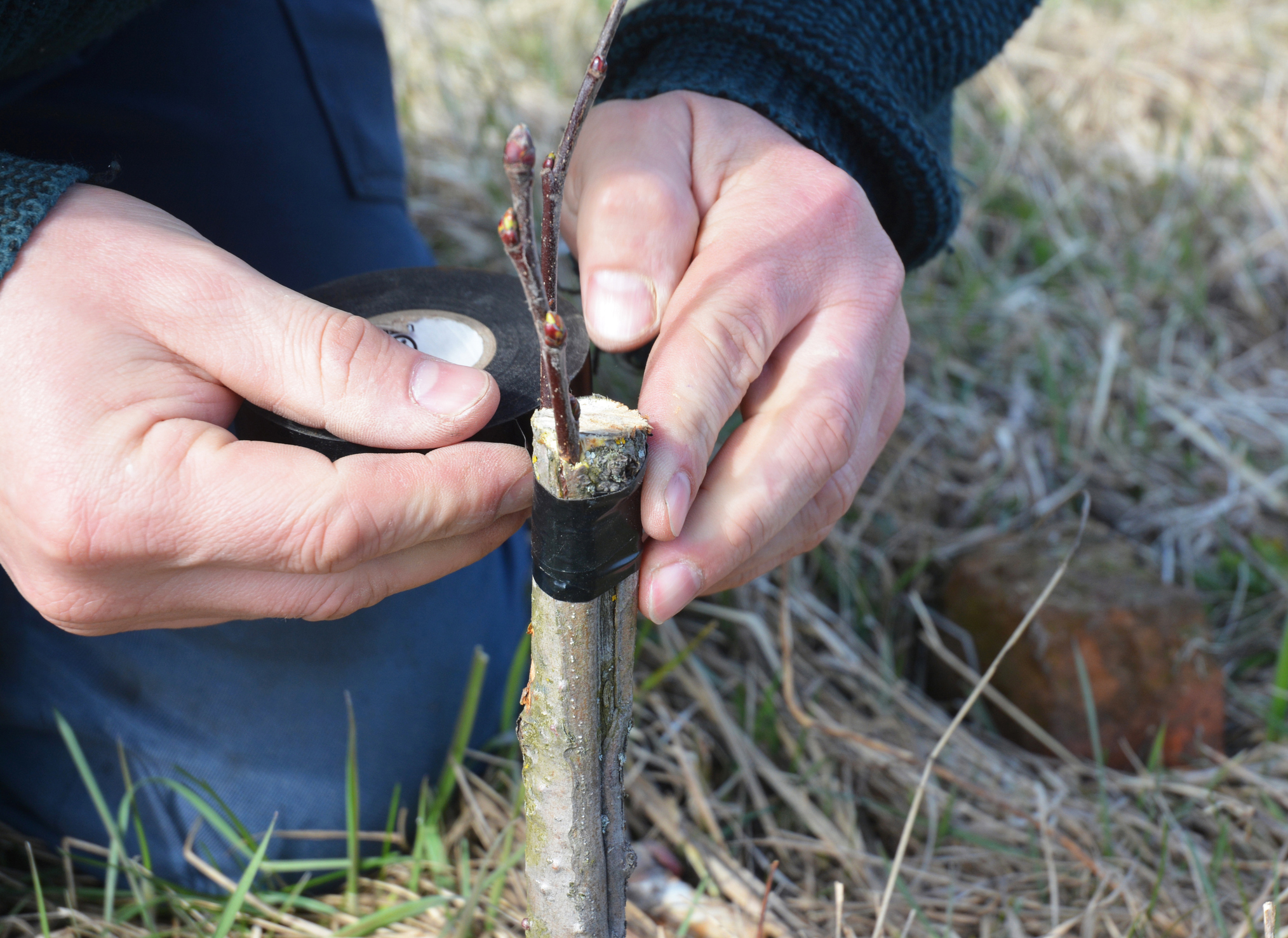
 A man grafting an apple tree. Courtesy Getty Images.
Do you have a gardening question? The UC Master Gardeners of Santa Clara County can help. Our volunteers are part of the University of California’s Cooperative Extension program, and we are trained to use research-based information to educate our fellow residents on home horticulture, pest management, and sustainable landscape practices specific to our area.
Our monthly “Ask a Master Gardener” column will answer your questions and offer tips. Have a question? Email lifestyle@embarcaderopublishing.com.
February gardening tips
How grafting works
Did you know that most fruit trees are grafted? Grafting is a technique where tissues from two compatible plants are joined so that they can grow together.
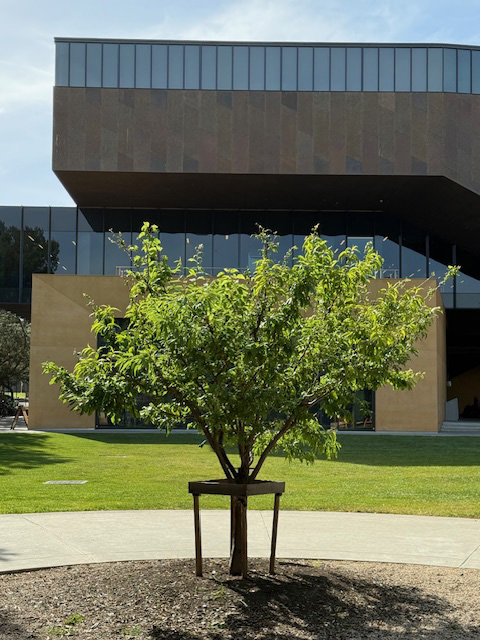 The “Tree of 40 Fruit” at Stanford University. Courtesy Mette Huberman.
One plant provides the root system — the rootstock. The other plant — the scion — is a bud or a shoot from the desired variety of plant. Growers can select a rootstock that is more disease-tolerant and better suited to the region.
You can graft additional scions onto your tree to get more varieties of fruits and enhance pollination like this tree with 40 different kinds of fruit at Stanford University, which grows everything from peaches, plums, apricots, nectarines, cherries and almonds. Art professor Sam Van Aken created the first Tree of 40 Fruit for the Syracuse University campus in 2011. Today, these trees can be found across the country, including at Stanford.
More information about grafting: Fruit tree grafting workshop (Feb. 21)
When to start summer seeds
If you start your seedlings too soon, they can get leggy and overgrown before it’s time to plant them. Tomatoes reach transplant size in six weeks, peppers take eight to 10 weeks, and cucumbers take just four weeks. Plan when you want to transplant into the garden, then calculate backward to figure out when to start seeds. For example, our vegetable planting chart recommends transplanting tomatoes in May, so start seeds six to eight weeks before, in March to early April. The hottest pepper varieties require a long growing season for the pods to ripen. Start peppers earlier, mid-February to mid-March. Wait until May to start heat lovers like cucumbers and melons.
More Information: Growing Transplants from Seed
How to manage weeds
While some weeds are edible (purslane, nettles, dandelions, miner’s lettuce), many are a nuisance and compete with your chosen plants for water and nutrients.
UPCOMING GARDENING EVENTS
UC Master Gardener gardening events are taking place throughout the county this month. Here are some of them, with more listed on our events page.
Whichever variation of “One year’s seeds make seven years’ weeds” you prefer, the truth remains: a key part of weed control is not letting them go to seed. For best results, remove weeds before they can propagate. Hand-pulling and hoeing are effective methods for controlling many common weeds.
Knowing what kind of weeds you have and how they propagate can help you choose the best management method. If they propagate by seed, pull or hoe them before they flower and go to seed. If they re-grow from roots, pull up as much of the root as possible. Many weeds, like Bermuda grass, have multiple ways of multiplying. Only non-propagating parts should be thrown in the compost bin.
More Information: UC quick tips on weeds in landscapes
Choosing trees for small spaces
If you’re thinking of adding trees to small spaces in your yard, it’s important to choose trees with the right characteristics. Non-aggressive root systems, no messy fruit, small size, relatively free from pests and attractiveness are some of the things to look for. Some examples are Japanese maple, Chinese pistachio (male), white or pink hybrid crape myrtle, Tollenson’s weeping juniper, flax-leaved paperbark, strawberry tree and Canadian redbud. The Cal Poly SelecTree website lets you search for trees based on characteristics, including size.
Would you like to ask a UC Master Gardener about a plant problem? Submit questions to our Help Desk online. You can also subscribe to our monthly Tips and Events newsletter. San Mateo residents can also find gardening advice on the UC Master Gardeners of San Mateo and San Franciscowebsite. Follow us on Facebook, Instagram and TikTok
Most Popular
Comments are closed.