
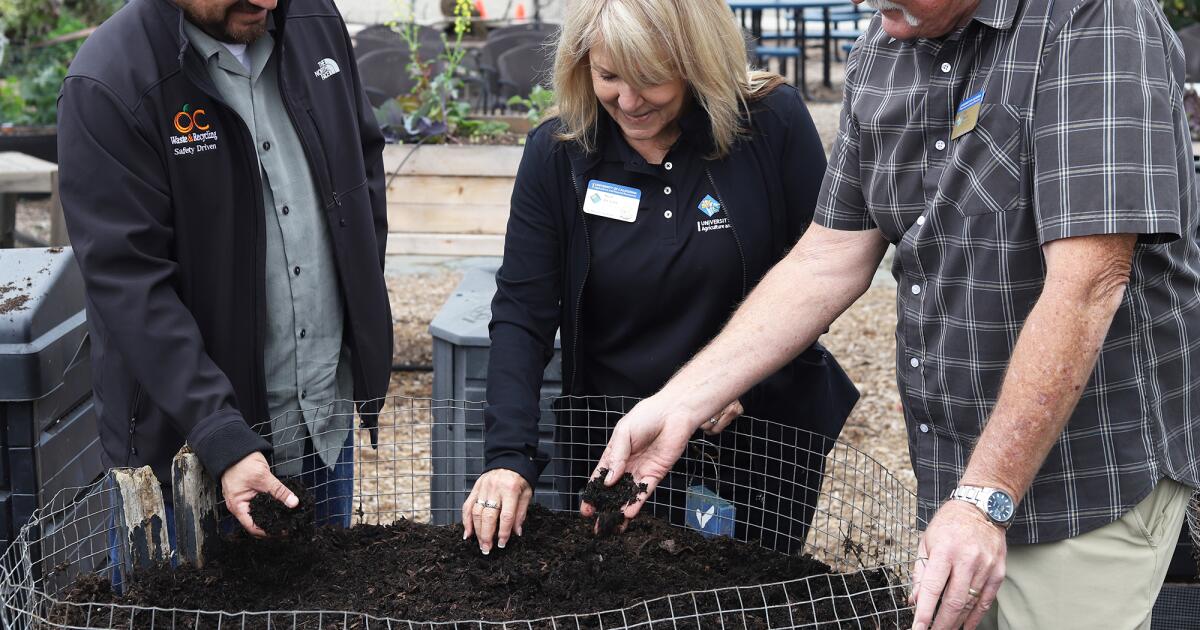
When Orange County master gardener Bill Brooks lifted the lid of a composting bin, hundreds of red wiggler earthworms burrowed into the soil to hide from the light.
“They like the dark,” Brooks said. “We call this vermiculture and vermicomposts, which people can do at home.”
The creepy crawlers aren’t pets. Red wigglers are used to mange organic waste and they are part of the University of California’s South Coast Research & Extension Center composting demonstration site.
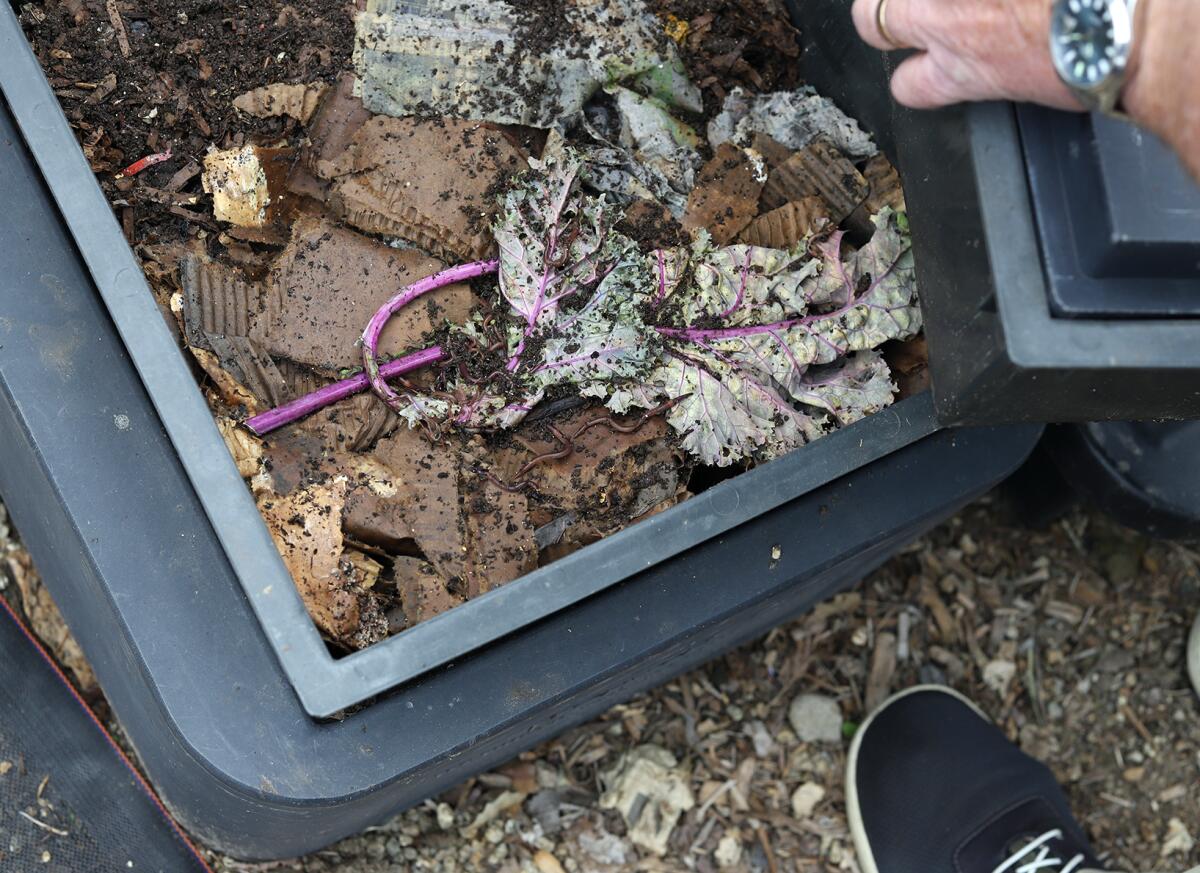
Food scraps are used to raise worms for compost at the South Coast Research and Extension Center in Irvine.
(James Carbone/James Carbone)
The compost demonstration is set up at the facility’s teaching garden, where Brooks and other OC master gardeners like Noel De Sota teach local residents about the composting process.
“It used to be called the youth garden and now it’s the teaching garden because we wanted to reach out to more people,” De Sota said.
Located at 7601 Irvine Blvd. , the University of California’s South Coast Research & Extension Center is one of nine research and extension centers in the University of California Agriculture and Natural Resources REC System. The SCREC was established as a site for agricultural and horticultural research.
The center also hosts community happenings, including seasonal U-Pick produce events and farming and gardening workshops. Composting demonstrations have become a big part of the center’s teaching garden too.
“There is a lot of interest in using compost and then there are a lot of people who don’t even know what to do when it comes to composting, and they don’t know what to do with the compost once they make it,” said Lindsey Rose Pedroncelli, interim director of the SCREC. “The compost demonstration site is so nice because people can see the whole process from throwing away your banana peel to then putting the compost in your garden bed.”
A desire to encourage local residents to dig into composting for themselves is behind the SCREC’s partnership with OC Waste & Recycling, the county’s waste management service that operates the local public landfills. Composting helps keep organic waste out of those sites and can reduce greenhouse gas emissions.
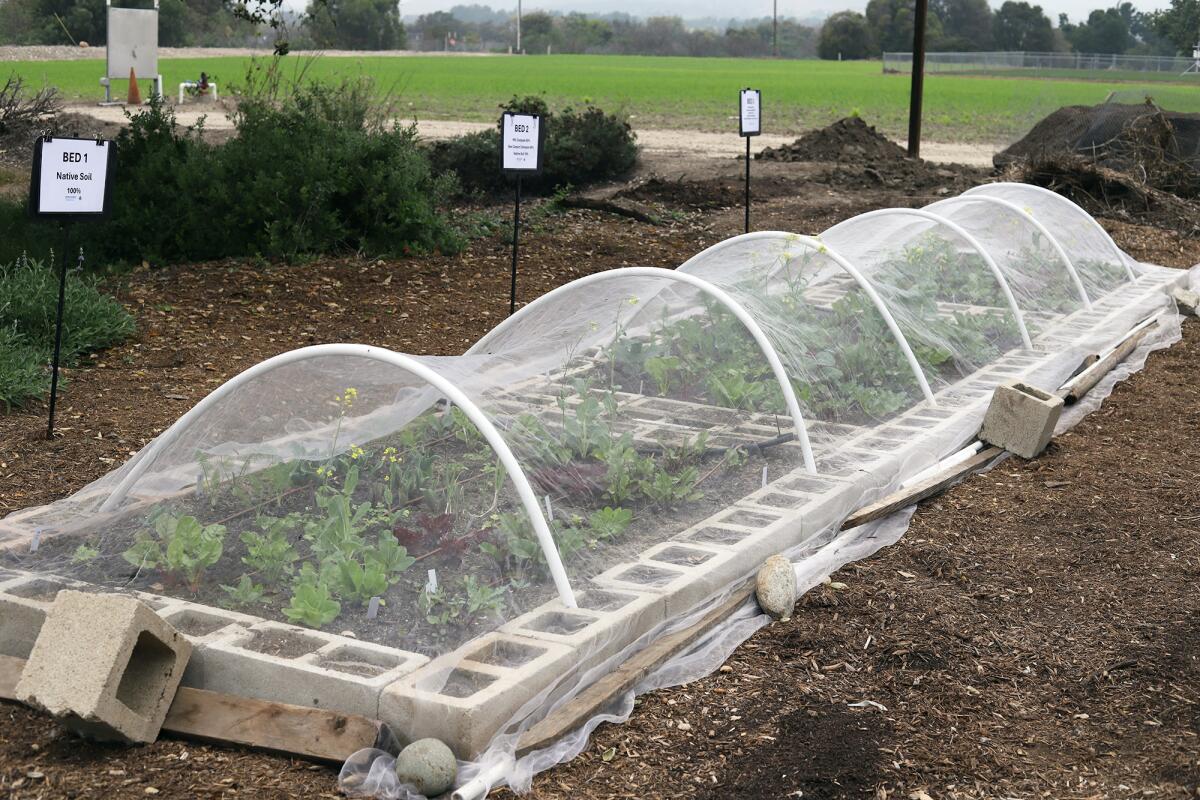
The compost garden experiment, where native soil and different compost mixtures are used to grow vegetables.
(James Carbone/James Carbone)
The OC Waste & Recycling Irvine facility, which is visible from the SCREC land, takes green waste that was collected curbside in Orange County and transforms it into nutrient-rich compost and mulch. The agency has been working with SCREC over the last couple years, giving tours of the nearby facility and providing compost education. It also provides free compost and mulch to the community, including SCREC.
“We have compost provided for free, made from the green waste you have clipped in your front yard,” said Isaac Novella, senior operations manager at OC Waste & Recycling.
A partnership between SCREC and the agency seemed like a natural pairing to Natalie Levy, soil health and organic materials management advisor for Orange, San Diego and Los Angeles counties.
“I first got to know OC Waste & Recycling from a compost operators training course that they hosted for their staff,” said Levy. “They wanted to make sure everyone at the Frank R. Bowerman Landfill in Irvine had this compost training and I was lucky enough that they allowed me to join their team.”
Levy was impressed with the company’s dedication to a staff that was knowledgeable on the composting process.
“They know the value of the product and I knew we had to figure out how to bring that to South Coast, because we use compost materials here too,” said Levy.
Levy connected the center’s master gardeners with OC Waste & Recycling. Novella said SCREC was among the first to receive some of the agency’s free compost.
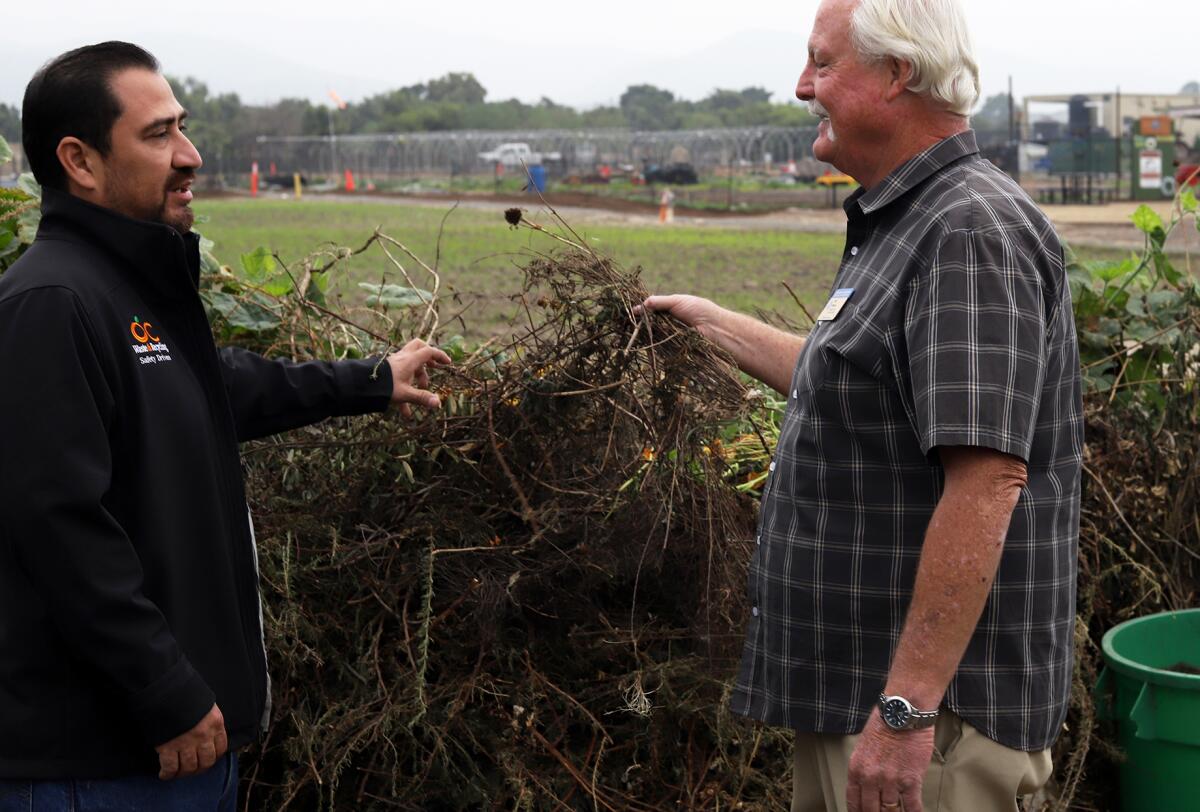
Isaac Novella, the senior operations manager at OC Waste & Recycling, left, and Bill Brooks, a master gardener, discuss the compost process.
(James Carbone/James Carbone)
The compost and mulch produced by the agency is Seal of Testing Assurance certified by the U.S. Composting Council, meaning it is compliant with U.S. Environmental Protection Agency regulations. The compost and mulch is available for free pick-up at multiple Orange County landfills. Bee Canyon Greenery at Frank R. Bowerman Landfill in Irvine, Capistrano Greenery at Prima Deshecha Landfill in San Juan Capistrano and Valencia Greenery at Olinda Alpha Landfill in Brea all offer them in self-service areas.
“They make this municipal product that is free to the community, so if you participate in that curbside organic recycling, you get a free product back in the form of their materials up at the landfill,” said Levy.
Compost can be used to improve soil incorporation and is usually finer than mulch, while mulch is compost that is made up of larger, coarser particles. Mulch is best used on the surface of soil, to help retain water in the summer and absorb more rainwater in winter.
Pedroncelli said having master gardeners like Brooks and De Sota educate people on composting is part of SCRE’s mission.
“While we have a ton of research projects going on, that extension component is where we are really extending this science based knowledge to the community and to people who benefit from it most,” said Pedroncelli. “So many people are benefiting from being able to make compost here and use compost from different sources.”

Fresh healthy vegetables grown with compost at the teaching garden at the South Coast Research and Extension Center in Irvine.
(James Carbone/James Carbone)
In addition learning about the worms doing the work as part of the teaching garden’s vermicomposting, there are also examples of hot composting and a few composting barrel tumblers.
“We use several methods here. These here are small ones that someone with a condo patio could use a home,” Brooks said of the tumblers. If you live in an apartment or a condominium, you can do this in a container on your deck.”
Local residents who want to dig deeper into composting should sign up for one of the upcoming educational events at SCREC, De Sota said. Along with farming and gardening workshops, SCREC offers a master gardener program, taught by De Sota and Brooks.
“What I really love about being a master gardener is that I can go and teach people what I’ve learned,” De Sota said.
For information on upcoming events at the University of California’s South Coast Research & Extension Center, visit ucanr.edu. To request free compost and mulch from OC Waste & Recycling, go to oclandfills.com.
Comments are closed.