
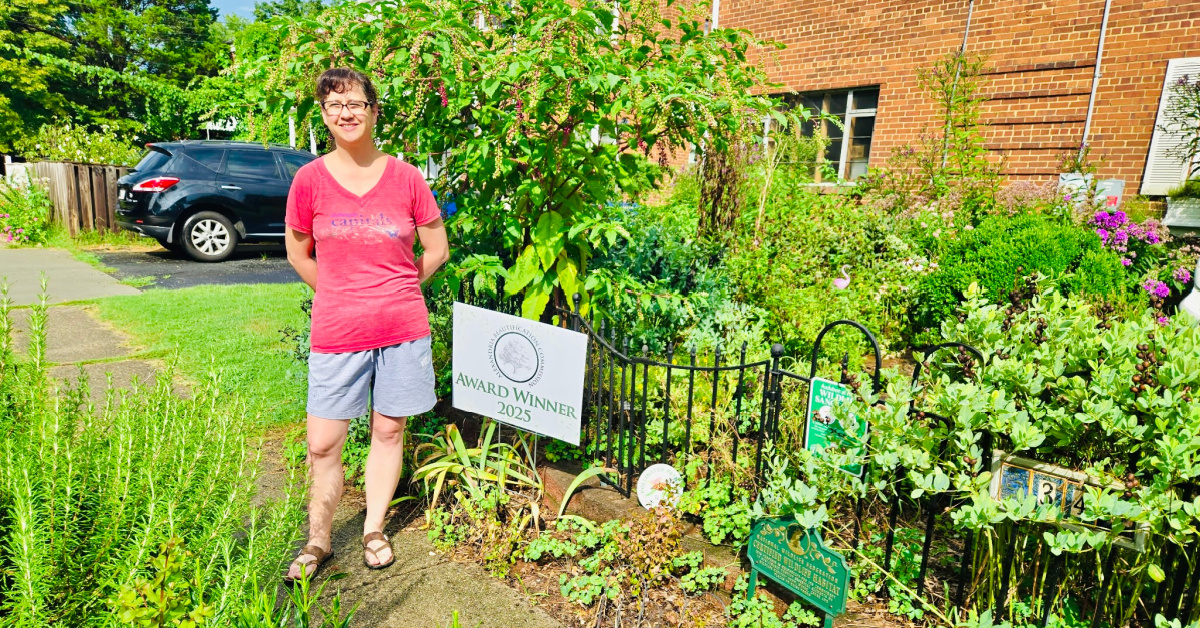
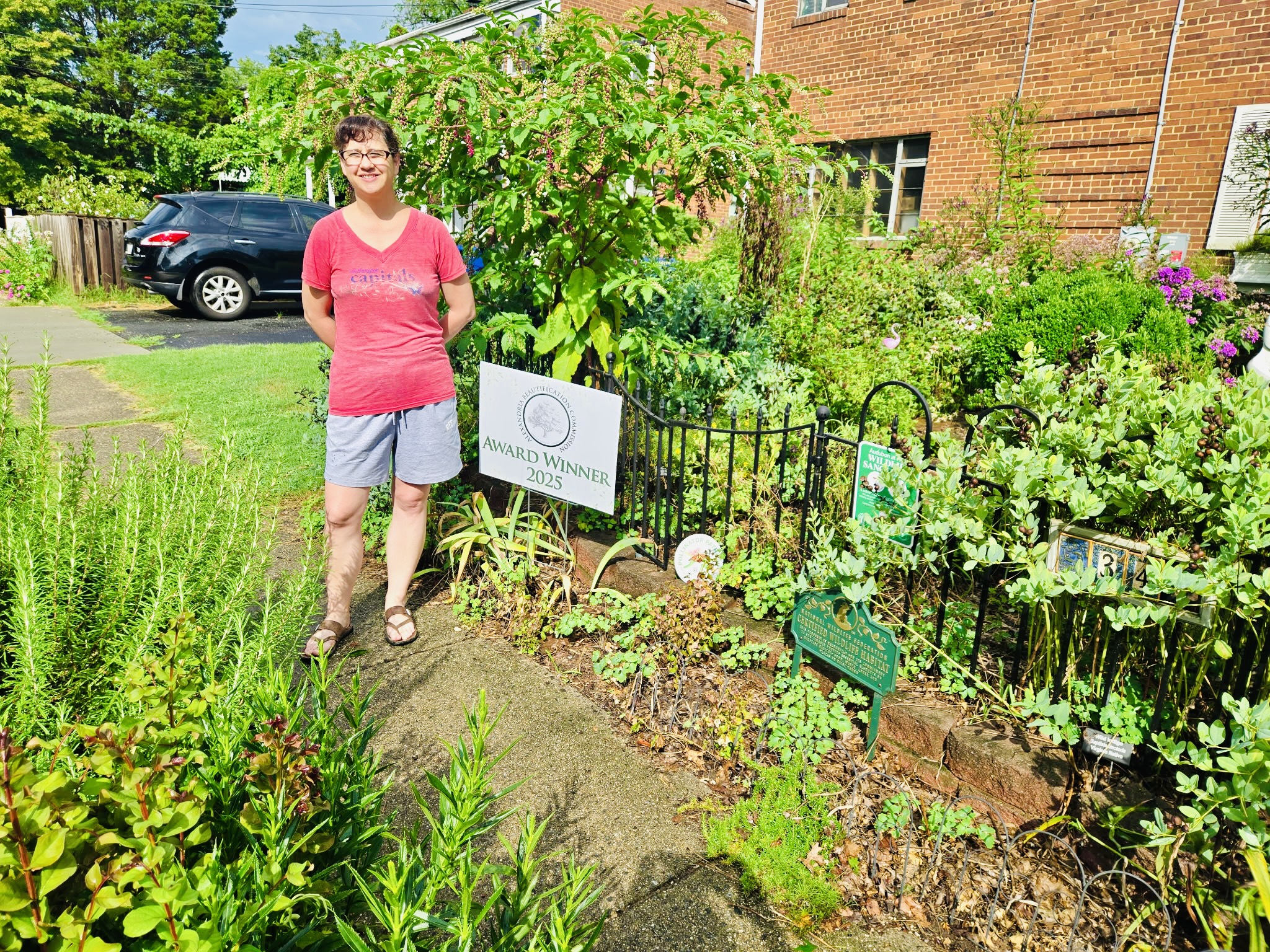
 Danika Hyssong stands in her South Ingram Street yard, a certified wildlife habitat. Inspired by a neighbor’s garden, her pesticide-free native landscape supports birds, bees, and butterflies. All courtesy of ABC
By Dereth Bush, Alexandria Beautification Commission
Alexandria, VA – Winter may seem like a quiet season for gardens, but it is one of the most powerful times to imagine what comes next. As we look ahead to spring 2026, the Alexandria Beautification Commission (ABC) encourages residents to use these colder months to plan gardens that are not only beautiful, but resilient, wildlife-friendly, and rooted in our local ecosystem. Last year’s ABC Annual Beautification Award winners offer inspiring examples of how planting native can transform yards of every size into sustainable, thriving habitats.
The 2025 Beautification Award recipients are turning their home landscapes into learning tools, showing neighbors how native plants support pollinators, conserve energy, and strengthen local ecosystems. Many have reduced or eliminated conventional lawns in favor of thoughtfully chosen native plantings paired with creative design elements. Regardless of lot size, these homeowners care for their gardens without pesticides, demonstrating that meaningful environmental benefits can come from any space. The eight residential awardees include certified wildlife habitats and vibrant gardens filled with native species such as serviceberry, buttonbush, coreopsis, milkweed, coneflower, and phlox.
Together, their stories remind us that sustainable beautification is not about perfection or professional expertise. It is about intention, curiosity, and care.
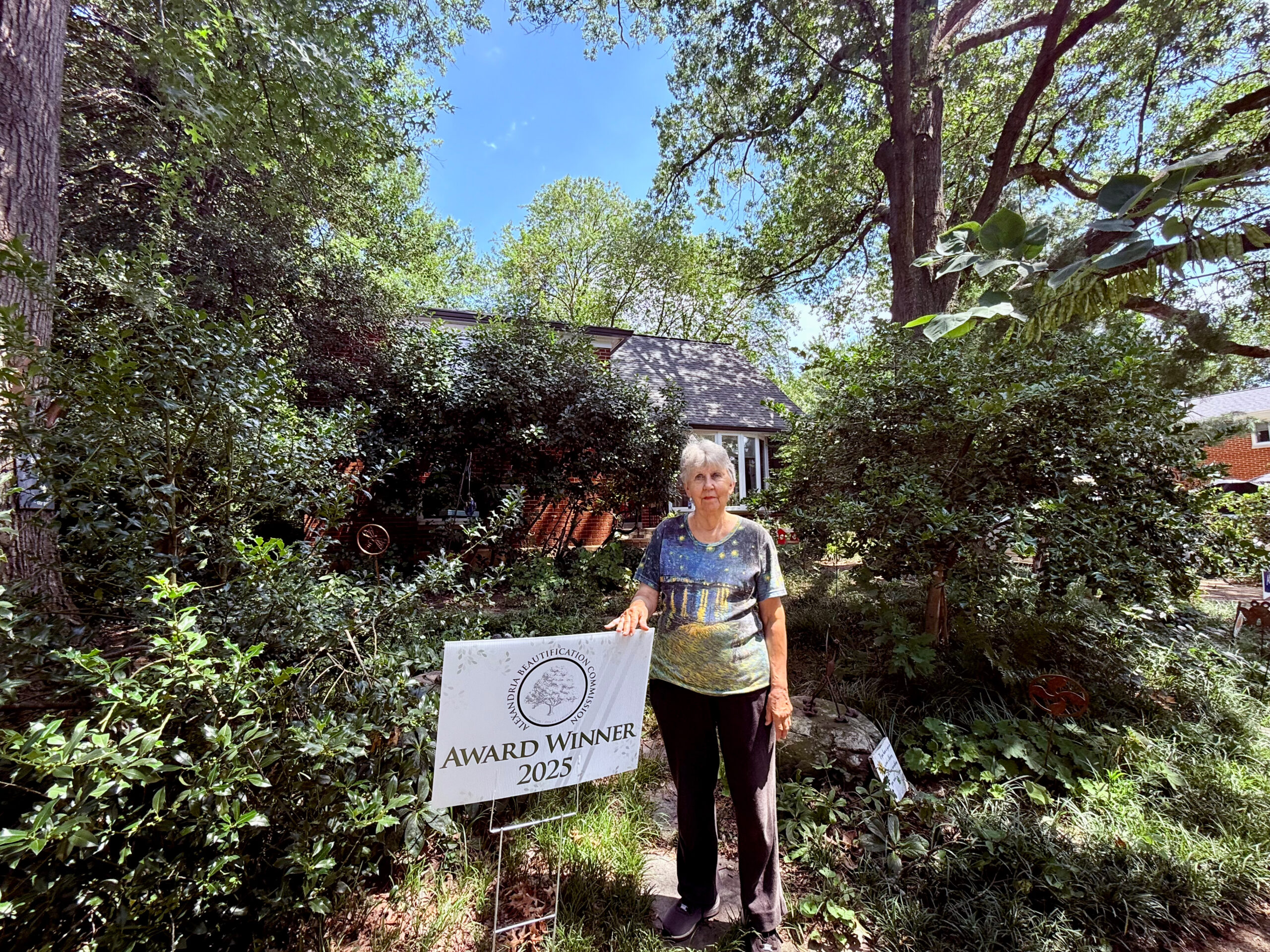 Mary Zoeter stands in her pesticide-free native garden, inspired by her childhood on a Maryland farm. Her “Leave the Leaves” approach supports birds and insects year-round.
For award winner Mary Zoeter, the inspiration for her garden reaches back to childhood. “I grew up in Southern Maryland, the daughter of a farmer,” she reflects, recalling days spent “running through the wheat fields, making mud pies, interacting with insects and other animals.” Years later, a trip to England sparked her love of cottage gardens, and over time that passion evolved into a deeply ecological approach. Mary describes the traditional lawn as “a dead zone,” choosing instead a pesticide-free garden that supports birds and insects. Her philosophy is rooted in connection: “We are all connected on this earth – the very big and the very small, and I hope that my garden reflects this philosophy.” Even winter plays a role in her practices, as she proudly displays a “Leave the Leaves” sign to provide shelter for overwintering insects.
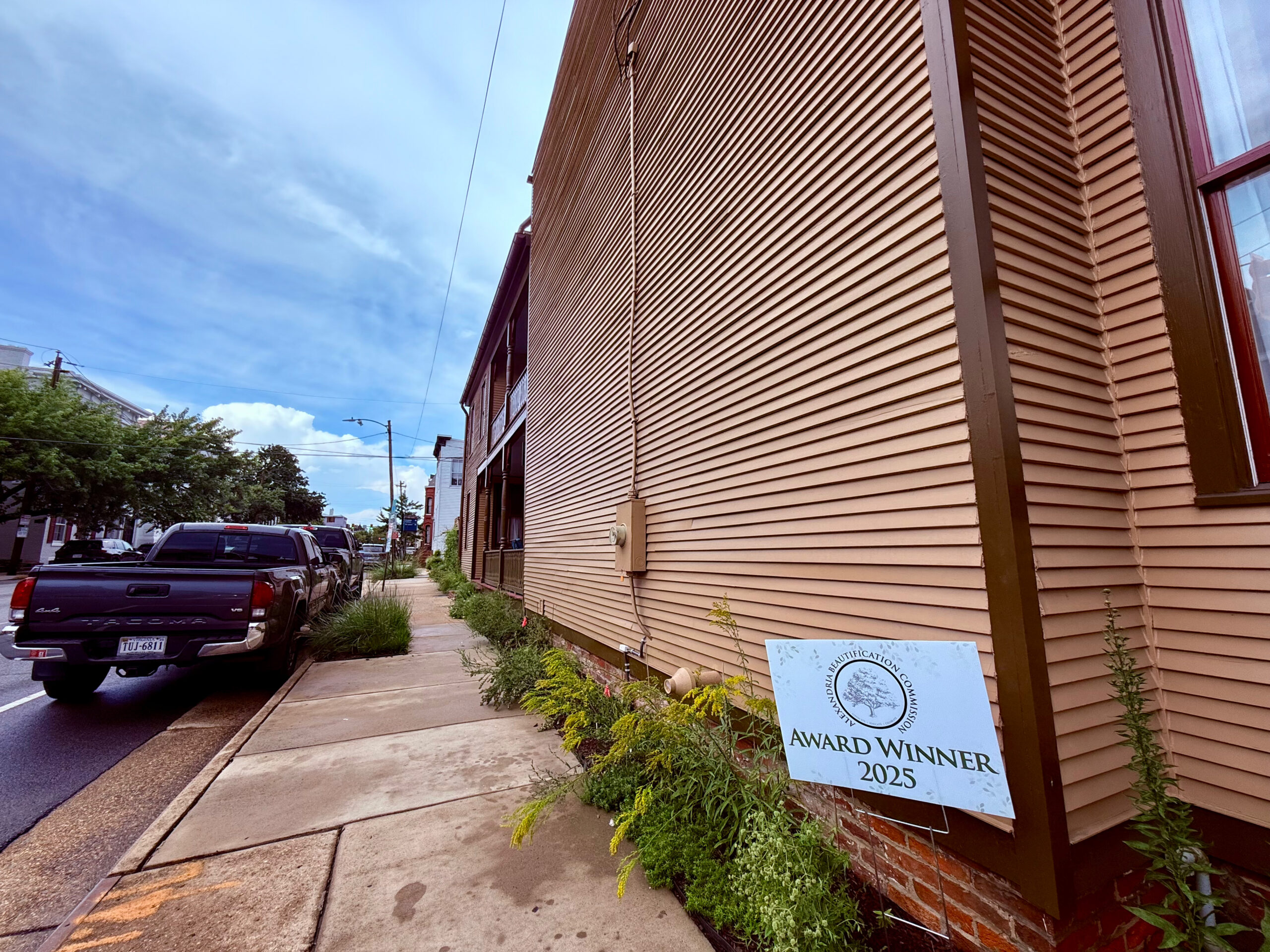 Naomi Ryan’s narrow yard, transformed with native plants, demonstrates that even small, low-maintenance spaces can support pollinators and thrive with minimal care.
Not every native garden begins with confidence. Naomi Ryan, another award recipient, is refreshingly honest: “Neither Jeff nor I consider ourselves ‘gardeners’… I have always told people that I have a ‘black thumb.’” Their journey began out of necessity: removing ivy that threatened their home, eliminating grass they didn’t enjoy mowing, and seeking plants that could survive what Naomi calls “benign neglect.” Winter research led her to native plants because, as she explains, “Native plants should require the least amount of actual care.” Supporting bees and butterflies was a welcome bonus. After planning for sun exposure, poor soil, and narrow planting spaces, Naomi enthusiastically shopped at local native plant sales. Now, with visible progress, she sees their prominent front yard as an opportunity to share what they’ve learned, joking that there should be a plaque celebrating natives as “good for lazy gardeners.”
For Danika Hyssong of South Ingram Street, inspiration came from close to home. “I was inspired by a neighbor’s yard,” she explains, particularly one marked by a certified wildlife habitat sign. Already practicing organic gardening, Danika transitioned to native plants and earned her own Audubon At Home Wildlife Sanctuary certification. The results were notable: “I have noticed a significant increase in wildlife activity in my garden since I switched to native plants.” Her advice is practical and empowering. “Start with going pesticide free first,” she urges, and “start slow.” To Danika, sustainable beautification means “low-maintenance wildlife habitat creation,” where plants are established with care and then largely left to thrive on their own.
As winter settles in, now is the perfect time to reflect, research, and dream. Whether you are a lifelong gardener, a self-proclaimed black thumb, or somewhere in between, 2026 can be the year you plant native. Alexandria’s award winners show that small, thoughtful choices made today can bloom into lasting beauty for years to come.
Post Views: 5
Comments are closed.