
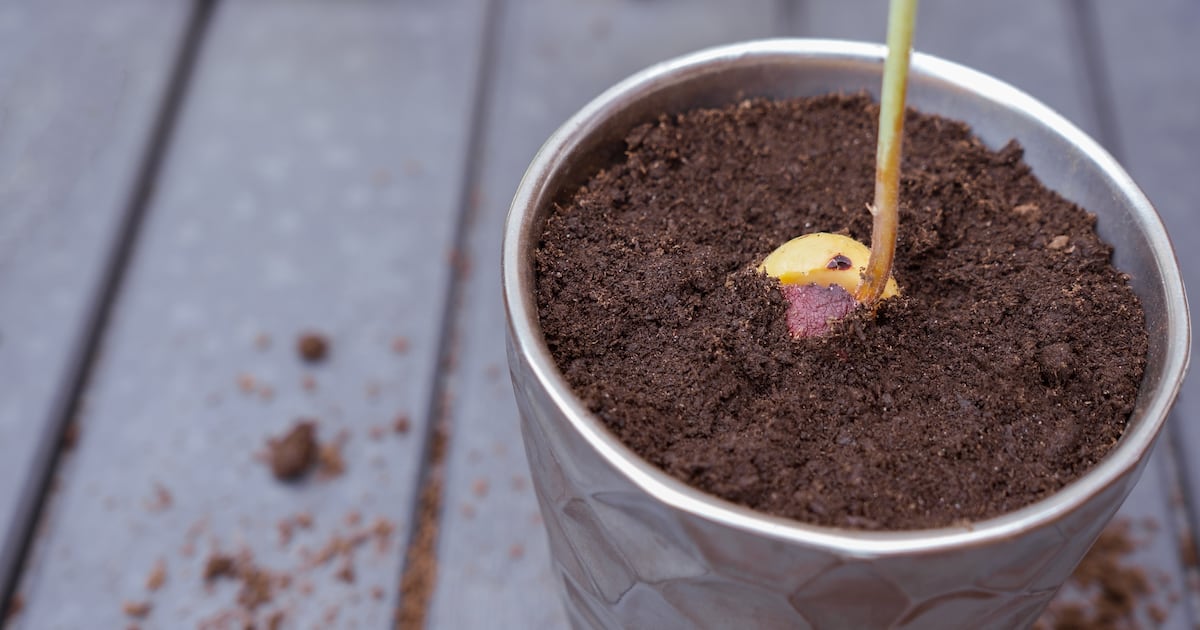
 Avocado sprout (iStock / Getty Images)
My dad used to start the seeds from things we ate at breakfast, mostly citrus but occasionally a cherry or a plum and even a mango. Anything remotely capable of germinating was tried, from apricot to peach to nectarines. We ate breakfast together as a family, so naturally we all got involved. Looking back, I now wonder if this was a formulated plan to get three rambunctious boys into gardening. If so, it worked.
I am not sure when Dad started germinating breakfast seeds. Knowing his father, it must have started when he was a kid though it intensified during his serious bonsai phase. You can make some really neat-looking bonsai forests using citrus seeds. In addition, any stone fruits — peaches, plums, nectarines, apricots and cherries — will germinate, though some require vernalization, which means a period of exposure to cold. The refrigeration provided during transport and in the supermarket may be enough.
The one pit we didn’t grow was the avocado. We are talking about a father who was a real snob when it came to plants. He would walk into someone’s home and, without comment, toss plants into the garbage because they were never going to amount to anything. Leafless February poinsettias were a huge target every year. Avocados were a constant. Their removal was usually accompanied by a lecture on the futility of actually producing a good-looking tree from an avocado, especially one that would produce fruit. You could do it outdoors if it was warm enough, but the fruit would be hit and miss as what we buy are the products of hybrids.
Anyhow, somewhere along the line, we regrew celery, romaine lettuce, pineapples, thyme and oregano. I am not sure my mother appreciated the soil at the table, where it was dirt to her, but at least my dad didn’t insist on keeping a litter of Saint Bernards as did his father, replete with a fake “poop” he would use to crack up his grandkids while we sat at the dinner table. These would grace the table for a while, get moved to the windowsill and, if any looked promising, they would be moved to the greenhouse.
Citrus was always interesting. The young plants were fun until some developed huge thorns. They took a long, long time — years — to get big enough to produce flowers, but he had fun fooling with them. He may have tried cucumbers, different cos lettuces and squashes, but I can’t remember how these turned out, again because of frequent hybridization.
Today, his efforts would have an additional hurdle. Much of what we buy by way of vegetables has been treated to prevent sprouting. If you want to try your hand at growing plants from the supermarket, head to the organic section. Again, avocados, citrus seeds, mangos, dates and most stone fruits — peach, plum, nectarine, apricot, cherry — are capable of germinating. They may have been treated, but one nice thing about growing pits is that if you fail, you can always go to the supermarket and start over.
The soil you should use to grow pits must be biologically active. Use something that has compost in it or try with compost alone. Use a suitable container, or one with ample drainage and not too big. As your pits grow, you can transplant them.
Growing leftovers from breakfast is easy and a lot of fun. It is, in fact, a particularly good way to induce an interest in growing things that should last a lifetime. I am living proof of that.
Jeff’s Alaska Garden Calendar:
Alaska Botanical Garden: The Garden does not go silent during the winter. There are lots of activities for all ages and many interests. Do check things out, and by all means join. I don’t ask for much, just this. All great cities have a great botanical garden.
Vegetable seeds to start: Celery
Flower seeds to start: Sweet peas, begonias from seed, both tuber and fibrous.
Comments are closed.