
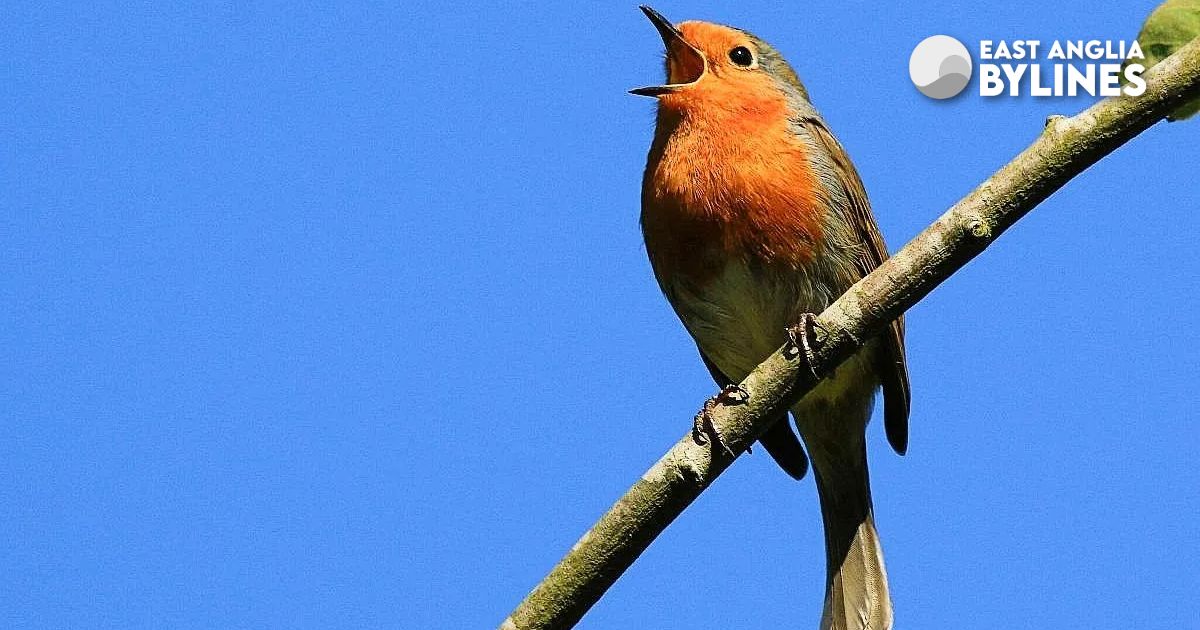
The British Trust for Ornithology (BTO), based in Thetford, has run its weekly Garden BirdWatch (GBW) survey since 1995. This makes it one of the longest running continuous citizen science surveys monitoring garden wildlife in the world. The GBW survey has helped us understand the important role of gardens as habitats for wildlife. At the same time, it, identifies how and why populations of garden birds and other wildlife are changing, and how we can help them.
A different approach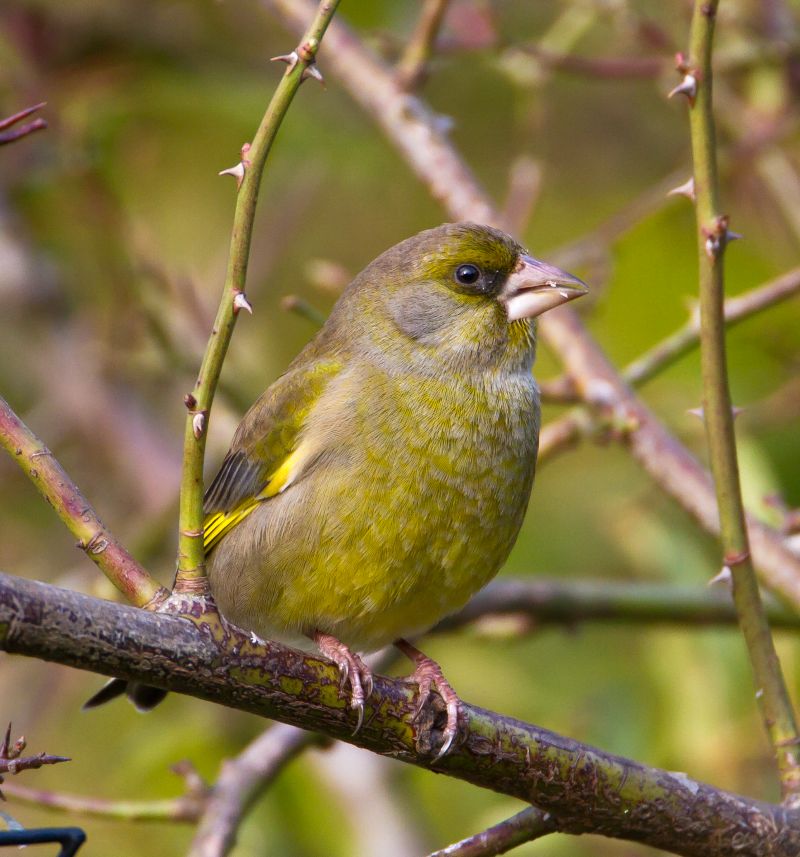 Greenfinch. Credit Allan Drewitt. Used with permission
Many people have heard of and taken part in the RSPB’s Big Garden Birdwatch, which takes place annually during the last weekend in January. The BTO Garden BirdWatch is similar to the RSPB’s annual survey, in that it gets citizens involved in science. However, its year-round approach and long-term volunteer commitment delivers fine-scale information on both seasonal and longer-term patterns in garden use.
To take part in GBW, people simply register anytime on the BTO website (www.bto.org/gbw). The key to GBW is consistency, so how you monitor the birds in your garden doesn’t matter, so long as you do it the same way each week. Some BTO Garden BirdWatchers (GBWers) have an allocated time every week to observe the comings and goings in their garden. Others glance out of a window every time they pass and record what they see.
Observing and explaining decline
The advantage of participating every week is that GBWers are the first to notice change. This has put the survey at the forefront of leading research into the decline of some of our most loved garden birds. For example, in the mid 2000s, when greenfinch numbers began to decrease in UK gardens, it was GBWers who first picked up the decline; and, because many were also involved in a sister programme looking at disease, their observations helped to link this to an emerging infectious disease called finch trichomonosis.
Further work, involving BTO and partners, revealed that the disease is caused by a microscopic parasite. It most likely spilled over from woodpigeons whose garden populations have been increasing, and which are known to carry the parasite. This prompted a major effort to raise awareness of the importance of good bird feeder hygiene, encouraging those people who put food out for their garden birds to clean their feeders regularly. Finch trichomonosis continues to be monitored by GBWers, and the science teams at BTO are continuing to study how this disease is spread between individuals, so best-practice feeding advice can be refined.
It’s not all doom and gloom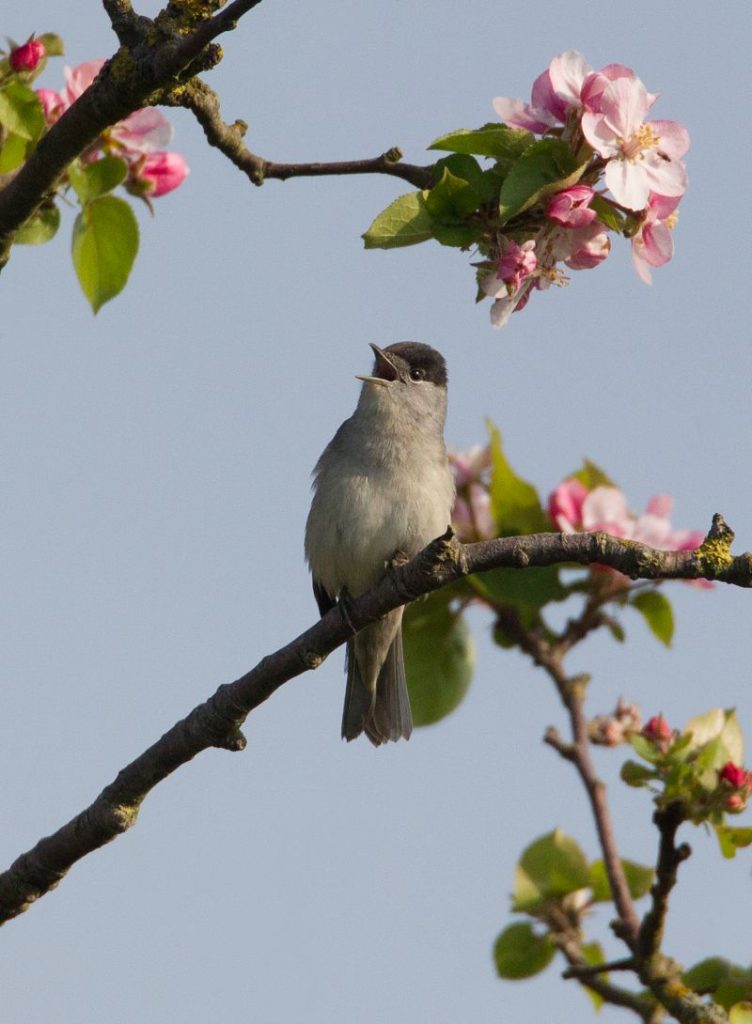 Blackcap. Credit Liz Cutting. Used with permission
GBWers have helped us understand the changing behaviours of several species. The blackcap is a species of warbler which breeds in British hedgerows and migrates south to the Mediterranean for the winter. In recent decades, the number of blackcaps over-wintering in the UK has increased substantially. BTO research has shown this is partly thanks to supplementary feeding in gardens.
These wintering blackcaps originate not from the UK, but from breeding grounds across a swathe of European countries (from northern Spain to Poland), while our UK breeding birds continue to migrate to the Mediterranean.
Studies have shown that not only is there an evolutionary change in their migratory and feeding behaviours, but the blackcaps that overwinter in the UK are different physically to our breeding birds; they have relatively narrower bills and more rounded wingtips, linked to their more generalist diet and shorter migrations.
Not just birds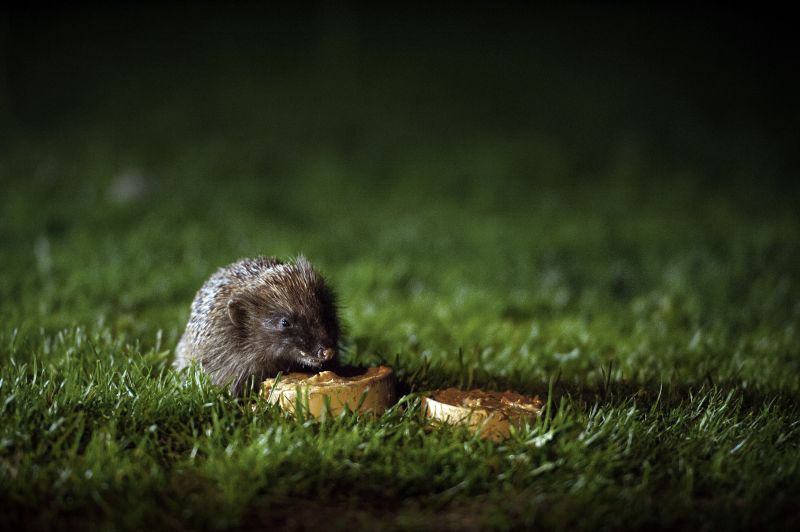 Hedgehog. Credit Sarah Kelman. Used with permission
GBW is not just about monitoring birds. Participants are also invited to monitor mammals, reptiles, amphibians and selected invertebrates as part of their weekly observations. This has led to some interesting research highlighting the importance of gardens for species which are in serious decline elsewhere in the British landscape.
Hedgehogs are classed as Near Threatened by the International Union for Conservation of Nature, following a significant decline of between 30–75% in some areas of the UK since 2000. The reasons for this include habitat loss and fragmentation, pollution, the use of pesticides and herbicides and climate change.
In the wider countryside, hedgehog numbers have declined to the point of localised extinction. However, in urban or suburban areas, gardens are seen as a refuge, and GBW data has been used to show that with wildlife friendly gardening practices, hedgehogs can thrive.
Gardens for butterflies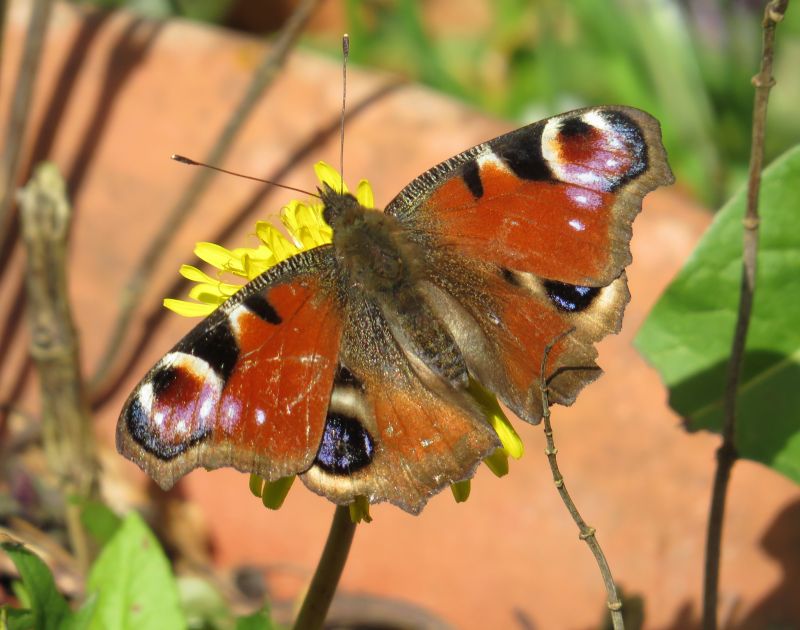 Peacock Butterfly. Credit Debbie Frazer. Used with permission
Similarly, a paper published by BTO in 2023, showed that between 2007 and 2020, half of the butterfly species monitored by GBWers increased in their abundance in gardens. Butterfly data from GBW were compared with figures from the wider countryside, suggesting that some butterflies are faring better in gardens than elsewhere.
Top birds
Around the UK, the top two bird species have swapped places over the course of the past 30 years, but based on the 2025 data, robin is number one, followed closely by blackbird, then blue tit. Woodpigeon comes in at number four, which is interesting as they only entered the Top Ten in 2004. This highlights the increase in their population in line with other more generalist species frequenting gardens, such as magpies (that entered the Top Ten in 2013), now number six. Birds which have dropped out of the Top Ten include greenfinch and chaffinch, due to finch trichomonosis, and starling, due to habitat loss.
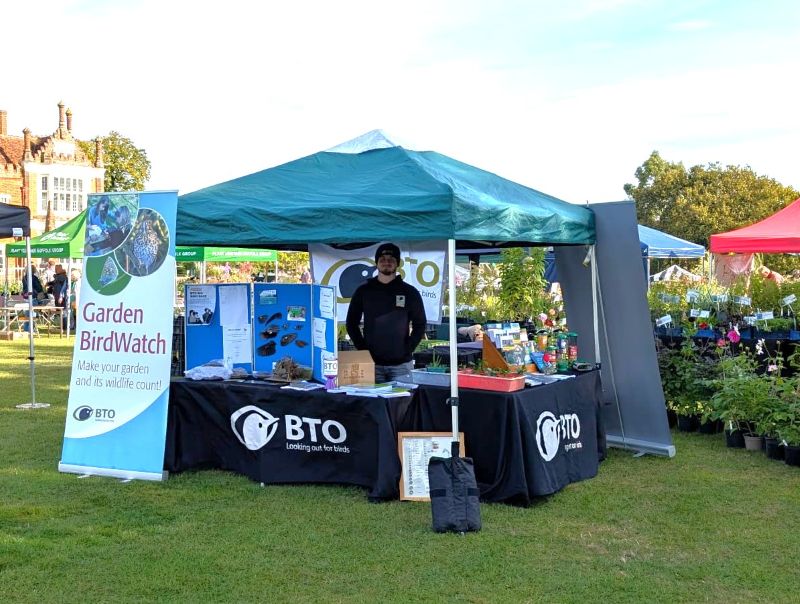 Garden Birdwatch Stall. Credit Susan Jones. Used with permissionCommunity outreach
Garden BirdWatch is supported around the country by a network of local Ambassadors. These volunteers, who take part in the survey themselves, also help to promote it in their local communities. They are available to deliver talks, attend events or write pieces for local publications. If you would like to contact them, please email [email protected] with details.
 Great BirdWatch website
If you would like to find out more about Garden BirdWatch, including how to sign up to our weekly newsletter, please click www.bto.org/gbw or scan the QR code.
More from East Anglia Bylines
 Bylines Network Gazette is back!
With a thematic issue on a vital topic – the rise child poverty, ending on a hopeful note. You will find sharp analyses on the effect of poverty on children’s lives, with a spotlight on the communities that are on the front line of deprivation, with personal stories and shared solutions. Click on the image to gain access to it, or find us on Substack.
Journalism by the people, for the people.
Comments are closed.