
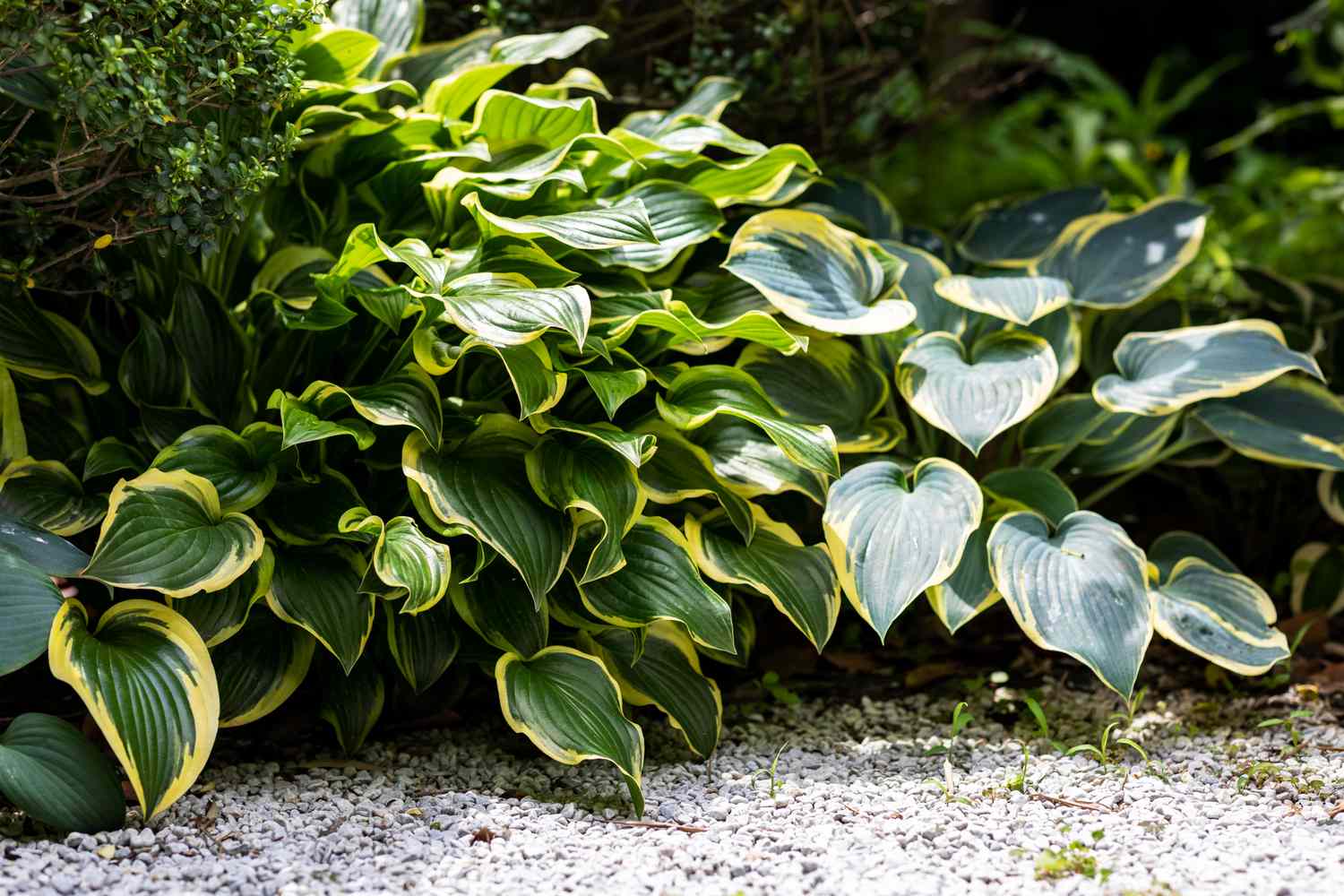
Hostas are popular perennial plants that are grown for their stunning foliage and upright flowers. In addition to being beautiful to look at, hostas are also an effective, natural weed-suppressant. Their thick foliage blocks sunlight from reaching garden beds, which most weeds need in order to germinate. To help you with this all-natural gardening technique, we spoke to the experts who shared their tips for planting hostas the right way so they keep weeds at out of your garden.
How Hostas Prevent Weeds
Hostas have many characteristics that make them effective at suppressing weeds. They have broad, dense leaves that form a canopy that shades the soil, reducing light for weed seeds and seedlings, says Kelly Funk, president & CEO of Jackson & Perkins. Additionally, their clumping growth habit allows them to spread quickly over time, filling empty spaces where weeds can grow. “Mature plants create a kind of living mulch that keeps soil cool and moist, conditions less favorable for many weeds,” Funk adds.
How to Plant Hostas to Prevent Weeds
When planting hostas to prevent weeds, the key is to group the plants together to block more sunlight as they grow. Funk recommends planting larger-leafed and fast-spreading varieties, which are better for shading the soil and suppressing weeds. She suggests Behemoth, Elegans, and Maui Buttercups as suitable hosta varieties. Here’s how she says to plant hostas to suppress weeds.
Prepare the bed: Remove existing weeds so hostas don’t have to compete with them.Space them based on mature size: For dense coverage, space hostas so their foliage will touch when fully grown. Larger varieties can be spaced 24 to 36 inches apart. Small varieties can be planted closer. The care tag will have spacing recommendations, so consult it before planting.Dig a hole and plant: For each plant, dig a hole twice as large as the hosta’s root system. Place the hosta in the hole and backfill with soil.Group in masses: Plant several hostas together rather than isolated plants to block more sunlight to soil.Use a layer of mulch: Add a 2- to 3-inch layer of mulch around hostas to retain soil moisture and suppresses weed seedlings.
Limitations of Using Hostas to Prevent Weeds
While planting hostas can prevent weeds, it’s not a foolproof solution. “Planting hostas or any ground cover in the landscape bed doesn’t mean that there will be no weeds,” says Teresa Watkins, landscape designer and syndicated radio host of Better Lawns and Gardens.
“They do not form a solid, continuous mat like some creeping ground covers, and weeds can emerge early in the season before hostas fully leaf out,” Funk says. “Hostas also perform best in shaded, moist areas and still require regular care, including watering and occasional weeding, especially as plants establish and fill in.” Keep an eye on your hosta beds and pull any weeds that manage to grow between your plants.
Mistakes to Avoid
As stated, planting hostas won’t keep weeds out of your garden for good, but avoiding these common pitfalls will make this gardening method more effective.
Planting too sparingly: If you space them too far apart, Funk says weeds can fill gaps before the hostas mature.
Ignoring sunlight tolerance: You may be tempted to plant hostas in full-sun beds to prevent weeds from growing in them, but too much afternoon sun can stress hostas. Funk says this can weaken the plants and reduce coverage.
Skipping mulch: Not laying down mulch will let the weeds germinate more easily, Funk says.
Not preparing the soil: Hostas are slow growing in the initial stages. Preparing the soil with compost or a fertilizer will encourage growth and better prevent weeds. Funk says poor soil slows hosta growth, encouraging pesky weeds.
Not weeding regularly: Weeds are inevitable, even between mature hostas. Monitor your beds and pick weeds in the early stages before they can spread seeds. Watkins also recommends weeding before planting to get the hostas off to a good start.
Comments are closed.