
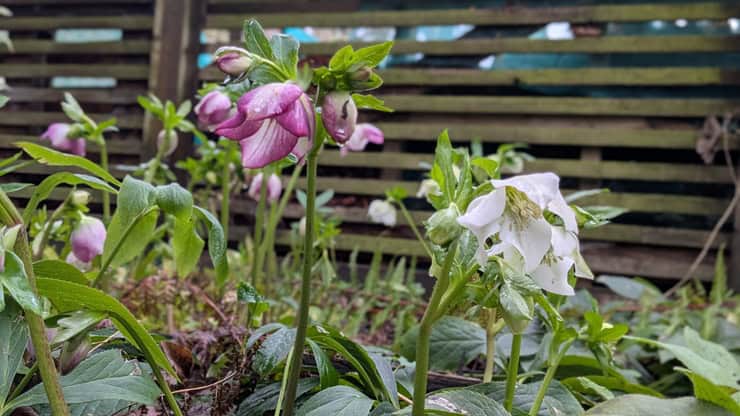
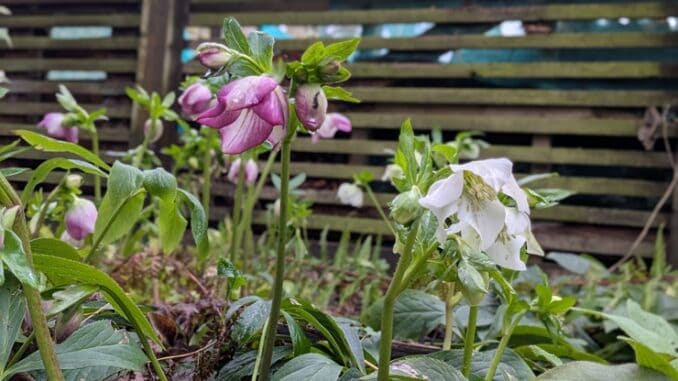
 Hellebores at the Garden Gate Project
By Nick Condron
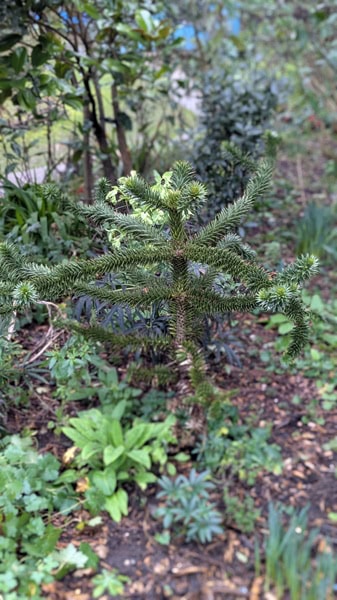
Just inside our gate stands a still quite modest, but wonderfully vibrant, young monkey puzzle tree. It’s easy to imagine how, in time, it will grow into a tree of real presence and character, greeting and inspiring everyone who arrives at the Garden Gate Project. For now, it feels symbolic of much of the garden in February: young, full of promise, and quietly gathering strength.
As winter enters its final wet and windswept month, the garden sits in that familiar in-between space. Growth is slow, the cold still bites, yet everywhere there are signs of change. February is a time for reflection on seasons past, but also for anticipation—of new plantings, fresh projects, and the year ahead.
Late-Winter Wildlife: Why the Garden Is Getting Louder
A walk around the woodland garden reveals carpets of snowdrops, but it’s the soundscape that really gives the season away. Robins, blue tits and even our resident ring-necked parakeets have noticeably increased both the frequency and variety of their birdsong.
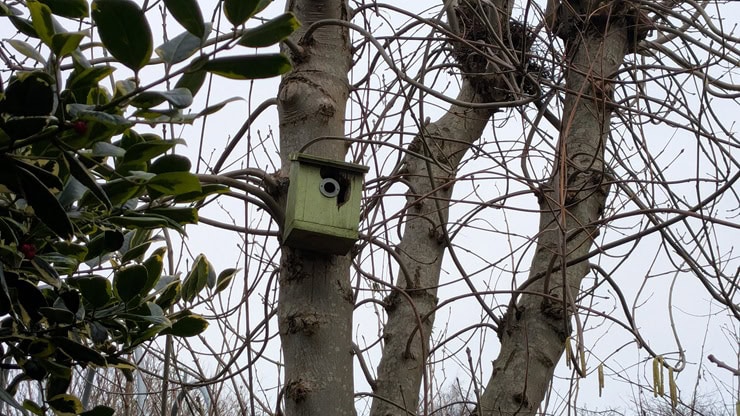
This pick-up is no coincidence. As daylight lengthens after the winter solstice, birds’ hormones respond to the changing light levels, triggering early territorial behaviour. Robins begin defending patches, blue tits rehearse courtship songs, and parakeets become increasingly vocal as breeding season approaches. The garden, quite literally, is waking up.
Woodland Interest: Hellebores, Foxgloves and Shade-Loving Stars
Among the plants catching the eye right now are the oriental speckled hellebores flowering beautifully in shades of pink and white on the floor of the shade house. These winter-flowering perennials are invaluable for providing colour at a time when little else is in bloom, and they thrive in dappled shade with well-drained soil.
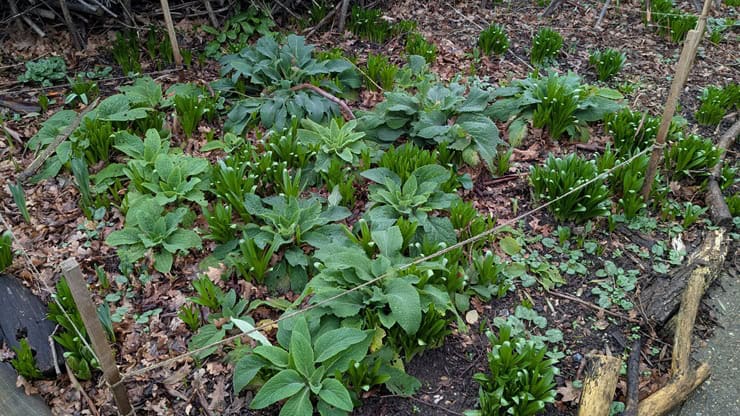
Nearby, foxgloves—biennials sown last year—are putting on strong leafy growth. They’ll go on to provide classic woodland flowers later in the season, loved by bees and other pollinators. Leaving these biennials undisturbed over winter pays dividends now.
Polytunnel Care: Frost Losses and Seasonal Maintenance
In the polytunnels, a few sharp frosty nights have taken their toll. We’ve lost some succulents and had to cut back other susceptible plants, which is always the way at this time of year. The key task now is ventilation: aerating tunnels as much as possible on milder days helps prevent mould and fungal problems.
Watering is kept light but regular, just enough to support plants as they begin to stir back into growth. Overwatering in cold conditions is a far greater risk than under-watering.
Tropical Touches and Early Sowing Under Cover
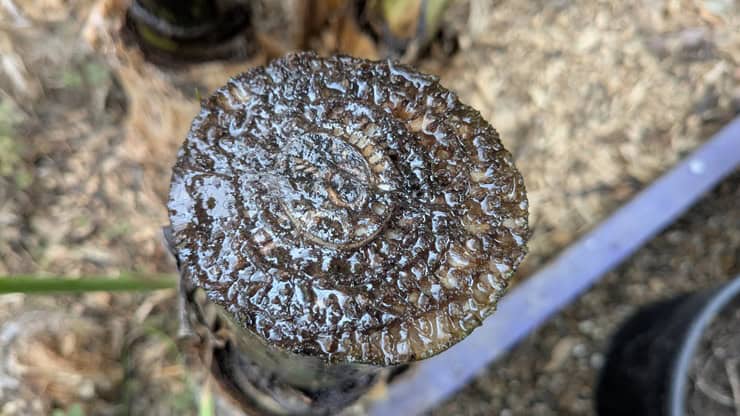
One definite sign of the season moving on is the cutting back of our banana plants to around two feet high. This may look drastic, but it’s essential for encouraging strong, fresh growth once temperatures rise.
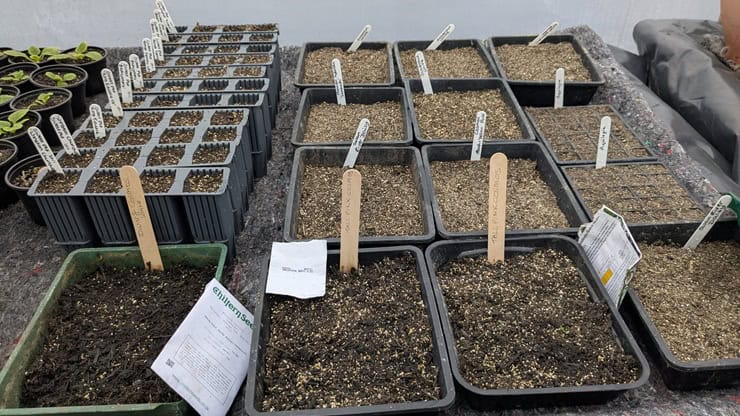
On the seed benches, the team have already been busy sowing onions, tomatoes and peppers. These crops need an early start under protection to give them a long enough growing season to perform well later on.
Cut Flower Progress: From Autumn Sowing to Spring Strength
Plants destined for our cut-flower beds—such as white scabious, achillea and foxgloves—were sown in the autumn and have now all been potted on. They’re coming along strongly, building good root systems before being planted out.
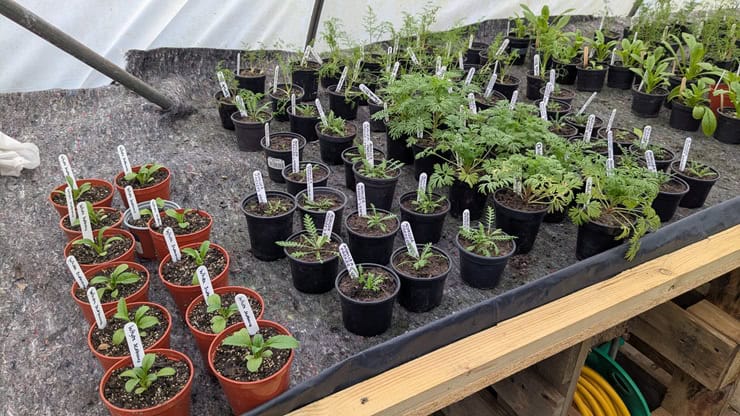
Meanwhile, sweet peas, cosmos, aquilegia, bergamot and delphiniums are still in the germination stage. Patience is key here: cooler soil temperatures slow things down, but steady growth now leads to sturdier plants later.
Early Blooms and Productive Beds
The small polytunnel has been planted with purple ranunculus and anemone ‘The Bride’, both of which are growing well and should provide some of our earliest cut flowers. Outside, tulips are pushing up strongly in beds protected by mesh—a simple but effective way of keeping squirrels at bay.
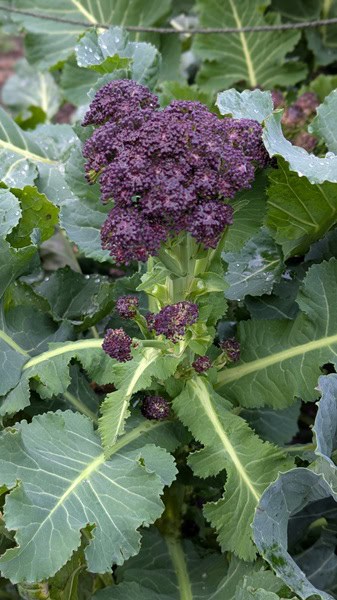
Nearby, we still have carrots in the ground, delicious purple sprouting broccoli almost ready to harvest, and garlic coming up well after its autumn planting. These crops are a reminder that winter growing, with a bit of planning, can be remarkably productive.
Willow Work: Creating Stock for the Future
A new willow bed has been created to establish a red-stemmed variety, helping support our future supply of whips. At the same time, willow and dogwood cuttings have been taken and potted up for sale later in the year.
These are taken as hardwood cuttings during winter dormancy: straight sections of young growth are cut, placed firmly into pots or the ground, and left to root naturally. It’s a simple, reliable way to propagate these vigorous plants.
Practical Jobs and Seasonal Displays
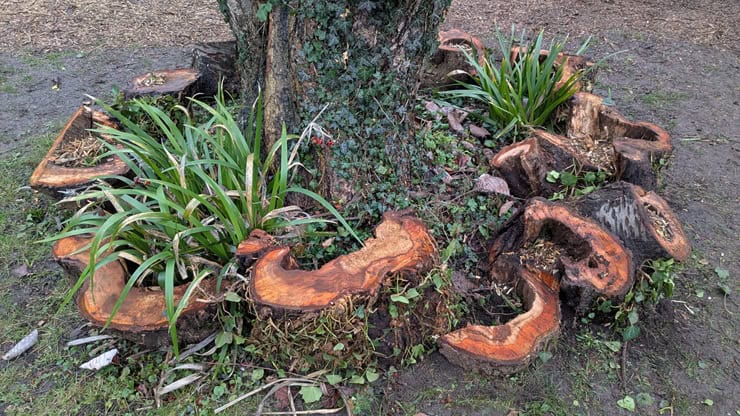
Sara and James have been busy planting up sections of tree trunks with daffodil bulbs, creating an attractive and slightly playful seasonal display around the base of our whitebeam tree.
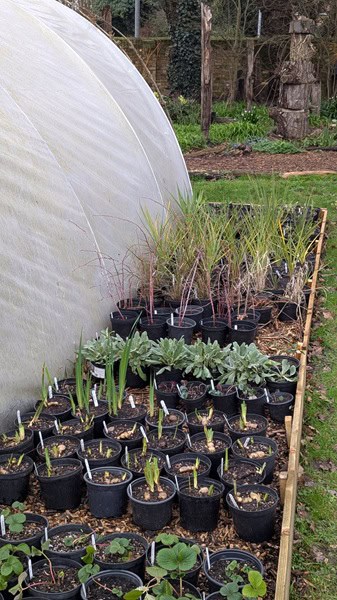
Meanwhile, Angie and the team have done a super job tidying and organising our plant stock in the cold frames. Plants have been repotted, labelled and arranged, all in preparation for sale at the upcoming spring open day.
Inspiring the Next Generation of Gardeners
We were delighted to recently welcome two groups of 45 children from Northdown Primary School. They learned about growing food and flowers, allotment gardening, and the no-dig method we use here at the project.
The children explored hot and cold composting, carried out soil testing by mixing our homemade compost, leaf mould and bark mulch, and discovered the combined pH was around 6—slightly acidic but fine for most plants. They also sowed broad beans to take back and grow at school.
It’s always a pleasure to see the garden inspiring tomorrow’s gardeners and playing as wide a role as possible in the local community.
Looking Ahead: An Invitation to Visit
As spring bulbs continue to push through, birds prepare their nests and trees begin to bud, the garden gathers momentum. If you fancy popping in for a look around, we’d love to see you. We’re open on weekdays from 10 am to 3 pm.
In the meantime—happy gardening!
www.thegardengateproject.co.uk
Comments are closed.