
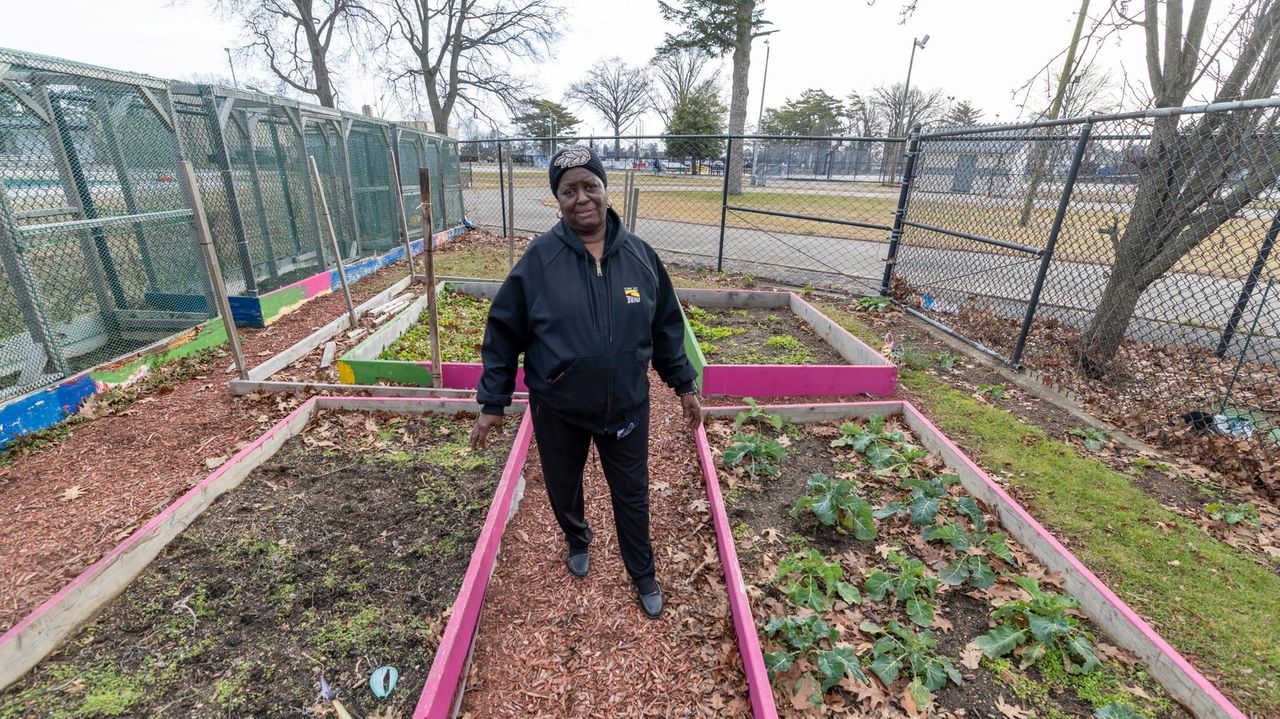
In February 2016, Mary Crosson went to Village of Hempstead Mayor Wayne Hall with a vision.
Crosson, who has lived in the village since 1995, was tired of seeing underutilized spaces in her area and people throwing garbage over the fences of unoccupied lots.
Her idea — turn one of those lots into a community garden.
“He said, ‘Ms. Crosson, OK, who’s going to take care of this garden?’ ” Crosson recalled. “I said, ‘Well, I want to do it.’ ”
Shortly after, Hall allotted a plot in Kennedy Memorial Park to be dedicated to the garden’s original caretaker, Ligia Estrada, and tended by Crosson. With Estrada’s sudden death in 2011, the garden fell by the wayside, Hall said.
But ever since, everything in the Village of Hempstead Community Garden has come up roses — and so much more.
With a wide variety of crops, including spinach, corn, potatoes, beets, apples, strawberries and flowers, the garden has become a resource and pride of the community. About 4,000 pounds of fresh produce from the garden is donated each year. That is thanks in large part to Crosson’s green thumb, and the volunteers who help her.
By the time she could walk, Crosson, 78, the daughter of South Carolina sharecroppers, knew how to grow things.
“I did everything from plowing the fields, getting up early in the morning, sunup to sundown, hitching up the mules on a one-horse plow, walking for miles,” Crosson recalled, saying her family’s farm was as large as the Village of Hempstead. “That was my life.”
Sharecropping is a practice in which a landowner allows a tenant farmer, or sharecropper, to use their land in exchange for a large portion of the harvested crops.
The system was pitched after the Civil War as a solution for landowners to retain labor and for formerly enslaved people to make a living and support their families. It ultimately provided a fundamentally unequal arrangement for hundreds of thousands of Black Southerners, preventing them from achieving economic or social mobility.
Each harvest, the landowner received half the crops, and Crosson’s family received the other half.
“It was not a choice, it was a survival,” Crosson said.
Survival meant ensuring all crops were harvested, and by any means necessary.
At the age of 11, Crosson was forced to drop out of school and work full time on the farm after her brother, who was 13, drowned.
Since it was a warmer climate, her family worked year-round preparing, planting and harvesting tobacco, cotton, corn, oats, sugarcane, tomatoes, collard greens, peppers, watermelon, potatoes, okra and more.
“It was hard,” Crosson said. “I did not have what you call your ‘teenagerhood.’ ”
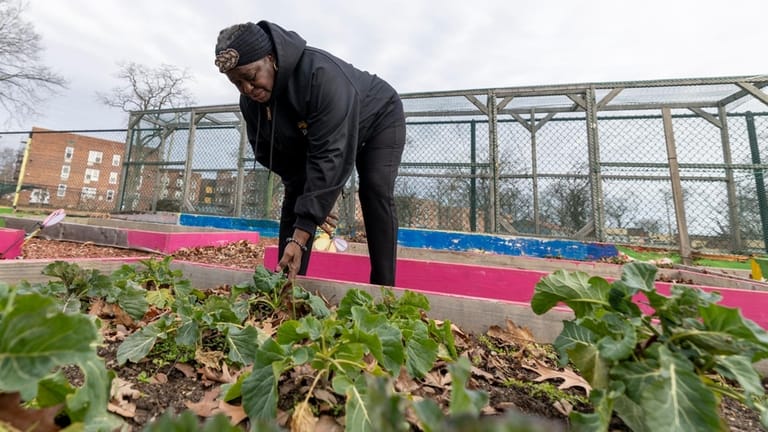
No matter the season, Crosson can be found in the garden (though snow days do happen). Credit: Newsday/Howard Schnapp
LEAVING THE FARM
When she was 17, Crosson married Bobby Bethea, a childhood friend who lived across the road from her family’s farm.
By the time they were married, his family had moved to New York.
Crosson, who read at a sixth grade reading level, said she saw marriage as the only path to upward mobility.
“At some point, I knew the only way I could leave home, I would have to get married,” she said.
She moved to Queens and joined one of the 6 million Black Americans who relocated to cities in the North, Midwest and West as part of the Great Migration — a period between 1910 and 1970 when many sought better economic and social opportunities and to escape racial violence and Jim Crow laws.
“It was terrifying,” Crosson recalled upon seeing New York City for the first time, including its tall buildings and signs she had trouble comprehending. “I thought I was in another dimension.”
Crosson separated from Bethea after five years of marriage, becoming a single mother to their five children. They later divorced.
At 23, she enrolled in a literacy program to improve her reading comprehension. The program opened several job opportunities for her, such as working in food service for the supersonic Concorde airliners at Kennedy Airport and working as a health aide.
Crosson said she worked as a home health aide for four years and then at Sands Point Nursing Home for 26 years. She retired in 2017.
During that time, she said, she always had something growing in her home, whether it was in a planter hanging on a window, or in her backyard garden.
In 1997, when she was 49, she married Al Crosson. He died in 2020 at the age of 69.
Crosson said through all stages of her life she has most enjoyed sharing the love of growing plants with her children, grandchildren and now her great-grandchildren.
“It’s a part of me,” she said.
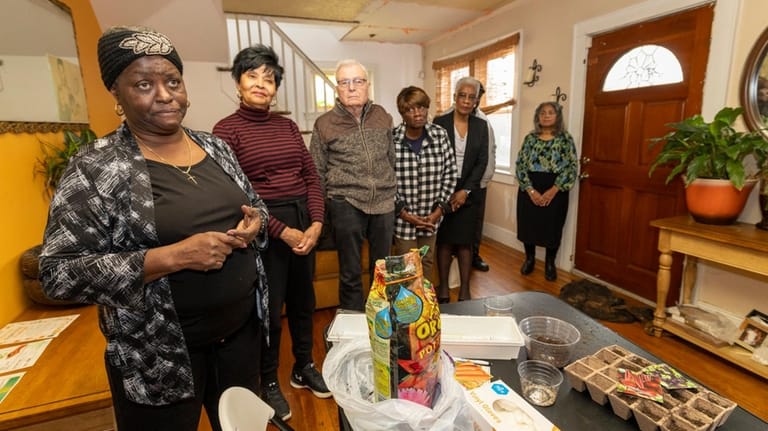
Head gardener Mary Crosson with volunteers, from left, Claudestine Gourdet, Bob White, Jerline Harris, Mamie Ashley, Donald Adamson and Joyce Gibson. Credit: Newsday/Howard Schnapp
TURNING NON-GARDENERS INTO GARDENERS
Crosson and her volunteers grow the produce in rows of about 16 planter beds.
No matter the season, Crosson can be found in the garden, volunteers said.
Her passion — and the beauty of the garden in bloom — are what lured her dedicated team of volunteers.
Jerline Harris, 80, said she felt compelled to volunteer when a friend brought her to the garden and she saw an okra flower for the first time.
“About two weeks later that thing turned around to a beautiful, long okra,” recalled Harris, a retired nurse. “I was amazed . . . and from that day on, five or six years ago, I’ve been in the garden, because I want to make sure that okra comes.”
Many volunteers said they started with little to no gardening experience.
In the past 10 years, Crosson has taught her team so much about gardening that they now hold K-12 education workshops and classes for the community.
The garden has also become a place where young adults can find leadership opportunities by instructing younger children, said volunteer Joyce Gibson, 69.
“It has, really, a great impact on the village,” said Hall, who still frequents the garden once a week in the warmer months and admires how all generations enjoy it. “This is something that’s positive in the village.”
Crosson said she loves showing the garden to others, especially children, as she notices so many who have not been exposed to the process of growing and harvesting crops.
When children come to the garden and are asked where vegetables come from, a typical answer Crosson said she hears is “from the grocery store.”
“I cried many tears because I’m so thankful that I’m able to show them,” Crosson said.
After an event she will send folks home with produce so they can taste the fruits of their labor.
She will also drive to nursing or senior homes to deliver fresh produce to those who can’t get out.
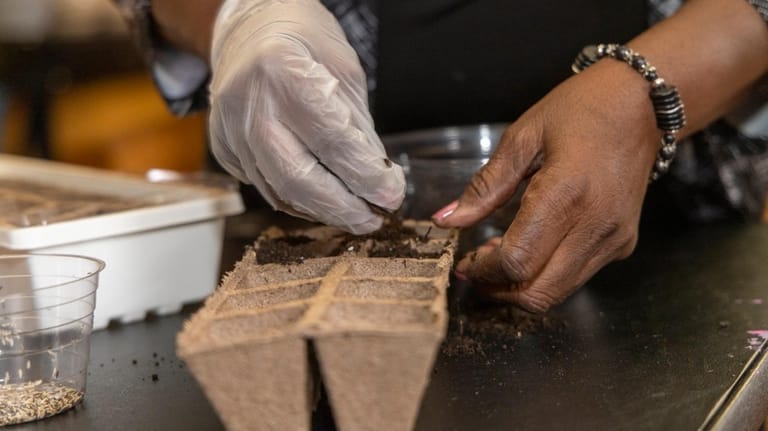
The list of vegetables grown in the garden is long. There is even an “international” section. Credit: Newsday/Howard Schnapp
PRODUCE IS FREE
Food is always available for free, Crosson said. All one must do is come to the garden in the park on Greenwich Street.
She said she always tells community members to “bring their empty bags.”
Residents have also been generous, giving their food scraps for compost, potato heads for sprouting and extra seeds. Last year, Northwell Health donated 100 bags of topsoil and mulch.
Crosson said another thing she loves about teaching is showing the difference in the quality between a garden-grown fruit or vegetable versus store-bought produce — and just how easy it is to grow them yourself.
“Someone said to me, ‘I’ve never had a cucumber. I don’t like cucumbers,’ ” Crosson said, adding that the man came to the garden and ate one. “He’s been a cucumber lover ever since,” she said.
The garden allows people, including Crosson, to be exposed to produce they have never eaten before.
Retired pension consultant Bob White, 82, of Hempstead, said he never had collard greens before he started volunteering six years ago. He has been eating them “ever since,” Crosson said.
Community members have even brought crops from their own cultural backgrounds, such as callaloo, a leafy green vegetable used in many Caribbean dishes, long beans and bitter melons, now a part of the garden’s “international” section.
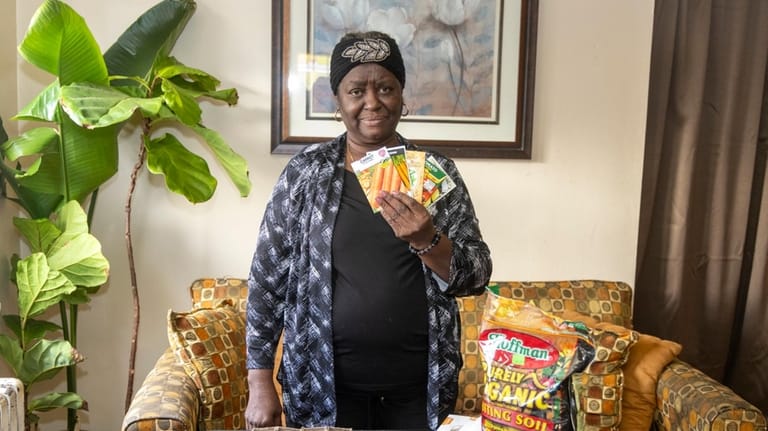
Crosson said she is especially happy when she can teach children where their food comes from. Credit: Newsday/Howard Schnapp
PARADISE FOUND
In a world that can sometimes feel chaotic, volunteers said they find serenity in the garden, whether it’s from hours of pulling weeds from the plant boxes or sitting under a tree in their favorite corner and taking in nature.
Harris said the garden is a “paradise for those who don’t have a paradise.”
“We have everything in the garden,” she said. “We have a corner where you can sit. We have roses. These ladies have made it a paradise for those who don’t have a paradise.”
More than 50 years after working full time on a farm, Crosson said she never could have imagined teaching gardening to so many — and that so many love it as much as she does.
“If you don’t know how to plant a garden, it’s very simple,” she said. “Dig a hole, put a seed in it, water it and then let God do the rest.”
Maureen Mullarkey is a breaking news reporter at Newsday. She previously worked as a reporter for Patch, where she covered a range of Long Island stories on topics such as the Diocese of Rockville Centre bankruptcy and the Babylon School District abuse scandals.
Comments are closed.