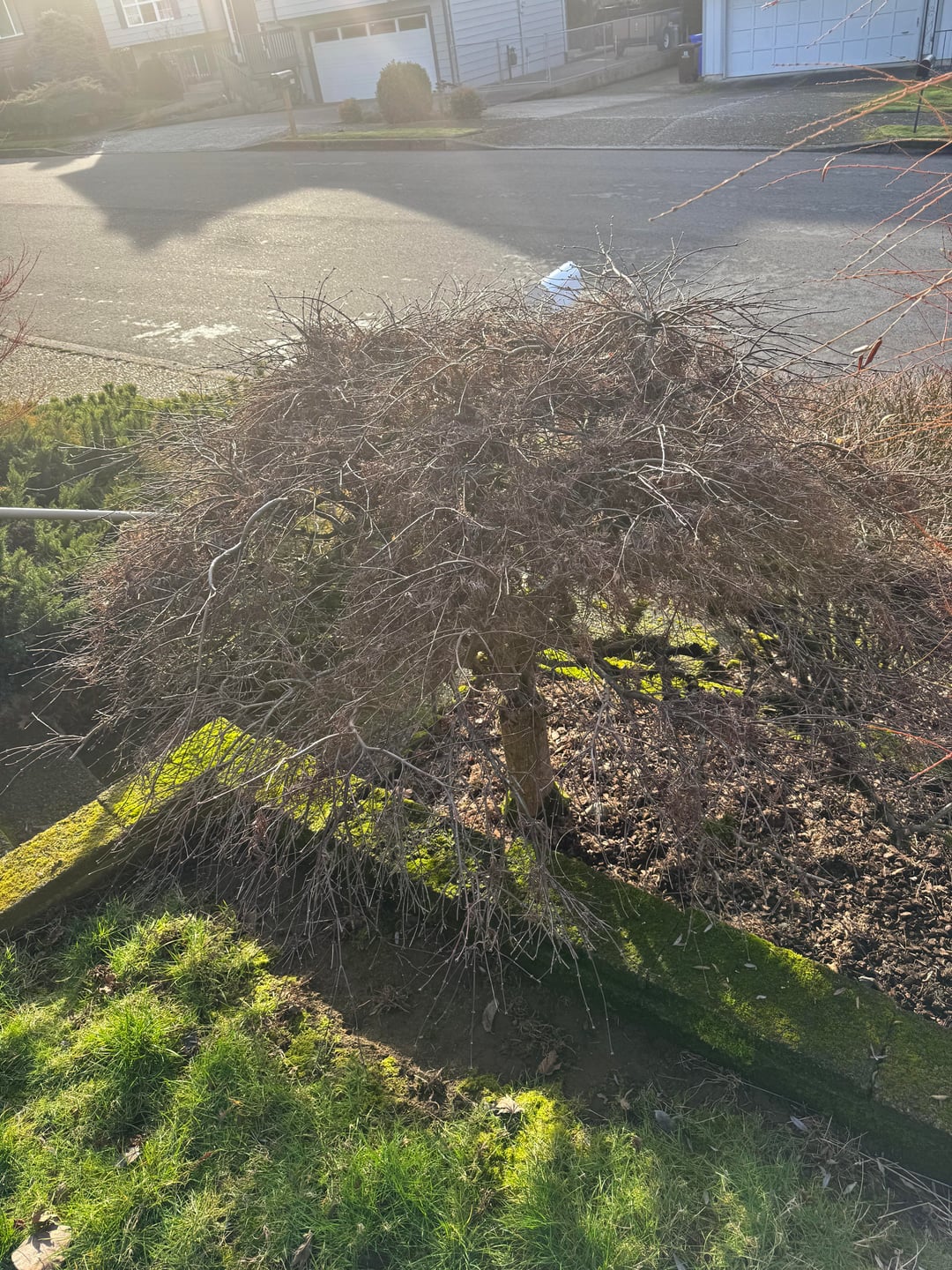
First step is to use a leaf blower and blast all of those dead leaves out so you can see what you’re doing.
DeaneTR
I do lots of these… First step is put on some gloves and use your fingers like a comb to rake all the dead leaves out which does no damage compared to using tools. Next step is using your hands to break off all the deadwood that’s been shaded out and lighter in color. The deadwood breaks easy but the live wood won’t. Final step is optional, which is to prune and simplify the branch structure, as well as thin out and simplify branches underneath that are going to get shaded out so it’s mostly just one outer layer. That last step doesn’t need to happen very often, but first two steps is done annually. Lastly don’t experiment with major pruning, it rarely works as planned. Just let it keep its natural shape.
Note: main problem you’ll run into with these is dummies who prune them like a hedge. You have to prune at the forks otherwise every branch hit with a hedge trimmer will die back to strongest live fork and look unsightly.
Saigh_Anam
Unfortunately, based on the size of the trunk, this appears to be a dwarf variety. The canopy may not get much higher than the current canopy.
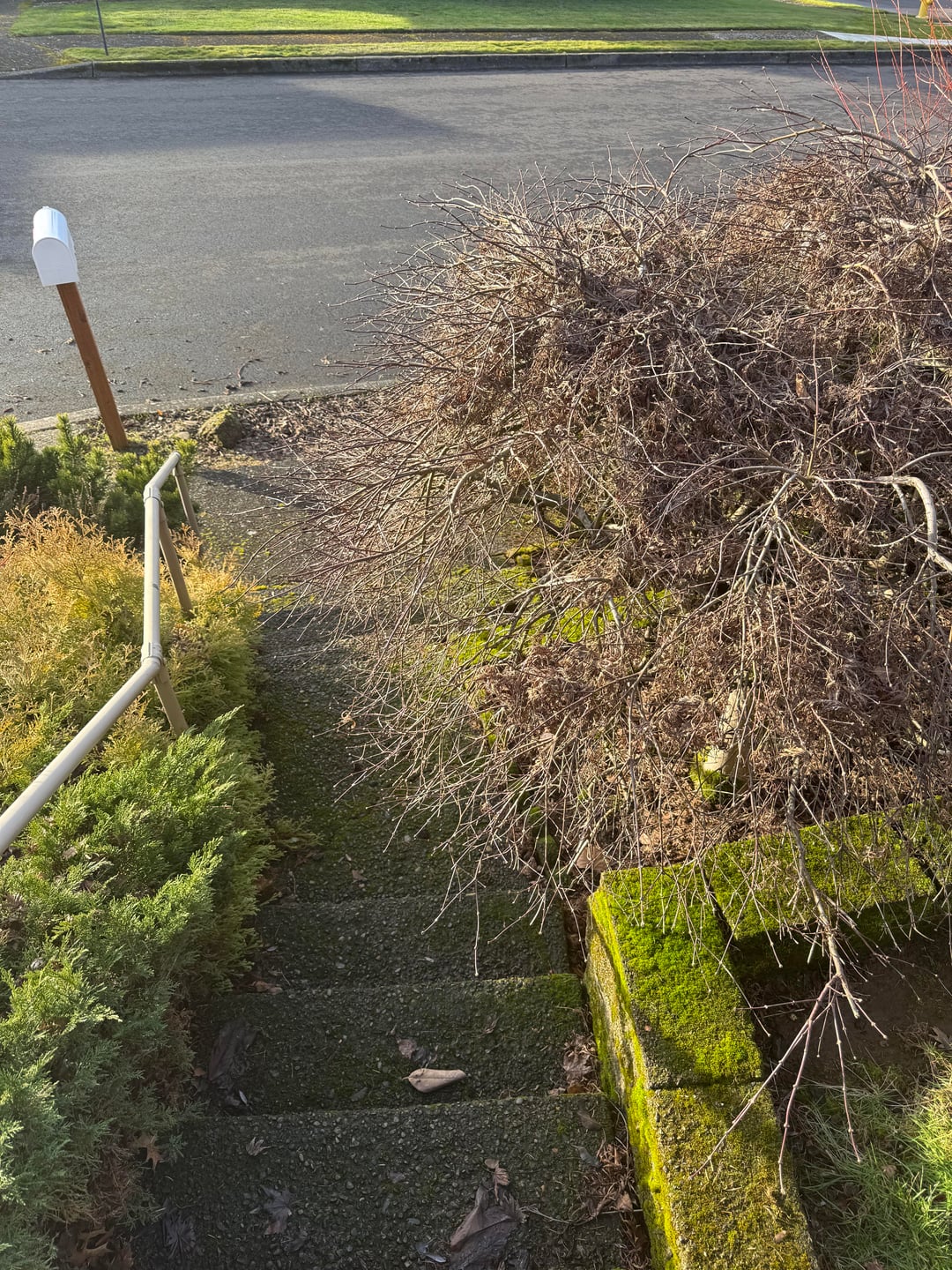
A normal height acer could be trained to arch over the steps, creating a beautiful trellis effect. That may not be possible with this tree because the height required simply isn’t there.
As others have mentioned, thinning and shaping are likely the vest option. Relocation of this mature of a tree is not a simple nor cost-effective option.

3 Comments
First step is to use a leaf blower and blast all of those dead leaves out so you can see what you’re doing.
I do lots of these… First step is put on some gloves and use your fingers like a comb to rake all the dead leaves out which does no damage compared to using tools. Next step is using your hands to break off all the deadwood that’s been shaded out and lighter in color. The deadwood breaks easy but the live wood won’t. Final step is optional, which is to prune and simplify the branch structure, as well as thin out and simplify branches underneath that are going to get shaded out so it’s mostly just one outer layer. That last step doesn’t need to happen very often, but first two steps is done annually. Lastly don’t experiment with major pruning, it rarely works as planned. Just let it keep its natural shape.
Note: main problem you’ll run into with these is dummies who prune them like a hedge. You have to prune at the forks otherwise every branch hit with a hedge trimmer will die back to strongest live fork and look unsightly.
Unfortunately, based on the size of the trunk, this appears to be a dwarf variety. The canopy may not get much higher than the current canopy.
A normal height acer could be trained to arch over the steps, creating a beautiful trellis effect. That may not be possible with this tree because the height required simply isn’t there.
As others have mentioned, thinning and shaping are likely the vest option. Relocation of this mature of a tree is not a simple nor cost-effective option.