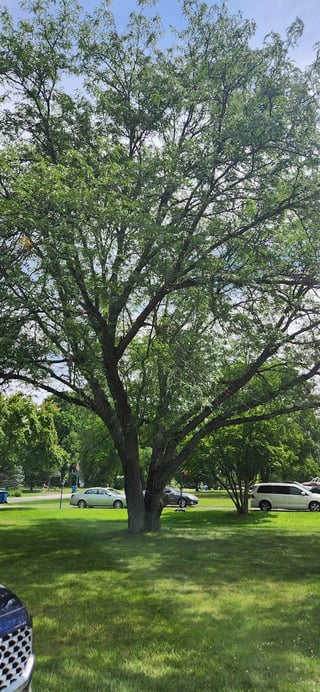
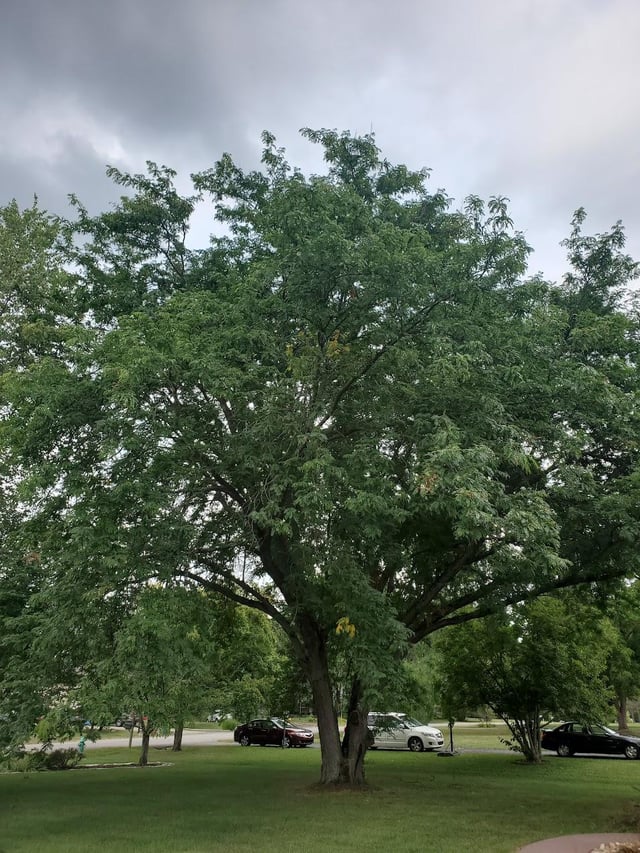
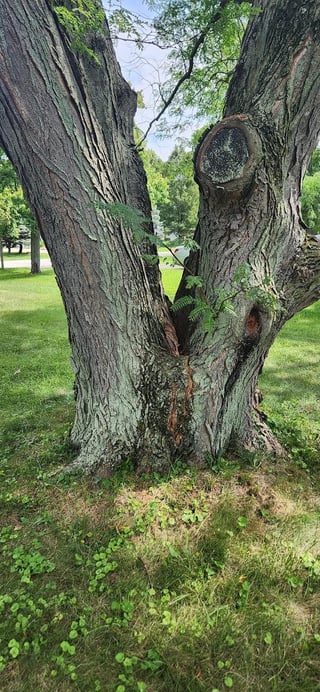
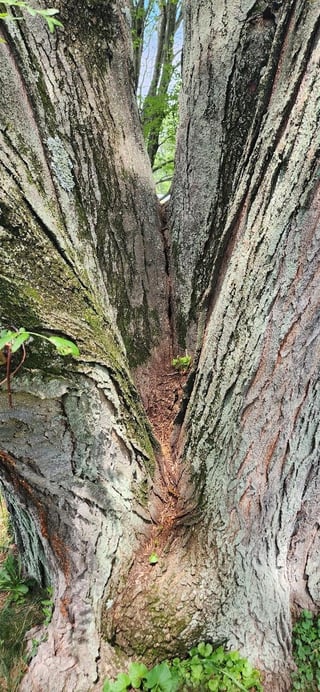
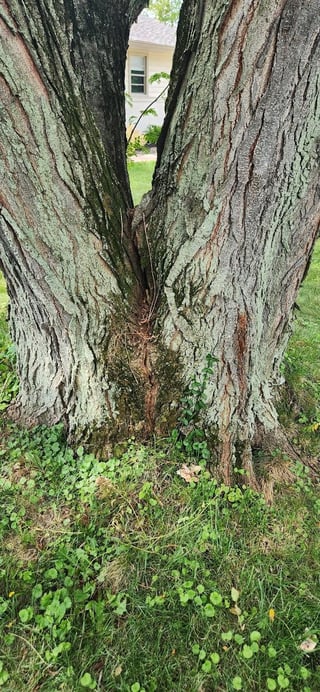
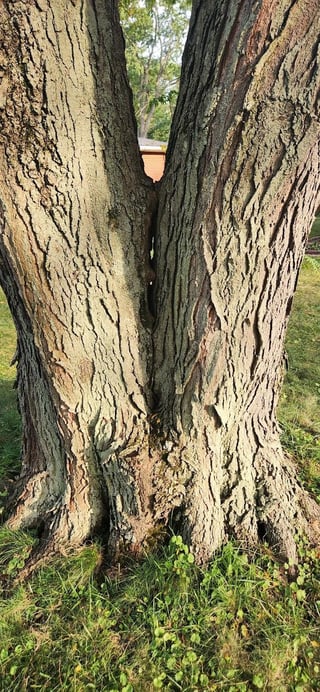
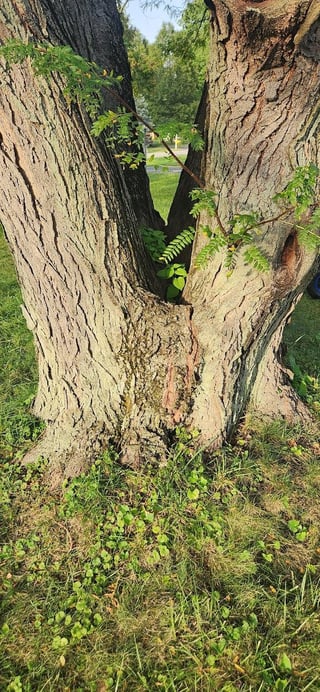
Definitely a good candidate for a cable and maybe even a few brace rod.
Ineedanro
It appears to be a black locust. Is that correct?
BigHoss_17
Yes. Bracing and a cable would be a good idea if you can afford it. A weight reduction pruning would also be an idea.
Tom_Marvolo_Tomato
Bear in mind that cabling is not a “one and done” type deal. Cabled trees need to be examined by a climber at a minimum of once every 3 years.
My personal opinion on cabling is that it delays the inevitable, and puts the tree owner at a false sense of security. A lot depends on the species of tree, the overall risk (especially that of targets), and the quality of the workers in your area. In my area, I would never recommend cabling…it’s poorly done, never reinspected, and when the trees fail, it is a catastrophic failure. But that’s my area.
riseuprasta
I’m not a huge believer in cabling myself. This is a pretty standard form for a locust. I think weight reduction is more practical and likely to be maintained over time than cabling.
My question to the pro cablers. Where would you cable this thing to prevent its most likely point of failure which I assume is an entire stem failure?
If you do decide to do cabling or bracing make sure you get an arborist who has a proven knowledge of installation and monitoring. Lots of guys will throw some random cable in and call it good.
lonelyinbama
Yeah it’s kinda textbook case as a cabling candidate. Seems healthy enough otherwise.
So, if you like the tree and want to give it the best opportunity to live for as long as it can then I’d say it’s worth the investment. I’d think about getting some of that weight off the branches too.
an-unorthodox-agenda
At first I read calibrated instead of cabled and I honestly dont know how I thought a tree gets calibrated

8 Comments
Yes
Definitely a good candidate for a cable and maybe even a few brace rod.
It appears to be a black locust. Is that correct?
Yes. Bracing and a cable would be a good idea if you can afford it. A weight reduction pruning would also be an idea.
Bear in mind that cabling is not a “one and done” type deal. Cabled trees need to be examined by a climber at a minimum of once every 3 years.
My personal opinion on cabling is that it delays the inevitable, and puts the tree owner at a false sense of security. A lot depends on the species of tree, the overall risk (especially that of targets), and the quality of the workers in your area. In my area, I would never recommend cabling…it’s poorly done, never reinspected, and when the trees fail, it is a catastrophic failure. But that’s my area.
I’m not a huge believer in cabling myself. This is a pretty standard form for a locust. I think weight reduction is more practical and likely to be maintained over time than cabling.
My question to the pro cablers. Where would you cable this thing to prevent its most likely point of failure which I assume is an entire stem failure?
If you do decide to do cabling or bracing make sure you get an arborist who has a proven knowledge of installation and monitoring. Lots of guys will throw some random cable in and call it good.
Yeah it’s kinda textbook case as a cabling candidate. Seems healthy enough otherwise.
So, if you like the tree and want to give it the best opportunity to live for as long as it can then I’d say it’s worth the investment. I’d think about getting some of that weight off the branches too.
At first I read calibrated instead of cabled and I honestly dont know how I thought a tree gets calibrated