
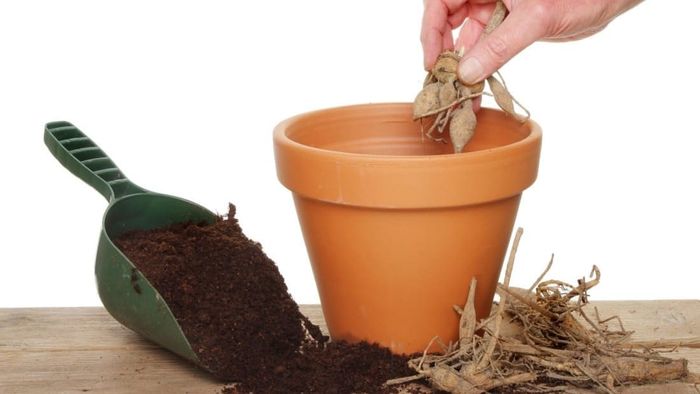
SUMMER BLOOMS: Dahlia tubers can be potted up towards the end of the month (Image: Griffin24/Getty)
With the end of winter in sight, February offers gardeners a chance to crack on with tasks that’ll set them up nicely for spring. When the ground’s frozen solid or saturated with rain, there’s plenty to be getting on with indoors, from starting off seeds to giving houseplants some TLC.
Make sure your houseplants are getting plenty of light, says gardening expert, Hannah Stephenson. Move them nearer windows but away from draughts, and keep the leaves well dusted to encourage photosynthesis.
While you’re at it, check if they need watering by testing the soil with your finger – if damp earth clings to it, the plant probably doesn’t need any more water. Hannah has shared nine more jobs to tackle this month, and you needn’t venture outside for all of them.
READ MORE
1. Get sowing: Sowing seeds is another timely indoor task, and cosmos, salvias and sweet peas are excellent choices for flowers. If you prefer veg, start growing tomatoes and chillies on your windowsill, or even some kale, peas and leeks.
If the soil outside isn’t frozen or waterlogged, and you live in a mild area, you could try sowing broad beans, cabbages, carrots and parsnips under cloches. If the ground is not suitable, wait until March when everything has warmed up a little, says Hannah.
2. Chit your spuds: Early seed potatoes (or new potatoes) can be ‘chitted’ indoors to encourage them to sprout. Put them ‘eye’ side up in old egg boxes or seed trays on a windowsill with indirect sunlight. Once the shoots have grown to about 2cm you can plant them in the ground or potato sacks.
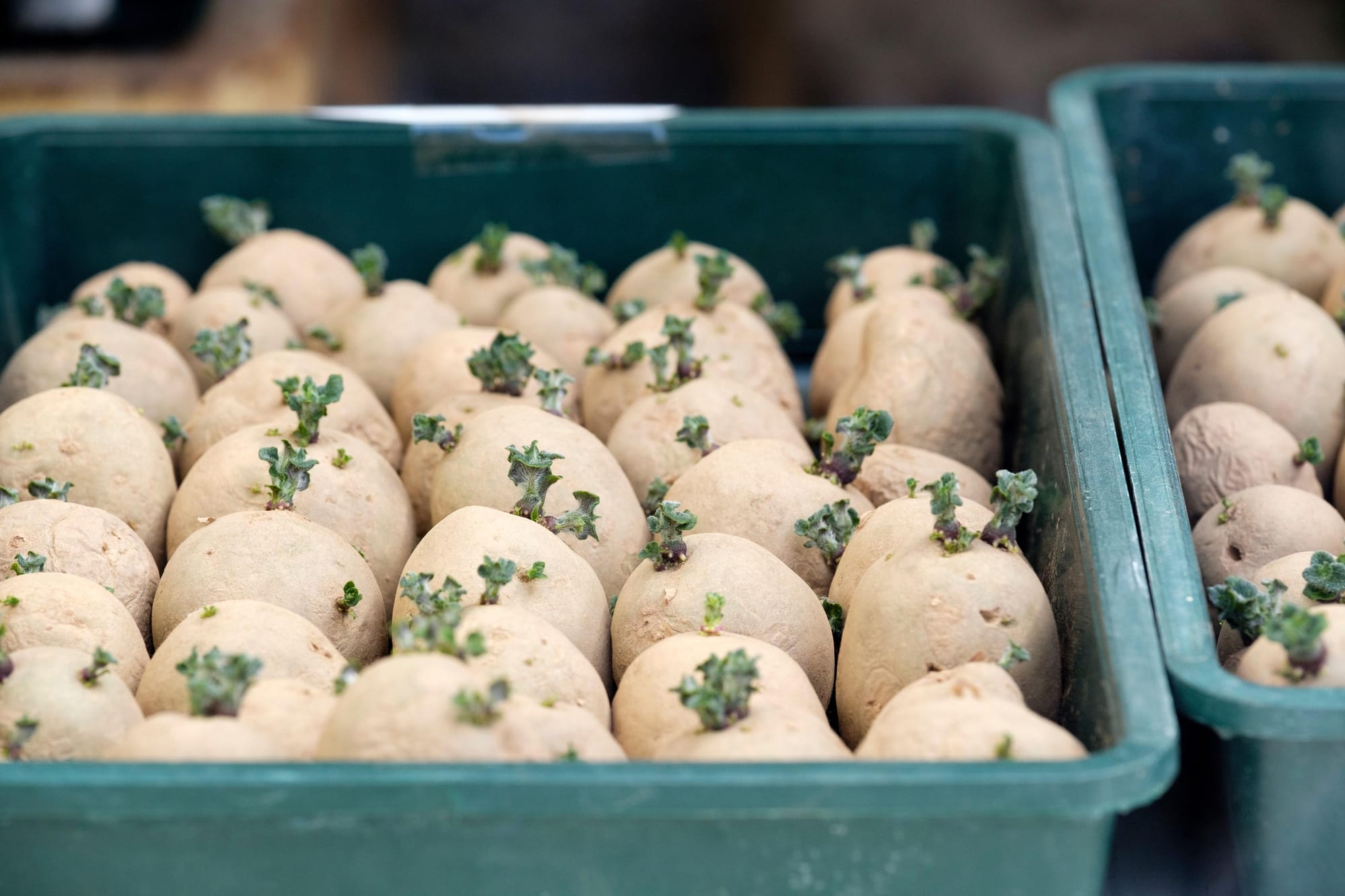 GROW YOUR OWN: Put seed potatoes in a cool, light, frost-free spot for four to six weeks (Image: Alamy/PA)
3. Plant bare-root roses, shrubs and fruit bushes: Bare-root plants might not look very prepossessing but they’re much cheaper than buying potted ones, tend to be better quality and are an environmentally friendly option. Provided the soil isn’t frozen solid or waterlogged, planting them now means they’ll be well-established come summer.
4. Get pruning: Winter-flowering shrubs, such as winter jasmine, should be trimmed back once the blooms fade. Roses can be pruned later in the month, along with Groups II and Group III clematis, wisteria, and summer-flowering shrubs like buddleia and Hydrangea paniculata, which flower on this year’s growth.
It’s also a good time to tidy up fruit bushes, such as blackcurrants and gooseberries, to create a better framework, and trim deciduous hedges before birds begin nesting in them come March. Cut back perennials and ornamental grasses to promote fresh growth, but hold off pruning spring-flowering shrubs, such as forsythia, until they’ve completed their display.

5. Deadhead flowers: Container-grown violas and pansies might have been looking dejected over the winter, but if you deadhead them now, they should come back to life come spring. Do the same with the spent blooms of early flowering primulas and clear any fallen leaves which may have drifted into planters and given slugs and snails a handy hiding place.
6. Start off summer-flowering bulbs: Dahlia tubers and lily bulbs can now be potted up and put in a bright sheltered spot, such as a greenhouse, keeping the compost moist. Give your gladioli a head start by planting corms in seed trays in a light, warm spot where they should show signs of life before planting on.
7. Check plant protection: February can still be bitterly cold and windy, so make sure any protective covers over vulnerable plants are secure. Various types of netting and horticultural fleece can be draped around containers or fashioned into frames over wall-trained plants.
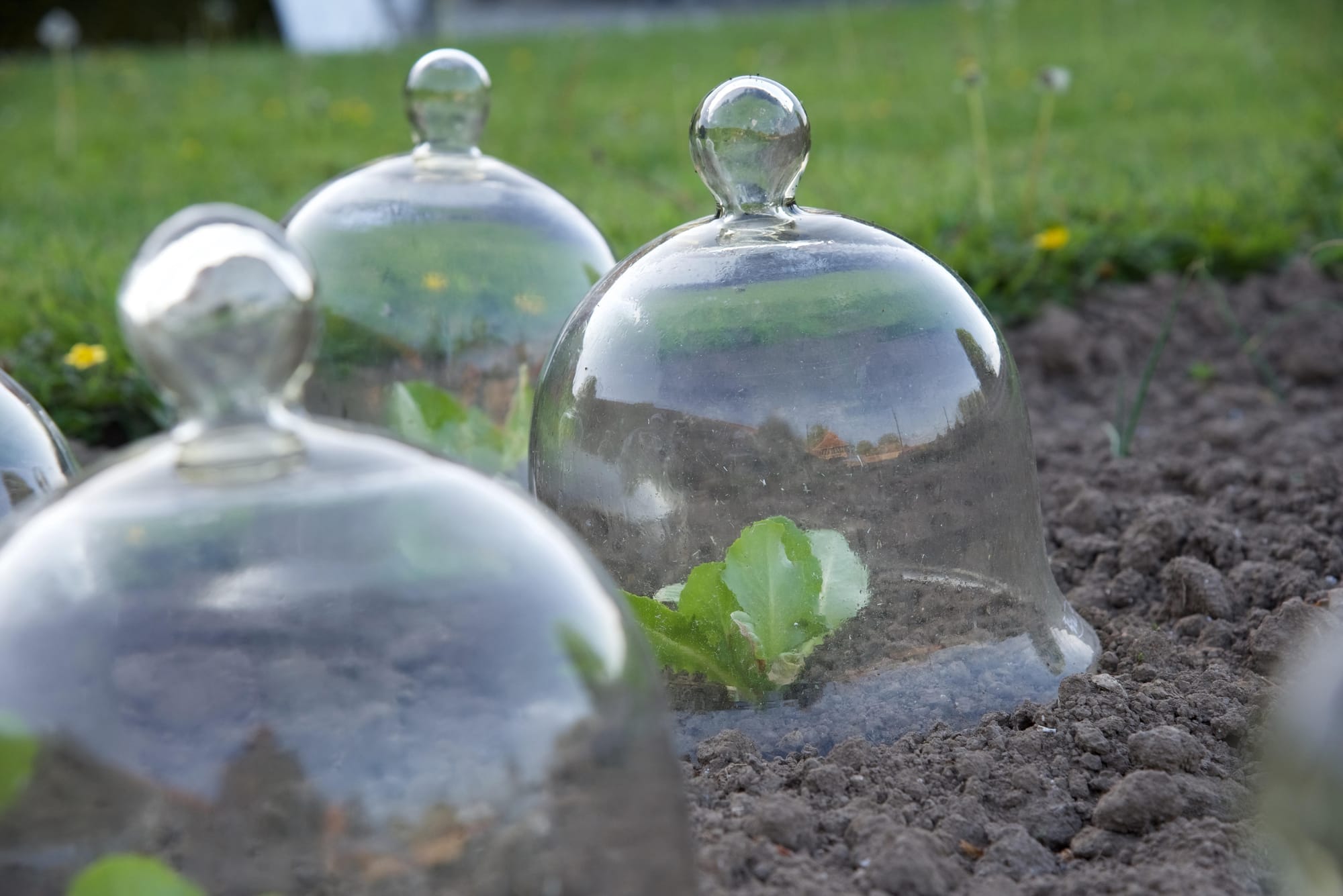 PLANT PROTECTION: Cloches help protect seedlings from harsh weather (Image: Alamy/PA)
8. Prepare the soil: You’re likely to achieve better results when sowing straight into the ground if you warm it beforehand. Materials such as cardboard, old fabric, bubble wrap or cloches can shield the soil from the worst of the weather and give plants the best possible start.
It might be wise to hold off planting your hardier specimens until mid-February, when, with any luck, the sun will have made an appearance. Applying a layer of organic mulch around trees, shrubs, and fruit bushes not only enriches the soil but also provides insulation for the root systems.
9. Clean garden tools: If you neglected the task last year, head to your shed and make sure all your garden tools are cleaned and oiled, ready for the new season – they’ll work better, last longer, and it’s cheaper than forking out for new ones. While you’re there, check if your lawnmower needs servicing and give plant pots a thorough wash ready for seed-sowing.
Useful items 🌿
This article contains affiliate links and we may receive a commission on any sales we generate from it. Learn more.
A 1kg bag of Seed Potato ‘Charlotte’ costs £5.49 at Marshalls Garden. High-yielding crop with tender, creamy-yellow flesh that’s ideal hot or in salads. Save 32% on 10 Reusable Germination Trays with Lids, now £13.58 on Amazon. Includes trays, 12-cell inserts with drainage hole, ventilating lids and plant labels. A 10L pouch of John Innes Seed Sowing Compost costs £7.86 on Amazon. Added vermiculite to retain moisture and feeds for the first three weeks. Save almost a third on the Votrek Bypass Secateurs, now £18.03 on Amazon. The ergonomic design with soft rubber grips dampens vibrations and minimises wrist strain.
Prices correct at the time of publication.
MORE FOR GARDENERS
Comments are closed.