
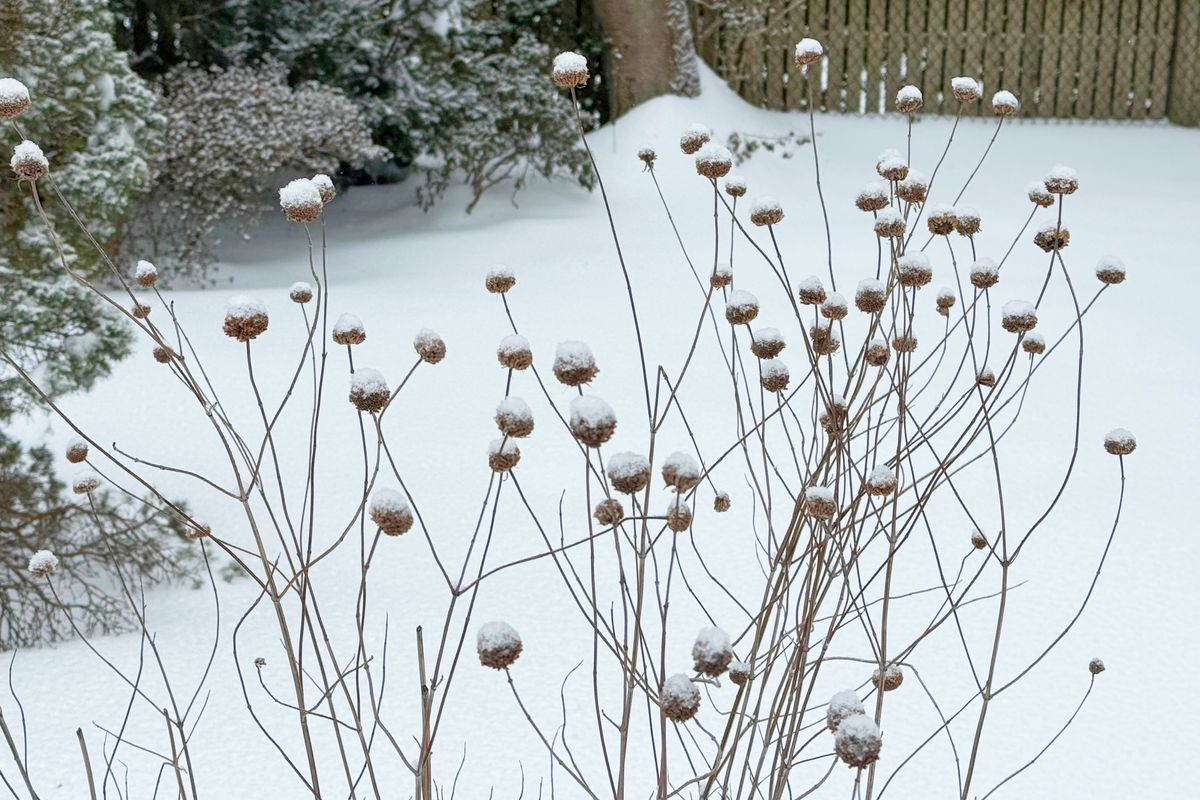
Shoveling in single-digit temperatures after the colossal winter storm last weekend, I dumped mounds of snow onto my garden beds, knowing it would protect my trees, shrubs and dormant perennials.
When the ground repeatedly freezes and thaws, as it does over winter in cold climates, that can squeeze roots, seeds, bulbs, tubers and rhizomes right out of the earth. Once exposed, they can be killed off by cold, drying winds.
But snow cover provides a heavy blanket of winter mulch that insulates the soil, prevents heat from escaping and keeps soil temperatures from seesawing. And as it melts, snow will not only water your garden but fertilize it with plant-boosting nitrogen absorbed from the air on its way to earth.
It’s a perfect display of nature taking care of itself.
Branches might not fare as well
On the downside, the same heavy blanket that keeps plants warmly tucked in can spell disaster for evergreen trees like arborvitae and Leyland cypress. When wet snow accumulates on trees, its weight can bend, buckle or snap branches. And if you don’t remove it, it can permanently disfigure them.
We can help by gently knocking snow off branches with a long-handled broom. Under normal circumstances, I do this after the storm ends. But during extended snowfalls, I go out during the storm, as well, to keep on top of the accumulation. Trees are expensive, so I’d rather brave the elements than have to replace them.
When water or accumulated snow freezes into ice, however, it’s best to leave the branches be. Attempts to crack or knock ice off plants risk further damaging bark and other delicate plant parts. All we can do is allow it to melt naturally and hope for the best.
Comments are closed.