
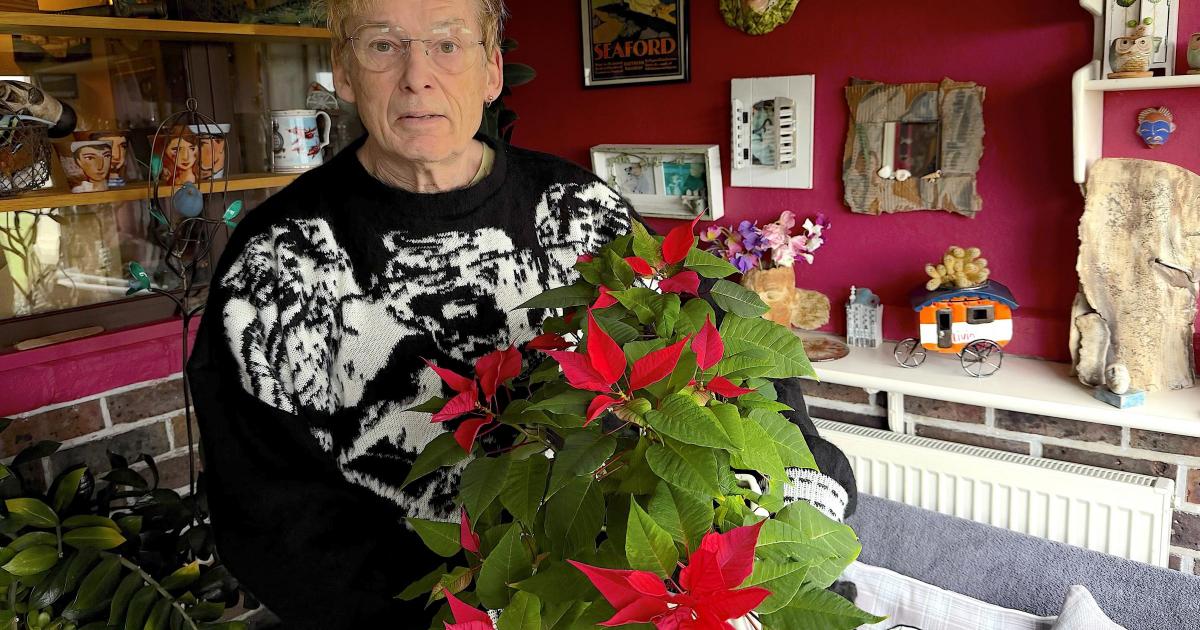
Now, if I am being honest, there was probably a lot of luck involved, but there are some guidelines you can follow if your plant is still doing okay. The first thing you need to do is prune the plants after the flowering season. You’ll know the time for pruning has come when the bracts start to shrivel and eventually fall off. This typically happens around now. The aim is to cut down the stems to approximately six inches above the soil line. Don’t remove all the leaves; if two to three leaves remain on each stem, it will encourage your plant to generate new growth. After pruning, the plant should display new growth. Then, it is advisable to give it a feed, using an all-purpose houseplant fertiliser every couple of weeks.
Watering is another essential factor in poinsettia care, so make sure you water when the top two inches of the growing medium dry out. They like to stay evenly moist but not waterlogged. It’s important to check the soil regularly to ensure it’s not too dry, as the plant can suffer if it dries out completely.
A simple trick is to pick up the pot; if it feels light, it’s time to water. Now, here comes the most important part of the reblooming advice. You need to find a room in your house where your plants can receive about 10 hours of bright light and approximately 14 hours of complete darkness. This period of full darkness should not be interrupted because even a slight change in conditions may affect flower production. If you don’t have such a room, you can put the plant in a cardboard box and keep it closed for 14 hours. Once your poinsettia has had its six to eight weeks of darkness, you can move it to a brighter spot to kickstart the blooming process. This step is essential for encouraging the appearance of colourful bracts. Just keep the light and dark cycle consistent, and with a little patience, your plant will reward you with those beautiful blooms. Now that’s the theory, but even being not quite so thorough, mine have managed to flower well in their second year, so fingers crossed for next Christmas.
At this time of year, the birds in the garden really appreciate being offered some food. With the extremely cold spells we had earlier in the month, they would have found it difficult to get food and water. I tried to remember to go out and break the ice on the water features, thus giving them easy access to water to drink. As far as feeding is concerned, I have always had a problem in the past with food dropped on the ground, attracting unwanted rats in the garden. This year, I have invested in what is billed as a smart bird feeder. The theory is that rats can’t get to it, and food does not drop on the ground, thanks to the tray beneath. So far so good, let’s see how it works out through the rest of the year.
Tomorrow starts my regular BBC Sussex radio sessions for 2026, joining Pat Marsh on Sunday gardening with updates on the gardens opening for the National Garden Scheme. There is a session on 1st February and 1st March, thereafter every Sunday until the end of the open garden season, why not listen in?
On that note, Pembury House in the village of Clayton, BN6 9PH, in the South Downs National Park, has been opening for more than 30 years and has raised a remarkable £160,000. With some three acres of mainly woodland garden, it is renowned for its late-winter showing of snowdrops and hellebores. The garden will be opening again on eight dates this year, 12th, 13th, 19th & 20th, 26th and 27th February and again on the 5th and 6th March, all visits will need to be pre-booked and entry is £12 inclusive of homemade teas.
The other snowdrop opener is 5 Whitemans Close in Cuckfield. See many single and double snowdrops, hellebores, bulbs and other winter treasures. Open for pre-booked visits on 2nd, 4th, 10th, 12th, 14th, 17th and 18th. There have been changes to the garden since last spring, and more new snowdrops added for this season. Delicious homemade cakes are also very much part of the visit. Check booking details on the scheme’s website at www.ngs.org.uk.
The 2026 Sussex County booklet is available to pick up in garden centres and local libraries in the coming weeks or you can pre-order the 2026 Garden Visitor’s Handbook on the website too.
Read more of Geoff’s garden at www.driftwoodbysea.co.uk or follow both him and the garden on social media.
Comments are closed.