
Modest Mussorgsky’s searing original version of Boris Godunov — just seven scenes starkly chronicling the rise, disintegration and death of a tsar — was once regarded as a rough sketch that needed polishing by more sophisticated composers. These days, rightly, we prefer unvarnished Mussorgsky, thrilling to his primordial harmonies, modal soulfulness and jagged savagery in a score where bells signify exultation, madness or death, and an array of baritones and basses declaim their hopes and forebodings (mostly the latter) in baleful arias.
One abiding glory of the Royal Opera’s production, back for a third instalment of dark, deep Russian angst, is the orchestra’s fierce contribution. The conductor this time round is Mark Wigglesworth, who is particularly good at gradually increasing the intensity and pace of slow-burning scenes that start with what seem like rational conversations and end in mortal terror.
But it’s not the only glory. This is one of Richard Jones’s most cogent stagings, presented within Miriam Buether’s economical but evocative two-level set. The brutal opening mime — the young prince getting his throat cut as he plays with his spinning top — is reprised throughout but not for vicarious effect. It’s because this grim atrocity fixates the guilt-ridden Boris like a recurring nightmare. It sets the tone for the staging, but there’s also a touch of brilliance about Jones’s treatment of the Royal Opera’s rampant chorus, either as a browbeaten mass of Russian peasantry, a coronation congregation forced into rejoicing or a sinister cadre of boyars moving with the robotic abruptness of cartoon villains.
• The best classical concerts and opera: our reviews
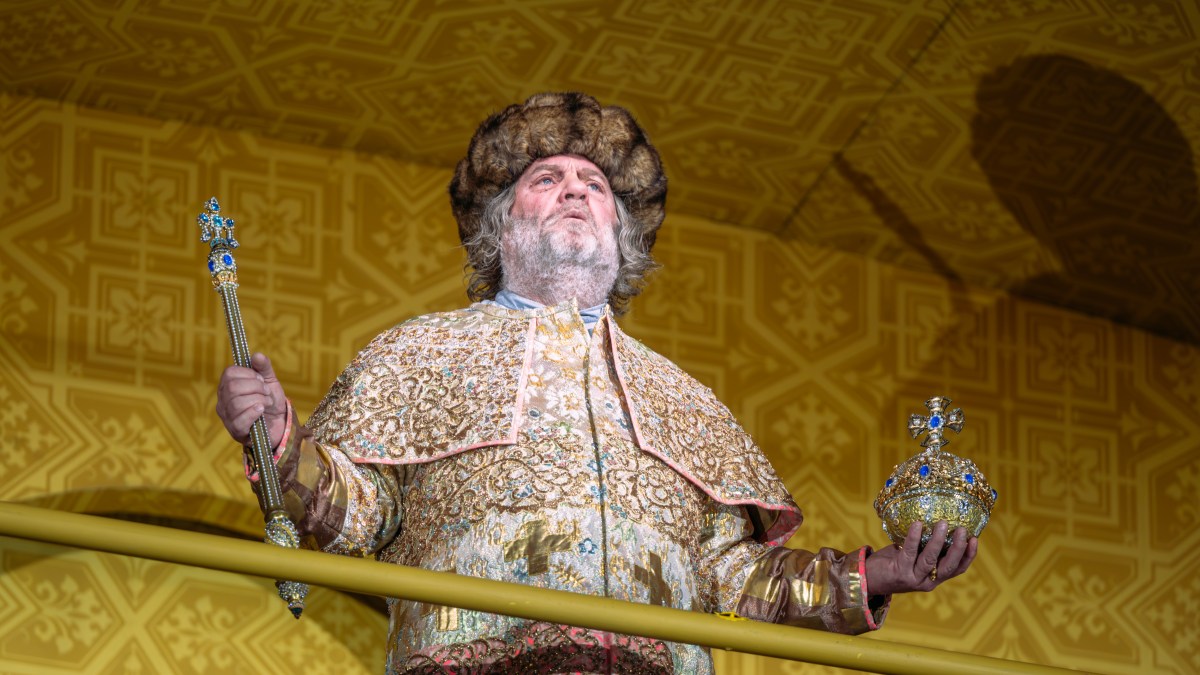
The production’s other seemingly permanent fixture is Bryn Terfel’s portrayal of Boris. Terfel is 60 now so I was prepared for some slight loss of focus or power. But he still rides the orchestral storm magnificently. And what age has brought is an even more profound sense of a haunted man’s paranoia, frustration, despair and rage, conveyed with groans and unhinged laughter as well as pungent singing.
There are strong voices around him too, including the rich bass of Adam Palka as Pimen; Andrii Kymach delivering a beautifully sustained prayer as Shchelkalov, the clerk; Jamez McCorkle, properly volatile as the traitorous Grigory; and Alexander Roslavets as Varlaam, the drunken monk who has the show’s best tune. Not an evening of light fun, then, but one that makes you think about the nature of despots and why there are still so many around.
★★★★☆
140min
Royal Opera House, London, to Feb 18, rbo.org.uk
Comments are closed.