
Here are 5 things to do in the garden this week:
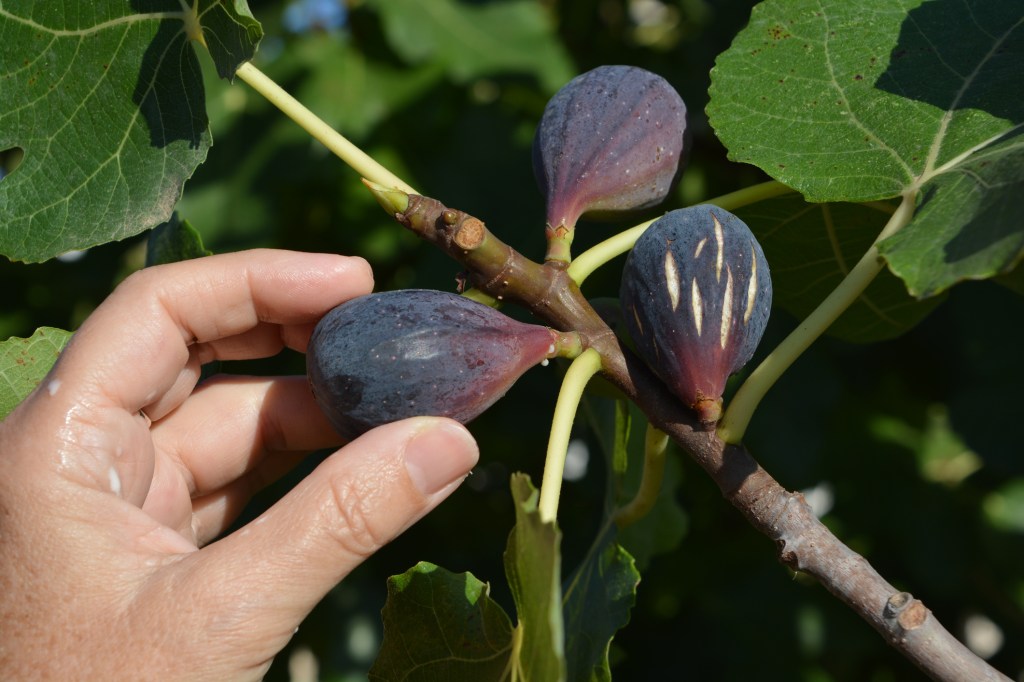
No deciduous tree is more suited to Southern California or easier to grow than the fig. Of all deciduous fruit trees, figs have the lowest winter chill requirement, or lowest number of winter hours below 45 degrees needed to produce a crop. Since the fig forms its fruit on shoots that start to grow in the spring, it can be radically pruned in the winter without affecting the following year’s two crops. The first crop starts to grow in March and is harvested in June. A much larger crop begins to grow in April or May and is harvested over a period of several months, from July until October or even November.
Check out “Vibrant Harvest” (Quarto Publishing, 2026), which is preoccupied exclusively with colorful vegetable crops. Author Sandra Mao provides a cornucopia of vegetables that will brighten up your garden and your salad plate. Among tomatoes, she highlights Big Rainbow that boasts “huge yellow fruit with red streaking that is delicious and sweet” and Zebra, a cherry tomato that is burgundy red, green striped, and matures in only 70 days. She also praises Mosaic, a yarding bean with “purple and red pods that are sweet, crisp, and tender,” which matures in just 70 days. Red Burgundy okra is a heavy producer that is ready to harvest in only 55 days after planting its seeds. Purple Brussels sprouts and purple broccoli are vegetable garden possibilities as well, and they may be planted now.
Sugarcane (Saccharum officinarum) is a member of the grass family, although its sturdy stalks and spreading rhizomes make it a candidate for a privacy hedge that grows up to 10 feet tall. Propagation is easy enough. You can find leafless stalks in specialty markets or online. Take 4- to 6-inch stem pieces with at least two nodes or rings on a stalk and bury them so that two inches remain above the soil level, whether planted in pots or in the ground. You can also lay these pieces horizontally, half buried in the soil. Roots should begin to form soon enough and then shoots will emerge from the nodes. In fall or early winter, cut stalks down to the ground as their sweetest portion is closest to the earth. Strip off the hard outer skin and chew the woody pith, extracting its sweetness before spitting it out.
When I interviewed Jenn Rodriguez of Growing Works nursery about the soil mix she uses for potting native plants, she revealed that it consists of perlite and compost (Agromin premium blend). In 4-inch containers, the mix is 1/3 perlite to 2/3 compost, and in one-gallon containers and larger, the mix is 1/2 perlite to 1/2 compost. “For an easily accessible mix,” she advises, “you can combine one part cactus mix with one part potting soil or compost,” with the caveat that “desert plants could go leaner,” meaning they would have a higher percentage of cactus mix.
To keep birds out of your fruit trees and prevent them from pecking at your crop, hang spiral reflective strips from the branches. Widely available from online vendors, hundreds of reviews extol their effectiveness. They are not only effective at keeping birds out of your trees, but will deter them from visiting pergolas, balconies, and rooftops as well, wherever avian creatures are inclined to perch.
Comments are closed.