
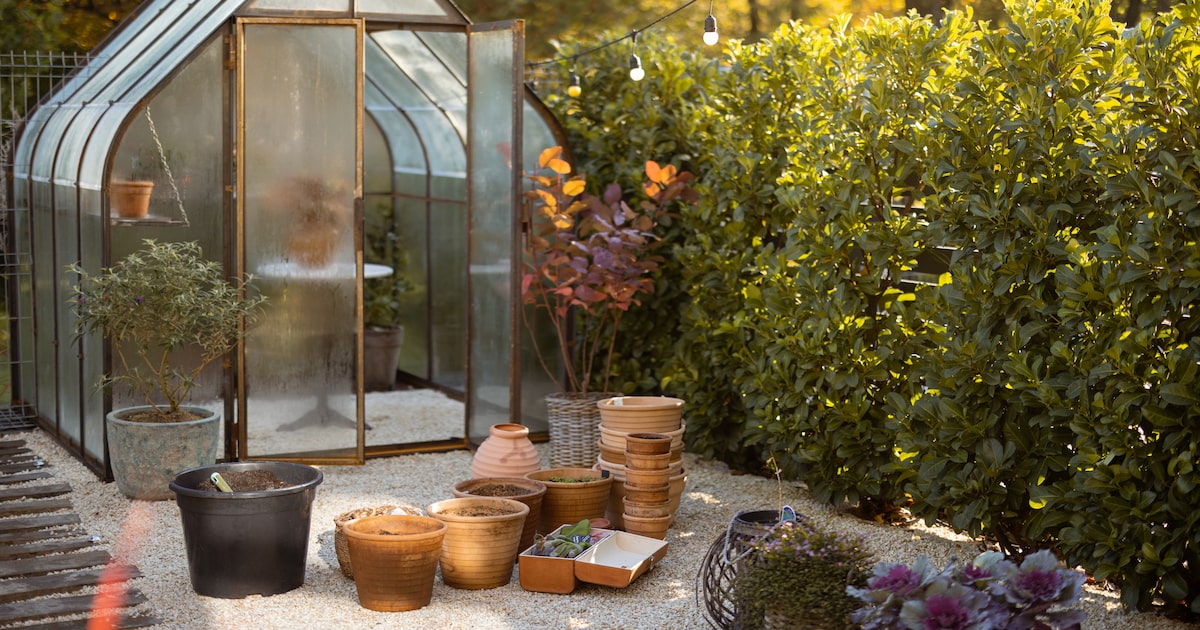
For many garden enthusiasts, a thriving plot or bed is less of a finish line and more of a starting point. So what’s the next step? “I like to think of greenhouses as kind of like gardening 2.0,” says Kenley Larkin, owner of Richardson-based Home Growing Wild, a company that designs, installs and maintains vegetable and cut-flower gardens for clients around D-FW.
Greenhouses allow gardeners to extend their growing seasons while bringing a touch of whimsy to outdoor spaces. Here’s how to channel spring energy all year long.
Greenhouses 101
At the most basic level, a greenhouse captures warmth as rays of sunlight beam through the glass or plastic roof and walls. That warmth creates a microclimate suited for growing plants.
Where planting outside subjects plants to temperature changes, pests and other natural (and mostly uncontrollable) elements, a greenhouse offers a more sheltered environment. And, depending on the equipment in the greenhouse, the gardener can shape the conditions to suit plants’ needs.
Get updates from Abode
How are greenhouses constructed?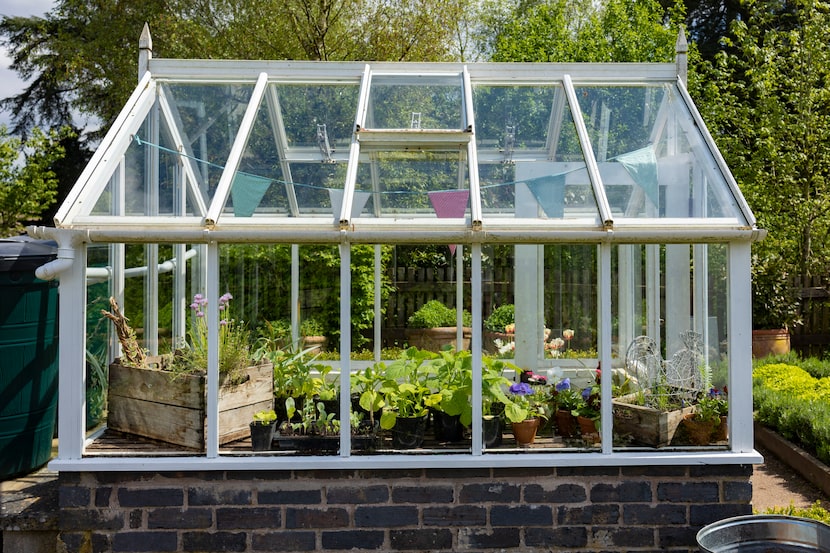
The basic components of a greenhouse are the frame, the panels and the foundation.
Ray Orton/Getty Images
Greenhouses are typically comprised of a frame (made of wood, metal or even plastic) with glass or polycarbonate panels along the roof and sides. Most have ventilation, which is important in the summer, and a door that allows both access and a way to close off the structure from the elements.
Eddie Hord works for Texas Greenhouse Company, a Fort Worth-based brand that’s been building custom greenhouses since 1948. The company used wood framing for greenhouses when it first began, he says, but now uses metal — either aluminum or galvanized steel. In Hord’s opinion, a greenhouse with an aluminum frame is the best bet, especially over wood. When it comes to the panels on the greenhouse, glass is typically more expensive; however, it will last longer and allow more UV rays to reach the plants. Polycarbonate is more cost effective, but it filters the light and reduces the amount of UV that gets through to the plants. Hord says polycarbonate will discolor over time, too, because of the sun. “It’s ugly and it does have a lifespan,” he says.
Despite the downsides, polycarbonate is still popular, especially in greenhouse kits. Hord’s clients often select polycarbonate for their greenhouse roof, where it will be less visible or covered by shades, while using glass for the sides and end walls.
Foundation types vary depending on the size and structure of the greenhouse you select. ”Most quality greenhouses are going to have some type of perimeter foundation — either pressure-treated landscape timbers or a poured concrete footer,” explains Hord, noting that he cautions his customers that the landscape timbers will deteriorate over time. For more substantial greenhouses, you’ll need a larger concrete perimeter foundation. Inside the perimeter foundation, pea gravel or decomposed granite are common choices, as are pavers with sand between and beneath. “There’s various ways you can do the flooring, but you just want it to drain,” says Hord.
Placement of the greenhouse is also important. You’ll need a sunny spot. Don’t put a greenhouse under trees: Light is the whole point. And you don’t want any branches to fall on it, either.
Does a greenhouse get too hot in North Texas?
In North Texas, a functional greenhouse will most certainly need a cooling system for summer — and a heater for winter, believe it or not. Even if our days stay warm, nights can get cold, and the greenhouse won’t retain daytime heat. When you’re sweating it out in the summer, your greenhouse will need shading materials and proper ventilation. Texas Greenhouse Company installs evaporative coolers in its custom builds.
To take advantage of these systems, you may need to run electricity — and possibly gas, if you select a gas heater — to your greenhouse; you can also place it somewhere near an outdoor outlet with the right voltage.
For some gardeners, though, the struggle to keep a greenhouse cool during the extreme heat of summer isn’t worth all the extra effort. They use the greenhouse for growing purposes in the winter and consider it a storage spot in the summer. “In extreme North Texas heat, even well-ventilated greenhouses can struggle,” says Larkin. “At a certain point, it becomes a cost/benefit decision whether to run cooling systems continuously or accept some loss and pivot how the greenhouse is used in peak summer.”
What are the benefits of a greenhouse?
Whether it’s a seasonal or year-round tool, there are plenty of reasons to invest in a greenhouse. You can start seedlings earlier in the year in preparation for spring and summer planting, house delicate plants (such as orchids) in a controlled environment, store cold-sensitive plants during the winter or grow certain vegetables out of reach of pests and critters.
Starting plants from seed is perhaps one of the most common reasons gardeners make the jump. The cost of seeds is much lower per plant than the cost of buying a flat of plants from the nursery. Plus, there are more plant types to choose from when you’re starting from seed than when you’re browsing your local garden center’s selection.
A greenhouse can also help you keep plants alive for longer periods, instead of watching them die off during a freeze. For warm-weather plants in movable pots or hanging baskets, the greenhouse provides refuge through the winter.
“Do you need a greenhouse? No. But can it be a really cool tool in your gardening journey? Absolutely,” says Larkin.
What can you grow in a greenhouse?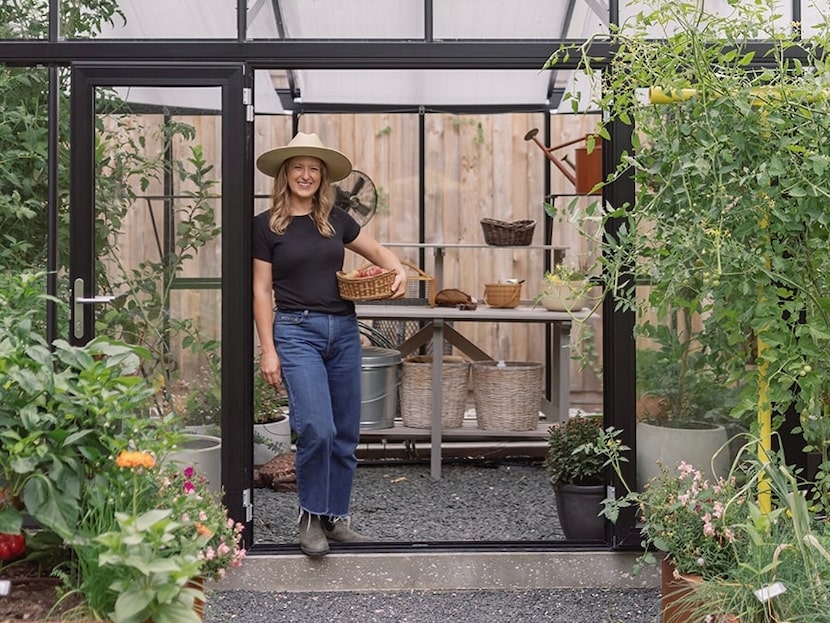
Kenley Larkin designed and maintains cookbook author Alex Snodgrass’ greenhouse, which offers an ideal environment for growing items the Dallas-area foodie uses in her recipes.
Anna Graves Photo
Greenhouse growing is incredibly flexible. Larkin has had success with cut flowers like cosmos and poppies, as well as edible plants. She has one client who uses her greenhouse to overwinter citrus trees. “Citrus[es] grow, I have found, really well in greenhouses in North Texas,” says Larkin, who also designed, installed and maintains a greenhouse for cookbook author Alex Snodgrass of The Defined Dish. Larkin focused the greenhouse plan on producing food that Snodgrass could use in cooking, including tomatoes, cucumbers, peppers and herbs.
There are some practical considerations when it comes to deciding what to grow. “It’s important to think about [the fact that] pollinators have a more difficult time getting into that greenhouse,” Larkin notes. “So if you are trying to grow edible plants, you can choose varieties and seeds that are self-pollinating or specific for greenhouse growing.”
What does a greenhouse cost?
There are plenty of companies ready to build the elaborate greenhouse of your dreams. But like any other home improvement, the bigger, more custom your project, the more you’ll pay. “I’ve quoted half-million-dollar greenhouses,” says Hord. “You can spend $100,000 just on the glass.” Texas Greenhouse Company’s base custom structure starts around $6,000, says Hord — and that doesn’t include heating, cooling, shades or special finishes. “[There’s a] big price difference between a kit and a custom-built glass greenhouse,” he notes.
If the kits are a better fit, you have plenty of options. These models range from smaller structures made of wood (such as the Yardistry greenhouses you can buy online or at Costco for about $1,000-$2,800 and assemble yourself) to aluminum-frame greenhouses with glass or plastic panels. Popular planter brand Vego Garden sells the latter, starting at $1,800 and going up to $12,000, depending on the size and materials.
What’s a year-round greenhouse plan in North Texas?
Here’s what Larkin recommends planting in a greenhouse each season.
Winter
Move your potted citruses and other weather-sensitive plants into the greenhouse for protection. In the late winter, usually in January, start seeds for tomatoes and peppers so they’ll be ready to plant by March. You can also start seeds for cold-season cut flowers such as snapdragons, poppies, delphinium and calendula.
Spring
Grow your tomatoes, cucumbers and lettuces from seed in the greenhouse and they’ll thrive. Start seeds for zinnias and lettuces, which you can plant outside later.
Summer
If you have a good handle on temperature control, you can keep your citrus trees in the greenhouse through the summer. Grow sweet potatoes, basil and herbs in the greenhouse during this warm season, and start zinnia and sunflower seeds, too.
Fall
Early fall is the best time to start cool season seeds for plants like broccoli, cauliflower, kale and some lettuces. If temperatures drop, use the greenhouse to store your cold-sensitive plants.
Love homes, gardens and design? Get more good stuff from Abode by following us on Instagram, Facebook and LinkedIn.
6 designer-approved sofas under $2,000What to know before you reupholster furniture, according to a Dallas designer
Comments are closed.