
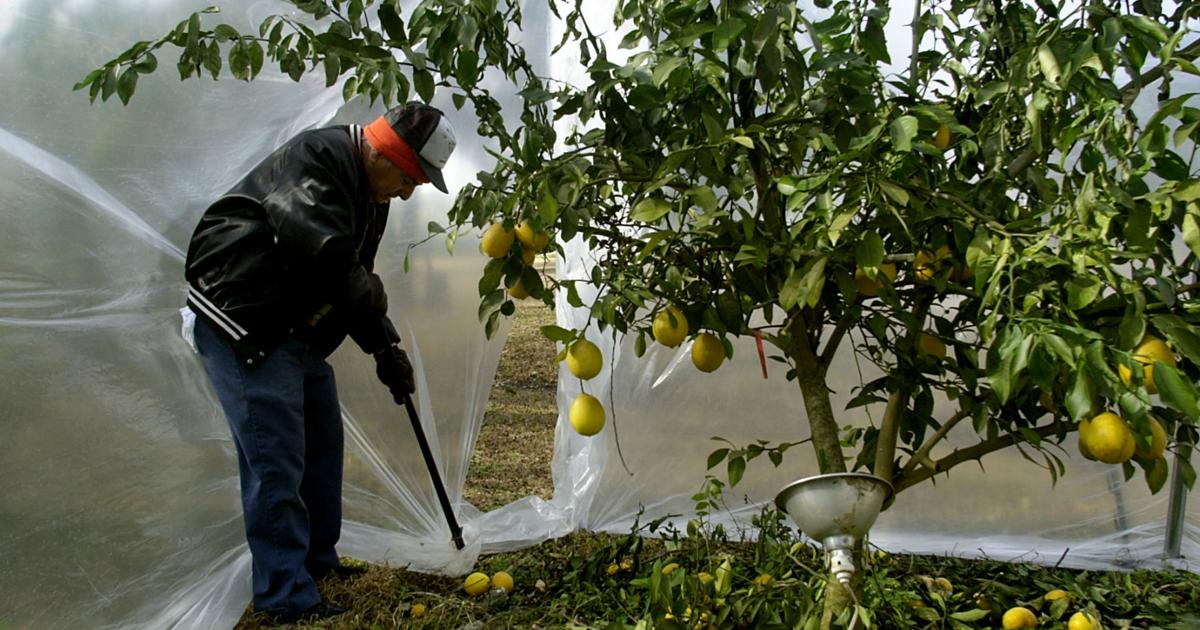
After the freezes this week (we got down to the low 20s), I’m worried about my citrus and palm trees. Do you think they will be OK? — Alex
Your palm trees will be fine. All the commonly planted landscape palms are hardy down to 20 degrees or lower. You may see some damage to the fronds of the more tender types. Badly damaged fronds may be removed to improve the appearance of the palm trees. New fronds produced in late spring and summer should fill the crown back in nicely.
Citrus trees should also recover from any damage they may have sustained. Lemons and limes are the least hardy of the citrus we grow, and you are more likely to see damage to those types of citruses. Oranges and grapefruit are hardier and likely sustained little or no damage. Kumquats and satsumas are the most cold tolerant and generally are not damaged unless temperatures go into the teens.
After the devastating freezes of January 2025 wiped out many citrus trees in south Louisiana, it is a relief that (so far) it has not gotten cold enough to cause such significant damage and loss to citrus trees this year.

Be sure to irrigate seeds lightly every day until the seeds germinate and start to grow. It is critical for the soil to stay moist during germination. Once the seeds come up, water more thoroughly less often to encourage the roots to grow deep into the soil.
I want to plant some tomatoes and bell pepper seeds and start them indoors under a grow light. In the past, my plants grew, but the stalks didn’t get as thick as the ones in the nurseries. I have Miracle Gro potting soil and Black Kow composted manure. Should I mix the two to start the seeds in? I live in Thibodaux. When should I start the seeds? Should I use a soluble fertilizer to water the plants? — Ricky
When it comes to tomatoes and peppers, home vegetable gardeners can either plant seeds to grow their own transplants (this allows you to choose from a much larger selection of varieties) or purchase transplants at a nursery ready to plant. The proper time to plant transplants into the garden is mid-March to mid-April.
If you choose to purchase transplants, all you have to do is wait until then to buy and plant them. If you want to grow your own transplants, however, as you do, seeds must be started six to eight weeks before you intend to plant the transplants into your garden. That means that seeds need to be planted from mid-January through February, depending on when you want them ready to plant in your garden.
Because the weather is cold now, production of transplants must be done indoors under lights or in a greenhouse. Windowsills do not provide enough light to grow quality transplants.
You have chosen to grow your transplants under grow lights, and this can be successful. But the primary reason for thin stems in transplants is insufficient light. You may have your lights too far away from the transplants to provide enough light. A grow light positioned just a couple of inches above the tops of the seedlings is generally adequate. Raise the light as the seedlings grow taller. If the seedlings are still not as stocky as they should be, you may need a fixture with a higher light output.
Stem thickness is not as influenced by soil or fertilizer. I’m sure the soil you are using is fine. Half Black Cow, half potting mix should be OK, or you could just use the potting mix alone. To make sure the seedlings are getting enough mineral nutrients, begin fertilizing with a soluble fertilizer (Miracle Gro, Schults, Peter’s and other brands) two or three weeks after you plant the seeds. Mix the soluble fertilizer following package directions and apply this about every two weeks when you water.
A week before you intend to plant your transplants in the garden, they need to be hardened off (outdoor conditions are more stressful). Place the seedlings in a location where they get morning sun for a few days, then move them to a spot that gets sun all day for a few days. Then plant them into the garden.
Garden tips
ROSES NOW: If you plan on ordering roses from a mail order company and haven’t done so yet, order your roses now. Plant them into sunny well-prepared beds as soon as you receive them.
TAKE CUTTINGS: Now is a good time to make hardwood cuttings of such plants as figs and hydrangeas. Cuttings should be taken from the ends of branches and be 6 to 8 inches long.
OFF THE TOP: You may clip ground covers back now through February before new growth appears to remove unattractive foliage, rejuvenate the plants and control growth. Hand prune individual unattractive leaves on plants like aspidistra and evergreen ferns. Liriope, monkey grass, Japanese ardisia and Asiatic jasmine can be cut back with a lawn mower adjusted to its highest setting, a string trimmer or hedge clippers.
SHORT BUT SWEET: There are several short-lived perennials that are commonly used as cool-season annuals in Louisiana. Although foxglove, delphinium and hollyhock may be reliable perennials in cooler zones, they have a hard time surviving our summers. Early planting is a key to success here. Transplants should be planted into the garden in February for bloom April through early June. After flowering, foxgloves and delphiniums should be pulled up and composted. Hollyhocks are almost always infected by rust by the time they finish flowering and should be disposed of in the trash rather than composting.
Comments are closed.