
1
/
10
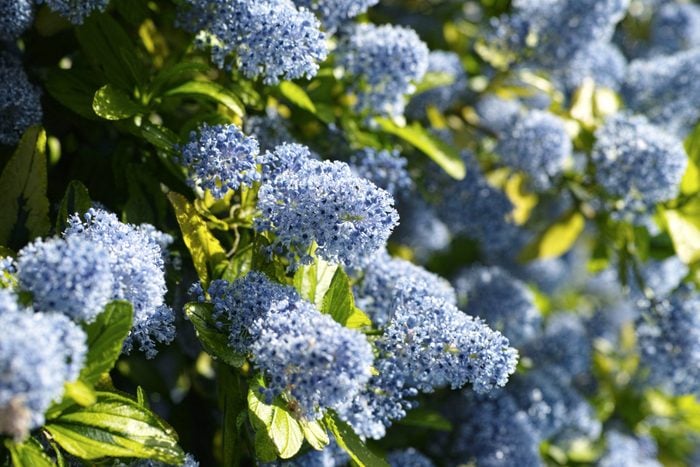 Kayco/Getty Images California lilac ‘El Dorado’
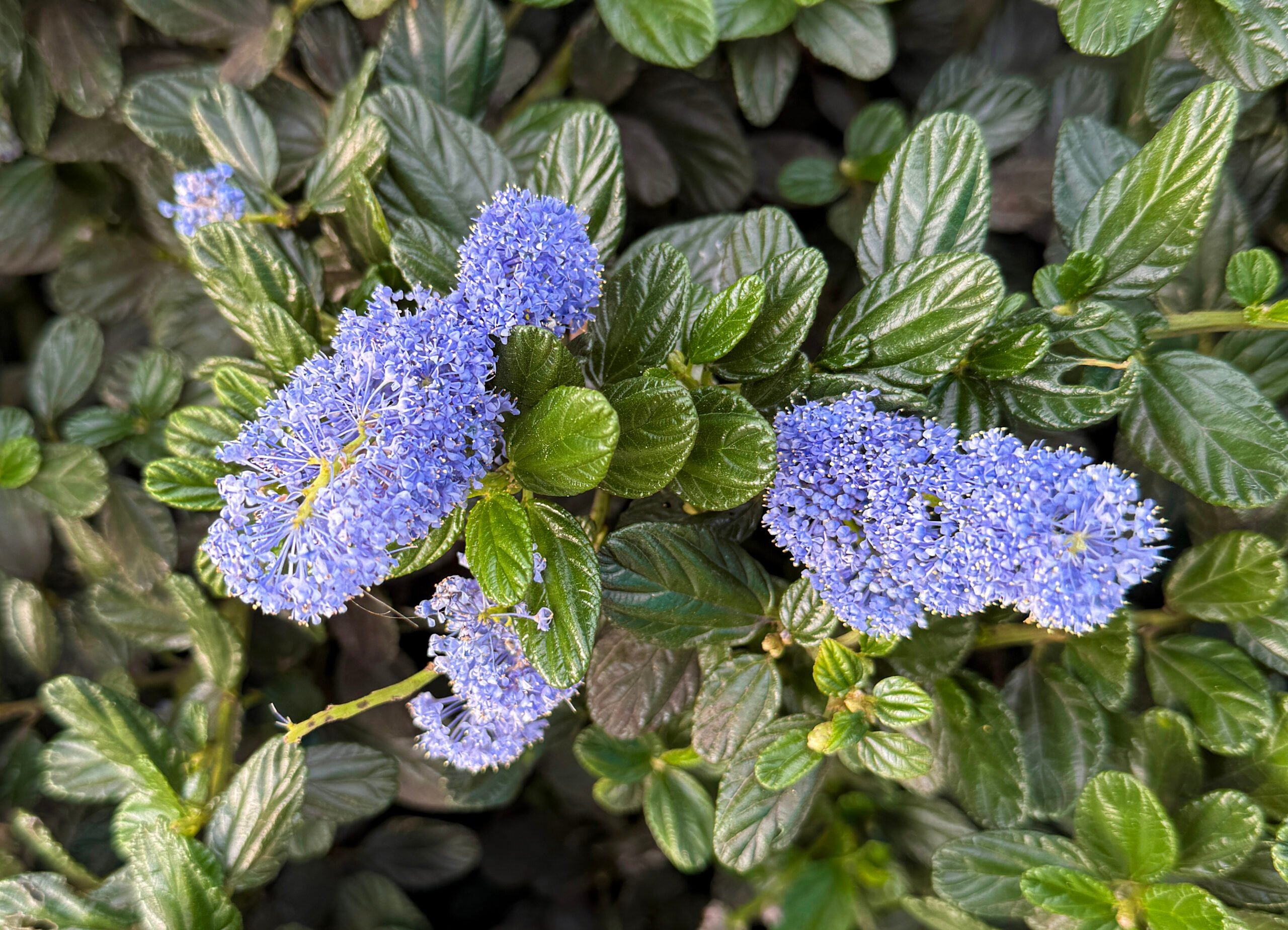
California Lilac
Ceanothus spp., Zones 7 to 10
California lilacs are named for their fragrant, spring blooming, purple/blue lilac-shaped flowers but they are not true lilacs. Grown in full sun, these broadleaf evergreen shrubs prefer well-draining soil and thrive in hot, dry summers. Plant size and habit ranges but most are evergreen.
Why we love it: These drought-tolerant native shrubs are food sources for butterflies and moth larvae (caterpillars) as well as bees and beneficial insects.
2
/
10
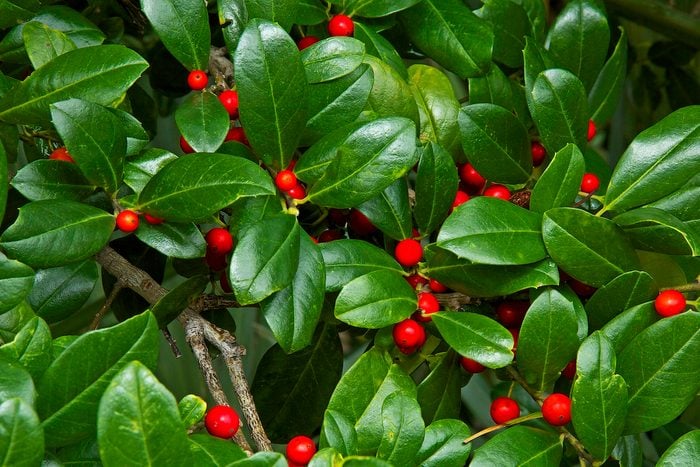 NajaShots/Getty Images
Yaupon Holly
Ilex vomitoria, Zones 7 to 9
A native holly with spring-blooming small white flowers, yaupon produces red berries which, if the birds do not eat them first, can be used for winter arrangements. This evergreen shrub is tolerant of a range of soil types and light levels, making it one of the more drought tolerant holly shrubs.
Why we love it: The leaves are not prickly making it easy to prune the plants into topiary, place in a container, train to be a hedge, or simply grown as a winter interest plant.
3
/
10
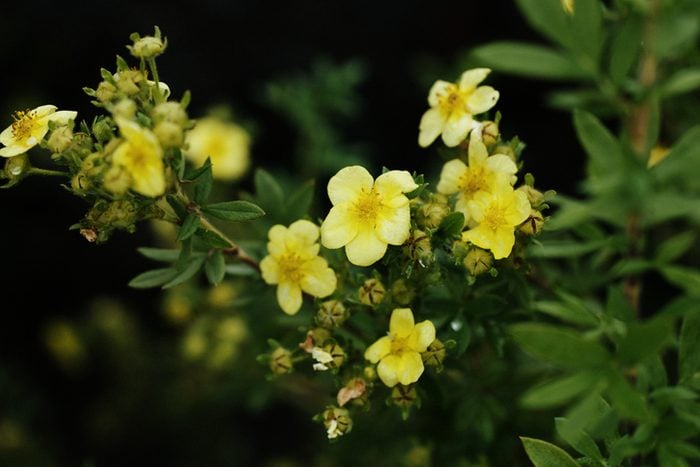 Iuliia Burmistrova/Getty Images
Shrubby Cinquefoil
Dasiphora fruticosa (formerly Potentilla fruticosa), Zones 3 to 7
Grown in full sun, shrubby cinquefoil is 3 feet tall with green or gray green foliage. Although it is drought resistant, it prefers cooler temperatures and does best in northern states with cool summers. The species blooms small yellow flowers all summer long but white, pink, or orange-copper flowering varieties are available. This plant responds well to shearing so it can be shaped into a low growing hedge.
Why we love it: Because it blooms all summer long and responds well to pruning, shrubby cinquefoil behaves like a shrub rose.
4
/
10
 Scotty Brown/Getty Images
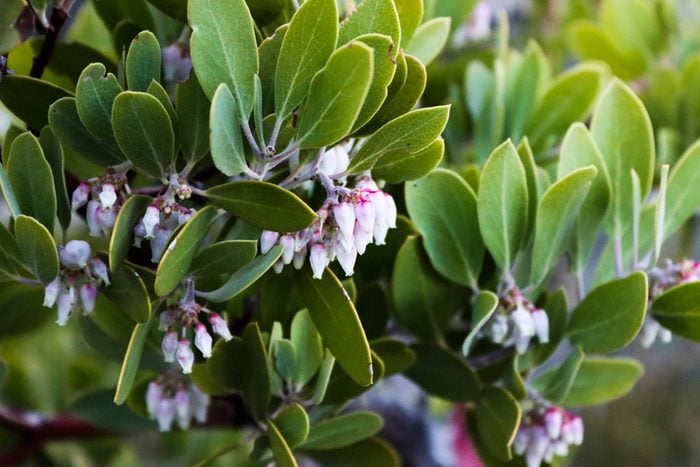
Manzanita
Arctostaphylos spp., Zones 7 to 10
Native to the western states, manzanitas are evergreen shrubs with winter-blooming, small, white or pink urn-shaped blossoms. Sizes can range from low growing to large shrub. Many are known for their beautiful twisting cinnamon-colored branches. Grown in full sun or light shade, these drought-tolerant shrubs need well-draining, sandy soil.
Why we love it: The dainty flowers produce edible orange-red berries that support mammals and birds and can be used to make jelly or beverages.
5
/
10
 www.provenwinners.com Double Take Peach quince
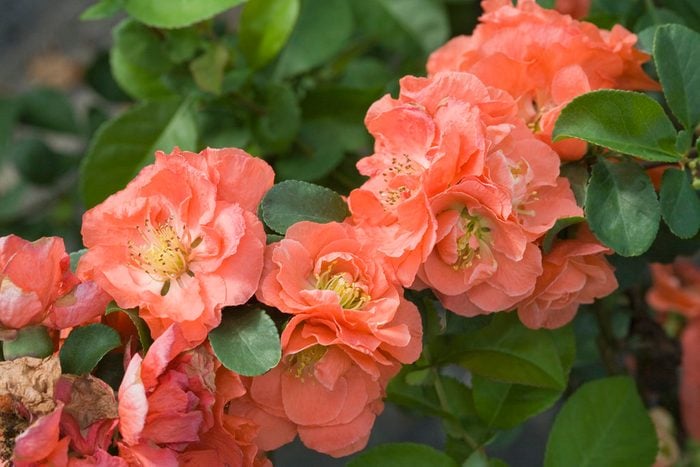
Flowering Quince Double Take series
Chaenomeles speciosa, Zones 4 to 8
Flowering quince is a large, dense deciduous shrub with thorns which is good for hedges. The Double Take series is compact at 4 to 5 feet tall with no thorns. An early spring bloomer, they produce numerous rose-like, double-petaled flowers in red, pink, peach or white. Drought resistant, the shrub can grow in full sun to part shade.
Why we love it: In late winter, you can “force” the branches to bloom early in your home by cutting and putting them in vases of water in the house.
6
/
10
 WWW.PROVENWINNERS.COM ‘Illuminati Arch’ mock orange
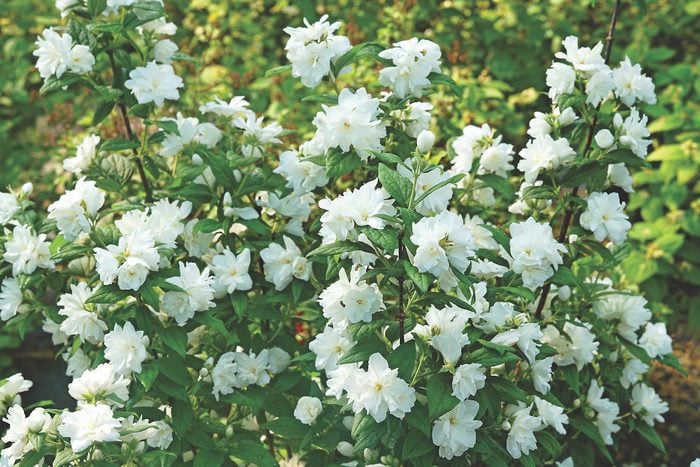
Mock Orange
Philadelphus coronarius, Zones 4 to 8
An old-fashioned deciduous shrub, mock orange blooms profusely in late spring, covering the shrub with white flowers. The sweetly scented flowers—similar to orange blossoms–attracts hummingbirds, butterflies, bees, and other pollinators. Grown in full sun to part shade, mock orange can be used as foundation plantings, as a hedge, or in cottage gardens.
Why we like it: Flowering branches can be cut for floral arrangements, thus scenting the home with a sweet citrus fragrance.
7
/
10
 Geoff Bryant/Monrovia
Glossy Abelia
Abelia x grandiflora, Zones 5 to 9
About 3 to 6 feet tall and wide, glossy abelia blooms small white to pink funnel-shaped flowers, attracting bees, butterflies, and hummingbirds. Usually, the foliage is green with interesting reddish-purple fall color but there are variegated types. Grown in full sun to part shade, this shrub is deer resistant and heat tolerant.
Why we love it: Often found on median strips, glossy abelia is a workhorse. It the one shrub you can plant in a poor area with full sun, high heat, and dry soil yet it will bloom all summer long.
8
/
10
 www.provenwinners.com ‘Beyond Midnight’ bluebeard
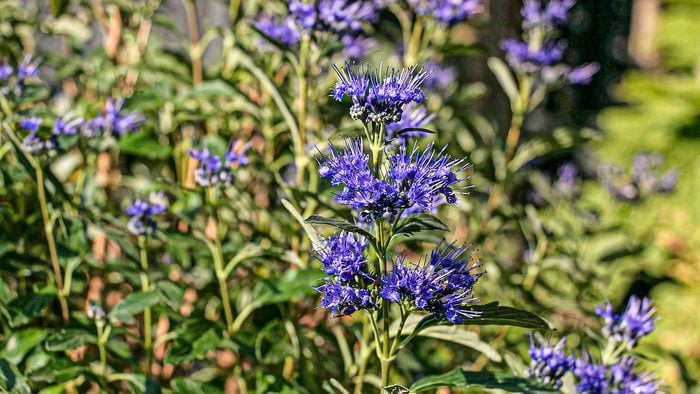
Bluebeard
Caryopteris x clandonensis, Zones 5 to 9
A small deciduous shrub, bluebeard blooms clusters of true blue flowers from summer to fall against green foliage but there are cultivars with variegated or chartreuse foliage, or pink flowers, or very dark blue flowers. These deer and rabbit resistant shrubs are also heat tolerant and can be grown in arid or humid areas.
Why we love it: Their compact size at 3 to 4 feet tall makes them perfect for small properties, containers, borders, and walkways, or mixed with other perennials.
9
/
10
 Hans Wismeijer/Getty Images
Brittlebush
Encelia farinosa, Zones 8 to 11
So named because the woody stems are brittle, brittlebush blooms golden yellow, daisy-like flowers in the spring, high above the 2 to 3 feet tall mound. This western native evergreen shrub prefers full sun, sandy soil and desert conditions.
Why we love it: The fragrant flowers and the interesting wavy, gray-green foliage can be cut for fresh arrangements.
10
/
10
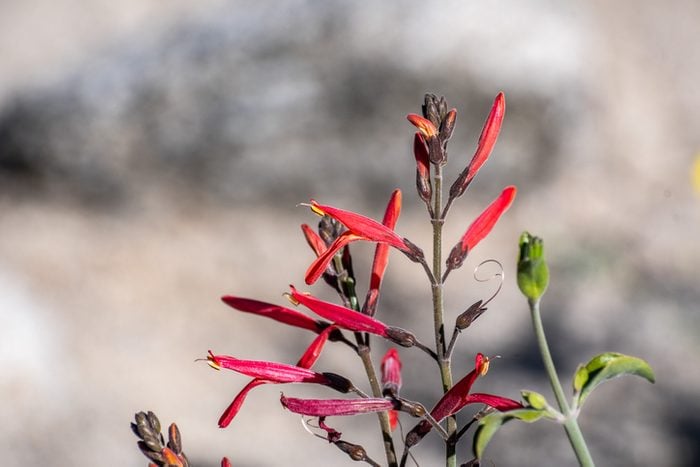 Sundry Photography/Getty Images
Chuparosa
Justica californica, Zones 8 to 11
Native to the west and southwest, chuparosa is a 4 to 6 feet tall and wide shrub with small gray green foliage. In the spring, tubular red flowers bloom so profusely that the flowers seem to cover the shrub, attracting hummingbirds. Grown in full sun, chuparosa prefers rocky, gravelly, or sandy soil.
Why we love it: Every spring, the shrub is a riot of red color and a flurry of hummingbirds. Chuparosa, Spanish for “hummingbird,” has co-evolved with the hummingbirds so the flowers are the perfect shape for their long bills.
Comments are closed.