
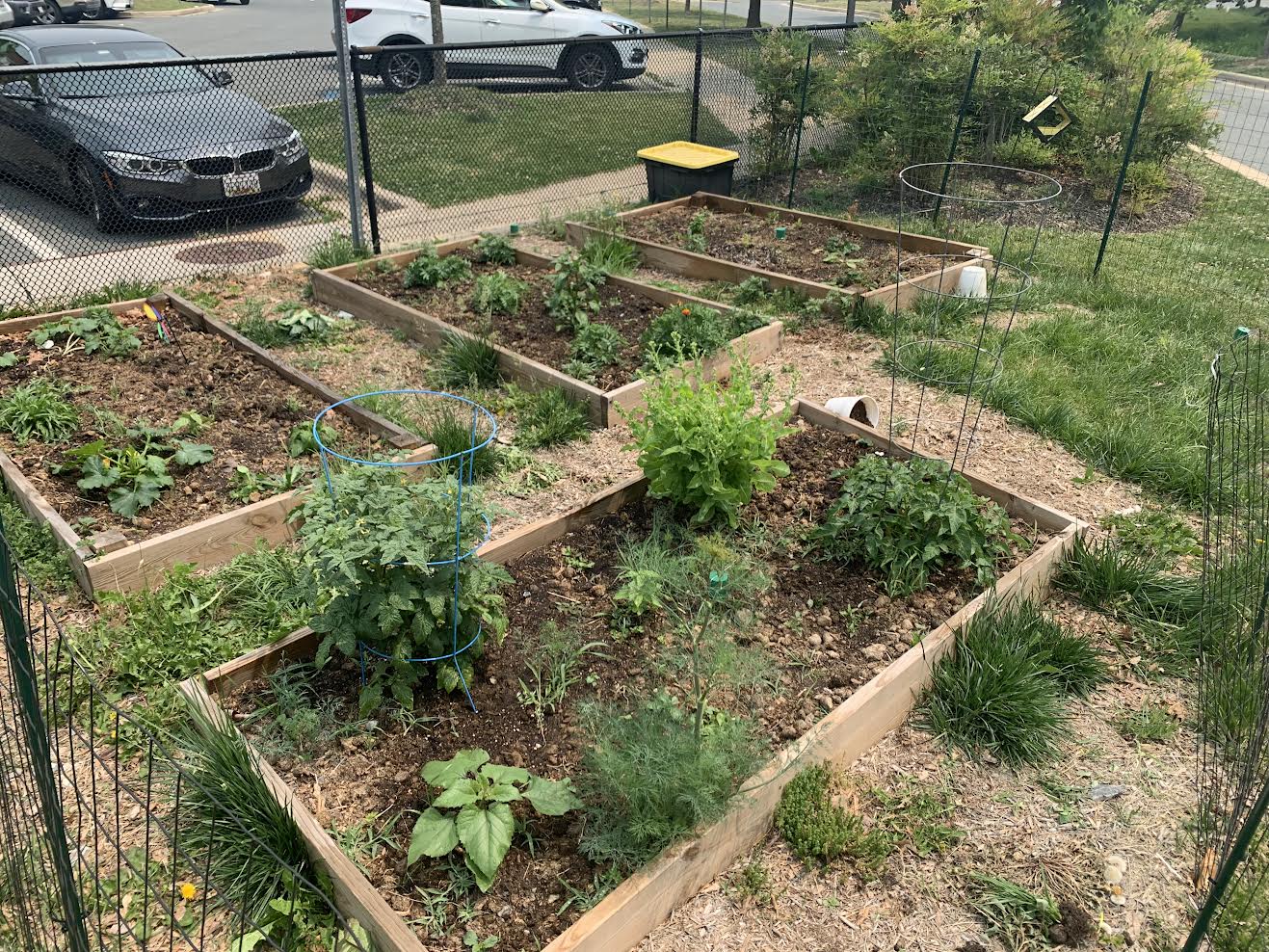
As winter turns into spring, Richard Montgomery’s garden stands as a reminder of what a community can grow together. What began as a student-led idea has transformed into a space that brings students, teachers and parents together while providing fresh produce to more than 80 local families.
The garden was first created four years ago by Maycel Palansky, an RM student, as a joint project between Julius West and Richard Montgomery. Members of the Envirothon Club took the initiative to start a community garden by applying for grants and recruiting volunteers. Together, they built four garden beds with the goal of growing food for the surrounding community. “Although it was a lengthy process with getting the money and getting everything organized, in the end they did make a very functional garden,” college student and former garden manager Kylen Tow said.
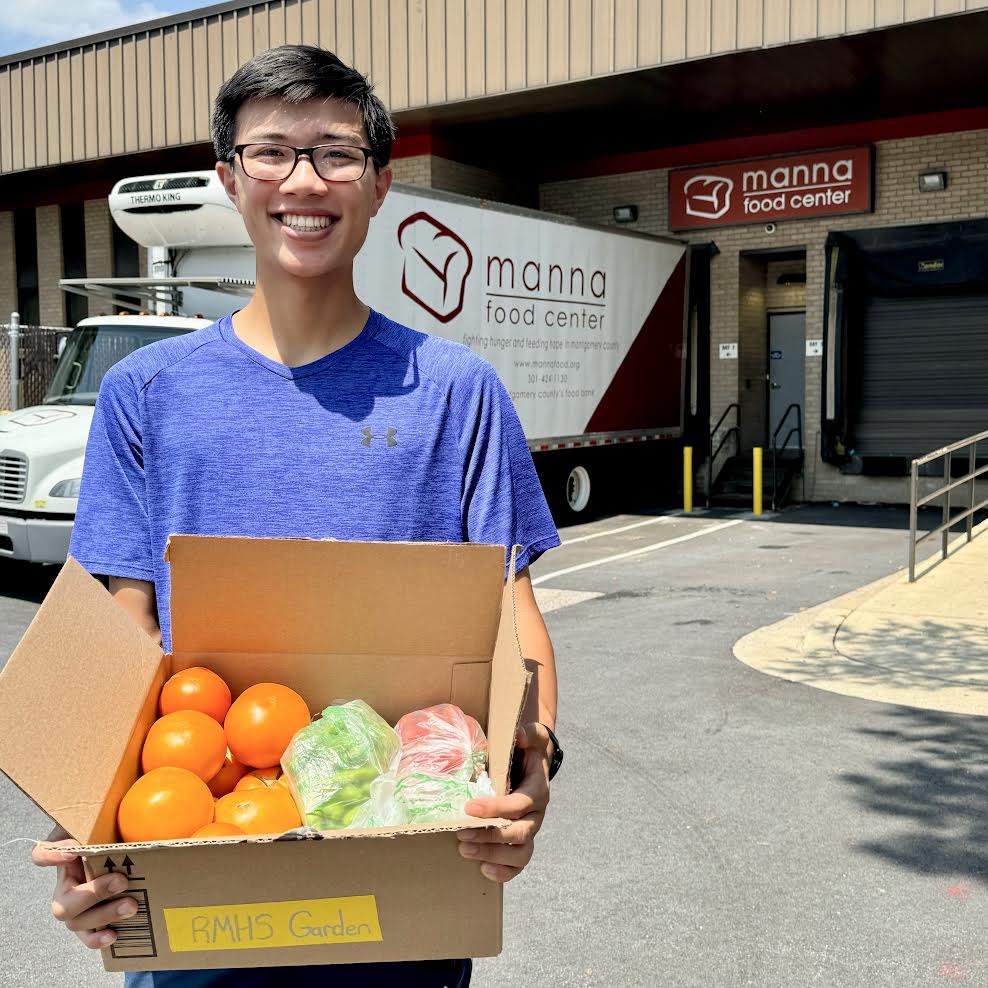 Former RM senior Kylen Tow poses for a picture while distributing produce to the Manna Food center (Picture courtesy of Kylen Tow)
Over time, responsibility for the garden was passed on to RM families, allowing it to continue blooming. “The garden started four years ago by a climate club and has been passed on to parents and students,” administrative secretary Laura Hermansdorfer, who helps manage the space, said. “The whole purpose of the garden was to grow food and donate it.”
That purpose has shaped how the garden serves the broader community. The garden’s main mission of addressing food insecurity led to its partnership with Manna Food Market. “Montgomery County is one of the most resourced counties in the country, yet more than a tenth of the population experiences food insecurity,” Annarose Kennedy, local food resources specialist at the Manna Food Center said. “So we have this interesting dichotomy where we see a wealthy community alongside more than 100,000 residents experiencing food insecurity.”
Story continues below advertisement
Through this partnership, the students who work at the garden donated produce and helped run a monthly food pantry, turning the food they grow into direct support for their community, with families receiving a wide variety of produce. “We typically provide around 10 to 14 different types of produce: Potatoes, tomatoes, onions, peppers, corn and sweet potatoes,” Kennedy said. “Sometimes we’re able to offer more culturally familiar foods like okra or kale.”
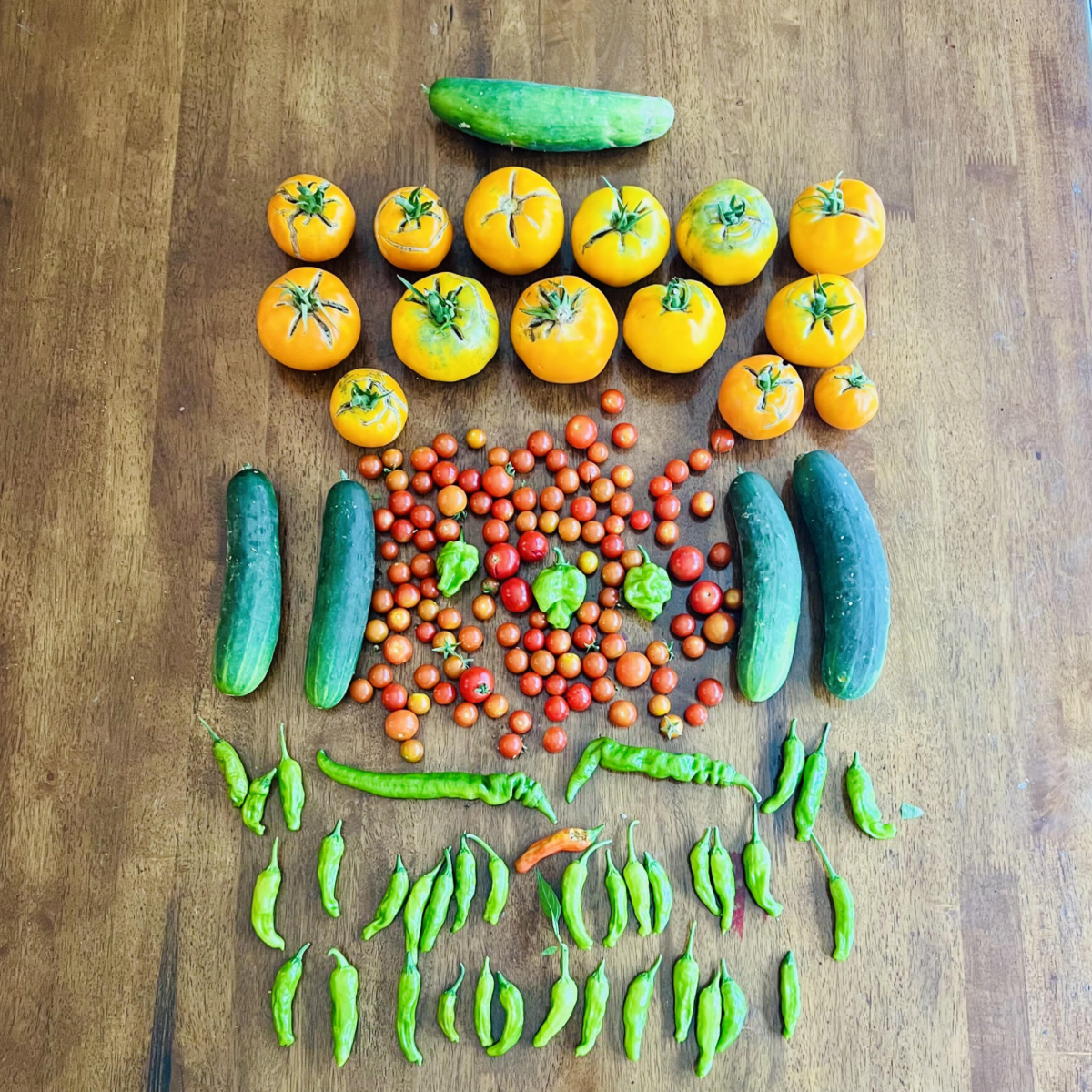 One of the donations to the Manna Food Center from the summer of 2024. (Photo courtesy of Laura Hermansdorfer)
Within the Manna food market, student volunteers there also built a community of their own, setting up tables of produce across the cafeteria and assembling customized packages for local families. “Once a month, we are delivered fresh produce for families to collect in the RM community. People order from a wishlist, and we pack bags for students and families to pick up,” senior Ansuya Bisbey said. “My favorite part of volunteering is meeting everyone, and it’s nice to see people giving back to their communities through Manna. I think it helps people feel welcome at the market when they see other students helping out.”
Beyond serving the community, the garden has shaped student life at RM. “I could pretty much give out dozens of tomatoes every single day to both the staff and students. I would just get a whole basketful, walk around the school, and hand them out to any staff or students who would take them,” Tow said. “Students and staff who walk by the garden would get handed or pick their own tomatoes right off the vine. It was really rewarding and created lasting memories.”
The garden also helps bring awareness to an overlooked aspect of daily life: How people get their food and the techniques behind it. “We were talking with administrators and other teachers, teaching them about the process and the thought that went into it, how we organize crops… Learning about the intricacies of working with the garden and teaching others about it is my favorite aspect about it,” college student and former garden maintenance worker Sienna Burns said.
Throughout these intricacies of maintaining the garden come a new set of challenges, plants require frequent watering and weeding while wildlife poses a new unexpected obstacle. Deer and other animals often wander into the garden and feast on the produce, eating all sorts of fruits and vegetables. “We had a whole year where we didn’t get any tomatoes out of [the garden] because the deer just ate the terminal buds right when they started,” Burns said. “All we had were little stalks that never grew.”
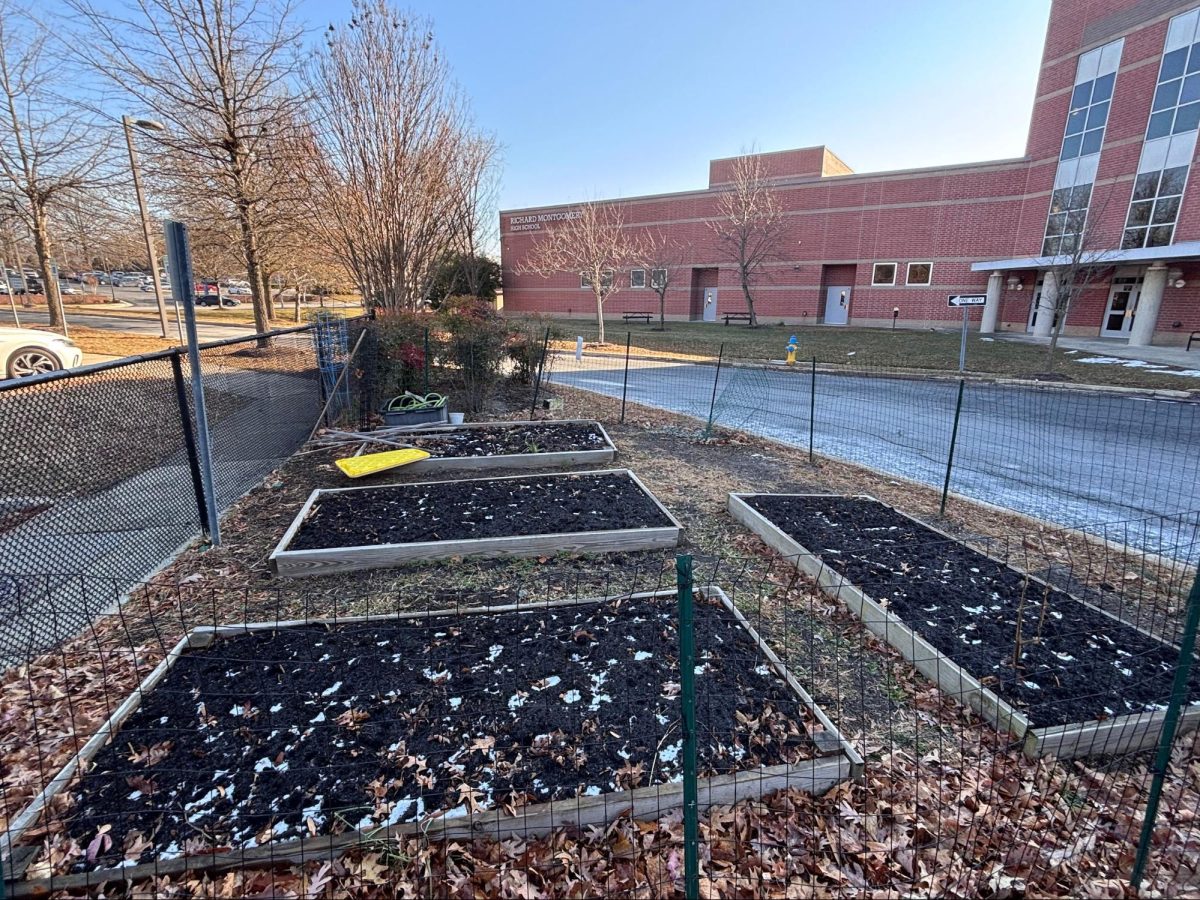 Jacob Kim
Another difficulty faced by the garden’s caretakers is the amount of time and effort that it requires. Keeping plants alive and implementing the necessary infrastructure is a significant hurdle when aiming for a productive garden. “My biggest challenge was not being able to attend to it all the time and I lacked the volunteers to come help consistently. It was a big time consuming task where the garden had to be tended to almost every single day to make sure the plants are healthy.” Tow said.
And today, with all of the original student members now graduated, the garden is now run solely by two parent volunteers with help from Ms. Hermansdorfer.
Despite these setbacks, the garden has continued to thrive. “The garden went wild,” parent volunteer Andrea Roe said. “We had wild strawberries growing in the garden and wild carrots. And when I say went wild, I mean that nobody actually cultivated it, it just sprouted on its own. We had onions, tomatoes, broccoli, and all sorts of collards that came up.” This spring, volunteers hope to expand the space with a butterfly garden, along with new herbs, fruits, and vegetables.
On the other side of the building, RM’s commitment to sustainability extends to a rain garden. Runoff from an air conditioning unit flooded a patch of land, where students saw the opportunity to create another garden. They transformed the area into a marshland by digging out the ground and allowing water condensation to collect naturally. “Every year something changes with that area,” Ms. Hermansdorfer said. “One year, there were a bunch of bees, but they would never sting. We had four or five dragonflies. You had all kinds of species move in.”
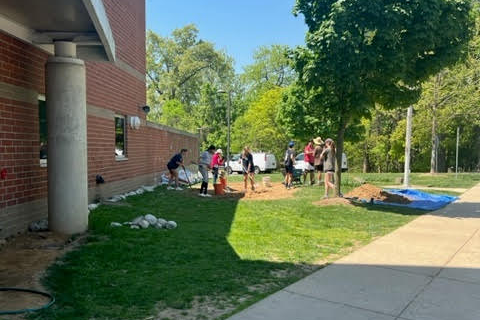 Students working to create the stormwater rain garden in 2023. (Photo courtesy of Laura Hermansdorfer)
This small wetland has made it possible to grow plants that wouldn’t otherwise survive in Rockville’s environment. “What’s nice about the space is that it opens up to planting things like ginger, which require a marshy habitat, which is not particularly native in our area,” Roe said.
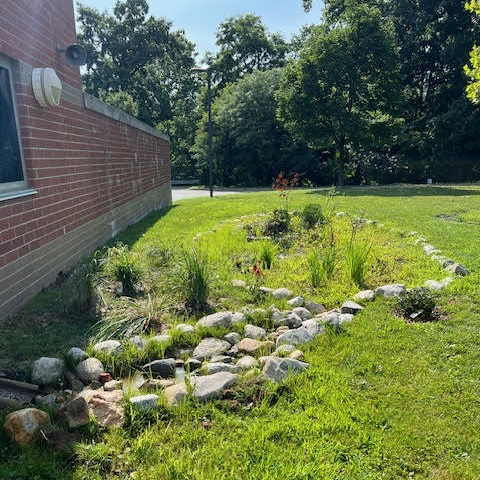 The rainwater garden in spring 2025 (Photo courtesy of Laura Hermansdorfer)
Together, the garden and rain garden reflect RM’s goal of growing something bigger than itself, combining environmental sustainability with efforts to limit food insecurity. By creating a shared space, the garden brings together students, artists, scientists and volunteers alike. “I think it’ll be really fun to have people who might be involved in the environment or want to be involved in food security or limited food waste to find their passion in the garden,” Roe said. “Our goal really is to bring in people that might not normally think they might be involved in a community garden, but to find an aspect that they love about it.”
Comments are closed.