
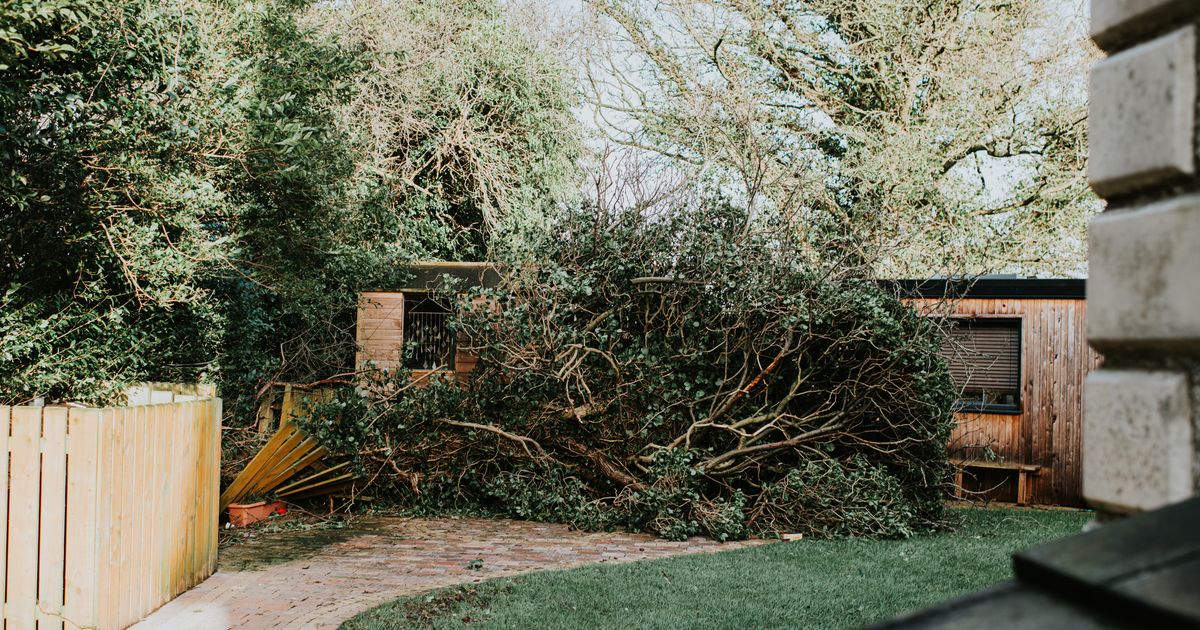
Storm Chandra is set to bring heavy rain, strong winds and ice across the UK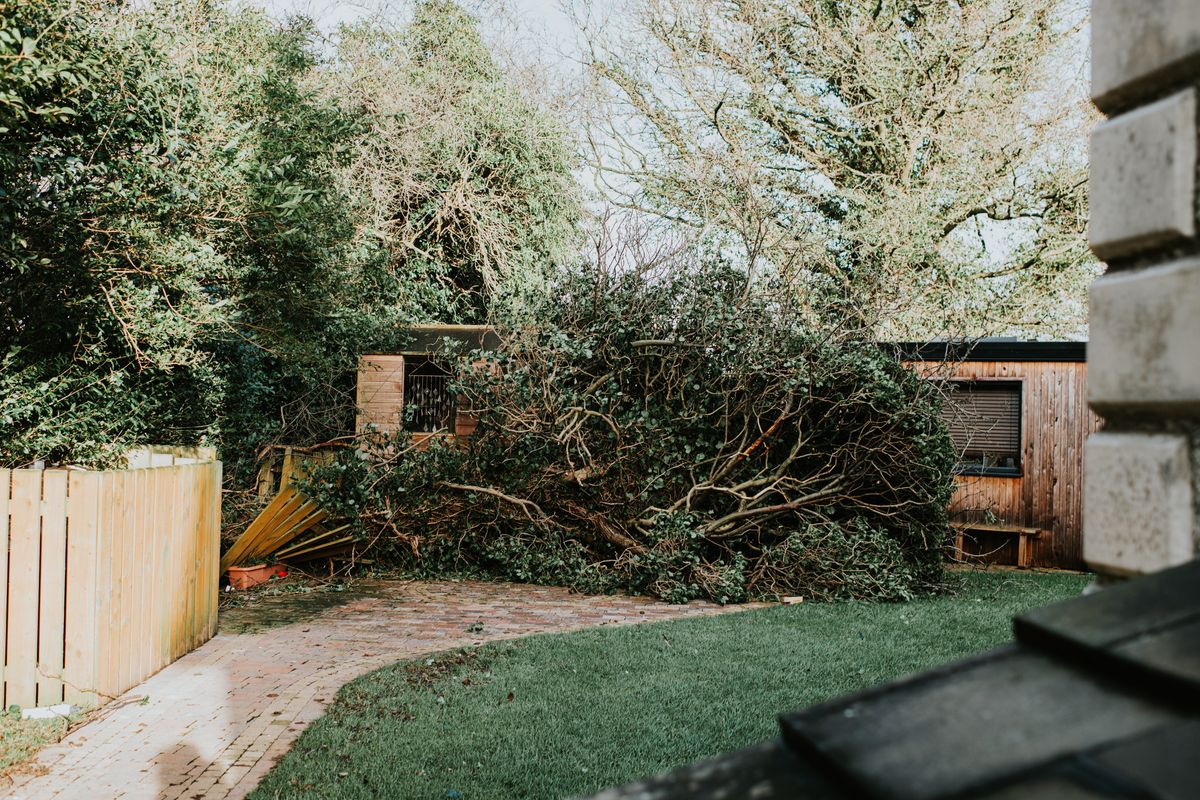
The storm could cause damage to homes and gardens across UK(Image: Getty Images)
Households across the UK are being urged to put bricks in their gardens amid Storm Chandra. The Met Office has issued several weather warnings this week as temperatures are expected to plummet, with a yellow ice warning covering large parts of the UK including much of the north west.
A yellow weather warning has also been issued for Wednesday (January 28) across large parts of England, Wales and Scotland, with warnings of ‘patchy ice’. Storm Chandra has also brought heavy rain and strong winds, causing flooding across much of the UK.
Homeowners are now being told to use bricks in their gardens to avoid costly damage to wooden garden furniture. As harsh winds, rain and plummeting temperatures take their toll, wooden garden furniture requires extra care and attention to help prevent damage.
“Winter in this country can be particularly wet and frosty at times, and this can cause problems for wooden items. If left unprotected against moisture, wood can become subject to swelling, warping and even rotting over time,” says Bradley Spencer at garden furniture specialists Royal Finesse.
“In ideal circumstances, you would be able to store wooden items in a dry, secure place such as a shed until needed again in the warmer months, but that is not possible for everyone. Garden furniture covers can be a really effective way of protecting items from British winter, but it may not do the full job.”
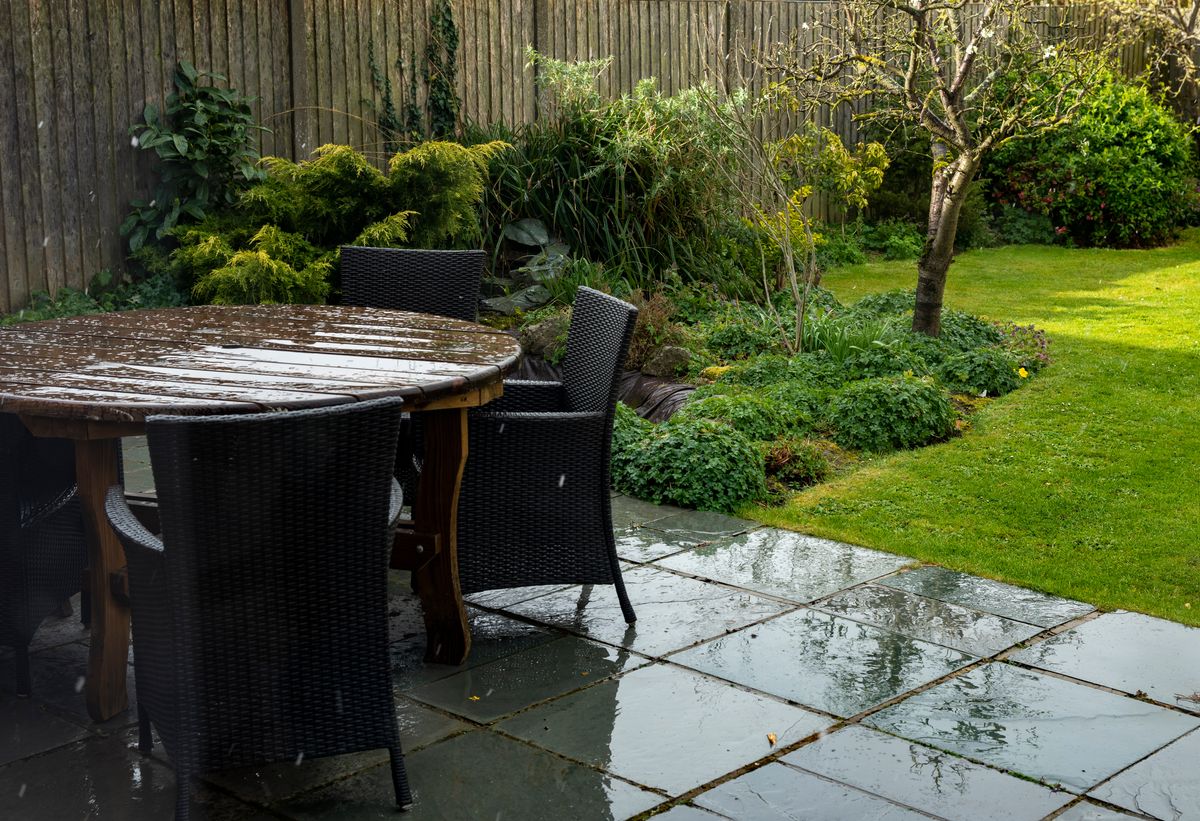
There are ways to protect your garden furniture from the storm(Image: Getty Images)
Bradley then explained how bricks can help prevent damage to garden furniture. “Leaving wooden items on soil or grass leaves their legs exposed to moisture, so it’s important to elevate them from wet surfaces,” he said. “You can buy dedicated rubber feet for wooden furniture, or you may already have some unused bricks or paving slabs that can elevate your items from the cold, wet ground.”
Prolonged exposure to moisture poses a significant risk to wooden surfaces, so it’s important to take action in winter. Wood can absorb moisture from sources such as rain or snow, which can then create damage if exposed to plummeting temperatures.
The frozen water expands and pushes tiny cracks wider before thawing, and this process happening repeatedly can eventually take its toll. While some damage may be minor or simply cosmetic, there may be a risk of screws, bolts and joints becoming weaker over time and threatening the item’s structural integrity.
Protective covers and storing items in a dry, secure place are among the most effective ways to prevent damage, but it is also important to ensure proper maintenance. Giving furniture a deep clean and applying a protective layer of oil or varnish once or twice per year can also go a long way to ensuring longevity.
Comments are closed.