
When Tullika Saraf into her sangeet— the celebration held the day before her wedding to fiancé Sean Keogh—she was swept back to her childhood. “My favorite memories of going to India as a kid were visiting the markets and bazaars,” she says. “They were so colorful and vibrant.”
The Kentucky-born, Georgia-raised bride’s parents hail from Chandigarh and Delhi, India, and when it came time to plan her nuptials, Saraf knew she wanted to lean in to her roots in a big way. “My parents’ wedding was a really small affair, and they love to throw parties, so this almost felt like the wedding they didn’t have,” she says. “And Sean [who grew up in Minnesota] and his family were excited to be on this journey with us and had no reservations about anything, which was so touching.”
The CEO and founder of the Atlanta-based Weddings by Epic, Jennifer Lott, who specializes in South Asian unions, took charge of the pair’s vision, alongside planner Alyssa Odom. “There was a lot of intention that went into just the smallest things,” Lott says. The three-day string of events kicked off with the haldi—a ceremony in which the bride and groom are covered head to toe in turmeric to symbolize purification, prosperity, and protection—and a night of karaoke. But it was during the sangeet that guests got their first true taste of the subcontinent. “I wanted a welcome-to-India, bazaar feel,” Saraf says. Inside the Foundry at Puritan Mill, a 1920s soap factory turned industrial chic venue in Atlanta’s Howell Station neighborhood, a mehndi, or henna, artist set up shop inside a tent, which Lott sourced directly from the Indian state of Rajasthan. Burlap sacks featuring Saraf ’s and Keogh’s names dotted the space. Dried chiles, onions, and snap peas hung from the ceiling—along with the odd disco ball for flair. Block prints from an Indian textile mill adorned the long communal tables. Silk scarves and prewrapped turbans, plus a wall of bangles selected by Saraf’s mother, Meenu, on a trip home, allowed guests to embellish their attire as they sampled bites from six food stalls (Saraf ’s favorite was pav bhaji—a street-food curry made with potatoes, meat, and spices, served on a bun).
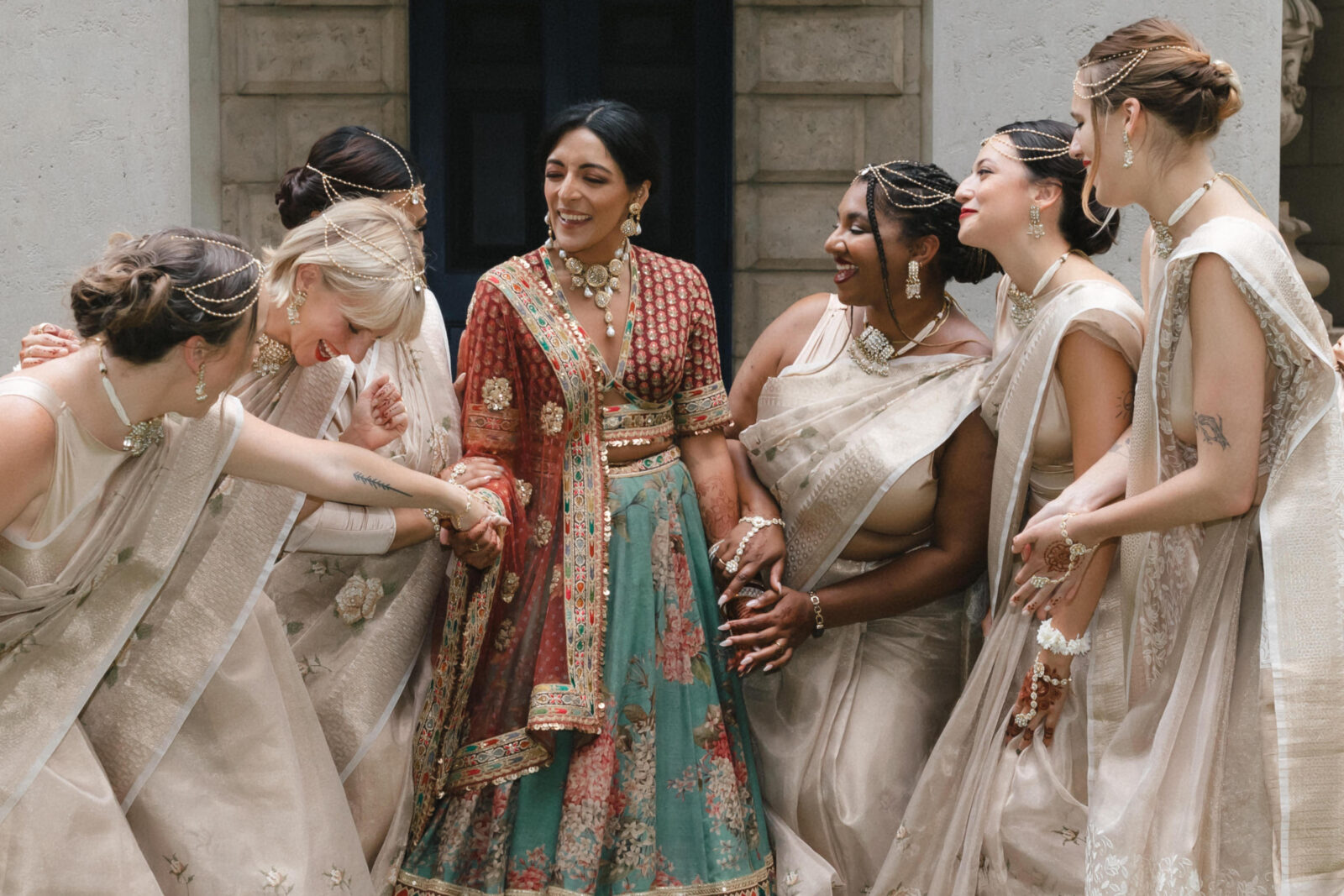
Photo: BEN AND VICKY PHOTOGRAPHY
Saraf and her bridesmaids.
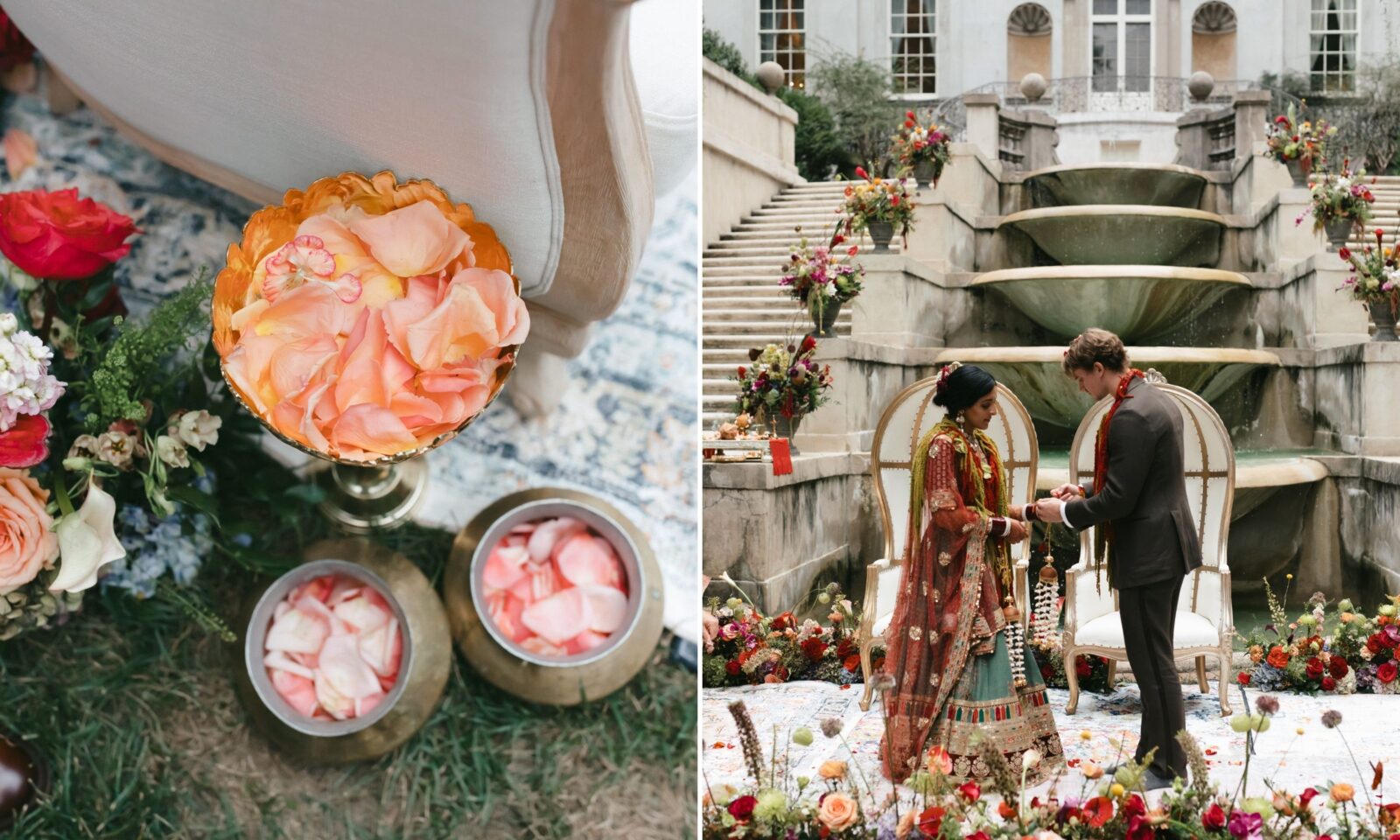
Photo: BEN AND VICKY PHOTOGRAPHY
Bridesmaids carried vessels filled with rose petals down the aisle rather than traditional bouquets; the bride and groom in front of the Swan House fountain.
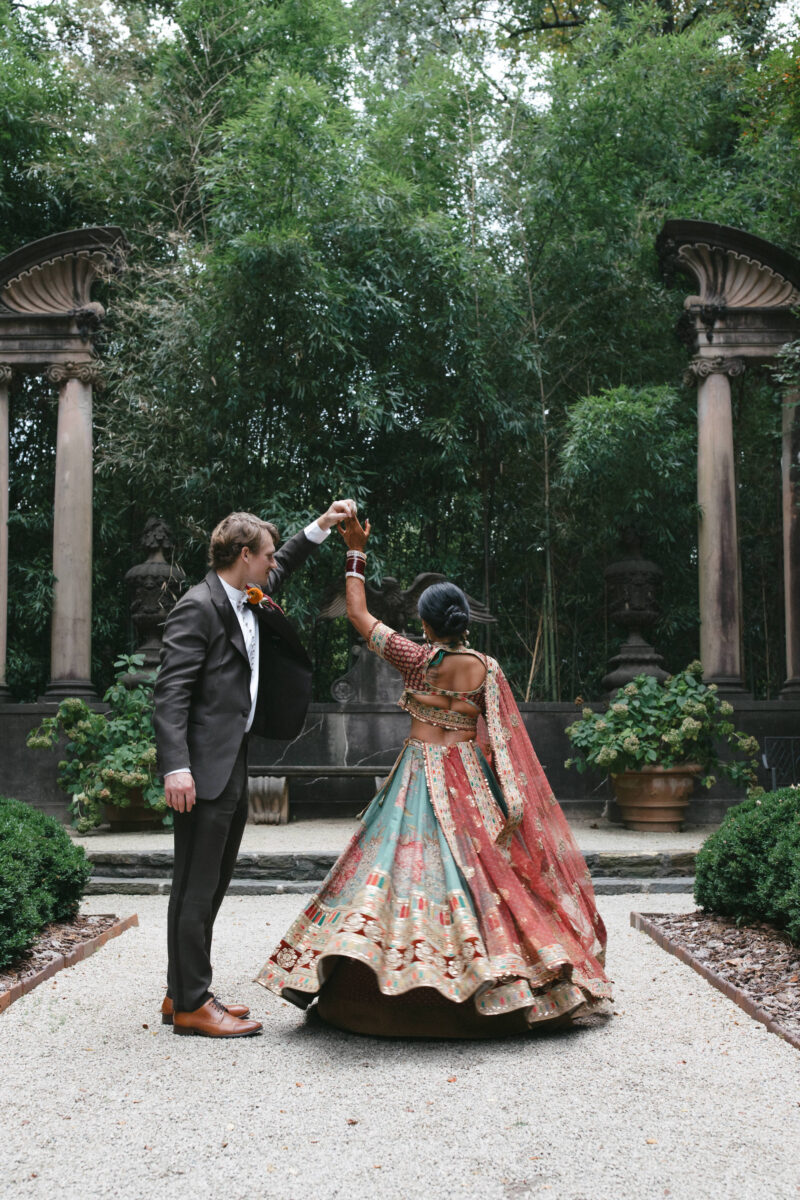
Saraf’s love of traditional Indian art wove throughout the space; Lott inlaid prints of the bride’s favorite paintings into the front of the bar, and across the room, a gallery wall displayed objects from Meenu’s personal collection, including a traditional ravanhatha, an instrument similar to a fiddle. Saraf’s lehenga, or wedding ensemble, made by Indian designer Ritu Kumar, even incorporated a painting: “My mom found it in Delhi, late at night when the store shouldn’t have even been open,” she says. “It depicts a mythological story of Krishna in the forest with the gopis, which are shepherd girls, and it resonated with me so much.” She accented the lehenga with jewelry borrowed from her family and wore her hair in a nearly floor-length braid studded with fresh jasmine—all the better for dancing to the Punjabi bhangra music augmented by two live dhol drummers.
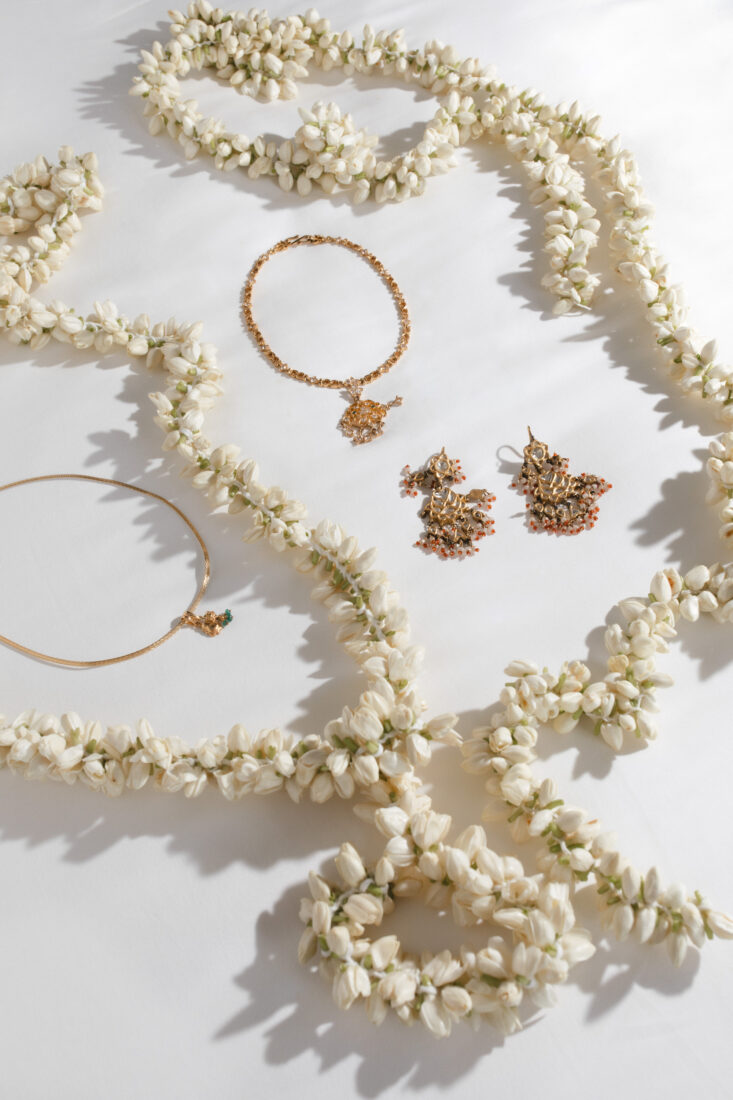
Photo: BEN AND VICKY PHOTOGRAPHY
Jewelry and a jasmine garland, which is known as a gajra when worn in the bride’s hair.
But on the wedding day itself, Saraf also incorporated nods to her Southern roots. Her ceremony lehenga featured hydrangeas—“the perfect mix of Indian heritage and Southern heritage.” The look fit the couple’s venue, Swan House at Atlanta History Center, with its cascading stone fountain and winding wooded paths, which offered a calm that reminded her of her groom, a clam biologist who loves to spend time outside. “We had so many people coming who had never been to the South before, and this is what I wanted them to experience,” she says. “Plus, there is a little statue of an elephant hidden in the woods there—we took that as a sign when we visited.”
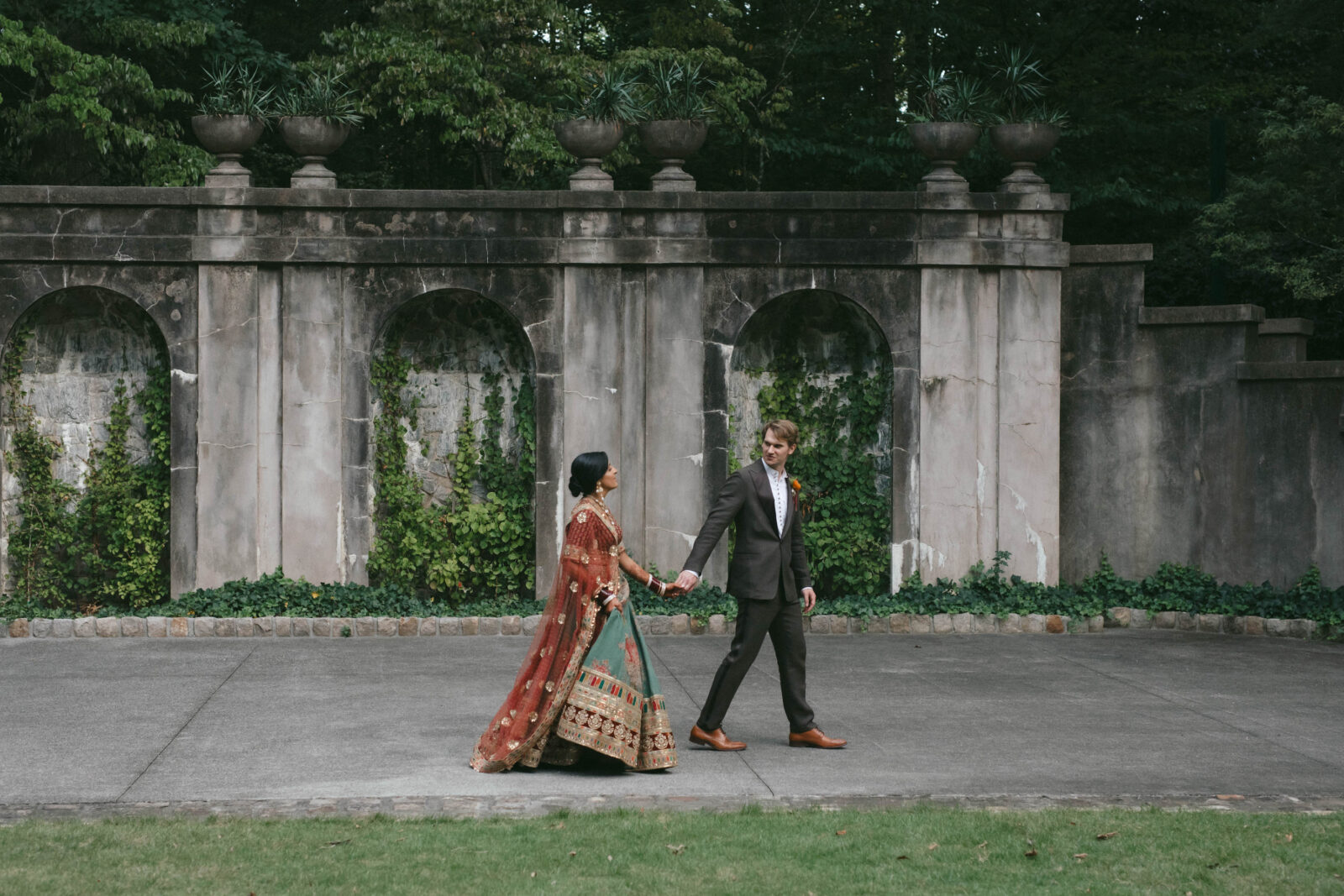
Photo: BEN AND VICKY PHOTOGRAPHY
Before the wedding ceremony.
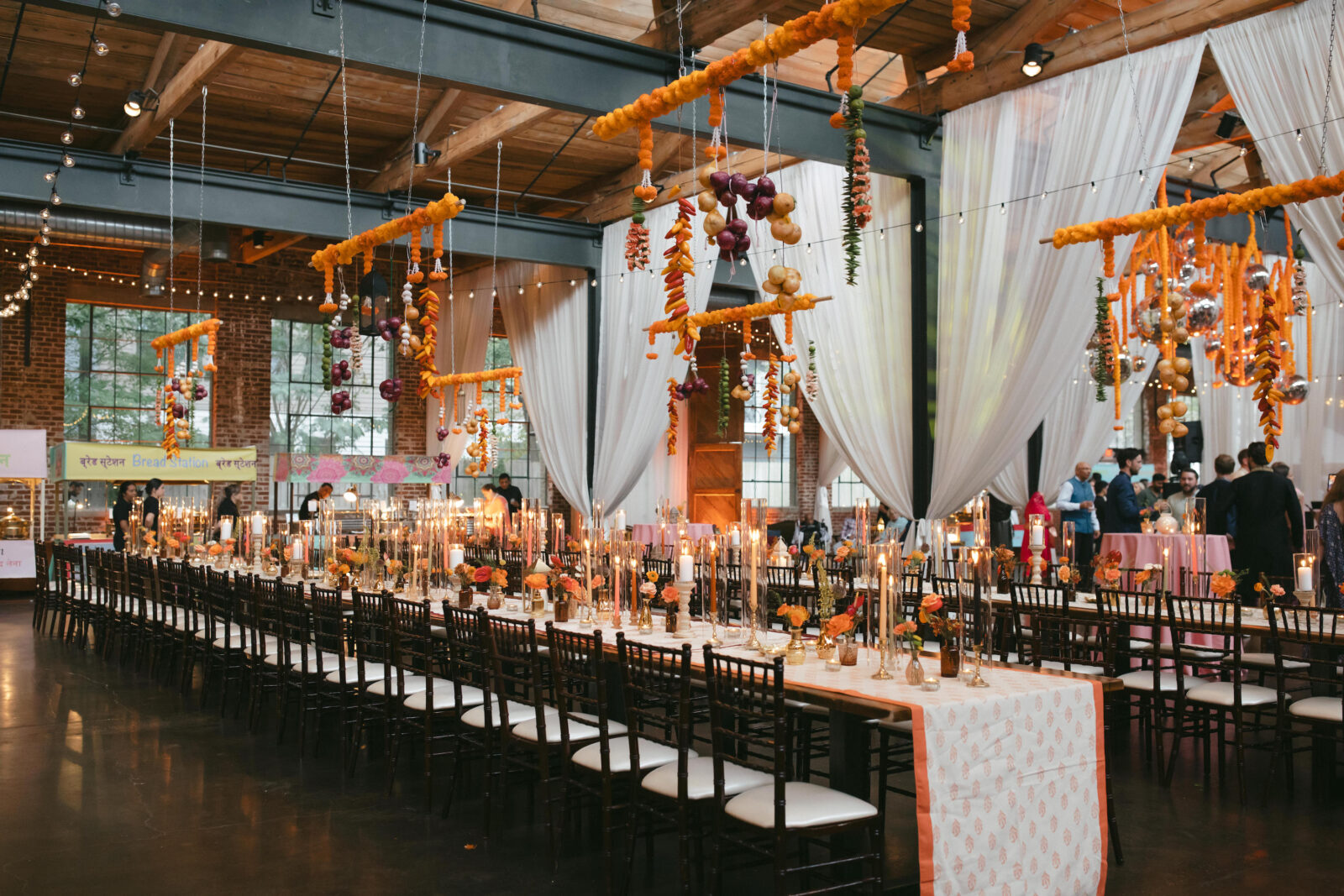
Photo: BEN AND VICKY PHOTOGRAPHY
Communal tables made the Foundry at Puritan Mill feel like an Indian street market.
When a little rain threatened the big day, Lott did a last-minute flip of the ceremony and the cocktail hour (during which Saraf ’s dad, Rahul, broke out something stronger than mango lassi and serenaded the guests). In the end, Saraf and Keogh got their dream ceremony, full of spirituality that reflected both of their upbringings. “Of all the South Asian weddings I’ve done, this felt like a true fusion,” Lott says. “Tullika wanted Sean and his family to feel represented and included.” In a wink to both traditions, he wore a Todd Snyder tuxedo over an Indian shirt sporting traditional buttons. They opted for open-air nuptials, rather than gather under the customary four-poster, canopied structure called a mandap. Still, they donned neck garlands woven of amaranth and employed a hand-decorated antarpat, or cloth, during a few of the ceremony’s key moments.
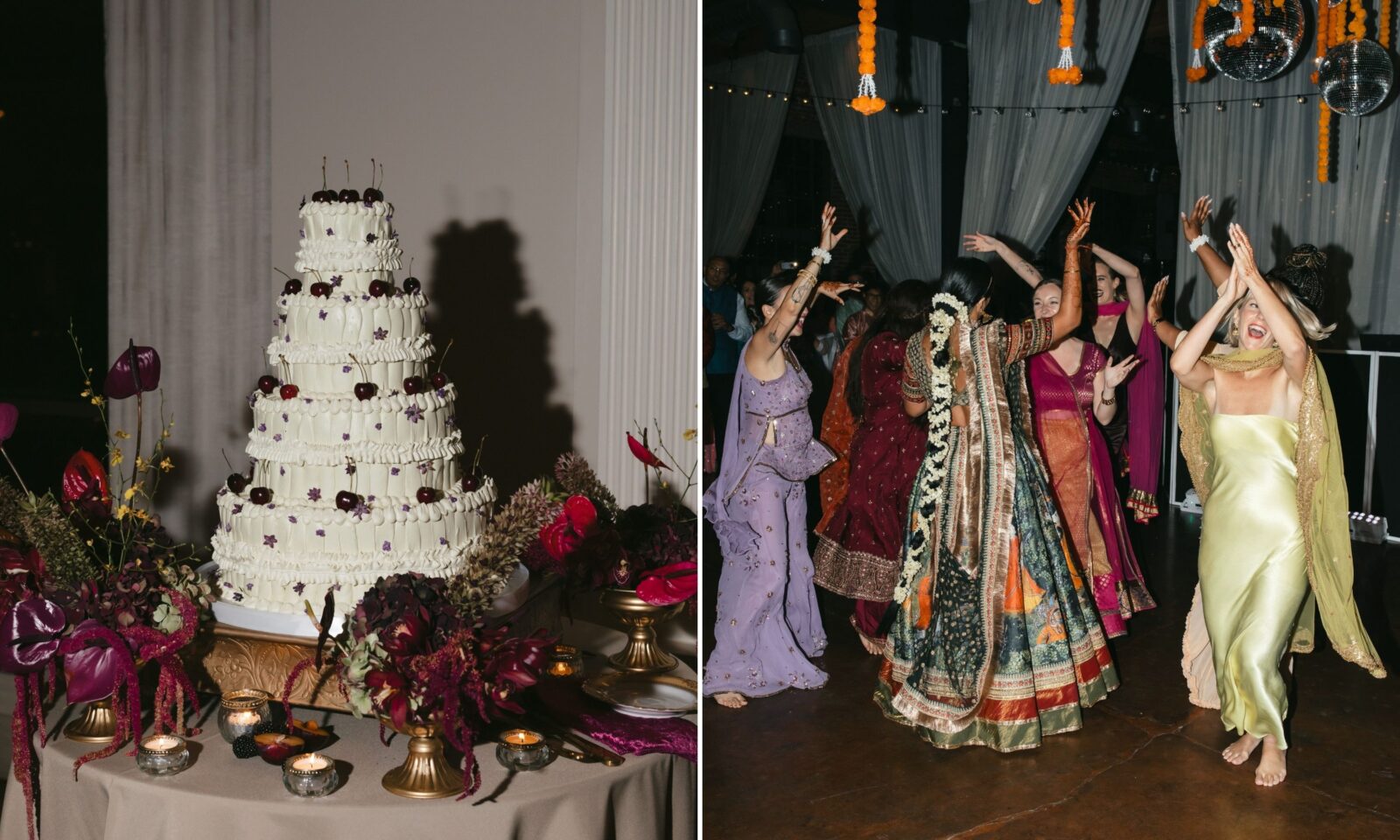
Photo: BEN AND VICKY PHOTOGRAPHY
Gingerspice Bakery crafted the cherry-topped wedding cake; the sangeet’s lively dance floor.
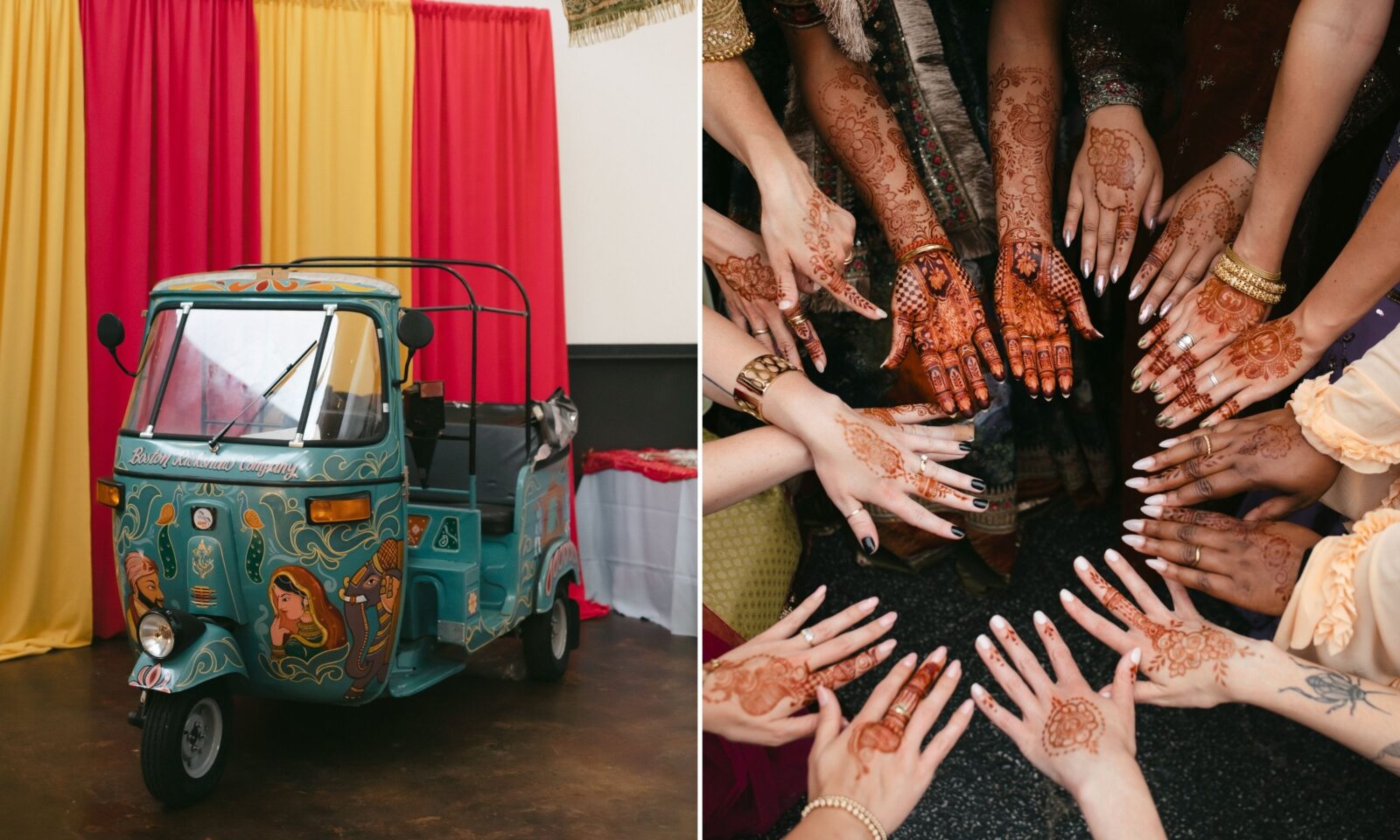
Photo: BEN AND VICKY PHOTOGRAPHY
A rickshaw provided by Boston Rickshaw Company doubled as a photo booth at the sangeet street market; the bride and her bridesmaids show off their henna.
Before the reception, Saraf put on a scarlet-red lehenga by the respected Indian brand Sabyasachi—complemented by a new set of jewelry that she hopes someday another bride in her family might select for her special day—and entered the Atlanta History Center. Colorful botanicals and dramatic magenta velvet napkins lined the tables. The cardamom-spiced cake dripped with fresh cherries. In lieu of a father-daughter dance, Saraf ’s father, the karaoke king of the weekend, sang her a traditional song called a ghazal. And when the music started—this time Emerald Empire Band playing bangers from the likes of ABBA and Natasha Bedingfield—everyone, from India, England, and across the United States, joined in the dancing just as they had at the sangeet. “That was the best part,” Lott says. “Yes, everything was beautiful and there was so much customization, but the merging and celebration of cultures was the most special thing to see.”
Lindsey Liles joined Garden & Gun in 2020 after completing a master’s in literature in Scotland and a Fulbright grant in Brazil. The Arkansas native is G&G’s digital reporter, covering all aspects of the South, and she especially enjoys putting her biology background to use by writing about wildlife and conservation. She lives on Johns Island, South Carolina.
Comments are closed.